



Crow Horse
Members
-
Joined
-
Last visited
Everything posted by Crow Horse
-
Ever have the experience of setting the hook while the lure was near the surface and it rockets back at you? I've had it happen several times and it's a little disconcerting. The last time it happened I actually had to duck which isn't very easy while in a kayak. I try to be very aware of my rod position but sometimes it can't be helped..... Maybe I shouldn't use the "turn them inside out" method of hook setting........
-
I'll agree with removing the plating could make it more susceptible to corrosion but that shouldn't alter the temper of the steel. I believe that would require heat and there's no way sharpening a hook by hand could generate the temps to change the temper. I fish plastics 99% of the time and only go through a couple of hooks per season as long as I don't have any bite offs. I inspect them weekly prior to getting wet using an 10x Optivisor and I haven't see any signs of corrosion. If it passes the sharpness test it's good to go.
-
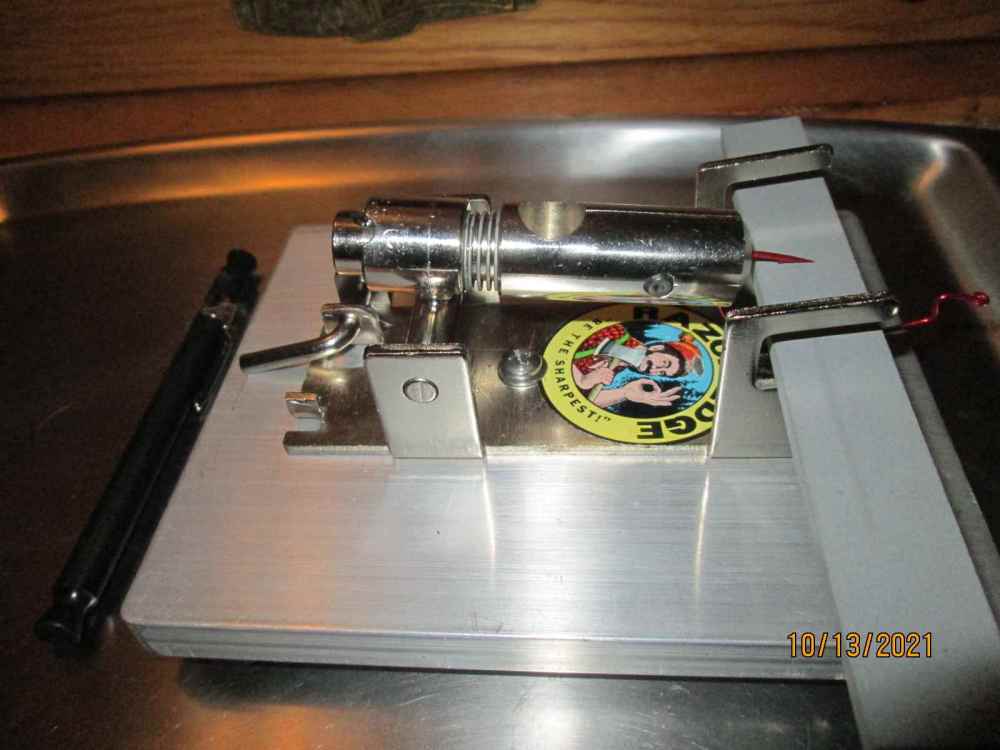
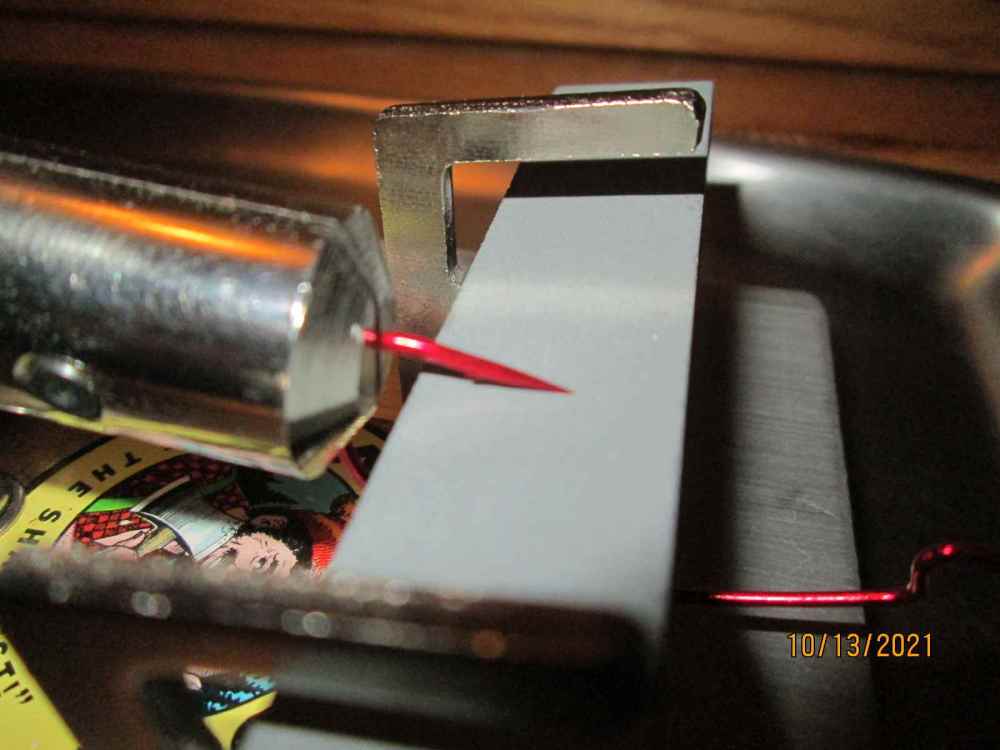
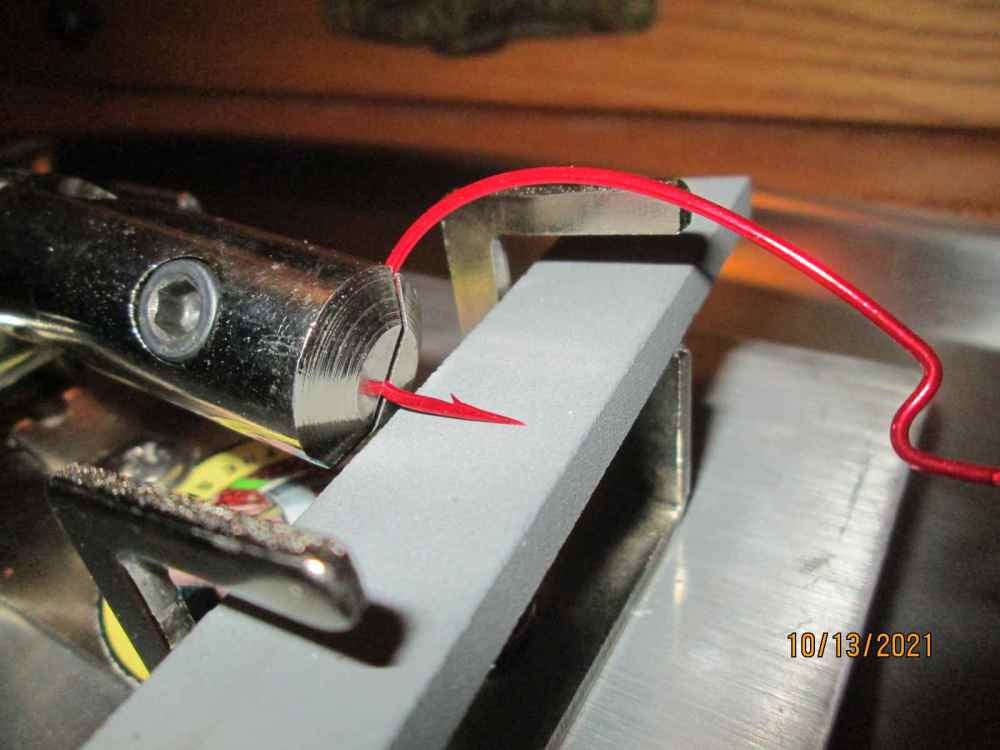
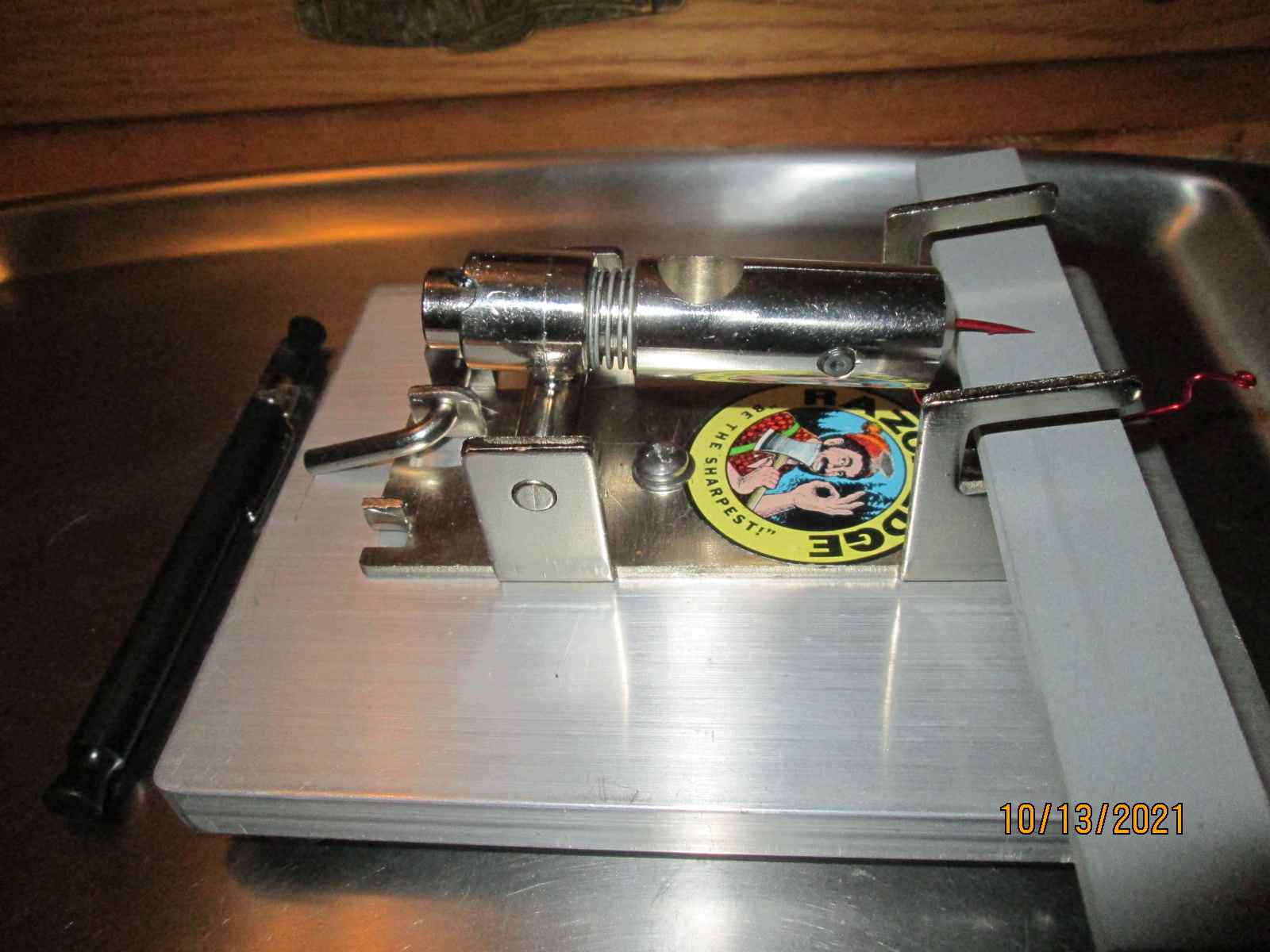
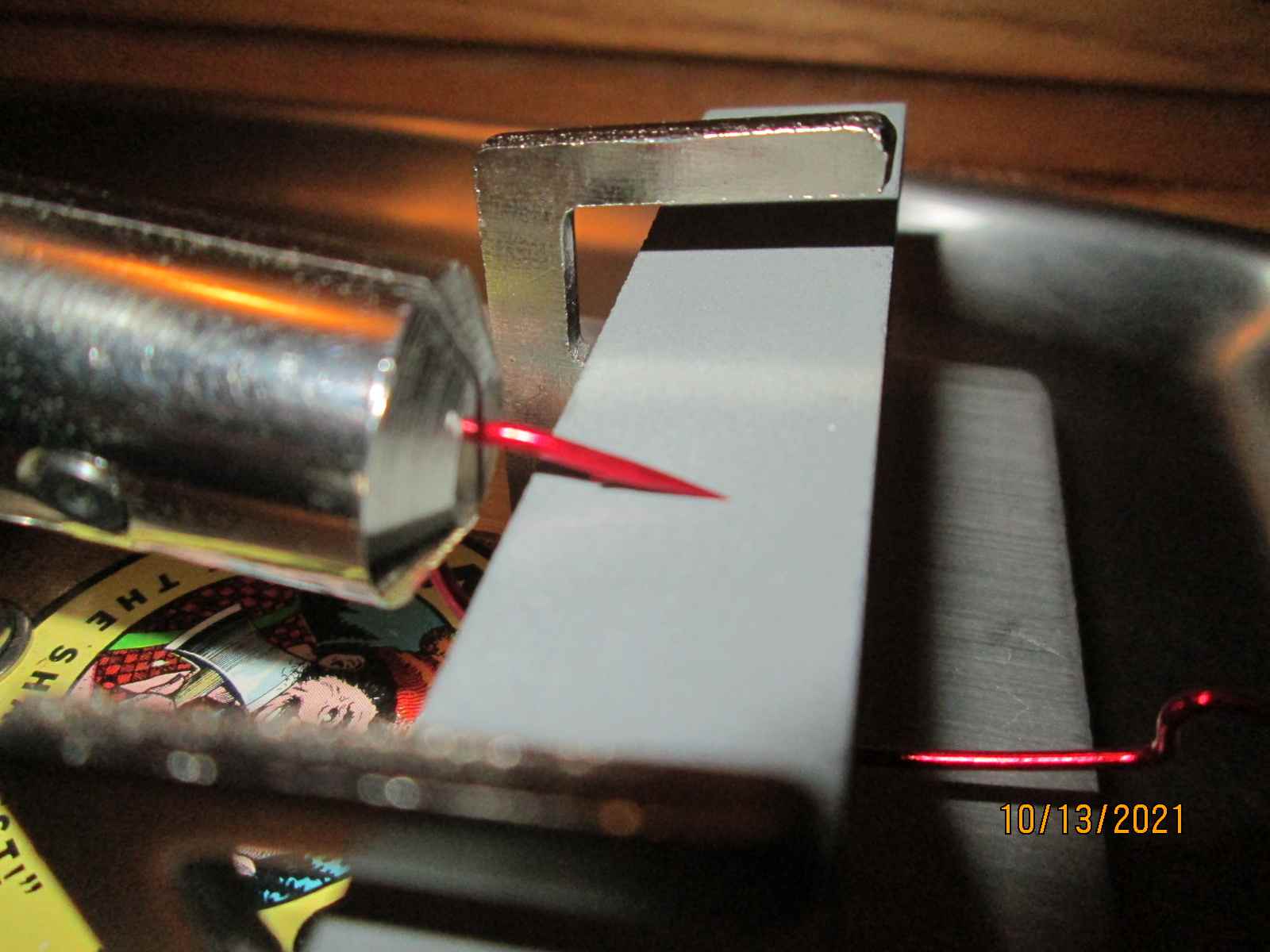
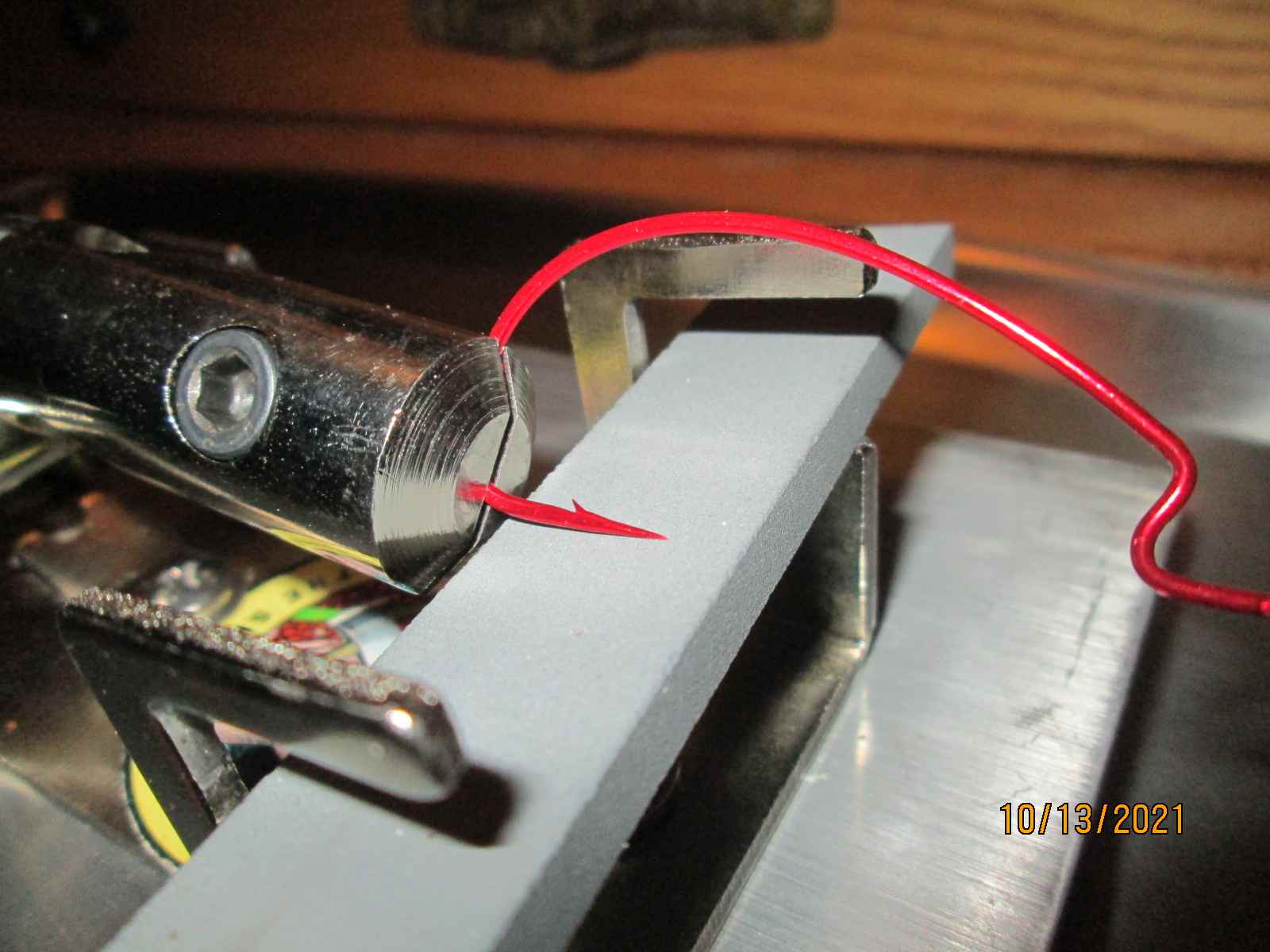
This is the turret sharpening system that I use. To the left of it is a edge tester used in the commercial meat and poultry industry to test sharpness of knives before they are used in production.
-
All the components of a hook need to work in concert with each other. A sharp hook with weak wire or an undersized wire gauge will yield poor results. The steel's properties if poor will result in a hook point that dulls easily. Hook geometry is another huge factor. There are many elements in this equation....
-
If it passes my test as shown above, it'll go through the roof of a bass's mouth with ease. I haven't tested any Mustad hooks for their sharpness but I suspect they are on par with the other major hook manufacturers. It'll be interesting to see how they fare. Hook manufacturing has improved greatly and current hooks are much better than those made many years ago. However, they are still made in a production environment where speed and cost containment is the name of the game. I'm of the firm belief that they all need attention prior to getting wet.
-
No worries. Initially it's a little more time consuming but it doesn't take long after some practice. I recognize that I often times go overboard in activities that I have a passion for. Fishing is one of those activities.
-
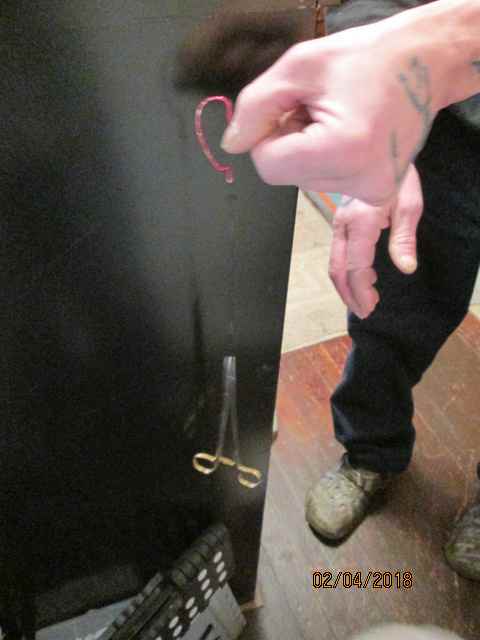
I respectfully disagree. None of the brands I've tested have passed my fingernail test. I take the test hook and connect it with a short leader which has a small weight. I'll position my thumb vertically and at app. 80° angle. I then take the hook and place it lightly against my fingernail and release it. If it falls to the floor it's not sharp enough. If it digs into my thumbnail and holds, it's good to go. Try it with a hook you believe to be sharp.
-
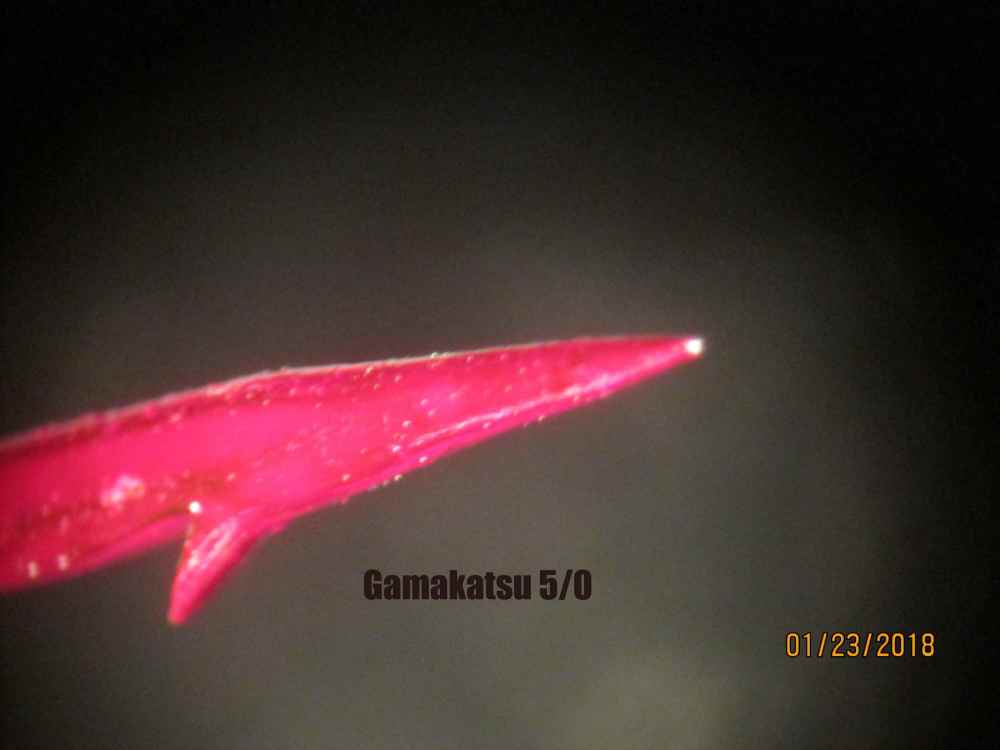
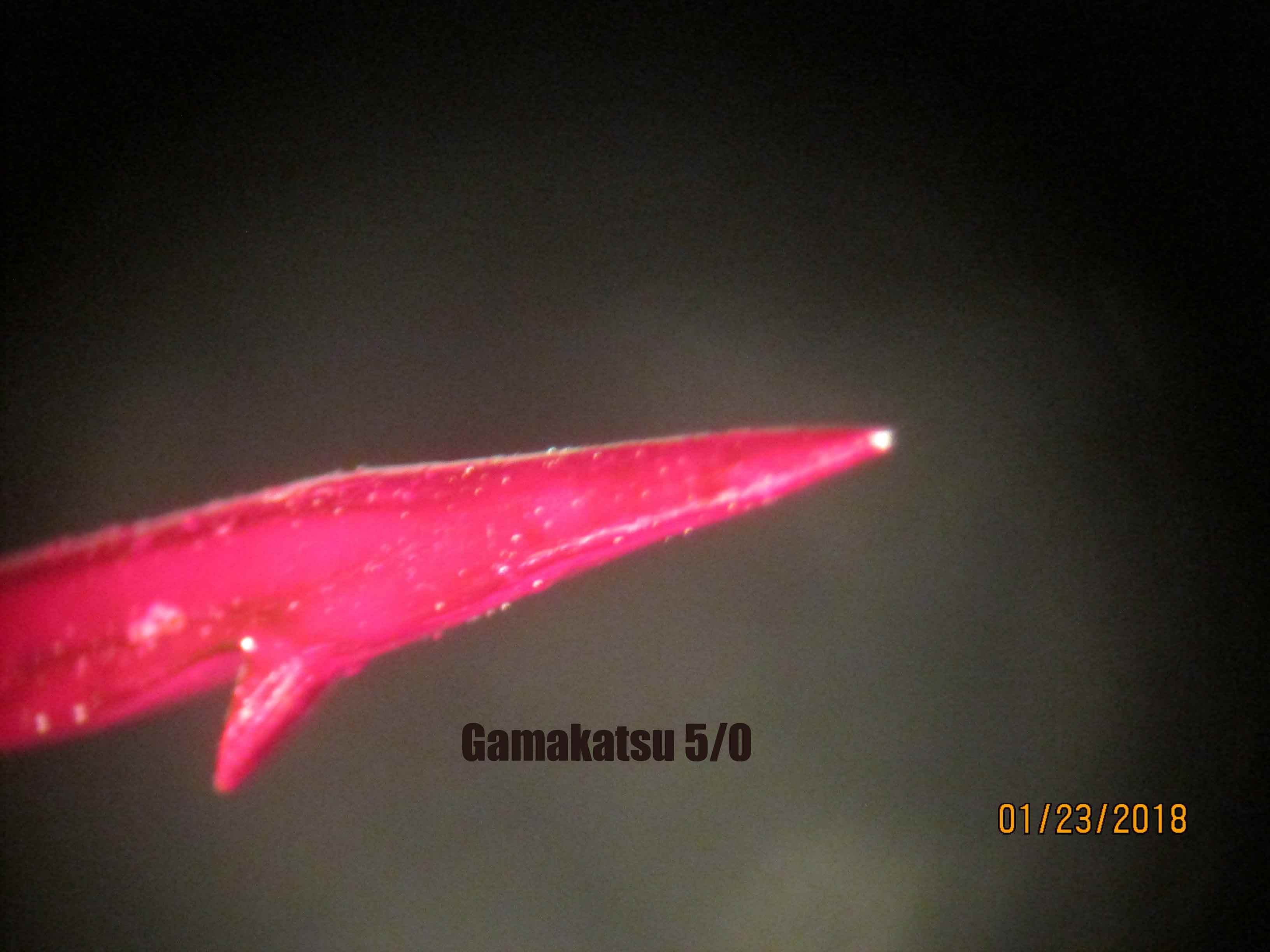
I use a Razor's Edge turret style hook sharpener which is no longer made. It produces accurate and repeatable angles as well as a "shovel point" that makes the hook point dig instead of slide. New hooks out of the package aren't sharp enough regardless of brand. This subject fascinated me and I began using an industrial microscope to view (and photograph) hook points. I found that Trokar hook points were the sharpest right out of the package but still required sharpening. They were better than most but still not sharp enough. Gami's were interesting in that they had irregularities at the hook point. I contacted them about it but they never replied.
-
Years ago I let a neighbor put his jetski ramp on my floating dock. He helped me install it but I knew he was not comfortable with using any type of tool. I used the drill to drill pilot holes for the lag bolts and I felt he was "safe" using a 1/2" ratchet to tighten the lag bolts. No more than 5 minutes in I hear the familiar sound of a socket caming off the bolt followed by a splash. I looked up and see my neighbor with a look of horror. Yep my socket & ratchet is now sitting in the bottom of the bay. Long story short, I used a hard drive magnet tied to a thin rope and dragged it over the bottom. Miraculously, I managed to pick up the socket. I should have bought a lottery ticket. My neighbor went home and got his snorkeling gear and was able to retrieve my ratchet. Now, virtually everything that won't float is leashed to either me or my yak.
-
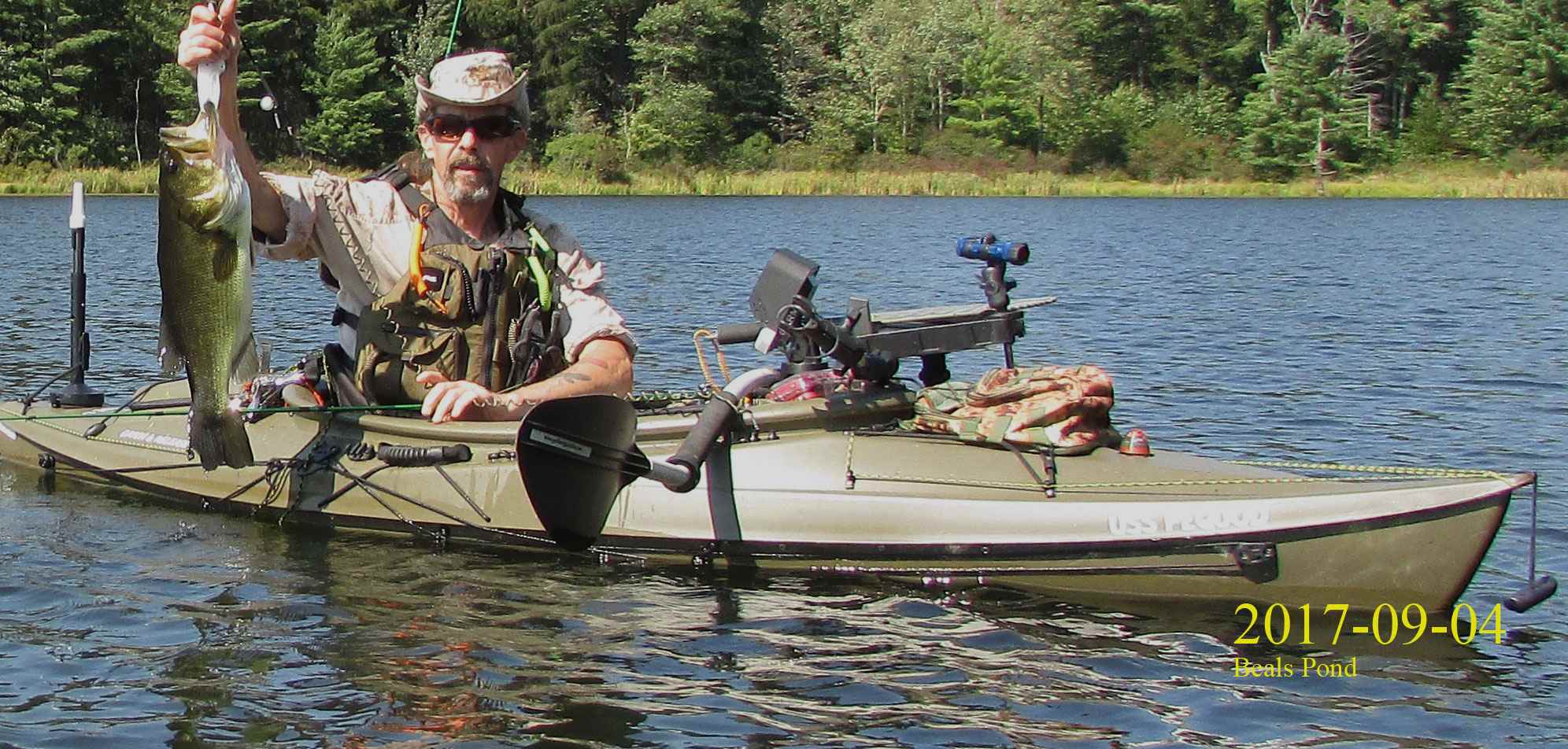
Pretty much all of the above reasons. My obsession with pursuing personal performance excellence, and unraveling the mystery of LMB allow me the perfect opportunity to offer thanks in a natural environment for the blessed life I live. My obsession mirrors Ahab's quest for Moby Dick, so much so that I named my kayak the USS Pequod.......Thanks guys. What I've also noticed is that the pond floor is covered with a dense growth so much so that a t-rigged worm just disappears when it contacts the bottom. An airtail does a little better than a standard worm but it's visibility is still compromised. The majority of the pond is covered with this vegetation. Interestingly the water clarity is pretty good. For example, when tossing a white fluke, I can see it app. 40' from my yak when it's about 12" beneath the surface. I'll get better pics when I get on the water next week. Another variable is the occasional appearance of a beaver. He's been around for the past 2 years. I don't know if this plays any role in the changes I've seen but thought it is worth mentioning.I found an older photo of what the vegetation was like 5-6 years ago. It's not the best photo but if you look in the foreground you'll be able to see the vegetation.
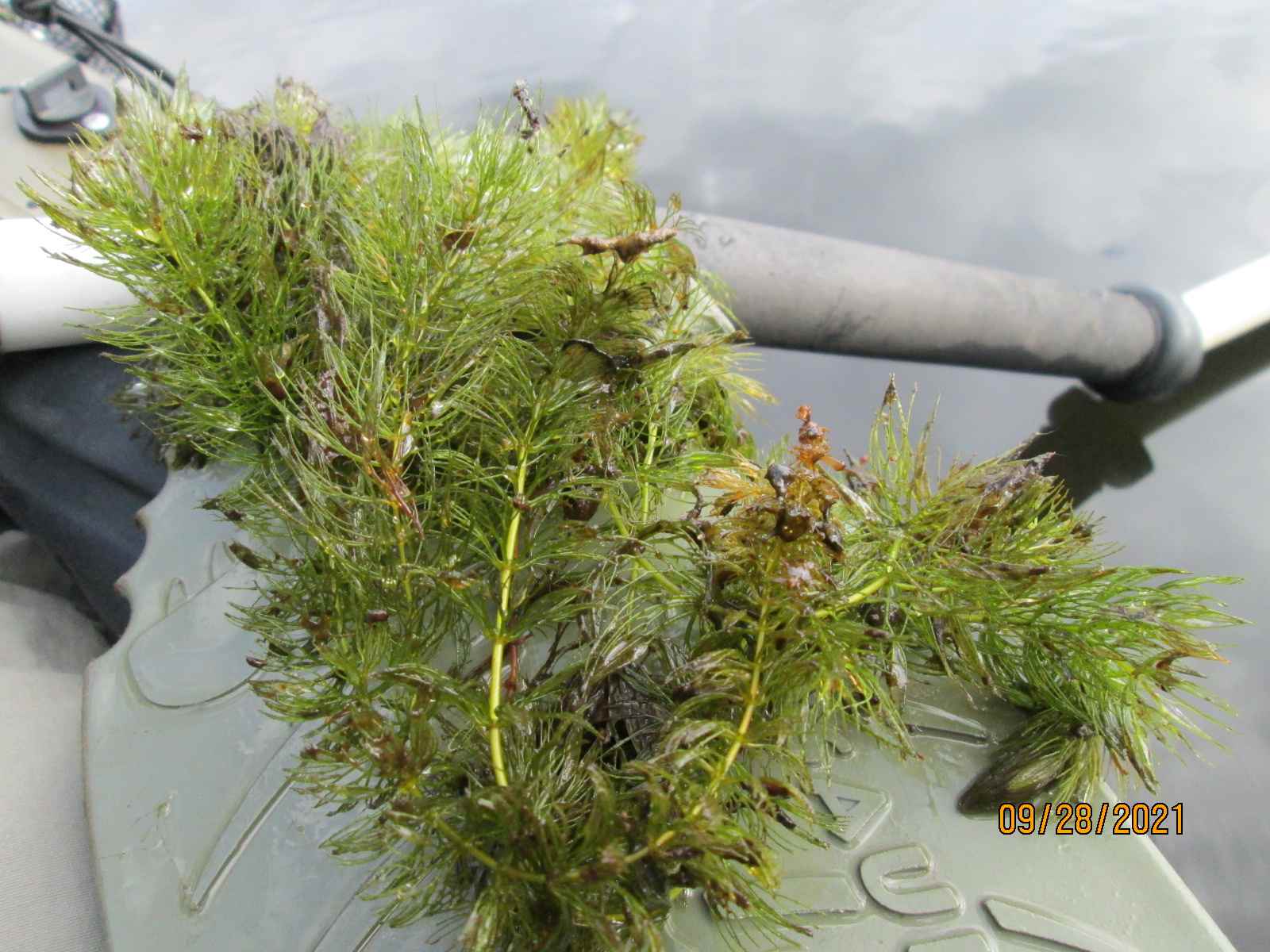
 The pond I've been fishing (12 acre) for the past 6 years has been undergoing changes in the aquatic vegetation. I'm terrible at best in trying to identify plants. There used to be fairly large pockets of a plant that somewhat resembles lilypads but the leaves are narrower and pointed. Now I'm seeing what looks to be hydrilla or milfoil. Next time out I'll snap some photos. How would this shift in vegetation affect bass behavior?Spare parts are available from Piscifun although it's not clearly indicated on their website. I've contacted them via email, specified the part #'s I needed for the model I have and they charged me via Paypal. The only caveat is that the parts come from China (no surprise), so it takes longer than what I would like. It's still not bad, just inconvenient. It's one reason why I have 4 of this model. This is the first time one has gone down for repairs but I just swap in a spare waiting in the wings and I'm back out on the water. Time really doesn't play a role and hurt my fishing. I've read that Piscifun are made in Daiwa factory but haven't been able to confirm this.I'm working on a Carbon X 3000 spinning reel that has developed a "roughness", deviating from it's normally smooth operation. The problem developed on a hookset of a small bass. I retired the reel for the day and used my backup. This particular reel has seen some pretty serious service the last 2 years and admittedly I should have been more aggressive in maintaining it. I disassembled the reel (I'm no stranger to doing this). I'm not ruling anything out now but my prime suspects are the pinion/main gear engagement and the associated bearings. With such small bearings I find it difficult to determine if a bearing is going bad. Catastrophic failure would be obvious, but I don't think you'd see that in a spinning reel. Any help to diagnose this reel will be appreciated. I really like the Piscifun Carbon X. It's light, smooth and is perfect for my type of fishing.I'm by no means an expert on this but isn't the "bend" in a rod called the spine/spline?Mentioned earlier, hook sharpness is often overlooked or not sharpened enough. Admittedly, I have this obsession with hook sharpening. New hooks are not sharp enough. I use a turret style hook sharpener that creates a "shovel edge" on the inside of the hook point which makes it want to dig in with almost no pressure and cutting edges on each side of the hook. I fish barbless so getting a good hookset with extremely sharp hooks is critical.I've been kayak fishing for 6 years. I bought an entry level yak and built/modified it to suit my needs. One of my fishing buddies has a Predator with a trolling motor and it's a beast. It's a really nice rig but way too heavy for my taste. I also prefer sit in yaks. I have a 10 footer and it's a little tight on space but it forces me to be organized.
 Do manufacturers of $100 and under reels generally use bearings (metric) that are easily sourced? Replacing a bad bearing(s) would be a lot cheaper with sourced bearings and not using the reel manufacturer's bearing.Edited and corrected..... Another senior moment.....I leave a tobacco offering on my walk to the launch point. Once on the water I leave tobacco offerings for the 4 directions, the water, the air, Creation and The Creator. In prayer I express my thanks for being allowed the privilege to fish in this magnificent place and only ask for safe passage through it and that any fish I catch can be released unharmed....Like the title says, how long is your average fishing outing? I fish from my yak and my average time on the water is about 7 hours, sometimes 8. If it wasn't for domestic obligations, I would want to stretch that a bit further. It's "grueling" in that I don't take any breaks and I'm always working a lure. My reels and my shoulder get a real workout. It's both physically and mentally demanding, but I still love it......Thank you! Your response is exactly what I needed to hear. One more question just to clarify, when you refer to the roller bearing, do you mean the line roller bearing? I guess I was driving to make a sub $100 reel perform similarly to that of a Van Staal and the reality of that is that it's not going to happen in this universe. You can't fault a guy for trying....Interesting points to consider. My limited experience with bearings other than automotive bearings was the difference between the "standard" bearings in roller blades. The ABEC rated bearings spin effortlessly and keep spinning whereas the standard bearings definitely didn't spin as freely and smoothly. Another experience was when I modified larger wheels and tires for my kayak carts. The bearings that came with the wheels were poor at best both visually and by feel. Replacing them with precision bearings did make a difference in how the cart with yak rolled and had the added benefit of being less likely to fail. In a spinning reel application it sounds like this won't matter in the least. I have difficulty wrapping my mind around that. I'm still thinking it will make a difference but as to how much difference and at what cost is still a mystery. I'll pose this question and no disrespect is intended or implied. What we're discussing is just speculation and no one has actually changed to ABEC bearings in a spinning reel. Has anyone actually done this to a spinning reel and conclude that it was a waste of money and effort because of poor results or no benefit?



Important Information
We have placed cookies on your device to help make this website better. You can adjust your cookie settings, otherwise we'll assume you're okay to continue.