Brad Reid
Members
-
Joined
-
Last visited
Everything posted by Brad Reid
-
Gosh, a great thread and an old one. I might have already posted a response . . . or even two! Ha! For me? What works year round, all weather, all hours, all depths in the water column, catches the most bass, would be a Keitech Shad Impact, 4" on a 1/0 EWG Owner finesse hook (light wire) that come with a CPS pin already attached. You can: 1) toss it beyond and drag it by schooling bass chasing chad at the surface; 2) toss it on top of lily pads and drag it through areas like that, or other areas with vegetation, or over and around limbs if it is weedless . . . fish often waiting below in the shade; 3) use it as a traditional jerk bait when fish are more active at various depths; 4) let it fall slowly through the water column like a dying minnow; 5) troll it behind a kayak; 6) fish it on the bottom like a T-Rigged or Ned Rigged worm. On the latter, I often make a cast from my kayak, let it fall to the bottom, then using reverse on my Propel drive, I leave the line out (don't reel it in) and slowly, very slowly, pull back and away as slow as possible. Sometimes the wind or current will do the trick for me. I can drag a Keitech across 50 or 100 or more yards along the bottom and the odds are pretty good that I am going to put it in some fish's face. I live on a lake, suppose I have been out 50 times since January 1, likely caught 200+ bass using it. It'd be my go to if I were limited to one presentation. And, about 75% of the time, I don't even carry out a second rod with a second presentation. Brad
-
If someone would perfect the 16 oz. Propane canister approach, make a 1 HP outboard, bring it in at < 20 lbs, < $700, what a winner that'd be for kayaks and canoes! It'd weigh less than a TM, less than a battery, for sure the two of them. You could grab 3 or so of those camping size Propane canisters and cruise up and down rivers for days on end. Brad
-
For sure on the stability. Should be no issue. You might want to load some gear forward and opposite side to make it perfect. I think some of the 2s are down to 29 lbs. And, some can be bought, last I looked, for around $700. Honda's is air cooled as I recall but it has some odd feature where when you start it, it isn't in a true neutral but lurches along at low throttle. I'm not certain that would be ideal for a canoe. Tohatsu has a strong rep. I think there are 5 or so big manufacturers in the 2 to 2.5 range. I'd avoid anything bigger. Brad
-
Hmm? If you had the square stern (S-15, S-13, S-11), then you could mount a small gas motor. I think with an S-14 I might borrow one to see if having it mounted off center is okay. Yep! You start getting big on the TM and a big battery and there is the loading issue, getting down to the water on some rivers. Issues. The ideal set-up? If the Lehr that runs on the camping propane bottles was reliable, you could carry plenty of those little green bottles and power a canoe for days. Tohatsu has one, too. It is more reliable (fuel regulator) but is only available down to a 5 HP. Brad
-
I can't even imagine using anything over 10 lbs. braid on a finesse-intended spinning reel and light to medium rod. Even better, drop down to 6 lbs. Sufix Nanobraid . . . if you run straight braid without a leader. With a leader, I almost always pair 10 lbs. braid with 8 lbs. Invizx fluorocarbon. The two "fit" each other pretty well, tie well. I don't want too small a diameter braid when I tie on a leader. I've never had a fish, any fish, break off 2 lbs. Sufix Nanobraid. With 6 lbs. test? If you use a spinning rod and reel as intended, you could land a whale. Brad
-
Yes, a bit of unintended misdirection in the original question/comment. The line is doubled and passed through the eye of the hook in BOTH cases. But, just once. The only difference is that in the so-called "double Palomar," there is one extra wrap. The real value of a Palomar, other than its simplicity? It is the fact that when you double the line and form a bight (a loop), then make your little granny knot, then pass the bight back over and around the hook, it: 1) anchors the knot better, this over a knot terminating in a cut off tag end; 2) and, it has two lines through the eye. For the latter, imagine hanging with one arm from a chinning bar, with 4 fingers, then 3, then 2, then a single finger (if you can). The more fingers, the more the load is spread out. A Palomar has "two fingers" around the bar (hook eye) instead of "one finger" like most knots. I've tied the double Palomar, likely stronger, but I agree with others: it solves a problem that doesn't much exist. I'm a uni knot guy anyway!!! Brad
-
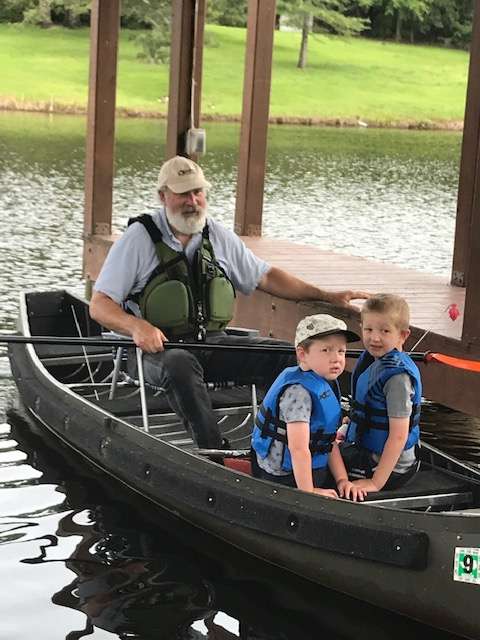
I have a 55 lbs. thrust TM and it works very well. But, as we all know here, a canoe or kayak under power is sort of like pushing a mattress across a lake. Hull speed limitations are firmly in control. Even a 30 lbs. thrust TM gets the job done well and I'd likely suggest choosing running time over top-end speed considerations. There are other considerations for sure. Carl, for example from the video? I believe he wanted a bit more power to punch through weeds better. And, if you go a bit toward the stronger thrusts, you can still run it at 50% or so of power most of the time, then have a tiny bit better top end speed in cases where you might need it. Say, you want to cross the mouth of a wide cove on a lake where there is a lot of boat traffic. It helps to make crossings a bit faster when you have a clear run to get across. *** Something else about an S15. It paddles a heck of a lot faster than my Jackson Big Rig ever did. This assumes no really heavy wind since an S-15 has high sides and catches wind like a sail. I have never measured my speed but on flat water coming home toward dusk back to my boat house, I think my speed is at least an average walking speed. So, 3.1 mph. This is with a 280 cm. double bladed paddle. And, it glides very well across the water since it has such a flat bottom and rides more on top of the water than heavier kayaks do. When you do encounter strong headwinds, a zig zag pattern really works well. Brad
-
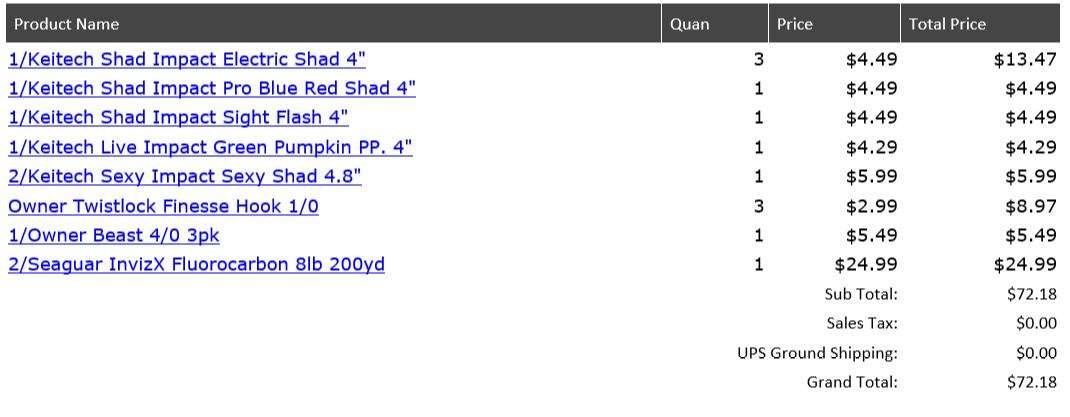
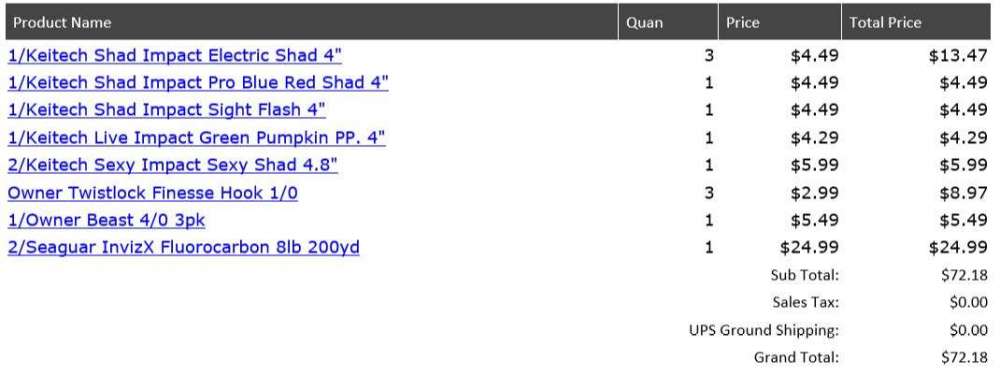
It's happening: age 67 comes along and I find myself narrowing down how I fish. So, I am selling all but one existing kayak, might get a light paddler but going out "finesse" more and more. Finesse presentations over power, too. One rod carried out versus multiple rods. Still . . . that monkey!!! I suppose over the past year and more, I have used a particular approach in gear/presentation/plastics and it has worked in all seasons. I caught two 25" bass, 50 yds. apart, 30 minutes apart the other afternoon, realized I had used my last preferred plastic bait. Order time! The Bait Monkey Victim Support Group will be able to tell exactly what I'm up to. Disregard the Beast hooks, a novelty I might give a try. Small hooks, fluoro leaders, Keitech 4" baits, one in particular. Brad
-
I use Shimano Ci4+ spinning reels and they have a strong, smooth and reliable drag system. I use drag most of the time, often adjust it a bit during a catch, and I used spinning gear as intended (fight the fish with the rod, not the reel). I want the drag to tire the fish on each successive run, then reel down once I attain a high rod tip taking up line. Rinse and repeat. Never tried a really overly loose drag on a casting reel, then manage it with a thumb, but that seems like a good option for all except presentations where you know you need to lock it down. Brad
-
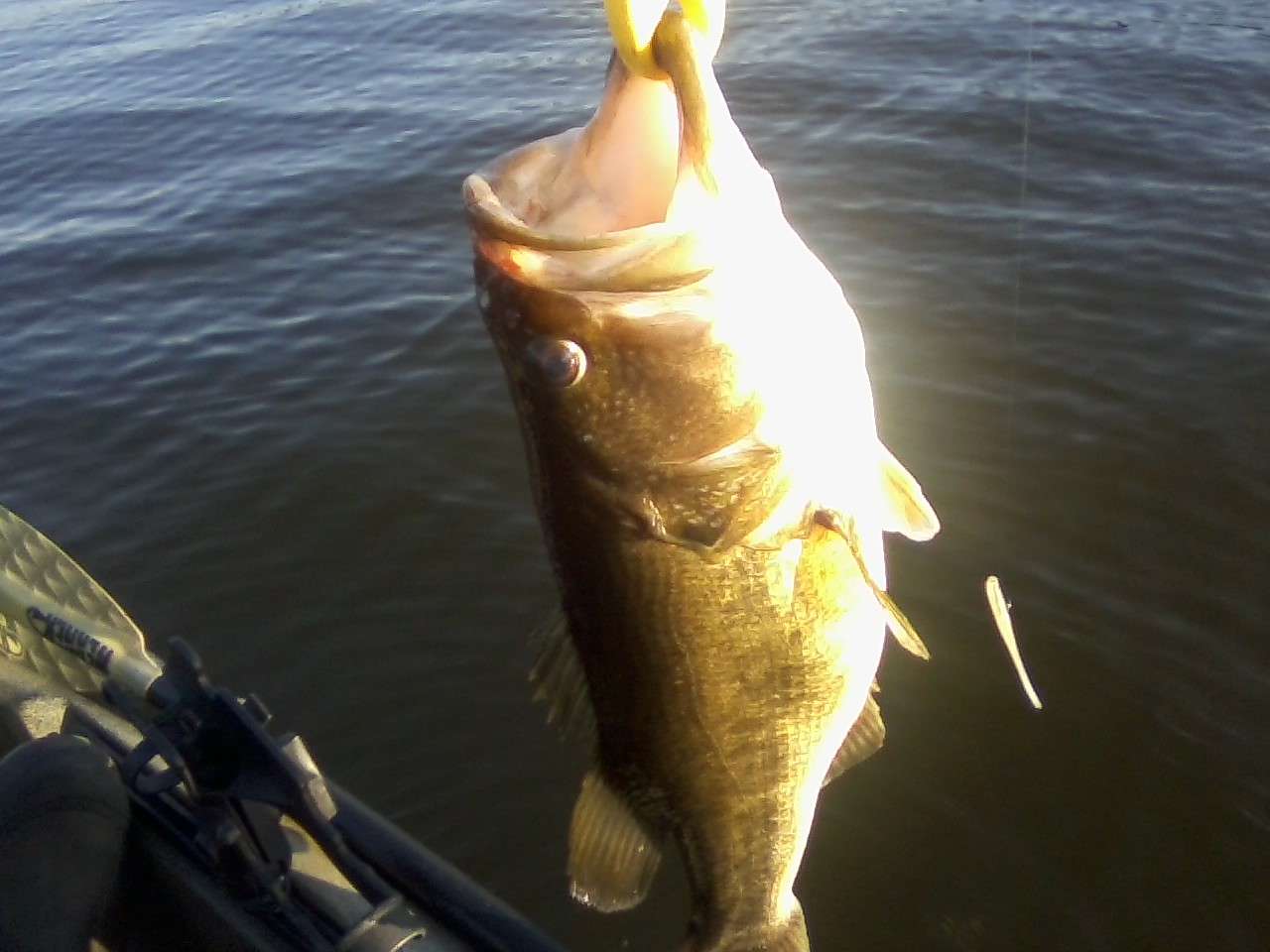
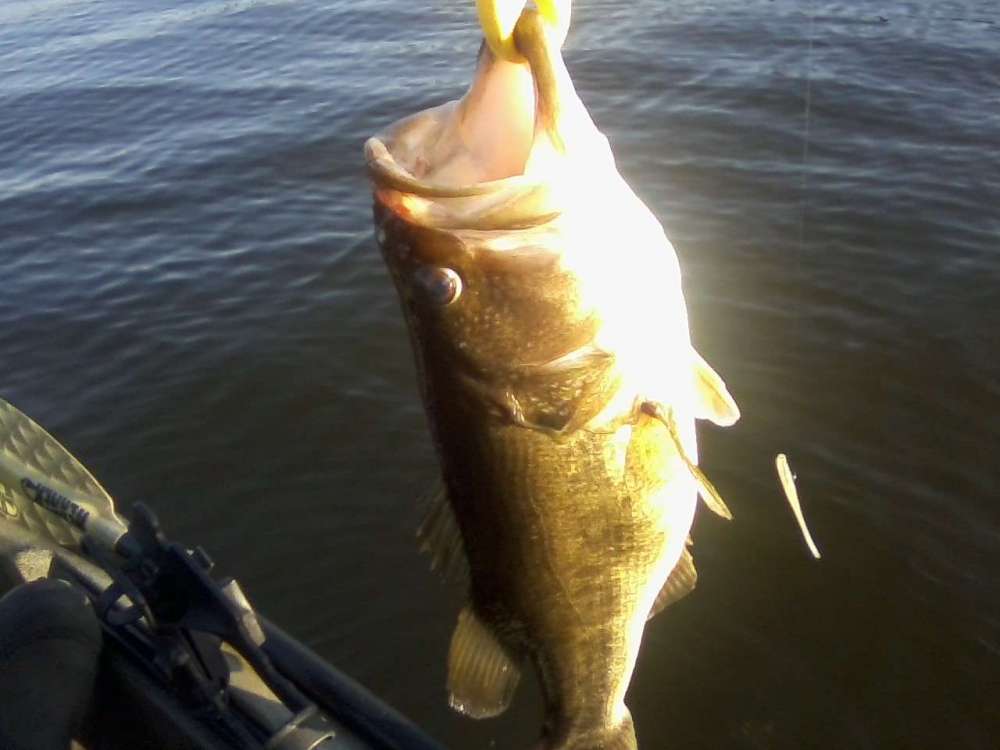
One issue with a Uni junction knot is you have the risk of either of two knots failing. And, while braid wrapped and pulled tight digging into a fluoro or mono leader works very well, on the other side, you have fluoro or mono trying to "cut" down into and hold fast to braid. I think of this as an inherent weakness. You can get around this to an extent but it danged well better be tied perfectly. This said, my largest bass ever was caught on a Uni Junction knot; but, I greatly prefer an Alberto/Albright knot for similar tying effort. Sure, an FG as a bench knot tied before going out, not so much out on the water. This one photo below, 25", was caught last late afternoon. 10 lbs. braid to an 8 lbs. fluoro leader, a 5'6" spinning rod. The junction knot? Alberto/Albright: 9 wraps away, 3 back and out. Over two hours, I actually caught a total of 6 bass, two were 25" all on the same junction and terminal knots, no reties. That was stupid of me, but the knots were never in danger. The junction knot passed through the guides without a tick. Brad
-
That's a great kayak, the Predator PDL. I have several friends who fish out of them with great success. And, I believe they made some improvements for this model year and dropped prices a bit. The new Hobie PA 12 or 14 with the new 360 Drive? For anyone fishing with a heavy emphasis on working around boathouses, docks, marinas, really hard? Or, pulling along long shorelines and casting parallel to the edge? These expensive new Hobies, likely $5,000 with taxes, will be very hard to beat. They will go forward and backward, like PDLs, Natives and others, but also allow the angler to sidle over left or right. Someone mastering its movements will be able to get in great position to make great casts to difficult spots where bass hang out. Brad
-
Along the same line as what A-Jay wrote, if you can imagine a bass sitting somewhere, say, under a pad, under a boat house/dock, in a bush, in the shade behind a rock, it is hard to imagine that it is there all by itself. Just as in a large aquarium like we see in some of the big fishing stores/restaurants, there are likely other nearby bass of different sizes, likely some panfish, some minnow/bait fish action. Things scooting along the bottom and surface, too. Smaller fish remain weary of larger ones, no doubt, but they often occupy space close to things that could eat them. So, my guess is a bass in a good ambush location ALWAYS has meal choices, not just our presentations. We are competing against other possible meals. For T-Rigged plastics, what usually works best for me is a very slow presentation. If I cast one out and it gets bit on the drop, I change my thought process knowing I have more active feeders. I speed up a bit, fish competing for food act different than fish taking naps. Brad
-
Ha! But, see, it is already moving me closer to the fish! Yes, many of these attractants are very stinky. If you drop a single drip of Spike-It Garlic scent inside your home, it'll smell like an Italian restaurant for a month!!! Cat anglers are looking at each other: "What's all the fuss about?" They set world records in stinky baits. Brad
-
Quiz: What really stinks? What smells "fishy?" What has a salty taste? What come coated in oil? For anyone out there wanting to make some homemade fish attractant, buy a tin of sardines in oil. If you enjoy eating sardines, buy King Oscars (yummy!), but for our purposes you can buy the cheapest ones available. They stink to high heavens! I use an old plastic coffee container, pour/scrape the contents of the sardine tin into it, then add a measure of cheap vegetable oil to it. Sardines are so soft, you can then take the back side of a fork and just "blend" the oil and the fragmented sardines together. It creates sort of a paste. Use the fork to mash this up. The result is more liquid than solid. Do this outside to avoid being served with divorce papers. So, out in my kayak, I just open the plastic canister and dip my plastics in it. There are techniques I use to not get it in my kayak but this is true of any stinky fish attractants. My stuff holds quite well. Even after a few casts, if you drop your plastic into the water alongside your vessel, you'll see the "oil spill" effect as it is still releasing the stinky oil. You will see an oil slick. Yes, one could filter the oil out from the mushy solids but I don't bother. So, the math: fishy smell + coffee remnant smell + oily feel and smell + salty taste = more bites. Give it a go, let me know how it works for where you fish!!! Cheers! Brad
-
Nothing is a fast as a Revo 16, I suppose. And, Hobie appears to have solved the reverse riddle. Just saw a video of how the new drive rotates 360 degrees and its flippers push up and out of harm's way if they encounter something . . . like an unseen log. Alas, Hobies are really testing the limits on price. Oldtown Predator PDLs got a price cut, didn't they, for this year? And, the Predators are super vessels. They are a heck of a value, for sure. Brad
-
Regarding bass inhaling its target meal, then closing its mouth, I bet most of the more experienced anglers here have fought a bass over a long battle only for it to come off or jump off. So, when this happens, we cuss a little and reel in the presentation. Usually several times each year after losing a fish, I have looked at my plastic only to find the hook still embedded in the plastic, skin hooked. The hook never even came out and the fish was actually pinching down on the plastic holding on with its tight lips clamped down. I recall having this happen to me with a Fat Ika not long ago. It makes sense that a plastic that dense and fat gives the fish something to hold on to and play tug of war with you . . . even with no hook involved. Pretty strong jaws!!! Brad
-
Wests Pond in Virginia? I looked it up. Looks like a great candidate for a kayak to me owing to its small size. If you plan to fish this place, your listed favorite, often, you'll get on the water a lot more often in a kayak. Brad
-
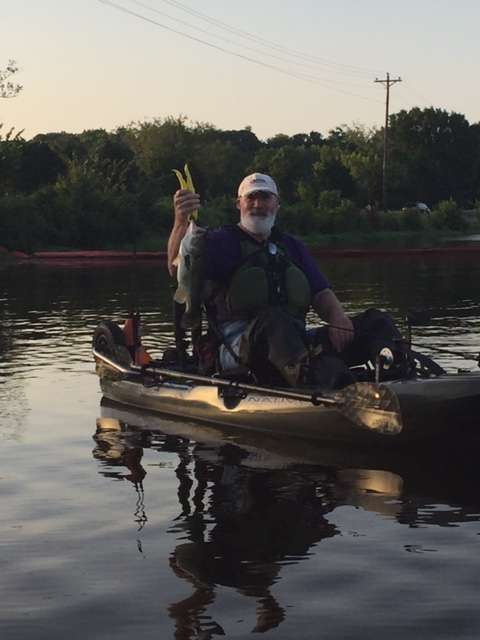
As regards retirement and fishing, one thing I do differently is I fish either early or late, pass on the middle of hot summer days. Not so many years ago, I did long days on the water and I'd always stay out about an hour longer than I should have hitting into the hot afternoon Texas sun, then have another 30 minutes or longer loading my kayak in the heat of the day on hot asphalt. I'd go home exhausted. So, what I do now is wait until around 6 PM and fish into the loss of light and then go home. 2 or 2.5 hours, but much more frequently than before where I'd squeeze all of my fishing into a single weekend day typically. I now often fish up to five times a week. And, I fish much more "minimalist" nowadays. I like going out with either one or two rods in my kayak. A 3.66 lbs. bass caught about a week or so ago . . . fishing late afternoon. See pic below. Oh! And, my wife and I just completed a 4400 mile road trip from Texas (home), to NM, to AZ, to UT, Idaho, Montana, Carlsbad Caverns, Roswell UFOs, Gila Indian caves, Yellowstone, the Grand Canyon, the Grand Tetons, various locations in Colorado. Gosh, I love road trips!!! If you are retired and have the time to get on the road, the western states are a fabulous destination! Brad
-
I'll be 67 in a few weeks and your OP reminded me of what was a popular "bait" when I was a kid with a cane pole or a Zebco reel fishing for bluegills in Texas stock tanks: a sliver of pork rind. You can buy a little piece from a butcher, people use it to flavor soups and stews. You won't need much and it can be frozen between fishing days. Thawed out, use a razor blade to slice off the appropriate size for your hook. You may need a tiny needle to make a pilot hole in the rind then run your hook through it. It can be tough to get the hook through it, like pushing through leather. Some rind, some fat is best. Forget about EVER getting your hook back out. You won't be able to and neither will a fish. You'll have to cut the hook off at the end of the day. Ha! Brad
-
Jay, I noticed that in your statement of the original problem that it occurred at a Uni junction knot, leader to mainline, and not as it had in the past up at the terminal knot. What came to mind for me immediately is in a Uni junction knot with its two tied sides, braid cinches down and digs into and holds fluorocarbon very well, so one side of a leader knot is strong. But, the other, the fluorocarbon side of a junction knot, does not bite down into braid. I wonder if that might be the issue? If you take, for example, an Alberto/Albright sort of junction knot, it is best tied with the fluorocarbon in a loop emulating a hook eye, the braid making the wraps and cinched down and tightly so into the former. If one tied an Alberto/Albright the other way, making a loop with the braid and then wrapping the fluorocarbon around it, the fluoro does a damned poor job preventing the braid from slipping out. This, no doubt, is an effect related more related to certain sized line pairs and there could be cases where it is less of an issue. In any circumstance where the fluoro's line diameter is > than the braid, it'd seem to exacerbate the issue. I'd have to go back to the OP and see if you mention line sizes, whether you might have been tying new sizes together that differed from those used in the past. No, by the way, to it having anything to do with sunlight or moisture. And, very unlikely it has to do with bad line if you are using a major brand. Brad
-
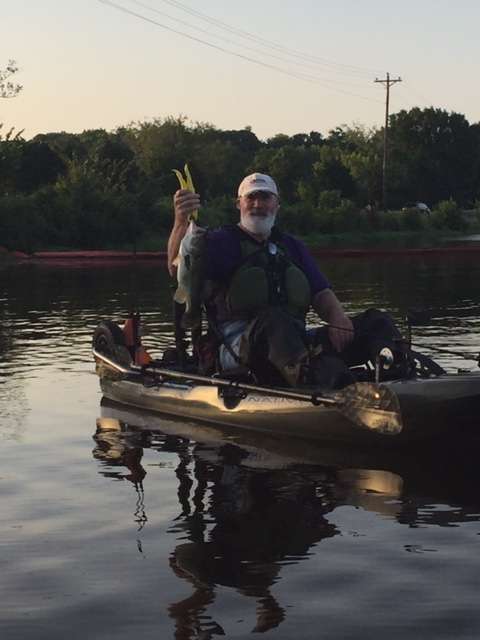
In the little pic below, I'm holding a nice bass, 3.67 lbs., and if you look carefully my little rod is lying flat, so short it is hardly visible. It's a 5' 6" St. Croix spinning rod and I had no other with me that afternoon. Well, another favorite is my 5'6" casting rod, also a St. Croix with a pistol grip. Though the rod is short, it allows the whole arm to swing so I suppose in a manner of speaking it adds the length of my arm to the casting lever length. It is a different casting motion from a 7 footer with a long butt end, that is for sure. And, it casts surprisingly far. Watch the video of Hank Parker using a short casting rod in some of his TV shows/ videos. He catches a lot of bass, and big bass with them, too. I think he caught a 7+ pounder on his TV program not long ago. One last point. Since we can float up so close to our intended targets, most of us hardly ever make "Tarzan" long casts out of kayaks anyway. I love not having a long butt end of a rod stuck in my tummy. Brad
-
I can't recall if I mentioned that my source for info back when I bought mine in 2015 was Carl on KeepinItReelFishing. I've attached his old review below. Under the comment section, you can see a response or two from me to him. Once you get your canoe, you might refer to Carl's video for some rigging ideas. He chose a canoe knowing that he'd often need to port it to the water for some distance to the sorts of lakes he fishes. Too, if you watch his various videos, Carl is often fishing tandem with a buddy and they both stand at the same time. Worth a viewing, for sure. Brad https://www.youtube.com/watch?v=JsPLpOHgCoU&t=1076s
-
Ouch! Word, too, elsewhere that Ott Defoe had heart surgery. Perhaps, this has been discussed? Brad
-
Go over to YouTube and check out fishing legend, Roland Martin, where he has published a video about fishing out of a jon boat with some of the very adaptations, cheap ones, that you could adopt. Check out what he uses for a rudder. So very cool to see a legendary angler fishing from the bank, fishing out of jon boats, etc. So worth a viewing just for this! Brad
-
I think that is what I recall, too, for the most recent KBF Nationals. Not far from my home, either! But, I guess that the great preponderance of entrants were pedalers and likely plenty with power assists, too. I'd expect more in the top ten. But, not all. I think Greg Blanchard finished high, maybe 3rd. He used pedals to fish around, then power to move from spot to spot as I recall from his videos. Anyway, not certain what percentage were paddlers. *** I sure wish they'd add a column showing the make and model. Or, just paddle/pedal/power would be okay.