Brad Reid
Members
-
Joined
-
Last visited
Everything posted by Brad Reid
-
Assuming you can get to these various sites safely, this is critically important, you can: 1) fish in coves on the side least affected by wind (best if the wind is coming in perpendicular to a cove's length; 2) fish on points/secondary points where there is usually one side much less affected by wind and waves; 3) same for rivers if the wind is blowing over the water perpendicular to it; 4) fish on the leeward side of any islands, even very small ones ( the waves cut around each side); 5) fish tucked up tightly to a dam sort of in the rip rap if the wind is coming from the direction over the dam; 6) some man-made structures provide relief: one side of a bridge over the other, or fish under the elevated roads that connect to bridges. One side is often dead still, the other getting beat to heck by wind and waves; 7) assuming the wind isn't too terribly bad, pulling up on top of a mass of floating vegetation works great. It "arrests" wave action; and, finally, getting to a destination like a gravel or sand bank or a shoreline unavailable to bank anglers, getting out of your kayak and fishing on your feet. Anyway, things I do at times here in windy Texas. Brad
-
It is a great topic, deserves much more attention. I don't fish tournaments and I own all three propulsion types: paddle, pedal, and power. I mention this because it informs my opinion on advantages, one over the other from actual experience. How could someone know if they haven't fished out of all three? This, and I watch the results and paddling vs. pedaling is closer than most think. Everybody assumes the Hobie PA 14 with 20 rods wins the tournaments. Hmm? Not so much at least not here in Texas. But, in my opinion, power should NEVER be allowed unless contested in a separate class. I've seen the same slippery slope hurt so many other sports where "gear" advancements favor one competitor over another. We all understand that the tiny motors pro bike racers have been secretly using aren't fair. At least they hide them to the extent they can, or their handlers do while they are getting their blood infusions and steroid shots. Ha! What about, someone might ask, the modern fish finders where you can almost see the color of the eyes of bass, Brad? Hmm, I struggle with this and no doubt it is another area where different equipment might diminish fair competition. We are close to the point where a state of the art kayak will command the price of a well-known aluminum bass boat. We might have passed it already, not certain. Finally, I watched third place finisher at the Nationals, Greg Blanchard's 3 part series. Excellent videos. Greg uses power to get to a beginning fishing destination, move from one place to another only if it is far apart, and I suppose to get back home the end. My general impression? Power didn't help Greg do much other than save some calories. One last point. If "power" begins to dominate the results, tourny directors could even it up a bit by building in a time penalty. Kayaks competing under power would have a, say, one hour earlier check-in, or one hour later beginning. I'd love to analyze the data from multiple events to see if we even have a statistically significant issue here. Brad
-
Good point, Tom. The Perry bass could be partly apocryphal . . . like some of the Georgia strrongman, Paul Anderson's lifting records. But, to what extent will we recognize, with the same zeal, any new WR largemouth bass if they are of the genetically altered, forced-fed sort? I need to revisit that video of the Kurita bass but it seemed . . . contrived. We have a private lake here in Texas chock full of giant bass, too. They are genetically predisposed to great size, forced fed like sumo wrestlers. For me, any record produced in this manner, while super impressive, just won't be the same as catching a monster wild bass. Another topic for us to opine on? Brad
-
Many good observations already. I'd only add whereas fish will only "sometimes" hit fast moving presentations, they will almost "always" hit something slow or dead in the water. So, for example, those energetic schooling teen aged LMBs, chock full of energy and actively chasing a school of shad darting around at high speed trying to survive? The bass are keyed in to react very fast, too, but they will also see and be attracted to what appears to be a wounded or shad in shock just sort of floating in the water. So, they'll bite a fast presentation at those times when they are all wired up, but they'll bite a slow one, too. On worm fishing? For me, if I cast a T-Rig, a weightless worm, a drop shot and so on, if the fish blast it soon after it makes contact with the water, I know they are feeding aggressively higher in the water column, else chasing it down and biting it fast as it makes bottom contact. In these cases, I don't want to soak my worm, I understand the action is focused differently so I want to re-create that action and that means more casts quicker. On other days when I am not getting bites quickly, this is when I really slow down, give fish an opportunity to snoop around, eyeball the worm. You know, when it takes them longer to commit. Brad
-
From where I am seated now, I am 180 feet from Lake Athens, 20 minutes to Lake Palestine, 20 to Purtis Creek, 15 to the Neches River and also close to the Trinity River, 30 to Cedar Creek, then within an hour of Richland Chambers, Fairfield, Tyler lakes, Lake Fork, Tawakoni. I'm getting writer's cramp and I could go on listing literally dozens of others. One of the densest collection of fisheries in the country, not the only certainly, but one of the best! Brad
-
Gosh, I think I'd consider the new Native 12XC for almost the same money. It has a retractable skeg, chain anchor chutes, under-seat storage, high/low seat, and it's 36.5" wide making for a very stable platform. I also like the horizontal rod storage which is very nice for river fishing near banks with trees overhead. A whole lot to love here. It is heavy, no doubt, but other than that, it just seems like it has a ton of features for the places you describe fishing.

-
A-Jay and Lionheart have it dialed in pretty well. A-Jay's comment about 20 lbs. braid seems spot on, maybe just a bit on the thin side. Lionheart suggesting 30 to 50 sounds great as would be A-Jay's 30 to 40 regarding handling. I'd only add that whatever size equivalency you'd use to match up against the same size braid, so let's say comparing 40 lbs. braid to 10 lbs. "anything else" assuming the same diameters? The braid will cast better, behave better on the reel, at least this has been my experience. You can always tie on a leader if necessary. Brad
-
Maybe I missed it . . . but not a single mention of Texas? Hmm? 1) no state income tax and a booming economy; 2) more lakes and rivers than most other states owing to our geographic size, population; 3) close access to coastal fishing opportunities, to Mexico's bass fisheries; 4) not as many lakes as Minnesota . . . but it also doesn't get down to -60 degrees (ha!); 5) through 100) . . . I'll spare you guys a list that keeps on giving! Homer . . . I mean Brad.
-
There is absolutely NO relationship between atmospheric pressure readings and fishing, shallow or deep, salt or fresh, or any other. As a tool to predict weather? Yes, because we do know that it signals weather changes and various sorts of weather conditions do affect fishing. But, fish simply move around to a greater degree, up and down in the water column, just going about their day-to-day activities where it creates pressures (when they swim down) that far, far exceed any added pressure from the atmosphere pushing down on water. 29.5 inHg = 33.41 feet depth; 30.5 inHg = 34.54 ft. That's a big move in pressure, usually more than a fish would experience over days and days, even weeks. Yet, all a fish would have to do is move 1.13 feet, up or down, in the water column to completely offset air pressing down harder, or less hard, on the water's surface. I won't belabor the point here but there are even more offsetting factors making it even less likely a fish feels anything . . . at all. (water being largely incompressible being one). To think otherwise, even in the absence of any proof (there is none), is to believe that a fish can discern the difference between the supposed pressure of the atmosphere pressing down or lifting up on water, this, compared to the pressure variances a fish experiences just chasing a minnow around. How? It's just one of these silly ideas that will never go away; we'll be debating this one in 2119. But, to the extent one uses it to predict the weather, great! Better option? Watch the weather report on TV or from some internet source. It'll give you a forecast of sunny or cloudy, windy or dead air, temps, direction of the wind, rain, etc. Those ARE factors that affect how we fish. Brad
-
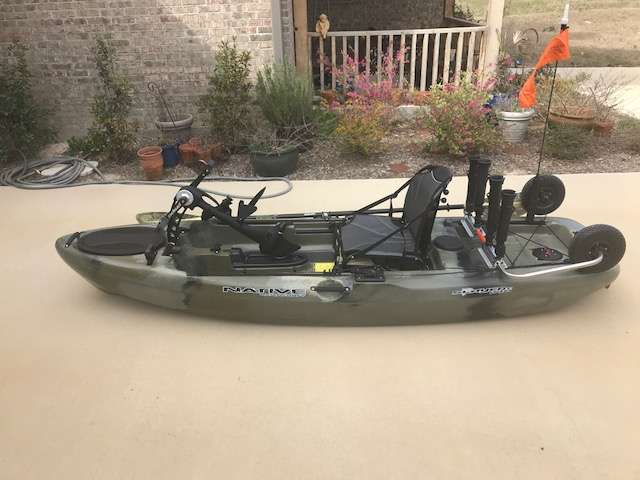
For my Propel 10, I feel absolutely no disadvantage regarding actual "fishing" speed. Most of us move around at a very predictable 2.5 mph give or take anyway. When I fish along with a PA 14, we move along at the same speed. But, the PA 14 could cross a big lake faster, has more top end speed. It's just not an asset used all that often the way I fish, where I fish. This is my 10 footer with 4 rocket launchers for my rods, underseat storage for 2 3600s, Boonedox Landing Gear . . . which means I am rolling onto the lake while so many guys with giant kayaks are still back in their driveways. With this kayak, I can literally fish on a whim which I do often. I just get home or end my day, think to myself that I guess I want to fish for a while, it takes no time to put this on my truck and off I go. This is the great advantage of a shorter and lighter kayak that you can get it on the water so much easier, so much quicker. Brad
-
Expander work will do a great job for most people, certainly those who want or need to workout at home. *** Just a note that my younger brother set 3 national records: the ******, clean & jerk, and total . . . last week at the 2019 Masters Nationals Weightlifting Championships. He'll be off next to Vancouver, I believe that is where it is, for the world meet next.
-
Some of that, for sure, with some of the retrieval rates of the high ratio casting reels and less so with spinning reels. But, no, what I mean is I think if you watch a power angler, say KVD, that he can make more casts per unit of time than someone with a spinning reel using it for power presentations. It just appears more seamless to me, casting over spinning prep for a subsequent cast. Heck, there might be someone out there just as fast with spinning gear, but we tend to seem a bit slower. Brad
-
I'm a kayak/canoe angler. The most I'd ever consider taking out would be 4 and when I have done this, I've rarely used them all. I usually know enough ahead of time about my day's plan that two rods get the job done. More, certainly, if I were in a tournament. From a kayak, I'd think a dozen rods would be self-defeating for me, might cause me to give up too soon, fish too fast, move too often. in other words, it might neutralize the very advantages a kayak angler often has over big boat anglers. I could see going out with two, then an ultralight rod, and a large swimbait rod . . . if I wanted to spend some time doing one or the other of those and not spend all day targeting just bass. Brad
-
Good personal observations/preferences. I'd only add that if you are fishing out of a kayak, I believe this to be the fastest growing segment of fishing, you'll likely lean a bit toward spinning gear as we tend to fish shallower, tend to use more finesse presentations. There are exceptions, of course. Some guy standing high on the deck of a bass boat making casts with power presentations in mind? Just a guess that casting gear can make 100 casts for every 75 or so with spinning gear. Other factors, for sure, play roles, but that'd be the big difference for a competitive angler. Covering more water where speed is a big factor. Brad
-
KVD is an interesting subject. I'm sure since he is such a great power angler he's blending casting length with accuracy. I doubt he is leaning into casts all that much just for the sake of distance. But, what KVD can do is make a ton of casts to cover a ton of water. He is angling's version of a bump stock. Even as he gets a bit older, he can sure cover a ton of water with rapid casting. And, when new rules allowed for longer rods? My mind went immediately to pro anglers like KVD thinking that on lakes where it'd be advantageous fishing open water, more power fishing oriented, that they'd adopt the longer rods for certain presentations. Not sure I have seen this yet. Could be they are still trying to "dial in" the proper rod, getting the metrics all worked out. Additional rod length would have to be accompanied by the right power and action, matched to the right lure weights, dial in for differences setting a hook on a bass that is 75 yards away from the angler. Decisions, decisions. Does anyone know if we've seen any pro bass anglers adopt anything close to the new 10 footers now allowed by B.A.S.S. beginning in 2017? Brad
-
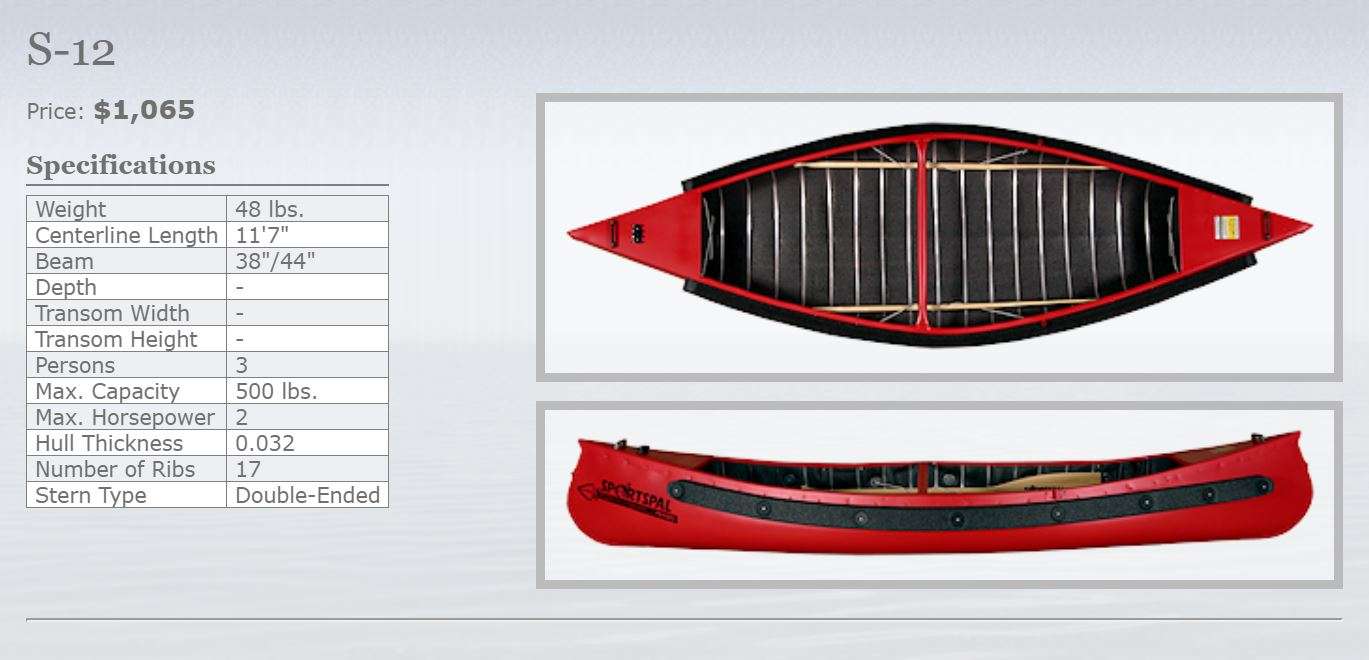
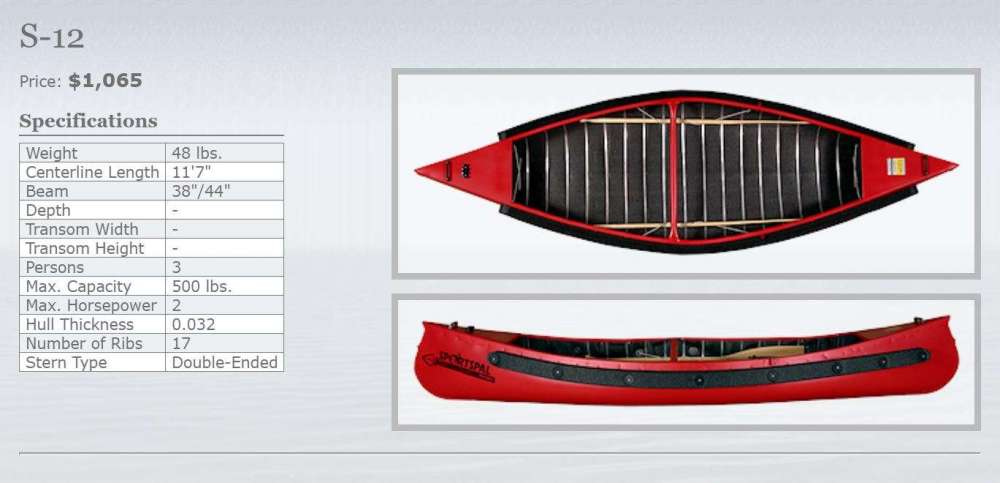
I'd recommend a Meyers Sportspal of any length if you want to maximize stability and fishing pleasure. My S-15 would be too heavy for a long carry. So, I'd personally downsize to an S-12 that weighs around 48 lbs. if I were portaging, making treks to get to launch sites. With a Meyers in this size, you'd have something that you could walk with on a shoulder, or overhead, and could stand in to fish from. Brad Oh! I should have added that the Meyers are thicker skinned aluminum than the gauge used on Radisson canoes. I have had mine for years, nary a crease or a dent on it. And, I should have also noted that Old Town has a new canoe out that is very light, looks like a decent fishing platform. Not certain of its price, nor are any likely available on the used market yet. Brad
-
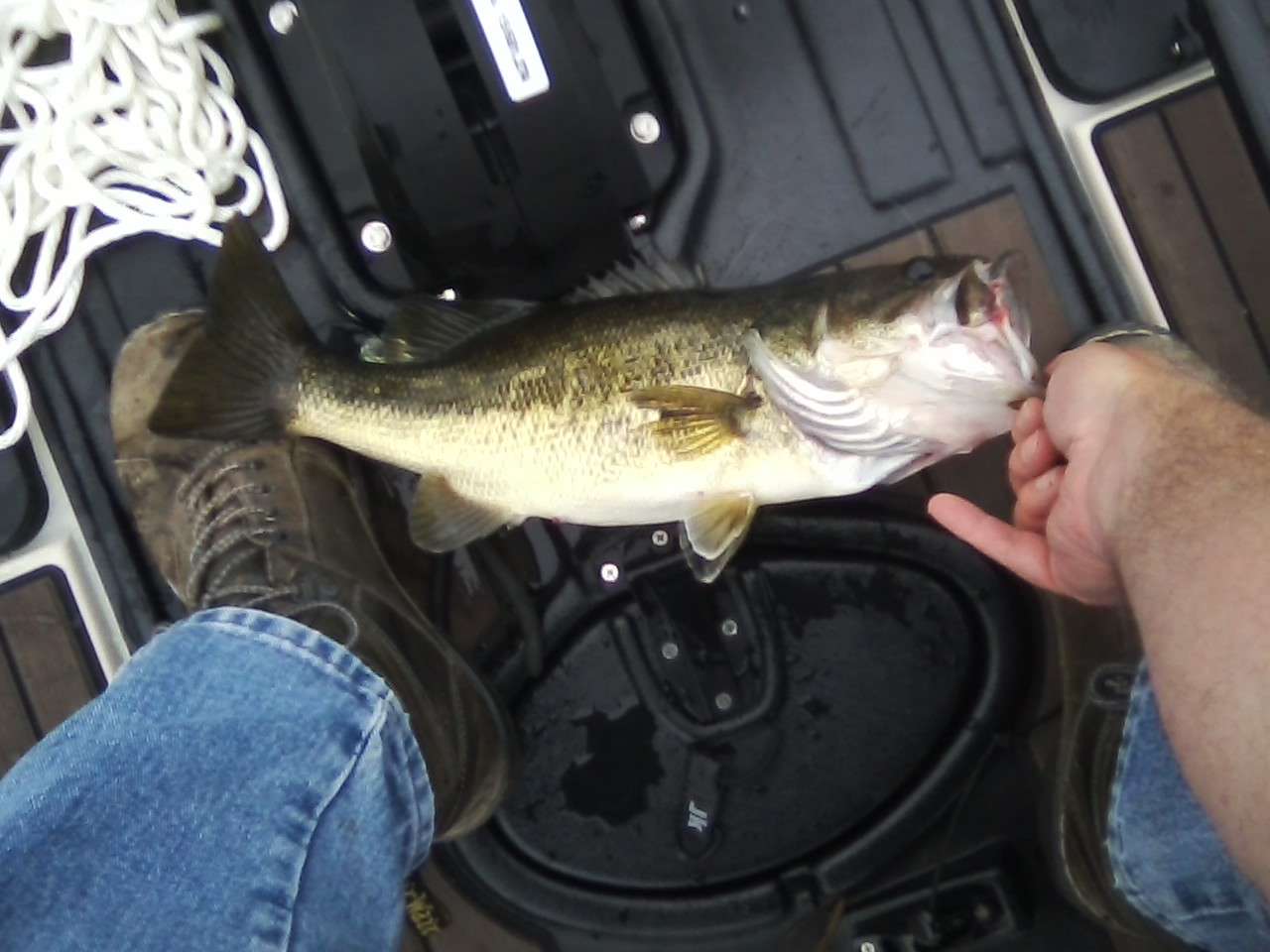
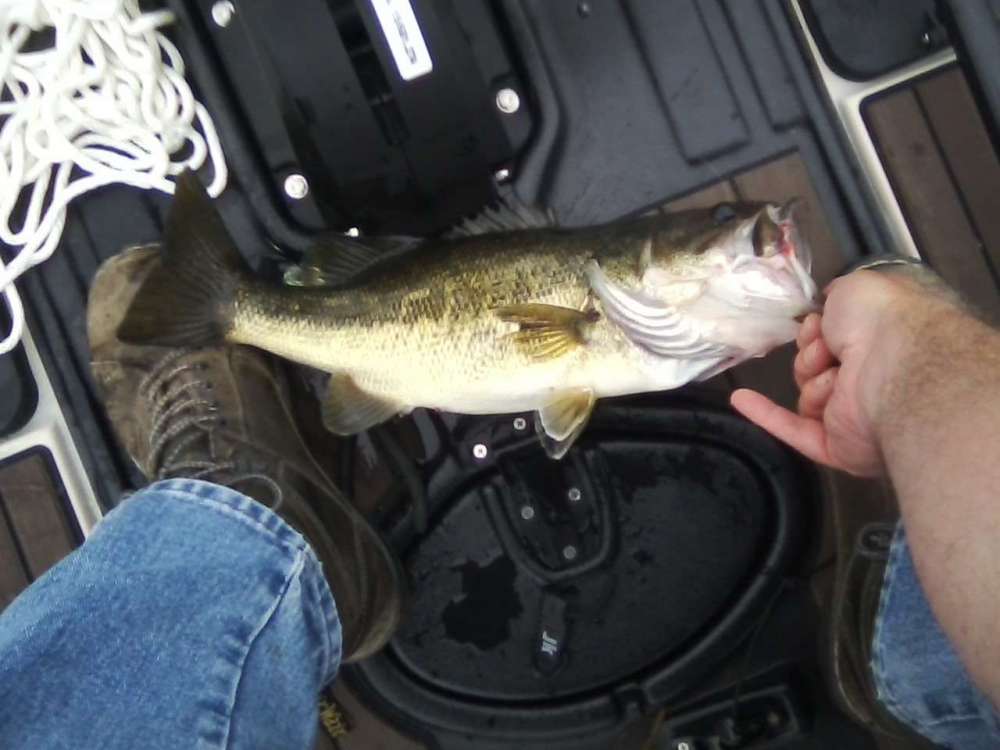
Kicker, I can imagine that working very well! Not certain about the steady retrieve . . . I'd try them all.. I was out again tonight and just before I got home, I hooked into a really nice bass. Odd that it bit me on the weightless Keitech being dragged incredibly slowly across the bottom. This really slow is new for me. I had read that the guys who love fishing the large swimbaits, that those that are fished off the bottom are moved incredibly slow. I thought, what the heck, let me try it with a 4" Shad Impact. It seems to work, at least for now. Photo does this bass no justice but you can see it next to my boot. Brad
-
For another version of adding "the little bit of weight," I'd recommend an Owner 3/0 underspin. It is the right size for the 4" Keitechs, and I'd actually use a paddle tail here, not the Shad Impact, to get that really nice and proper action on a retrieval. Else, for fishing slower, a tiny weight either at the nose or even pinched on the line a few feet up would work great. Isn't that odd that for most of us, we look back, see that we were having success with something, then for some strange reason, stop using it. It is the angler's version of banging our heads against a wall. Ha! Brad
-
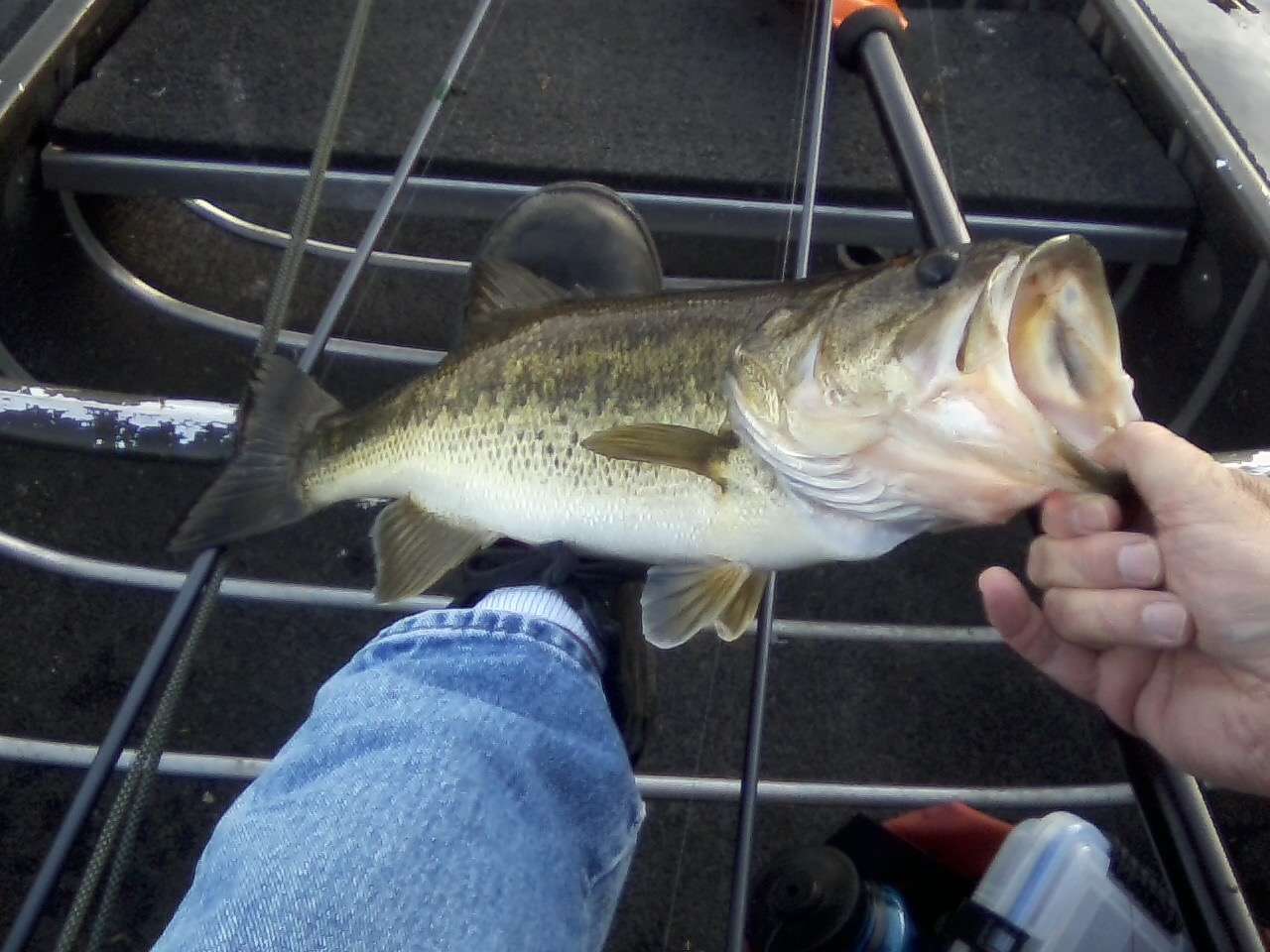
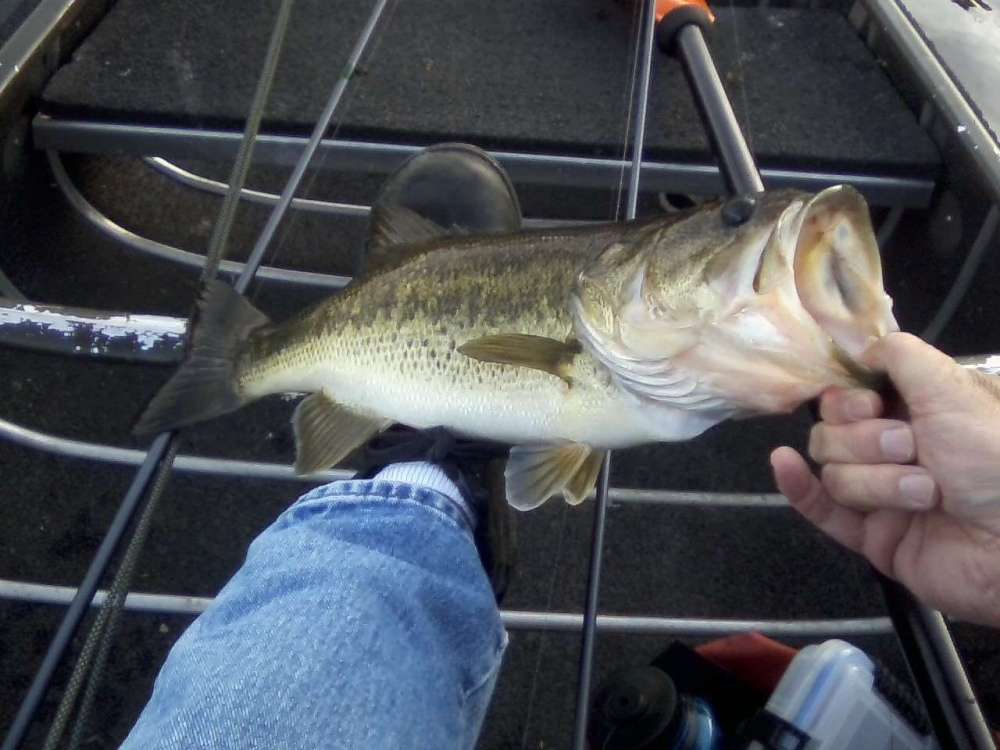
I "get" we aren't specifically talking about "inline" spinner baits, but I was having so much luck catching big bass on a #2 Mepps Plain Aglia that I ordered a bunch of them in #5. Yesterday around 6 PM, on my first cast while sitting near a dock talking to a neighbor and showing him how the new casting reel worked, I caught this one. Likely in the high 4s to 5 pounds range give or take. Very long fish! So, I'd recommend an old reliable standby, a Mepps inline spinner in a #5. It is hefty enough to easily throw with a casting reel, a good add for anyone's tackle box. No trailer required . . . the fish seem to target the spinning blade and it is more compact than others. Brad
-
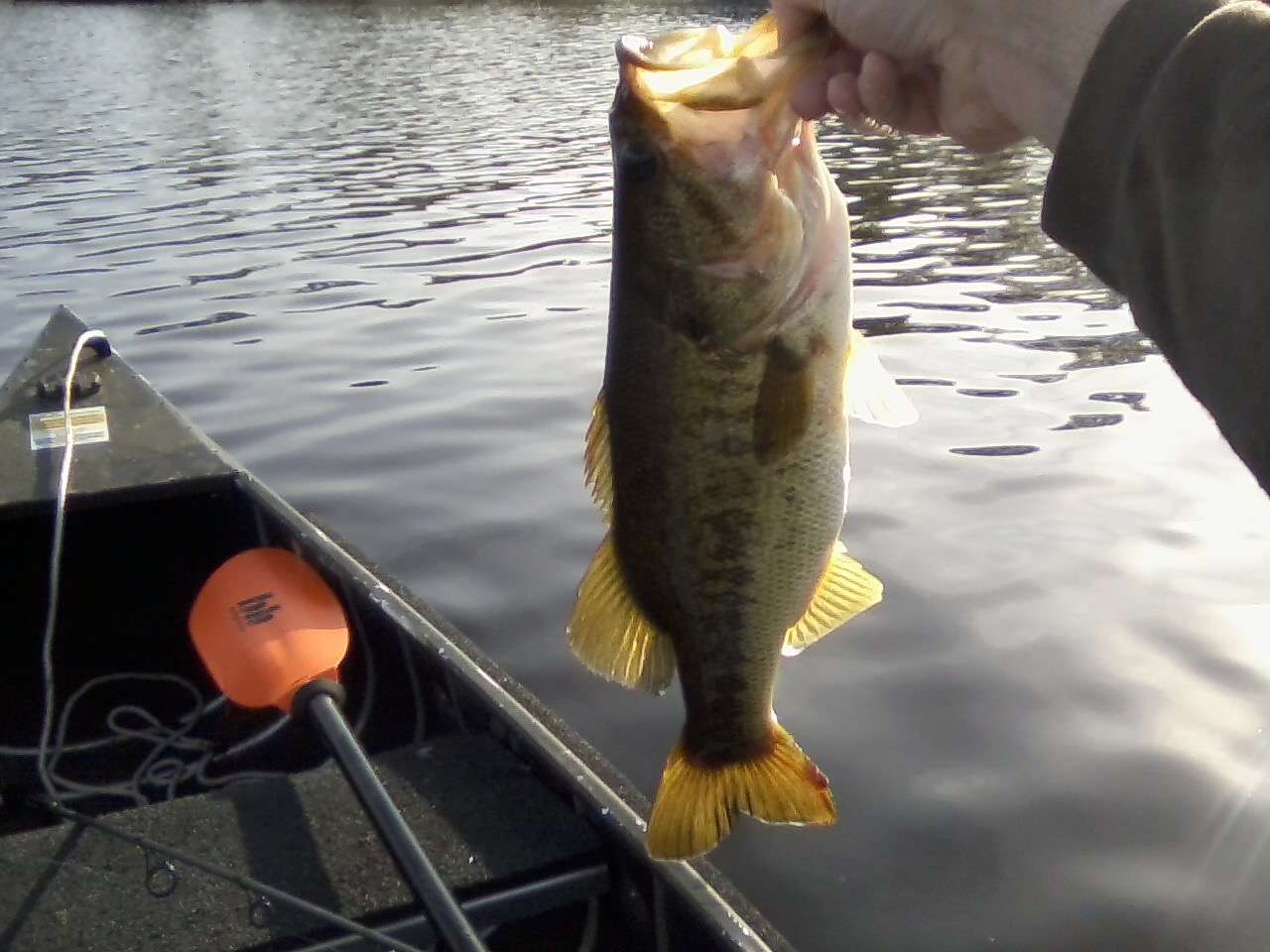
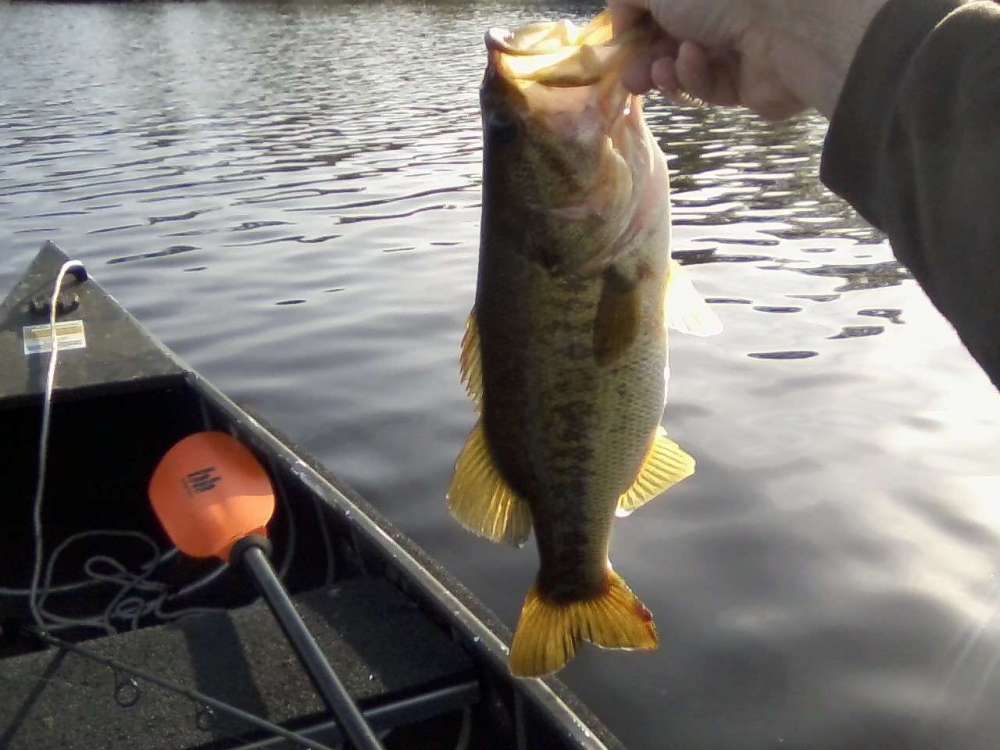
A few days off the water for me with a slight head cold, but so nice yesterday, out I went in my Sportspal canoe. Heaven! As usual, and all year long, the weightless Keitech Shad Impact produced. It is just one of those presentations that has particular aspects to it that makes it very versatile. Fish bite it on the drop, they bite it on jerky retrievals, smooth retrievals, off the bottom, in all depths in the water column. It can be fished in the heaviest of pads and over gunky vegetation, open water, and weighted in various ways to achieve desired water depths. If there is any version of its presentation range I think is most often overlooked, it is fishing it incredibly slow. Last late afternoon, I got bit on one of my first casts by pulling it along the bottom in my cove's creek channel where I was reeling in at about one handle revolution per 3 seconds. For some strange reason, I just decided to treat it the way some anglers present large swimbaits . . . pulled back incredibly slow on the bottom. It worked!!! Cheers! Brad
-
1) You set your kayak stern at 6:00 on an imaginary clock face, then the bow end at 12:00. 2) Once you know where you want the C-Tug to be placed under your hull, and you'll develop a preference for this, you set it off to the side a few feet at around that position, say 8:00 on the imaginary clock face, and you "aim" it at 12:00. Go ahead and splay out your C-Tug straps to each side. 3) You then lift your kayak up from its stern end and place or swing it over the C-Tug. The C-Tug has a little kickstand to hold it in place while you position your kayak on it. 4) Once your kayak is "over" your wheels, snug up your straps. This is endlessly easier than lifting a kayak with one hand and trying to push a C-Tug under it with any accuracy. Or, to have to empty a kayak and turn it on its side to attach something that way. A few practice sessions and you'll master the technique. Works great. Saw it on YouTube. Cheers! Brad Oops! It appears I attached my response to the wrong post. You'll see it down below! Brad
-
I really love both an ML or a M power in spinning rods from St. Croix. I'd have to go look but one that'd sort of be a split between the two would be an M power in a moderate action. You'd have the greater stiffness of M over ML for fighting fish; and, the fact that its moderate action would flex the rod more, thus shorten the rod's lifting point (lever), you'd have more power than a faster action (lifting point farther away from the hands). To this, a moderate action M power/Mod action would cast a bit farther with its additional springiness so it might give you better casting with the heavier sorts of presentations on your list, still retain the ability to cast the lighter ones, too. I guess the other thing is a moderate action loads up well for those of us using spinning gear as intended: fighting fish with the rod more than the reel. Brad
-
For a non-permanent sort of cart, this'd be my choice. And, it is especially nice that the cart comes apart for easy storage. So, if you are on a river and camping out, you can disassemble it, store it in a decent sized hatch on most kayaks. If you get one, there's a "trick" for slipping your C-Tug under a large kayak and fastening it tightly with the least fuss. Brad
-
A great little bait but I prefer the Keitech Shad Impact without the paddle tail. It is essentially a soft jerk bait. I get a lot of mileage out of mine by using 3/0 60 degree bend jig hooks with a medium sized Owner CPS to attach to the Keitech's nose, then T-Rig it from there where I keep the hook tip down in that groove on the dorsal side of the bait. I often get through a whole trip just using one Shad Impact. It is essentially weedless, can and should be fished all over the water column until you figure out where the bass are located. I often get hit on the drop, at other times down on the bottom like a T-Rigged worm. It has been my number 1 presentation for about a year now, all seasons, very effective. Fish it slow generally. Everything Keitech makes is great. Brad
-
There are several photos/comments around the Internet regarding PDLs and Boonedox Landing Gear installations. Take a look at these for your very best alternative. Not cheap, but if you can imagine pulling up to a ramp, PDL in a truck bed, then dropping two legs/wheels, and rolling directly into the water, you get an idea of what a time and "back" saver this is. I have this on a Native Propel 10 and it is great. Brad