
bulldog1935
Super User
-
Joined
-
Last visited
Everything posted by bulldog1935
-
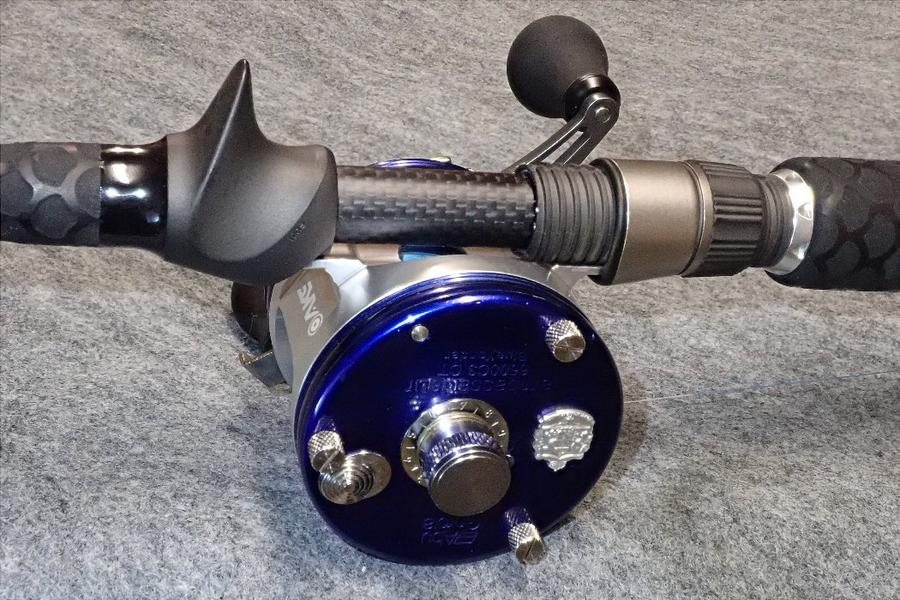
75 mm is usually the largest L3 on single reel seats. You may need a split reel seat. How about a measurement on your foot length for us? This isn't a recommendation, but my modified Abu CT's with barstock frames have 78 mm feet and needed a split seat on custom rod. Spinning surf rods usually come with split seats, big L3 gap, and they make them in varied lengths (down to 7') and line/lure tapers. My RH Custom just above is 8' 1-pc, 1/4 to 1 oz lures. From a Tackle Direct search with your limits - in stock Tsunami Sapphire SASSXT 802MH 7' MM 10-20-lb 1/2-3 oz Tica TC2 UEHA421301S 7' MF 6-17-lb 1/2-2 oz Star Stellar 0151 8' 12-20 MH 3/4-2oz Ugly Stik Bigwater USBWSF1025S802 8' MM 10-25 lb 3/4-3 oz I'll pm you the search link and you may see more
-
snowed all day heavy in San Antonio yesterday - even though both air and ground temps were above freezing - it came down fast enough it accumulated before it could melt. I had a dozen tamales in the steamer and grazed on them through the day. Clear and bright today.
-
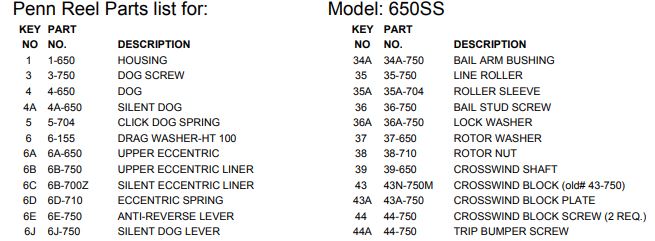
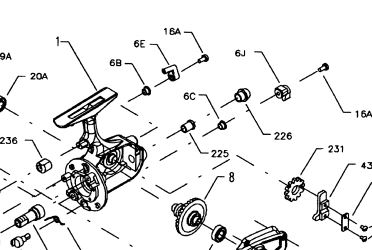
yes, it has separate anti-reverse and silent-dog levers I don't think it's for the drag, but for winding the reel. Wind it both ways - one way should be silent, even with anti-reverse engaged.
-
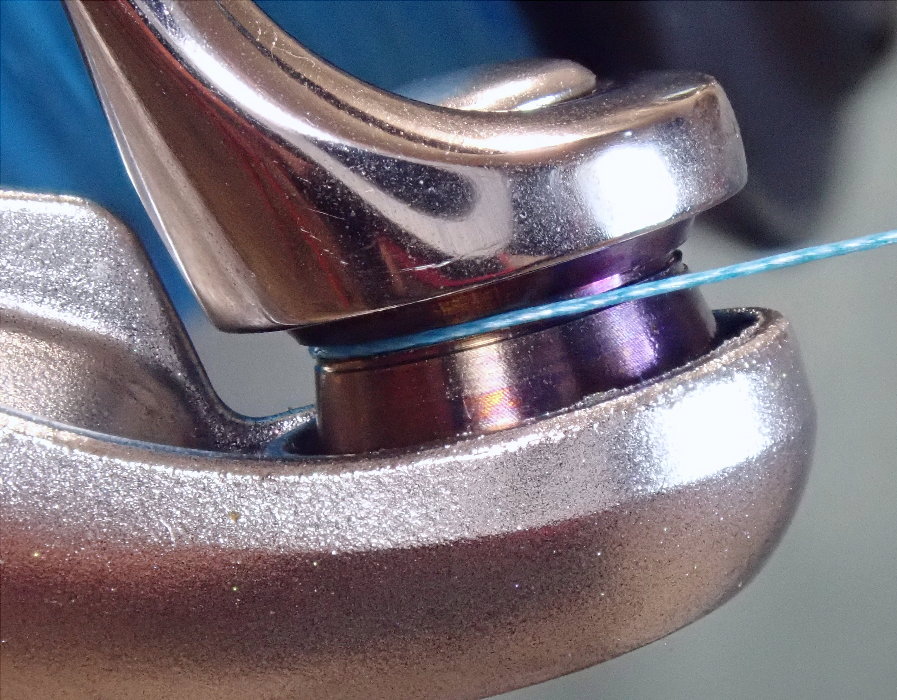
I've seen horrific line twist (every trip) on my buddy's old Penn with 40-lb PowerPro, and moderate on his very new benchmade IRTs. Though I did talk him into 832 on his new reels. (one trip last fall, his IRT shut him down for the day). In a few years of braid-only on salt spinning reels from UL to MH, I've never experienced line twist - nada. That's with X8, thin, dense braids from Florida Fishing Products and YGK (and some 832, 15- down to 6-lb). I'm going to rack up no line twist to having no sealed line rollers. I hate them in the salt and apparently they're a factor in braid. My Tica's have TiN-treated BB rollers without seals. On all my Shimano's, first thing I do is replace the chromed-brass and sealed single-BB rollers with titanium 2-BB MTCW line rollers (no seals). Future maintenance will just be the BBs. (What's lithium grease doing in Shimano line rollers, anyway - rhetorical.) These are the same line rollers on Stradic to Stella MTCW rollers were designed just for light braid (<PE#2) and recommended for salt (doesn't keep them from working better in freshwater) The no-seal line rollers spin like a bicycle wheel. I know for sure this is Florida Fishing Products braid 20-lb, 0.14 mm. (20-lb 832 is 0.23 mm, and their 15-lb is 0.21)
-
Manual bail is everything fishing braid on spinning tackle. Never use crank-auto-bail-closure. I hope this thing is on. Keep that spare hand close to the spool so you can feather outgoing line with it (kinda like using your thumb on a baitcaster). Close the bail with your free hand, and turn sideways with the rod to take up line slack before you begin retrieve. Never a wind knot no matter what braid you're using. this is a good habit even with mono/fluoro. I only loan fluoro spinning reels, and they still always manage to get the line under the spool.
-
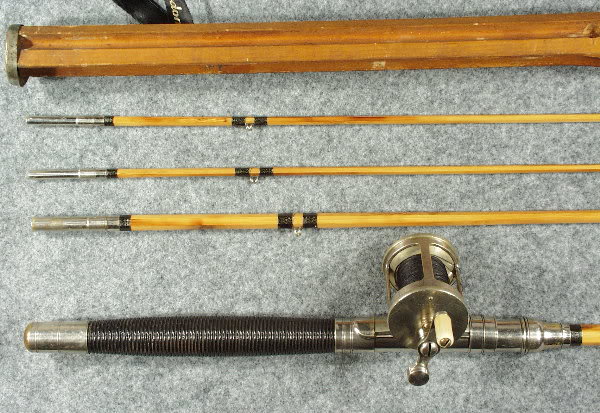
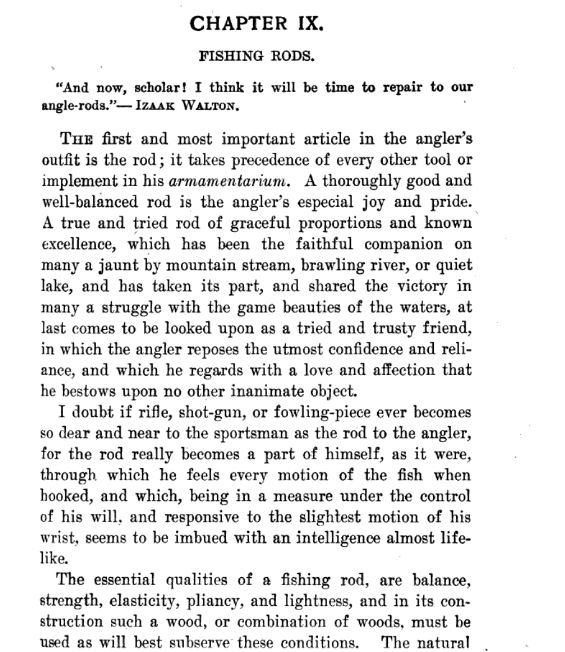
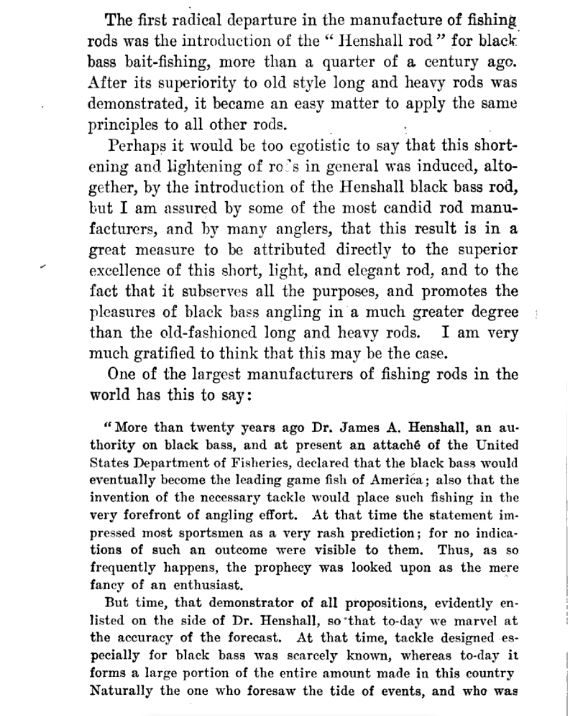
It ain't like it ain't been going on for 4000 years. Judging by stone inscriptions dating back to 2000 BC, fishing rods go back to ancient Egypt, China, Greece, Trinidad and Tobago, Rome and medieval England. Dr. James A Henshall, Book of the Black Bass, 1881 Bluegrass 33 reel and Chubb Henshall bass rod, both from 1910 - Doc's formula for the rod was first published in an 1876 article. some people are feely, others are analytical, and may have both the education and experience to see through the hype -- personally, I've always thought the feely part was creepy. In my case, 40-year career in mechanics of continuous media (this discussion is right up my alley), and my fishing career began a dozen years before that. And if you weren't watching, Forrest Gump never grouched and felt threatened when others understood and he didn't. The title of this forum page isn't fishing, but rodbuilding, and the question is about damage tolerance in rod blanks. Injecting off topic gripe into an intelligent discussion between contributing forum members is a well-demonstrated, though poorly intentioned MO.
-
Specs are more interested in the flash, and will hit the 3/16 oz YoZuri sinking Pins minnow, 2-3/4 inch (70 mm). The Smith and Duo plugs match this weight in a smaller size, but takes some really fine split-ring pliers (#2) to work on them. Reds are more picky about the size. In the winter, if you see a group of reds milling about, and can't turn them with anything, they're probably sipping from balls of glass minnows. A fly rod and small clausers also works. The beauty of these lures, you cast them farther and with less effort.
-
I think every Shimano except old Bantams and new Conquest are 7x4mm handle slot. https://japantackle.com/tuning-parts/handles-casting-reels/shimano.html Handles on this page accept 7mm main shafts, which is employed by all Shimano bait casters 50-400 size, except following reels. 1. Shimano old Bantam reels. Shimano 00/15Conquest 300-400, TE/TE-GT 300-400. They have 8mm shafts. Please pick handles for Daiwa/ABU which accept 8mm shaft, and M8 hooded nut. 2. Calcutta D series 2012- Out side drag model : Please choose specified handles. For 00Conquest 200 and Calcutta 200TE, please add a 0.5mm washer between handle and star drag. If you are not sure if the tuning parts fit to your tackle, please Email Jun Please refer to here as well.
-
Showing some diminutive plugs and spoons modified for imitating winter glass minnows on salt UL rockfish rods. These are 30 to 50 mm, 2.5 to 3.5 g (1/8 oz) - all weighted sinking. They're sold in Japan for freshwater trout, and came with fine-wire bronzed hooks, which I swapped with salty Owner singles and Vanfook stingers.
-
it's actually a fly rod lure
-
Exception for the spinning rod statement. BFS rods are the same idea as Japanese Rockfish rods, which I began fishing in the salt a dozen years ago, and lured my friends into as well - though there's no spinning UL that can cast with them, mostly because of the extra rod length. Showing this older Takamiya rod, because the solid tip and reinforced butt are so apparent. The rod construction gives you the ability to throw uncanny light weight, fish a very wide lure weight range, protect uncanny light line, and turn big fish. They're essentially the same progressive taper as a good dry-fly rod - soft tip, fast mid, stout butt. I'm sure you could build your own from a fly rod blank. Traditional UL spinning rods have a faster tip with all the flex in the mid and butt (para taper) - that taper narrows both the lure weight range and big fish range using traditional UL rods. This rod and my newer versions have landed salt doubles including one double with a 23" snook - 4 lb test. Have been following the Dobyns rod, and looking forward to someone's review. Note the Dobyns Ultra Finesse spinning rods are built the same way. If you check Yamaga Blanks Light Game rods, their published load curves for spinning and bait of the same length are identical. My buddy Alex sight-fishing a 5-lb bass on my XUL rod above
-
You can't change the intrinsic properties of the material of construction. You work with them. No one here is saying one MOC is absolutely better - if they are saying that, they're incorrect. Each MOC has its proper use, and applications where they're better than other MOC. Newer isn't better at everything, and never has been. In N+1 marketing, if they're going to sell you this year's rod, they must first convince you last year's is obsolete. Improper use will break Any rod. My dad had a habit of stepping on all the Falcon rods I bought him - he'd let his rod drop on the deck and go looking for the stringer, or they'd fall out of his horizontal rod rack while he was working with the boat - I didn't mind, it made birthdays and Christmas easy. You get more margin for error using a tougher MOC that's also properly made within its limitations It's exactly correct to say you can get a tougher rod from glass or IM6 - the intrinsic properties require using more material and that makes it heavier. The lightest-weight rod you can possibly make - the least amount of material - uses composite graphite cloth layers for reinforcement. If you want this (done right), you pay for it. Higher modulus graphite has higher strength, greater stiffness (doh), but also has lower toughness - intrinsic to the MOC. Until recently, they never used scrim for structural support, but always had to use it to hold the long fibers in place on the mandrel until they cast the resin. Even in highly sanded and polished rods, you can see ghosts of the scrim. Now they use spiral fabric for both scrim and structural advantage.
-
yes, the knobs will absolutely swap. A longer handle has the effect of slowing the reel down and increasing winding torque. My light reels are going after redfish, so I usually like this, and tune all my reel handles.
-
Shimano A / Daiwa S knobs are common, and easy to swap out. They're all the same up to about 3000/5000 size, then they go to larger Shimano B / Daiwa L. You should be able to swap the handles, ebay might be a place to look for them. But swapping handles between sizes, you'll probably get a different handle pitch (length). You can order parts from Japan (Plat), but before going to that trouble, it's probably much cheaper to find a knob you like and swap that.
-
see, you started something. My 3-g XUL lures and some good braid for a surf reel all heavy sinking, freshwater trout lures, while some have stainless hooks, all have light wire. Will end up replacing the bronze and light wire hooks with good salty hooks, like the spoon, and the 50 mm crankbait on the bottom. Winter is a great time for tinkering tackle - especially the blow that's coming this weekend.
-
It was $600 and $700 fly rods that led the way in pushing modulus on the public. Joe Fisher happily retired his business in 2004 (not quite many decades), after a career supplying rod blanks for Hardy, Sage, Scott, Thomas & Thomas, and Winston. He actually built a rod plant in California, and shipped it to England for Hardy (that was many decades ago). I bought my last Fisher Sterling in 1998, and my buddy bought a couple of the last Presidentials while he still could. (I later picked up another Sterling, Emerald, and Natural on ebay - buys too good to pass.) T&T and Hal Bacon sold the last blue Fisher blanks. The fly rod modulus history is at least part marketing hype (and under-rating line weight to appear fast in Ted Leeson rod reviews), but by the time they got to Graphite IV, the blanks were so harsh and painful to cast, all subsequent graphite in fly rods has reduced modulus and concentrated on dampening. The importance of modulus in a fly rod taper directly relates to rod length. Generally, below 8' length, cane and S-glass make a better rod (for practical purposes, cane and S-glass have the same modulus). E-glass makes the best progressive taper below 7'. Those limitations are all about graphite brittleness - the rod needs enough material to have minimum strength and toughness, and the modulus limits how light that can be. That may change with helical fiber layers and solid-tip. While you can duplicate any 9' graphite taper in cane and glass, it's pointless, because all you gain is thickness and weight. I'll add the Japanese are building some incredible progressive tapers in salty UL Rockfish rods, and they use the same idea in BFS casting rods. This 8'3" Yamaga Blanks rockfish weighs 2-1/2 oz, and casts 1/32 to 3/8 oz. In para tapers, spinning and casting rods, modulus is most related to weight and toughness. Light in hand is always nice, toughness to take repeated abuse. But the reason the highest-grade offshore rods (more $600 and $700 rods) are E-glass and glass-blend, is because of graphite brittleness and improving toughness. Admitted, offshore rod weight doesn't matter except in jigging rods. The way to look at rod taper and modulus is diameter and thickness change. The rod taper is the change in bulk modulus over the rod length. The bulk modulus at any point on the rod is proportional to moment of inertia (defined by diameter and thickness) and the specific modulus (diluted a bit by the resin content). Adding a Fisher ps - Randy Johnson, a former blank-maker in Mound House, currently makes new glass and IM6 blanks duplicating old Fisher - dba Retroglass Fly Rod Company.
-
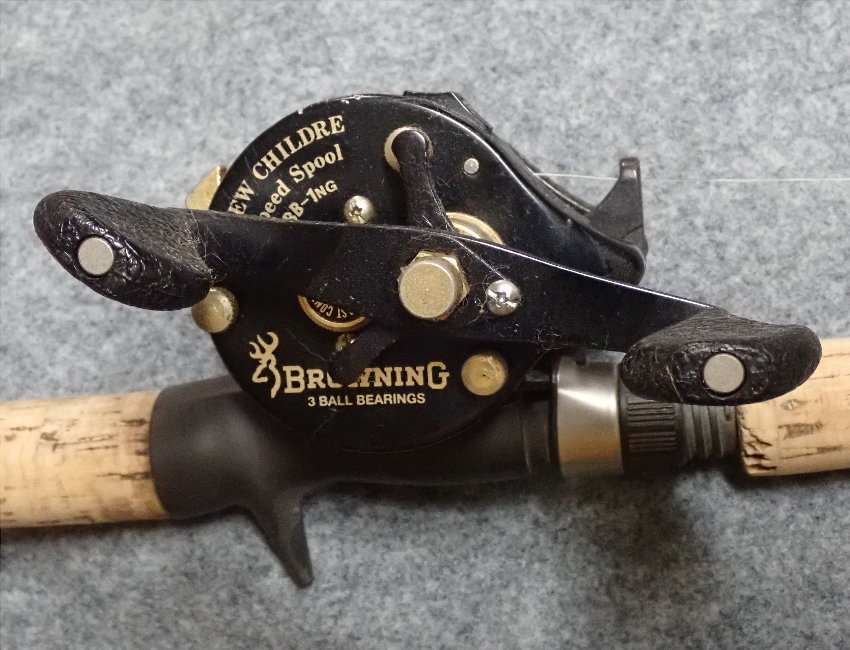
Bought my first baitcaster at 19, '77, Daiwa Millionaire 6H. Had it matched first with a 6' Fenglass Lunkerstik 2000, and later added 7-1/2' Browning Hi-Power for inshore and surf, my first ever graphite rod. By the mid-80s, the Millionaire chromed-brass worm gear (+440 pawl) wore through from surf sand, and Daiwa no longer supported the parts. (I gave the pretty Millionaire to a machinist-instrument-maker buddy, who marveled at its mechanism.) Bought my first Lew's, BB-1NG (still have), with 440 worm gear and zirconia pawl, and never looked back. Had already bought my dad his first Lew's BB-1LM. and kept him stocked in Falcon rods - in fact, before that, gave him his first baitcaster, the Ted Williams version of Millionaire 3H, and bought him a Lew's BB-1NSW Saltwater long before I bought my BB-25SW. For BB-1's, did buy a few anti-reverse dogs and one handle, and when Zebco stopped supporting them, Roy's in Corpus bought the parts inventory. The BB-25SW, just retired a few years ago with my first LFS Super Duty. I still use the BB-1N on Falcon Glass for crankbaits.
-
The problem with most spincast reels, and definitely the Abu 170, is that the line pick-up often won't release the line if the mono is too thin. Zebco makes their own mono with larger diameters than typical for the breaking strength. Abu Bonyl also fit that description. I think he can bank on 12-15-lb mono working well on the reel. Abu rated the reel for 12-lb mono (0.30 mm). If it's sometimes not releasing not releasing the line for you, you can "double-button" - Push the button, grab the line outside the reel, release the button, then push the button again - this time it will cast. and big never mind, I looked up Big Game 10-lb, it's 0.305 mm
-
A good friend had me rebuild his Abu 170 (gratis, of course). When he came by to pick it up, I donated a Browning Silaflex 910. It was meant to be a baitcast rod in the 70s, but the tip was way too soft, and made a perfect combo with his Abumatic. He was casting 1/8 oz 100' that afternoon. I searched "glass casting rod" on ebay, and came up with some similar rods, modest cost, and many in light-use condition. In particular, there was one listing with two Shakespeare rods that looked good, both 5'6", one L, one M. Plug in this number into ebay search to find it: 224292101039 I also checked Eagle Claw, their micro glass is UL - my daughters grew up with those matched with Zebco UL-1. They also offered Crafted Glass in a range of lengths and actions, but unfortunately, most of those options are sold out.
-
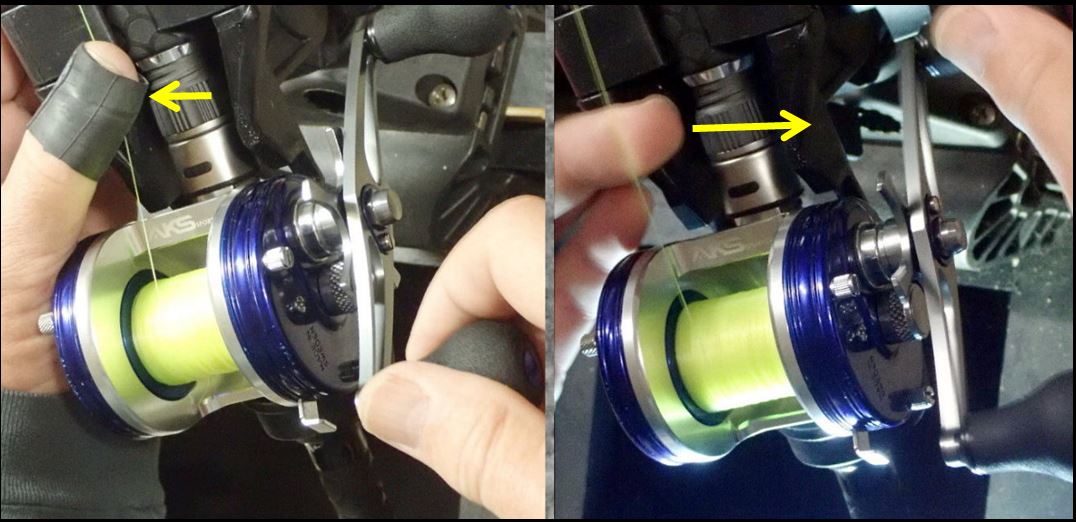
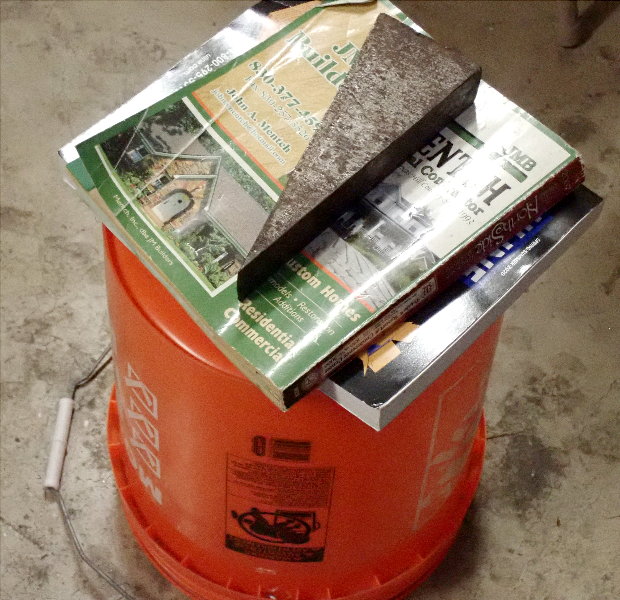
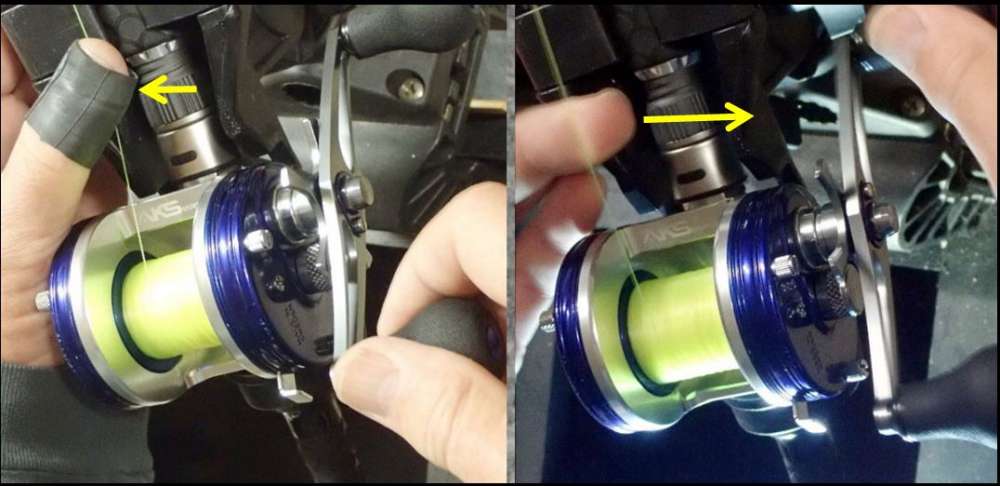
A rubber "thumb glove" is not going to help with a tuna on an antique reel, but would be plenty for Spanish mackerel or big bass. The bicycle inner tube is used by most all tournament casters. Installing line, I always run it through a phone book with weight on top to tension the line (moving the steel wedge around lets me dial the tension). A proper hand level-wind is a tight intimate line lay in one direction across the spool, and a wider, quicker lay across the opposite direction. Pushing down with your thumb helps get the close line lay, and lifting with your index finger gets the wide line lay. That thumb part has a lot of friction of skinny line on your thumb, especially for 300-400 yds. The nicest thing about the phone book line tension, you can walk away and take a break.
-
here's a very simple idea added to the reel seat hood: https://surfcastproshop.com/shop/ols/products/spool-stop-grips These tournament guys are making 300' to 500' casts with big lead (record casters double that). The other choice is put a piece of bicycle inner tube over your thumb, which I use for initially spooling NLW reels (modern reels and modern lines)
-
Pulled this over from the Langley thread, because @Paul Roberts has a very good thumb discussion. Most all salt reels back in Zane Grey's and Hemingway's day had nothing but thumb and clicker to stop fish. Very typical on squidding reels of the day was adding a leather thumb pad to the frame pillar Showing my salty display shelf - three of the reels have this thumb pad, including Pflueger Beacon, Norka (Akron spelled backwards), and Oceanic. The Beacon is direct drive multiplier, the Oceanic freespool, and the Norka freespool LW. The Oceanic also has an aftermarket Williams friction drag handle, which lets you add more by holding the handle still - very comparable to a modern washer disc drag, including the star, but without anti-reverse. Noteworthy, offshore cane rods also had both top and bottom guide sets, allowing you to reverse the rod blade to reverse the fishing set. I have an H-I that matches the Oceanic, but I've never spooled the reel from the connected cuttyhunk spools (far left in my shelf photo). Speaking of displays, Zane Grey's tackle room
-
that's always been acceptable dress at Walmart - and all you need this year is the mask.
-
The only rod I've ever broken is 13Fishing Omen (salty Green) ML, and it was because of a bad high-stick reaction when a redfish snagged my lure at the boat just as I was taking it out of the water - bad high-stick reaction set exactly when the redfish exploded - and a surprise warranty replacement from 13Fishing. The rod is stunning light in hand, Toray graphite, composite construction using layers of helical (spiral) graphite cloth. The purpose of this construction is to use the least amount of material possible, both fiber and resin - to get the thinnest wall for the lightest weight possible. My two MM rods are Legend (S) Glass spinner and Crowder IM6 casting. Both seem indestructible, but St. Croix has done a remarkable job making the Legend Glass lighter in hand than the Crowder IM6. I go way back in fly rods. Joe Kennedy Fisher was famous for making the lightest-weight, fastest taper glass rods. He never went past IM6, but his graphite rods were all as heavy as his glass rods, because he never trusted graphite. So there's some truth to graphite being brittle. At some point, you have to trust the rod maker has designed the rod to do the job - and buy good warranties.
-
looks like a random drip of epoxy to me. You might shine a flashlight on it to see if it is a hollow air bubble in the blank, but I think it's a drip from wrapping and coating the guides.