casts_by_fly
Super User
-
Joined
-
Last visited
Everything posted by casts_by_fly
-
don't trim it and just add a tip top that slides over the top of the remaining blank. Don't worry that the second guide is 2" from it. More important is that you keep as much of the tip section of the blank as you can. That's where all of the action is.
-
If you want options or answers, just tag the couple of us on here that have them. I've been through a couple iterations of setup on mine and I think I'm in a pretty good place for me. Cupholders are nice. They are going to fill up with a lot of water the first time it rains. Its a known thing. If it really bothers you, there is a drain hole modification where you drill a couple holes and connect them with tubing. It then drains the cupholder into the front well. I got the parts a year ago and never did it. Maybe this winter. My solution is a bottle sponge which works for the rod holders also. I get annoyed when the bottoms of my grips come out of them soaked. The dry hatch next to the seat is great. In mine at various points through the year: 10mm wrench for battery connections (always) two single packs of Off bug wipes (always) microfiber cloth for wiping electronics if needed (always) sunscreen (time of year dependent) sunglasses (when I'm fishing at night but start/finish in the day) truck keys (always) superglue 4-5" LED flashlight with adjustable beam I also did a couple little things for the under seat area. I had this small waterproof box that I velcroed to the lid of the hatch. Inside is my boat registration, extra fuses, a small philips screwdriver, a small elastic cord (was a shoe quick lace), my boating license, and maybe a few other things to keep dry but that I shouldn't need. The other is the lure 'tray'. I keep my seat in the lower position so I can't really get a 3600 sized box in the left tray. I used to just drop lures in there to dry when I cut them off, but some would slide into the battery box area. I had an old plastic silverware tray that I trimed down to fit. Now that the end of the day, I just lift out the tray and all of the lures I've used that day. They get packed into the tackle boxes at home, usually the next day, usually while I'm sitting on a phone call. The sections are nice for keeping trebles and elaztech separated.
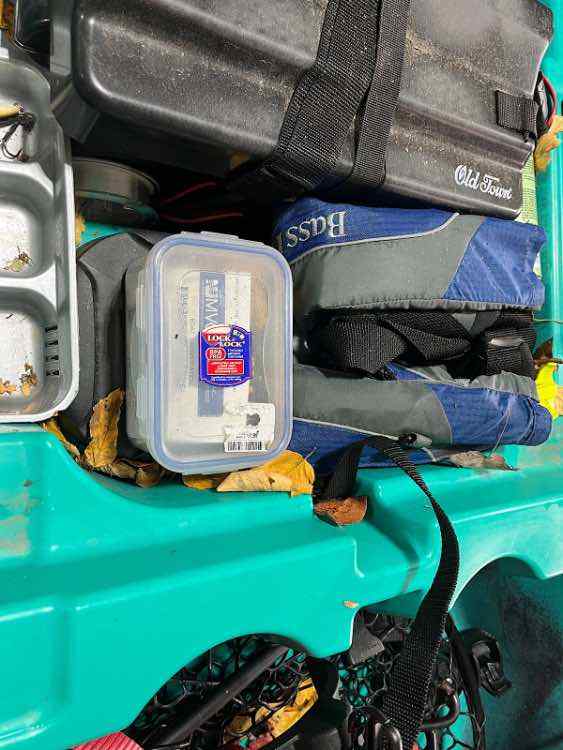
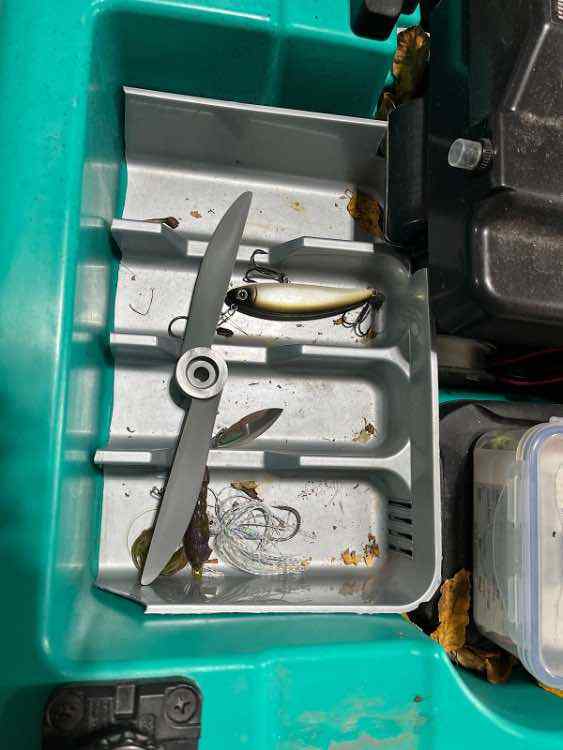
-
There isn’t another option. start without it. I think my data transferred to the card because my helix 7 mapping is on my helix 9 now.
-
I started without the card. I primarily fished two lakes, both about 200 acres and bowl shaped. I mapped all of the shorelines out to 50 yards off shore plus a bit more mapping while motoring between places. If you’re only fishing one lake and it’s 200 acres or less then you’ll be able to map it all without a card. If it’s bigger then you’ll want the card. Auto chart will give you an up to date map. The more you use it the better it refines the map. The built in map will be based on a point in time and some quality of surveyor. I’ve found details that current online maps didn’t have.
-
Good first run. I’m sure with some more time you will get it sorted just right. for the helix unit, you can adjust the yak attack arm where you have it now and that will bring it back towards you 8” or so. If you want more, you can add another arm for another 4”. I ran two arms on my helix 7 and I could just about touch the unit. Barely leaning forward in the seat.
-
shallow water warms faster. Darker/rocky/weedy water warms faster. So if the streams coming in are slow moving, shallow, weedy/rocky then they should warm just a little faster. It will help, especially when you get some sunny, still days for the sun to really bake what's under the water. The same will be happening on the bog side of the streams, so you'll have to try both and see. Your bogs aren't very deep, so there probably won't be much difference there but sometimes that little bit might matter. The event that you want to watch for is a warm rain. Early season warm rains (like a storm coming up the coast from the gulf stream) will push warmer rain inland which will collect in the streams. The water streaming in might be a couple degrees warmer than the main lake at that point and that will pull fish in. Also, the baitfish will get followed that time of year. I think you have an alewife run, not sure if its there in that pond or that time of year. if they are moving up the creek though the bass will position accordingly. I grew up on the Monongahela river where its a quarter mile across and 40' in the channel. Different situation and different bass (smallies for me) but every year the first couple floods would see bass filling the creek mouths of 20-40' wide creeks. They were getting out of current, following baitfish, and otherwise looking for better living conditions. Lots of those fish would then stay up in the creeks all year after the water receeded.
-
I'm in the same boat. I grew up fishing a certain way. I've gotten engrained with fishing certain baits in certain situations. What I've learned is that there's more than one way to skin a cat. I've also learned (with BR help) when to call it for a given method, place, or day. Sure, there are some days where I just want to cast and crank and not care if the fish are up for it. But when I want to catch fish I've learned (better, not complete) when to call it and do somehting different.
-
These are bass union weedless ned heads and I like them a lot. The eye will catch a little snot on the bottom if you have it in your waters, but on the whole they will come through wood and rocks really well. They go down to 1/16 which is what I carry in them. I would just go texas rig with anything heavier.
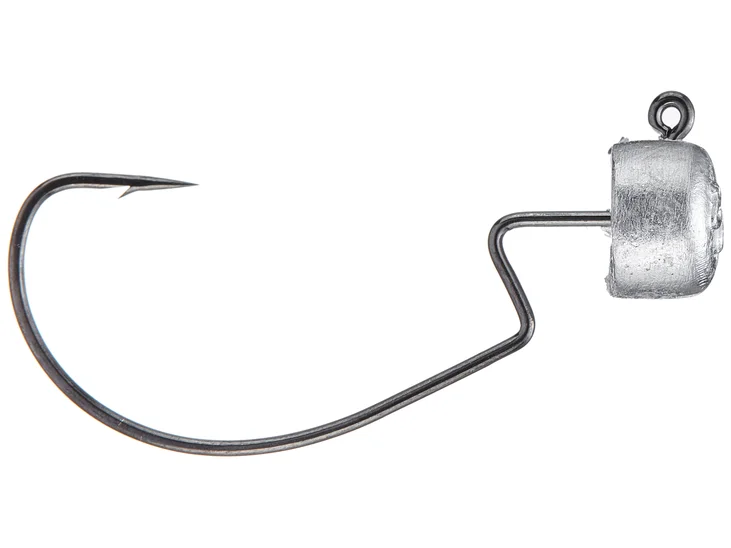
-
with a humminbird unit, i'd probably lean lakemaster if its available and good in your lakes. I tend to favor in-built compatibility than cross company compatibility. A company has no inherent incentive to make a think work for someone elses product/software/etc while they will want to ensure their own stuff works right. As everyone above said, check both for your area and see which has better mapping for your lakes.
-
its awful here. Something like 32 degrees and flurries! That's just not right and I'm not ready for it. Though the 20 mph winds are actually awful. They'll go away tomorrow though and be good for a while.
-
fully agreed. AI is good for click baity articles with no real substance in them that largely summarize the info you'd find if you just read actual articles by people. I'm all for AI for some things, but this isn't one of them.
-
to be slightly fair to SI, they had contracted out articles. That's common for a lot of websites. There are article writer/generator companies. SI chose a bad one or didn't vet what they were doing. That's one result of dismissing a large chunk of your staff when they revamped their business a few years ago.
-
For the first trip out, I’d leave the electronics and rods at home. Just take the boat for a drive. Confirm it all works. Get used to the pedals and steering it. It’s super stable, but there are a couple things you’ll need to get used to. Motoring at full speed and turning the head sharply is too much and it might throw you. If you hit the pedal to turn the same way at the same time it will probably roll you out. Don’t forget to deploy the rudder fully all of the time. at most, just take one rod and a handful of tackle.
-
here’s the chart from navionics. I don’t know what you get with either package but it looks like both work for the modern helix. https://www.navionics.com/media/wysiwyg/docs/Compatibility_Guides/GPS_Plotter_Cards_Compatibility_Guide.pdf
-
That is true. I don’t even know you could load navionics on a humminbird. But it appears that you can and I would be tempted. Navionics online is very good. I don’t know how much control hbird gives with it (depth shading for instance)
-
Don’t be in a hurry. There are tons of boats on marketplace all the time. Also, people price them high on mp assuming they will get negotiated down. I’ve put tons of watches on boats and you’ll see them drop $2k after a week some times. Especially this time of year when guys are done fishing and looking to upgrade for spring. They want out of their boat now so they can have cash to look for a new one. before you buy or look too much, know what your end point is for electronics and trolling motor. If you plan to go live imaging and spot lock then you’re better off with a boat that basically has nothing usable on it and talking the price down. Buy the boat and the motor, not the accessories, unless it’s exactly what you were going to do anyway.
-
spot lock doesn't use too much battery. Even in a 20 mph wind and waves, the motor is only running on setting 2-3 most of the time. That's drawing a negligible amount of battery power (roughly 2-3 amps). Running on speed 8-9 is drawing 20-25 amps. If you are spot locking in a river or tidal current then that's a different thing. And the spot lock works the same as an anchor- you'll always be pointed into the wind. Its not the motor trying to reposition you- the motor is just holding the motor GPS on the GPS point. the wind is blowing the back of the boat around. No way around it on a motor based anchor.
-
definitely bring a paddle. There is a paddle holder on the side of the AP that works fine. However a 100 AH might not be enough for him if he's going to be running 7+ miles. Helix units and the autopilot seem to 'play nice' and you rarely hear of any interference issues with them. Garmin seems to have a lot more instances of interference, even on separate batteries. Regardless, put the FF on a separate battery. It just keeps everything cleaner. Koz has the second battery already, so no reason not to. A 10 ah lithium would be enough for a day with the Helix 7. A 10 ah SLA is not. Then the bigger HBird units with the larger transducers pull about 3x the power. The Helix 5 and 7 come with the compact transducer; the Helix 8 and bigger use the bigger transducer which pulls 2x the power of the compact (2x the piezos inside). The helix 7 draws about 0.8 amps at full brightness and with autochart mapping on. A helix 9 is 2.4 amps.
-
You can try the battery box you already have when you get the kayak, however the old town battery box has the built in cable to plug directly into the hard mounted socket in the gunwale. You'd need to add that cable which I don't know they sell separately. You can buy the plug ends and make you're own cable, but you're going to be well over $50 for it, maybe more. You're already looking at the yak power setup and I think one of them has the USB plugs built in if you really need them. I didn't put any in mine but I don't run any go-pros or anything like that. And my phone lasts forever on a full charge. the heading puck is nice. I fished without it for a full season plus and it certainly isn't necessary. However, the jog feature is what its nice for. If you're fishing offshore or if you're fishing close quarters picking apart docks, laydowns, thick grass, or anything where you're making a lot of repeated casts to close together targets, then the puck is nice. As much as the autopilot is a heavy kayak, its still a light boat when it comes to wind and waves moving you around. You're not going to just sit on the water in one place and make repeated casts without the boat moving. You'll want to spot lock at casting distance and let the motor hold you in place. Without the puck you'd then unlock, move to the next casting point, and lock in. Definitely doable. But with the puck you stay locked and just bump the buttons. Its smoother, quieter, and faster to do it that way. Keep in mind I'm standing the entire time I fish and my rods are horizontal. I fish 360 degrees around the boat so I don't care which way the wind is swinging the boat around. the AP comes with a voltage meter on the motor head, but it doesn't work for lithium. You'll need a shunt based meter. I got the $35 version from Amped (their original) and mounted it forward of the left rudder pedal. Its out of the way and yet I can see it just fine when I'm running or standing. Its another wire to run, but I just used the built in wire grommets and some double stick tape. The only downside of that location is when I'm night fishing. The display is bright and comes on every 10 seconds or so. I throw my two hand towels over it to block the light. you're not going to run two batteries in parallel in the AP unless you do some custom wiring that's going to be more trouble than its worth. The underseat battery box fits one standard form battery more or less (the FPV system can do more). Your second battery will need to be almost back at your rudder so you have your tackle right behind the seat. Then you're running a wire up to the battery box under the seat (or thereabouts) either through the tank well itself or drilling into the gunwale and running it up inside the boat. Then you've got the factory wiring harness inside the boat that you'd have to cut into. It's all doable but you're going to end up voiding all of your electrical system warranty and spending more money than you'd have spent just to get a second battery box. If you have a second battery box from Old town, you unstrap it, unplug it, swap boxes, and reverse the process. Its one plug and two buckles to swap bateries.
-
Also, I run 3 different props. The standard prop it came with would give me 3.9-4.0 mph consistently when new. The weedless wedge dropped that to 3.5. The rc airplane prop (10.5x4L I think) would be 4.2-4.3. I’m down to 3.2/3.7/4.0 after 3 seasons. Early season and rocky lakes I run the plane prop. I want the speed and it doesn’t draw more amperage. It’s also trash if there is any grass. About April I start getting grass and swap to the standard prop. By mid to late may I’m using the weedless wedge, speed be damned. By that point I’m fishing a lot of smaller weedy lakes and the prop makes a big difference for that.
-
I run an 80 ah for the battery and heading puck, then a 30 for the fish finder and nav lights. I’m running a helix 9 and mega live. When I had the helix 7, I went straight to the 30 ah after a 10ah lead acid died after a couple hours (figuring I’d need it eventually). I fish lakes from 30 acres up to 2700. Depending on the lake and the time of the year (I.e. grass level) I’ll fish different props and different styles (of running and gunning). I run full speed between spots because every minute matters for me. I’ll moderate how much I run and plan better instead. Most of my lakes are under 400 acres and I never worry about battery for a full day trip. I can launch before sun up and fish until afternoon and never be close on an 80 ah. One lake I fish is 2700 acres and is the biggest in nj. I’ve done 8 miles in a full day trip (4am-4pm) and ended on about 15% battery or maybe a little less. The lake is about 7 miles end to end but has a bunch of fingers and coves also. It’s heavy with powerboaters and when I cross a main lake area I’m on full speed if there are boats around. I don’t fish that lake much anymore. The day I did that many miles I had a couple open crossings but much of it was 0.5-1.0 mph and going down the bank. My 1200 acre lake also has a bunch of fingers and where I like to fish is spread out over the lake depending on season. If I’m ‘just fishing’ and going around the lake, it’s about a 6 mile loop. I’ll do 30-40% of it on high speed. If I’m hitting specific spots then I’ll just make a run and go to it. Unfortunately a lot of what I like to fish is the upper end which is a 2 mile run. At 4 mph, that’s a solid 30 minute run if I’m paying attention and cut the corners just right. I can do 2 hours at full speed in my boat. So running there and back is half of my battery. That’s plenty if I stick around that area or just fish my way home. But I can’t run from the ramp to one place, to the next place, back to the first, over to a third, etc. if your spot is 7 miles from launch and you’re doing 14 miles round trip plus fishing distance, then I think you’re pushing a 100 too far. I’d want a spare 100 for that. You can save battery by running around 3.2 mph (about setting 8 or so). You’re dropping 20% of your speed but you’ll drop 40% of your amperage. get a meter for your battery if you don’t have one.
-
For on a kayak you need the generic pole mount.
-
Funny enough, you're not the first person with that thought. A few states have talked about changing the way registrations are paid to include per mile charges. States have started dropping or reducing the sales tax benefits and thresholds for EVs as more are adopted. Certainly there will be more change as more of the cars on the road become EVs and Hybrids. I don't know what the critical adoption percentage is but I'm sure some states are over it and some are no where close to it. https://cars.usnews.com/cars-trucks/features/states-losing-gas-tax-revenue-with-ev-adoption
-
He's not wrong about a very light physical weight medium power baitcaster being perfect for those 1/4 oz spinnerbaits. It will go down to an 1/8 oz spinnerbait too. Something in the 6'6" range. Hope you like the Sieberts compacts. I was thinking of picking a couple more up myself in the november sale <sets reminder>. I struggle to fish a trailer on them with all of the weight thats on the hook shank (at least for the 1/2 oz ones) but fishing them without one has been just fine so its changing how I fish spinnerbaits a bit.
-
Depending on the age, it could be a model S (sedan) or a model x (SUV) with either the ludicrous speed (older version which they have killed in the software settings) or the plaid (newer, as of 2020 I think). Either way, its basically the same thing- 0-60 in about 2.7 or a bit faster.