casts_by_fly
Super User
-
Joined
-
Last visited
Everything posted by casts_by_fly
-
I have. We have an electric car and I run lithiums in my kayak (motor and FF). I've weighed out gas vs electric for cars and boat motors a few times now and I keep up on electric tech. If at some point I am able to swap into a boat I know how I am rigging it. For your situation, the starter battery is the least demanding and running a group 24 lead acid starter should be fine if you're not already. That's about 25#. Maybe not worth buying a new battery over, but next time you need one. In the absolute worst case you could always jump to another battery. If you want to lighten up just a little bit swapping your dedicated electronics to a lithium is probably the way to go. I'm guessing you're running a group 27 or so there? That's a 75 lb battery for a nominal ~80 Ah capacity, though you realistically only get ~40-50 Ah of that for electronics before the voltage is below minimum threshold. Instead you could go to a 60 AH lithium that weighs 15# and have better performance with higher sustained output voltage. You'd save about 60# which is a good bit for a single battery swap that would be a drop in change and $350. Swapping the 3 trolling batteries will be the biggest change, but will also be the biggest change ($$$). You could save over 200# if that's important to you (also depending on what batteries you're running) but its going to cost you $1200-1800 since you have to do them all at the same time. That said, a 36V 60 Ah trolling battery for $1200 would put you back to three batteries in the storage giving you the space and weight savings. Lots of options.
-
exactly. Everyone needs to find the solution for their needs. The beauty of kayaks is that you can go low or high. You can modify to your hearts delight. I've been back and forth on livescope and/or 360. My current head unit won't do either so its a full upgrade (about $2500 no matter how you slice it). I like HBird though megalive doesn't seem quite as advanced as the others yet. I don't really want to run two units but I could rig a LS unit from anyone and then leave my helix in place for side imaging and mapping which is what I mostly use it for. Who knows where I'll end up. But at the end of the day a kayak will let you do that in a tiny package.
-
That is absolutely the truth in all aspects of what you said. greg is trying to come in at the lower end of the price range without getting junk. I'm probably at the higher end of the range (and if my bonus is as good as planned then going higher) with an autopilot, a pair of lithium batteries, and a Helix plus other mods. You can totally get a functional used tracker with a newish motor and trolling motor in the $5k bucket. That's practically the retail price of an autopilot and is cheaper than the retail of a new Hobie PA 14 360. Serious kayak tournament guys are running dual 10" FF, some with livescope. That's another $3500, though that's the same if you put it on a kayak or a boat. If you're going to spend $10k and a boat is an option, that's probably the better choice. Kayaks at that range are getting pretty specialized. But if you're in an area that has significant motor restrictions like major watershed reservoirs, then a kayak might be your best choice still.
-
lots of opinions on this one. For me, I prefer a knot that passes through the eye of the hook twice, especially if the wire of the 'hook' and the line have somewhat or very different diameters. When the knot is stretched (aka under load) the angle of the line between the hook eye and knot relative to the pull of the mainline makes a big difference in the strength of the knot. For that reason, the improved clinch is out for bass fishing for me (I still use it for trout and panfish and will even just tie a plain clinch at times). If I'm tying to a smaller bait like a jig, bladed jig, a plain hook, or crankbait I'll tie a palomar. if its a big bait like a spinnerbait, I'll tie a trilene knot so I'm not taking the loop of line over a big bait (which will invariably tangle on something and throw off a good cinch). The only exception to these two is that if I'm pitching with a straight shank flippin hook I will snell those.
-
Weight distribution is why boats will need to be designed around the battery. Look at some bassboats now that actually lose performance when swapping to lighter lithium batteries. When you remove 4x 12V 75-100 lb batteries from the rear and replace them with 100# total of lithium (or less), the boat sits a little higher in the water in the back and you lose speed. Bassboats are so fine tuned and engineered now that just swapping parts isn't necessarily going to work the same. A 250 hp mercury weighs 500 dry (more rigged I believe). 50 gallons of gas is another 300. A set of 4 batteries is about another 300 lb. That's 1100 lb in the back of a bassboat. That's the same weight as the battery pack in a top spec Tesla (roughly 120 kWh of capacity which is more than a boat would need). As a quick comparison, the E-motion 180 plus battery pack is 1300#. So the weight isn't far different and will only go down. I don't think bassboats are the first place that will have fully electric designs though. I think the weekend warrior boat is the right place to start (which Lund is kinda doing). Similar to electric cars, the vast majority of users are well within the limits of an electric version. With an electric boat, the charging doesn't have to happen in 10-30 minutes because you'll charge at home. Give me 2 hours of run time (at 20 mph or so) on an electric 9.9 and 16' aluminum and I'll fish anything around me perfectly.
-
I've not fished the amazon for peacocks, but from every show I've seen they are fishing stained or dirty water and the fish are hardly line shy. On top of that, some of the jungle cover is pretty extreme. I don't see any downside of the heavier line unless you're anchored to the bank and need capacity for running fish.
-
I know the club you mean. Supposedly you guys put in some good quality fish. I've not fished down that way though, and I haven't fished trout since 2020. I have Mercer, carnegie, and farringdon on my 'to fish' list. I wouldn't mind fishing Assunpink but it's pushing my distance rules for a day trip, especially with the pressure it gets on weekends when I'd have to fish it. I don't know about you, but I don't rate round valley for bass- not my kind of water. Spruce fished well for me last year until the water dropped. First year for me fishing it and its made the regular rotation now. Next time you fish it drop me a line.
-
the main difference is usually the BMS, followed by the internal wiring. Not all big brands have a good one and not all cheapies have a bad one. A couple reviewers have torn them apart to compare internal build quality.
-
Fish a lighter bladed jig and keep your rod tip high. You're still going to lose some, but you'll ride over more rocks than you are now. With heavier bladed jigs, they will drop quick if you let off the retrieve or lower your rod tip. With a lighter one they don't sink down in as fast. https://www.nasa.gov/vision/space/preparingtravel/kc135onfinal.html The vomit comet was the name for the zero gravity plane that simulated space. It flew up to something like 80k' and then dropped on a 45 degree angle over and over again to give simulated weightlessness. The name of the flight is self explanatory. The reference is the yo-yo motion of the jig across the bottom.
-
I'm an engineer by schooling and have worked in R&D and supply chain where data is kinda important...
-
If you can get a sportsman 120 for an extra $100 or so over the 106 I'd do it. 18" doesn't sound like a lot, but it will give you a lot of space. It also lengthens the wider middle section of the boat for a little more stability. A sportsman 120 is a great platform regardless of the propulsion (I love my sportsman AP 120).
-
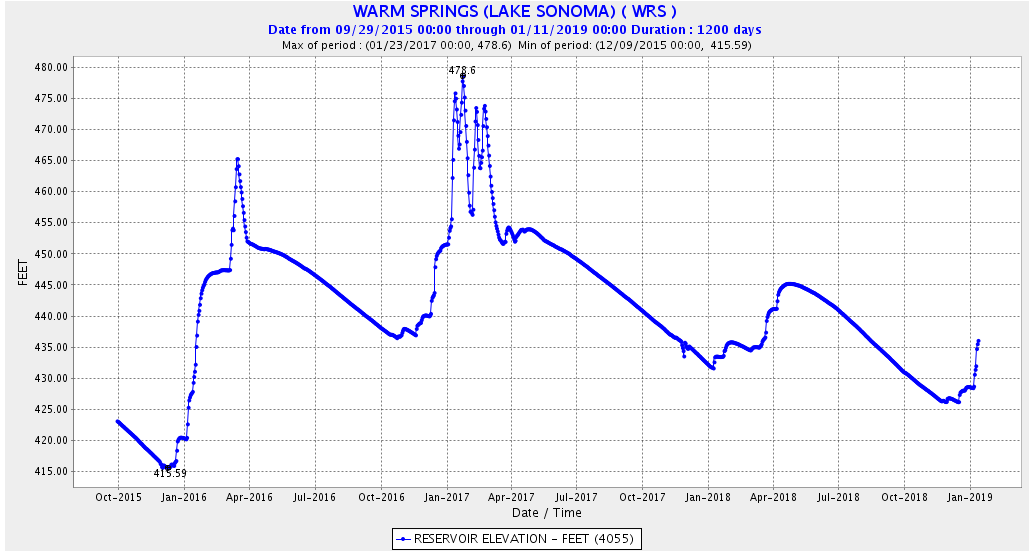
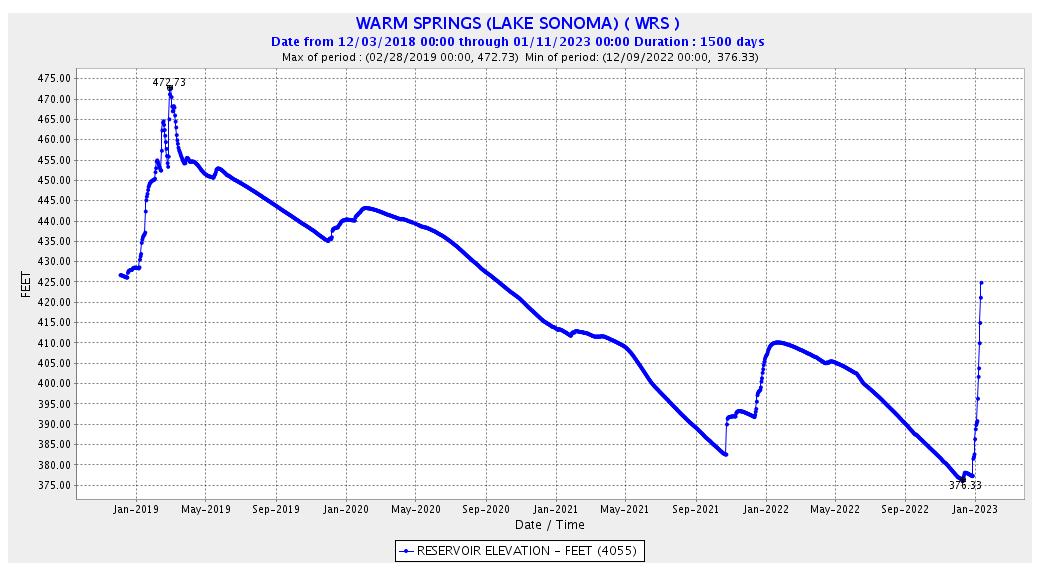
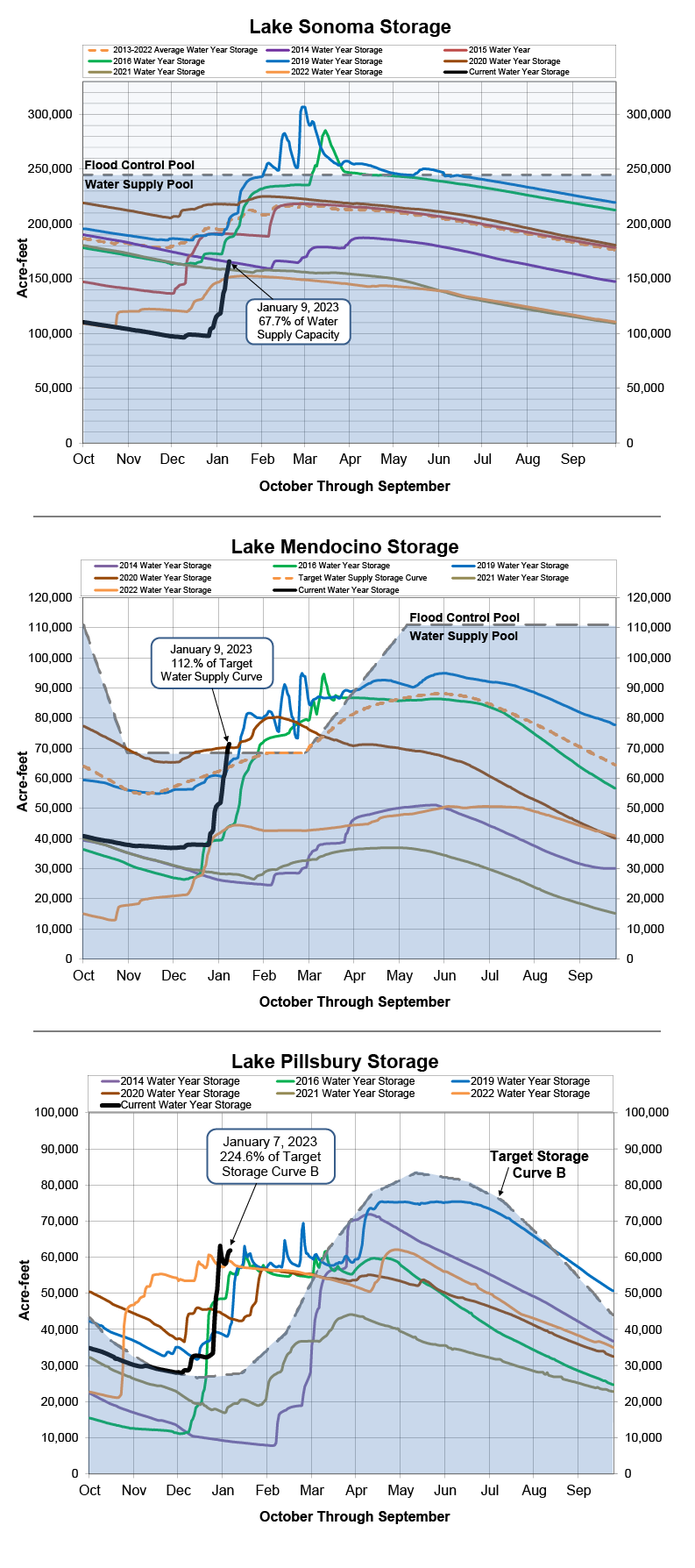
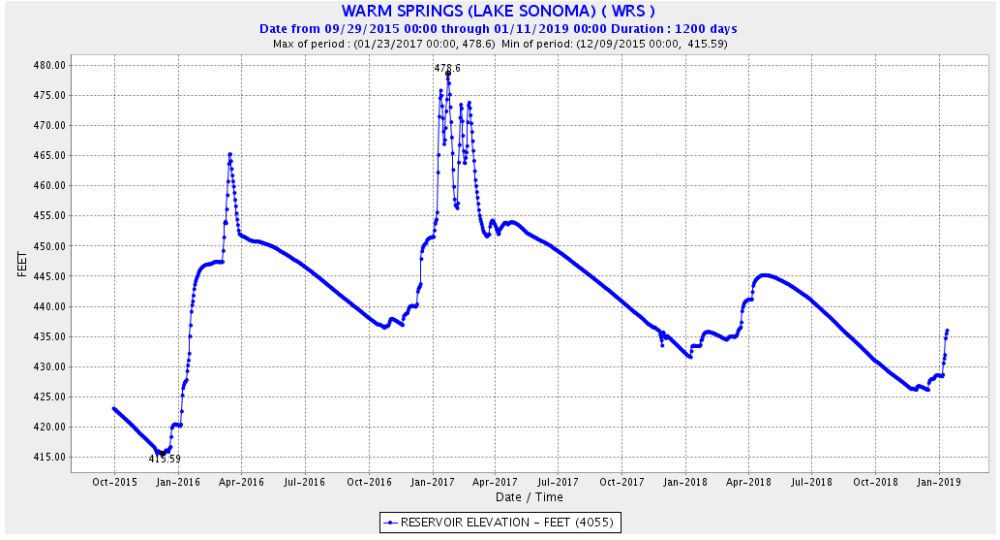
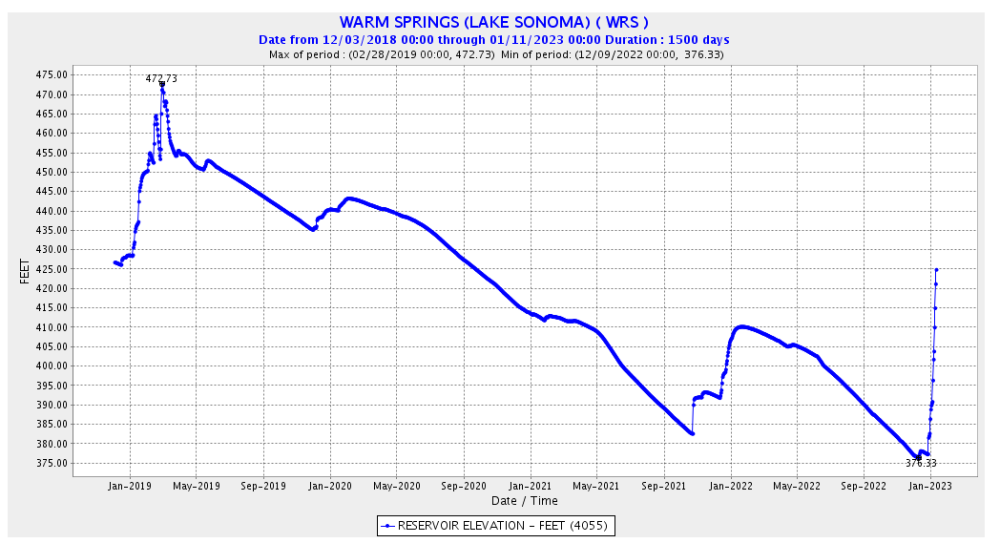
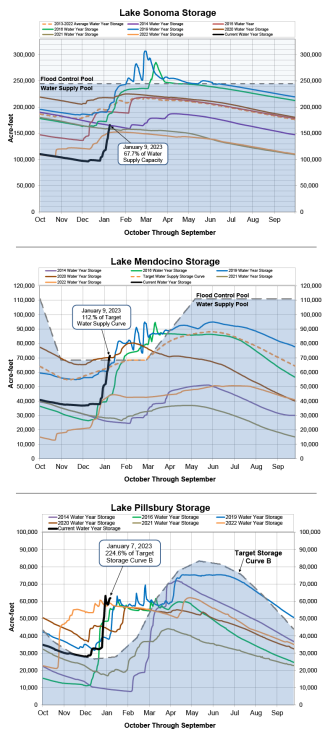
Since data sourcing/interpretation is one of my interest areas, and data with respect to fishing even more so, you've piqued my interest on this one. So without further ado, all the data for lake Sonoma. First, the raw data. It looks like Sonoma Water in conjunction with the Corps of Engineers manage the water. Here is the lake data page and then the raw water data linked from that page. Its not quite USGS level interface, but if you play with the web address you can change it from 1 month to 12 months and see what the last year was. This is also the page that has the 3-graph panel that I coped above (though I didn't know that when I copied it- it came from a newspaper article). https://www.sonomawater.org/current-water-supply-levels https://cdec.water.ca.gov/dynamicapp/QueryDaily?s=WRS&d=&span=1month Now how to interpret. I don't know your lake and local levels over the past couple years to say what is 'normal' water level. Looking at the historical data from the 3-panel chart from 2013 to now (skipping 17 and 18 for some reason) you can see the clear trend each year- steady (almost perfectly linear in fact) drawdown from around March until the rains fill it in Dec-Feb again. That's pretty normal for a place that has strong seasonal rain and is used for water supply and/or flood control. If it is just flood control the lakes will typically hold more water longer in the year and then draw down more rapidly in the fall. Typically those lakes will have a summer pool and a winter pool that is well defined and controlled by dam releases and rain. In your case, since there is a constant drawdown due to water consumption, that is the overriding water loss. I would be surprised if anything is released below the dam that isn't minimum requirement unless it is in flood stage (which it's barely been in 10 years). I suspect that the lake is designed with the flood/supply level as the target level given the constant consumption. So what is that level? Well the lake was holding it pretty constantly in the beginning of May 2019 based on the acreage graphs. Its noted as 245k acre-ft. If you play with the web address and make it 4 years you find that the start of May is roughly 450' elevation. That ties up with the 451' from lakelevels. Even more cool is if you read the instructions on the real time data page, you can get custom graphs. So here is a graph of a little over 3 years leading up to 2019 showing a pretty normal fill and draw down curve. Rain gets you to full or over full pool in the spring, it discharges down to full and then annual usage kicks in. Repeat in January. https://cdec.water.ca.gov/jspplot/jspPlotServlet.jsp?sensor_no=4055&end=01%2F11%2F2023+00%3A00&geom=huge&interval=15&cookies=cdec01 Now look at the 4 years preceding today. If you have only fished the lake for the past 3 years, you've never experienced full pool. The last time the lake was full was Jan 2019. At its lowest 3 weeks ago it was 80' below full pool. Right now you'd need to rewind about 2.5 years to get to the stage its in now. Did you fish it Sept 2020? That's about what it looks like now. With the forecast and current water flows, I think you're going to hit full pool imminently. You've come up 45' in 16 days on a pretty steady rise. That's 2.5' per day. Another 10 days of that and you're full. Above in my first analysis I suggested that 420' was full pool due to the vegetation. Ordinarily that would work, but its been 2.5 years since its been that height. That's enough time for shoreline vegetation to grow in. Heck, you're going to have fresh bushes in places that haven't seen standing water in 3 years. If that level holds for a little while, might I suggest a video to watch:
-
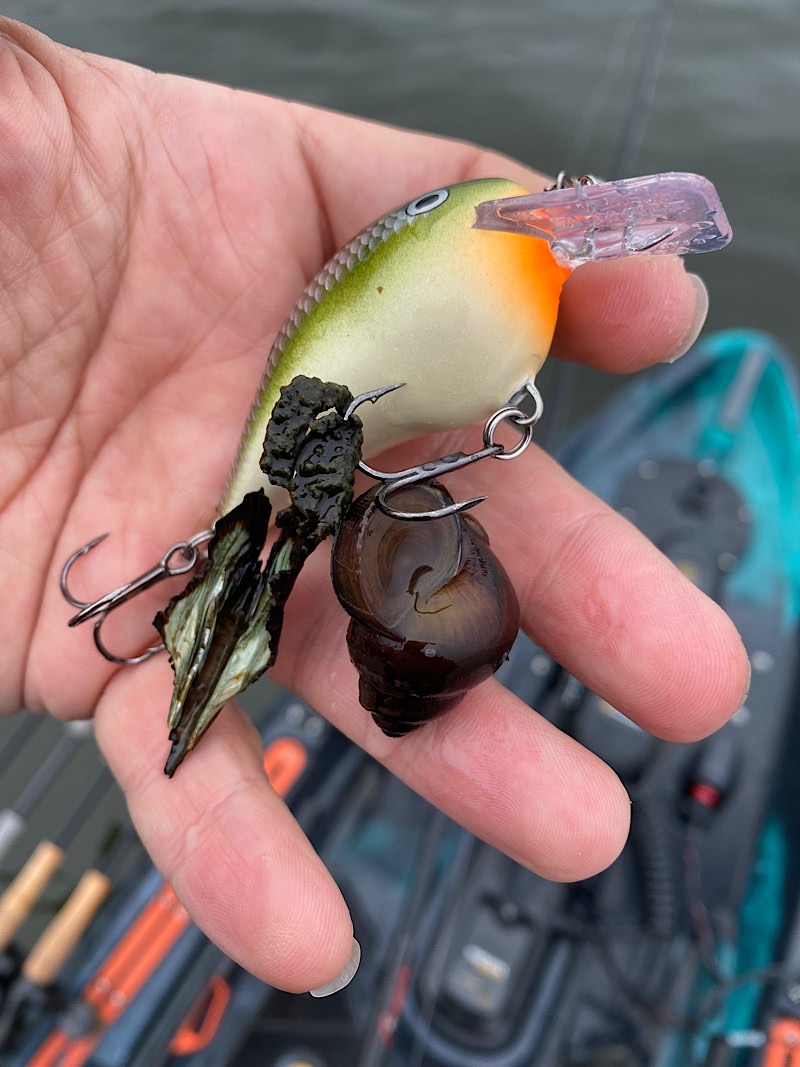
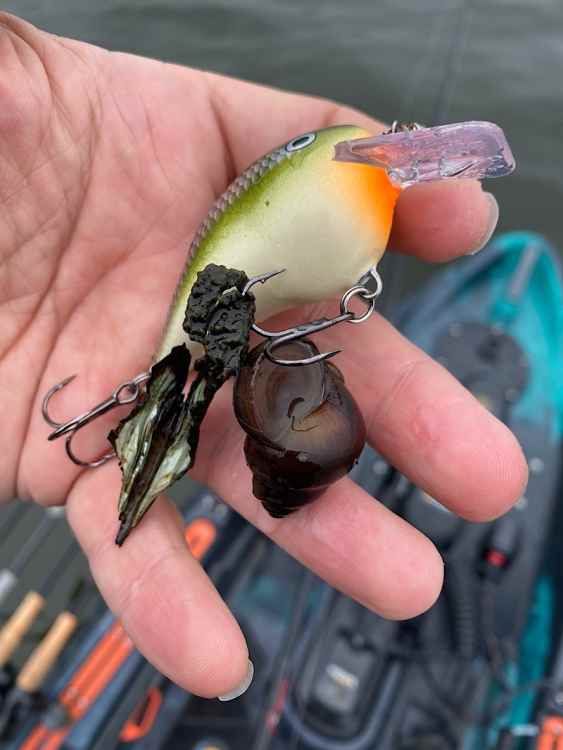
How about a double up on invertebrates? This lake has tons of snails (confirmed on UW camera) and Crankbaits scraping the rocks will find them. I guess I scraped the right rock and got a mussel too. Snail legally hooked in the meat.
-
What part of NJ are you in?
-
I’m not a standing timber expert so won’t comment there. I’ll just note how much I miss that lake (stonewall Jackson). We fished it the first couple years it was open in the mid 90’s before I went off to school. One of my dads top 3 bass of his life came there (a 9+). We never fished the standing timber, rather focused on the lay downs and other cover.
-
more investment and innovation in the area plus wider availability will make electric outboards more available to all, drive down prices, and improve capability. Those are all good for fishermen and boaters no matter if an electric outboard is for you or not. There will still be limitations on electric outboards no matter how you look at it though just due to energy density. Much like electric cars have been redesigned around the battery packs and motors, the same will need to happen with boats. Ignoring any serviceability problems, a boat bottom battery pack that distributes the weight appropriately and eliminates the need for ancillary batteries, improved hull designs with lighter total weights, and further improvements in batteries and motors are all needed. You don’t need a 200hp electric motor to put on the back of a 21’ triton. You need a high power electric motor and a boat that gives the benefits of a 21’ triton (ride, stability, storage, etc). if it’s like most electric motors, dropping that to 85% throttle will give 3-4x the run time. Similar to full throttle on a boat vs cruising speed.
-
Just came across this in a google suggested article. Should give you a good feel for where the lake is relative to a point in time when you last fished it. I use my pictures from a days fishing to correlate dates and water levels.
-
If you have the roof rack already, the rod pods are a good choice. You can make some yourself out of 8” pipe and some fittings. Lots of surf and fly guys do that for travel. If you’re traveling alone (like me) they go in the passenger seat. I have a 5’7” bed and a 6’10” is the longest I can fit diagonally in the bed (which doesn’t work with a kayak in the bed). Funny enough, the shortest rods I have are 6’10” so it all goes up front.
-
the 7.5 is just the name. It’s a 3 hp equivalent. The epropulsion spirit is about the same and in the $1200-1400 bucket.
-
It’s basically a mercury electric to compete with the specs of the epropulsion spirit 1.0. Roughly 3 hp equivalent with a 1kw disconnectable battery unit. If a 3hp motor is enough for your needs, then it might be an interesting thing. If not, then the epropulsion navy 6.0 (9.9 hp equivalent) might just do the trick. If I were to build a boat for local fishing, that’s what I’d put in it.
-
I partly agree with what you're saying. There are certainly considerations when fishing from a kayak and things you have to think through. But a kayak and a boat are different animals made for different (but overlapping) places and circumstances. I think I've put this in another post here before, but for me, the lakes I fish, the space I have, and my needs, a kayak is a fine choice (and especially the kayak I have). Here in north jersey, we don't have big reservoirs and lakes like other places. There are two over 2k acres (round valley and Hopatcong. I am excluding Greenwood as it is only half NJ and there are no public ramps), 2 or 3 more in the 1-2k acre range, and then the rest are largely under 500 acres. There are lots of places in the 5-200 acre range. Across all of them, we have 4 lakes that are unlimited horsepower (three are under 300 acres and barely 1.5mi in the longest dimension). We have 3-4 more that are limited to 9.9 HP (including two of the bigger ones). The rest are electric only. A 20' bass boat with a 250 HP isn't going to be used to its full capability and in some places it will be a hindrance. The ideal boat for this area is an electric powered aluminum bass boat with a 9.9 equivalent electric motor. A jon boat with a 9.9 and a good bow mount wouldn't be a bad choice either. But some people don't have a place to keep a boat. Some don't want the maintenance of a boat. A lot of waters up here don't have a ramp for a boat. For $2k or so, you can pick up a very good PDL kayak that you can load in the bed of the truck yourself, fish practically any lake here, and then roll it into your garage corner when you get home. It can be a low intensity way to get onto the water and be 85% as capable as a boat if that's what your situation calls for.
-
If you're just talking about wiring a basic fish finder, I would get a basic lithium 15 AH or so, a set of spade connectors, and wire it that way. Put the battery in a dry hatch and run the wiring through a through-hull fitting if you need to. The spade connectors will let you disconnect the battery and pull it out if you have to. My 30 Ah sits inside the hull under my seat. Its velcroed to the hull and hasn't moved an inch in 2 years unless I pull it out. I pull it once a year to inspect, clean, and lube the terminals with electric grease. The dakota box is $229 from dakota for a 10 Ah battery and some lights inside a box. If you need the lights and extra connections, then so be it. But a 15 or 20 Ah Amped is $105-$139 plus $10 in hardware to set it up. You'll have more capacity at half the price.
-
thanks. If I had more time I’d plan an extra day and do it properly but I’ve got a doctors appointment on Monday and my wife goes on a trip Friday. With morning meetings every day, a later half day is about my only option. I know it’s a tight window and a slim chance, but if I can make it work it would be awesome. I’ll have a look at some of the guys you noted and keep you posted. on a separate topic, any can’t miss eateries in the Denton area? thanks rick
-
at that price point I don’t think you can do any better. For a little bit more, I’d take the old town in a heartbeat.
-
more or less. Make sure you have an inline fuse on the positive. any reason why you want that battery pack and not just a plain battery?