
Glenn
BassResource.com Administrator
-
Joined
-
Last visited
-
-
Watch my videos. I wearing either Columbia or SIMMS pants.
-
In this video, the legendary Glenn May breaks down exactly where bass really go in summer and how to catch them at every depth, from shallow shade to deep structure, and the biggest mistake anglers make!
-
This should help https://youtu.be/K6Tu4z6OXBc
-
Suzuki Marine is extending its popular Ultimate 7-Year Limited Warranty offer through July 31, 2026, on qualifying new 150-350hp pleasure models with no participation fee. From offshore fishing trips and family sandbar days to sunset cruises and weekend escapes, there’s still plenty of summer left to enjoy the reliability and performance Suzuki Marine is known for. If you’ve been thinking about repowering or purchasing a new boat, now is the time to visit your authorized Suzuki Marine dealer or visit suzukimarine.com to learn more about this extended summer promotion.

-
If you’ve thrown topwater baits and struggled to get consistent bites, this video breaks it all down.
-
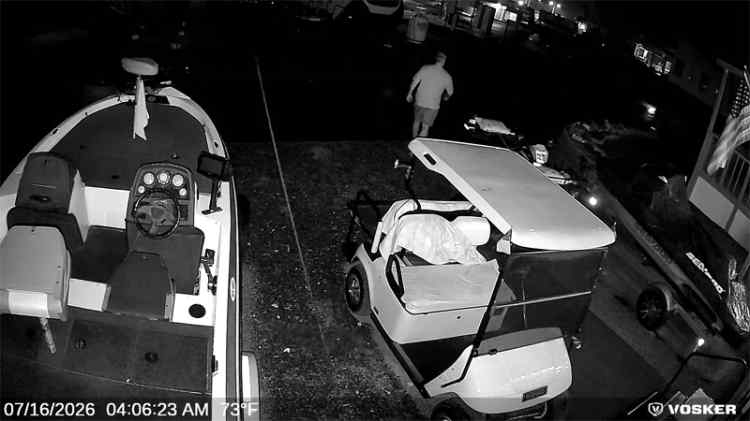
Hey guys, I don't know about you, but the night vision on most security cameras is not that great. Well my Vosker is changing my opinion. This shot is a compressed image from a full HD quality video taken at 4:00am on a dark, rainy morning (that white streak is a raindrop the camera caught!) Aside from the porch light, the entire area is unlit, yet it caught my neighbor on his morning walk. The camera is mounted on the roof, and he's about 35-40 feet away. Most cameras can't "see" that far, but its infrared capabilities are impressive. Its night vision is about 100 feet!
-
Bingo! It is ONE LURE and meant to be fished as shown.
-
iPhone Guys, I Googled the partial loading issue and found that the issue is confirmed, and there are several solutions. https://support.apple.com/en-us/102456 https://discussions.apple.com/thread/254835664?sortBy=rank Please keep in mind that there are many possible combinations of operating systems, browsers, VPNs, antivirus programs, ad blockers, extensions, and security settings. As a result, issues like this are often related to a local configuration conflict, outdated software, a recent update, cached data, or a specific browser setting. While we always want to know if there is a site-wide problem, most isolated issues are usually traced back to something on the individual device or setup. This thread is a good reminder that many different factors can affect how a website loads or functions from one system to another. Thank you!
-
Sounds like the common denominator is IOS/Safari. I did a quick Google search and found this:
-
Guys, There's nothing awry with the site or server. I just checked the error logs and ran multiple tests and checks, and everything checks out fine. Nothing is wrong. But something on your end is triggering it. likely a VPN, ad blocker, or anti-virus setting. I refer you to this page: https://www.bassresource.com/bass-fishing-forums/topic/270224-login-and-registration-support-forum-help-help-desk/ There's a TON of helpful info in there beyond clearing cache and cookies.
-
I want to address the click-bait videos proclaiming ICAST is dying. I do not believe the evidence supports saying that overall ICAST attendance collapsed in 2026. Officially, it was approximately the same size as 2024 and larger than the reported 2025 registration count. However, I believe the observation is valid in a more important sense: Why? The industry is sending smaller teams, scheduling more meetings, limiting travel, conducting more business privately and relying more heavily on digital product information. That produces a show that can technically report 14,000 attendees while feeling substantially quieter to someone who has attended for many years. Specifically (transparency note: I used AI to help calculate some of the figures below): 1. The attendance number is not the number of buyers walking the aislesThe 14,000 figure includes exhibitors and their employees, media, professional anglers, manufacturers’ representatives, association personnel, guides, international visitors and other credentialed attendees—not simply retailers shopping the show. Exhibitors receive four discounted badges for every 100 square feet of booth space, meaning thousands of the people counted may be working inside booths rather than creating aisle traffic. That makes the real question: ICAST has not yet released a detailed 2026 breakdown by badge category, so we do not know whether buyer attendance increased, decreased or remained flat. 2. More business is happening away from the general show floorICAST has intentionally added more appointment-driven programming. The new Meet the Market event puts buyers and manufacturers into prearranged meetings before the exhibit floor opens. There are also retailer breakfasts, private meeting rooms, seminars, lounges, demonstrations and other events pulling people away from the aisles. This may produce better-quality meetings while making the show appear less crowded. In other words, the show is becoming less about thousands of people wandering around and more about smaller numbers of decision-makers arriving with scheduled appointments. 3. Retailers and manufacturers are controlling travel expensesThe fishing business has been operating in a difficult environment. Reported U.S. tackle sales declined approximately 8% from 2023 to 2024, while the estimated number of licensed anglers declined more than 8.5% between 2021 and 2023. That affects ICAST directly. A retailer that previously sent six employees may now send two. A manufacturer may bring fewer sales representatives, sponsored anglers and marketing personnel. Smaller companies may skip the show entirely. Therefore, the company may still be represented and counted—but with a much smaller contingent. 4. Tariff uncertainty is making the industry cautiousFishing tackle companies continue to face uncertainty involving tariffs, imported components, manufacturing costs, pricing and future inventory. ASA was still issuing policy updates about potential fishing-tackle tariffs immediately before ICAST 2026. When companies cannot confidently predict landed costs or retail pricing, they become more conservative about: Travel and entertainment expenses Booth staffing New-product commitments Retail orders Marketing expenditures That uncertainty does not necessarily stop companies from attending, but it encourages them to send fewer people and conduct shorter, more targeted visits. 5. Much of the traditional media function has moved onlineYears ago, attending ICAST was one of the only practical ways for retailers and media outlets to discover new products. Today, manufacturers send digital catalogs, host video meetings and announce products through YouTube, social media, email and retailer websites. Major retailers now publish extensive ICAST coverage online almost immediately. My inference is that this has particularly reduced the need for: Large media teams Regional writers Marginal content creators Retail employees who are not directly involved in purchasing The people who remain are more likely to have specific meetings and less likely to spend three days roaming every aisle. 6. The floor is large enough to dilute the crowdICAST occupies roughly 200,000 square feet of exhibition space. Even 14,000 registered people do not appear simultaneously. They are spread across several days, the New Product Showcase, private meeting rooms, demonstrations, restaurants, seminars and off-site events. A similar total attendance distributed across more activities can produce noticeably thinner aisle traffic. 7. Friday is no longer a meaningful measure of attendanceThe 2026 exhibit floor closed at 3:00 p.m. Friday, with product pickup beginning at noon and exhibitor move-out beginning immediately after closing. Many buyers and media members leave Thursday night or early Friday. Consequently, Friday can make the entire show appear poorly attended even when Wednesday and Thursday were reasonably productive. This is nothing new. It's been happening this way for decades. This last point is important, because the videos and pictures produced as "evidence" of a declining ICAST were shot on the last day, after nearly everyone had left. The dead-giveaway is people walking around with orange buckets, which were only available on the last day. Those videos and pics are misleading and were created solely for clicks. Bottom line: The most revealing figures would not be total attendance. They would be unique retail-buying companies, buyer badges, media badges, average days attended and buyer-to-exhibitor ratio. Those numbers have not yet been publicly released. So it's premature to proclaim ICAST is in trouble and, therefore, in dire need of inviting the public to the event. I would, however, welcome a change in venue to bring in new faces and companies to the event, which has been held at the same place for about 15 years.
-
A few items that may not be grabbing the headlines as much: Nishine BQ Frog - Its design allows you to easily walk-the-dog without modification. Plus you can switch between "normal mode" and "heavy cover" mode for better hookups. Also, it has a unique vent slit system that keeps water out while allowing the bait to collapse when a bass strikes. BONUS - it's available now on their website in limited quantities https://www.nishinelureworks.com/products/bq-frog Missile Baits Ike's Dice Jig - Combines a dice bait and a jig with a unique weighting system. It solves the rigging problems associated with these baits. Yamaha Crosswave - It combines a Waverunner with a fishing boat. In essence, they built a deck around a Waverunner to give it storage and a place to mount a trolling motor. It's a competitor to the SeaDoo FishPro. While it didn't debut at ICAST, it is new for this year.
-
In this video, pro John Crews breaks down how to catch bass with crankbaits during the summer, from shallow water to deep structure.
-
Yes, you're safe to ignore it. No, I wasn't aware of it, however I cannot reproduce it either. It's secure for me. I'm curious if anyone else is seeing it and, if so, what URL(s) they're getting it.