J Francho
Super User
-
Joined
-
Last visited
Everything posted by J Francho
-
Gotcha. Somewhere @A-Jay has a pic of the jigs he assembles that sound EXACTLY like what you want. In the meantime, here's what I've been using for three years for punching super heavy cover. It doesn't feature a skirt, but the 1 oz. pencil weight pulls the bait through as good as a 1.5 oz. punch rig.
-
Sweating at a church gig a couple years ago:
-
-
That time I bought a Whopper Plopper, and then fished with it.
-
Broke back in black.
-
For what Tom describes, I find a sinking bait works best. I don't often use that presentation, but something like a Shad Shaped Worm from GYCB works well. Most of the time, I let the water currents provide the action, and use a floating bait. That gentle current makes the the plat tail on a Roboworm wobble up an down. Crosstail Shad orient in the current, with a slight side to side movement. That's why I start at 1/2 oz. I want the the entire rig to remain in place. I don't often get bit on the initial drop. Usually it takes a few moments before I see a fish in the cone approaching my bait. If it turns away, I do a very quick lift and drop, raising the weight about 19" off the bottom, and let it settle. All of which is done on a tight line. The only time I really do a semi slack line presentation is when I use the drop shot to expedite a wacky senko to deeper water. In that case, I might use a 6' (that's feet!) drop line. I let it drop, once the weight hits bottom, I add enough slack to let the senko fall to the bottom, like it would normally rigged in shallow water. Saves the pain of watching water boil as your senko slowly sinks in 30' of water. So, in a sense, that presentation does just what the OP asked about. It's no big deal though, since the line that piles on the bottom is the tag end of the rig. There's some stuff in there I hesitate to share. It's been learned over the course of drop shotting, or some earlier form of the rig before it was a "new rig from Japan lol," for over 30 years.
-
Subtle...looks great!
-
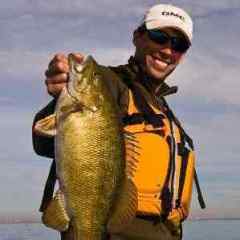
I'm cautious if I know I'm on smallmouth that are big. I keep the rod perpendicular to the fish, often employing gentle side pressure, and not just lifting up, especially if the fish is a ways out. It's different when fishing vertically, where you're often simply holding the rod parallel to the water's surface. While keeping steady pressure, and when the fish is not taking drag, try to move the fish gently with the rod, then bring the rod back, taking up line as you do so. I definitely use a lighter drag setting, and like A-jay, don't mind it when it sings. You only need 2 to 2.5 lbs. of resistance to subdue even the biggest smallie. A nice little Erie chunker employing the what descripbed above, using 6# Invisx, a 6'3" ML spinning rod.
-
Crochet? Kastking has pretty pink braid you might like!
-
They are a sponsor. The company also happens to be local to me. Please explain what you mean by "fake reviews." Because I've actually been using the braid, as have quite a few others here.
-
You might be a fan of casting them with this type of rod, but some of the spinnerbait and chatterbait experts have weighed in, and said catching is another story. Yet you've made your choice. You'll catch fish, but it won't be problem free.
-
If you have to use super glue on your knots, you're tying them wrong.
-
Once you nail the walk the dog on something like a spook, the rhythm and cadence is similar with a frog, just more delicate, and less twitching. Start with the bigger topwater plug, then progress to the frog.
-
He's just overcome some major health issues. All is well now, though. He even bought a brand new boat!
-
Rich has been a fishing writer for around 40 years.
-
pickerel
-
I rarely, if ever see a review on a store site that is relevant to my fishing, or even genuine.
-
That thread was interesting, to say the least.
-
I'll dig for it in my line bin. Supercast is a mono core, fused micro filament outer sleeve, that has an abrasion resistant coating that aids in knot strength. It handles a lot like mono, though not exactly. Other notable feature, it floats, and doesn't absorb water. I like it for mats and topwater. It's basically twice the strength of similar diameter mono, so 20# line is like 10# mono. Not as drastic as true braids, but still features zero stretch.
-
Tuf-Line Supercast. PM me, and I can probably dig up a sample.
-
A couple of his videos show this, clear as day. Everything gets out of the way for a big Esox.
-
Very cool thing. I used to work for this company. http://www.foxcarolina.com/story/36248704/greenville-kayak-maker-sending-dozens-to-police-in-tx-as-flooding-rescues-continue
-
-
I don't have any MBR, but I was surprised at how inept my 803JWR was at throwing jerkbaits. Sounds like an MBR would be a better fit, based on the two trusted responses above.
-
This article by my friend, RichZ will help explain things. http://www.richz.com/fishing/blog/?page_id=552 You want there to be DIRECT contact between the hook and the rod tip. Fluoro eliminates the bow in the line, is very dense, and therefore more sensitive. You do not present baits on a slack line, so line wouldn't pile up at the bottom. I've had success using mono, co-polymers, and even braid with various leaders. My preference for deep vertical presentations is fluoro.