
Team9nine
Super User
-
Joined
-
Last visited
Everything posted by Team9nine
-
I’ve got several friends that fish the professional crappie trails, and according to them, the biggest fish in the system tend to be loners, just doing there thing and often suspended out and away from most all the other fish - very similar to the biggest bass in the system. These guys just look for individual fish, and don’t worry about finding schools or groups. I’n guessing that is the case here.
-
Most of the time, I gamble on fish intelligence being low and just throw standard GP/BLK flake baits. It’s what I own the most of. But, for whatever reason, GP BLU flake baits just catch my eye, so I use them regularly, too, especially on those days when the bass are being extra intelligent and ignoring my standard black flake baits ?
-
Both types of bites you typically get have been described above, but it somewhat depends on setup, too. Seems like there are two camps when it comes to DS rod actions; Stiffer rods with XF actions, and then more moderate action rods. Both work fine, as I’ve used both for DS, but I’d say you’ll feel more “tick” bites on the XF, while the bite on the more moderate actions is akin to ice fishing with a spring bobber - don’t worry about feel and just watch the rod tip for loading. Whether you use braid or straight fluoro/mono can also play a difference.
-
Yes it works, but some reels not so well because trying to control the spool rotation with your thumb like you might normally do is a little trickier when it needs to go halfway into the spool without touching the spool sides and prematurely slowing or stopping the cast. Seems like narrow spools with high/steep sides are the toughest. Personally, not a fan of the idea, and so I own several lower geared reels for these applications, but I’ve done it.
-
Bass fishing and having a slow day. Spotted 3 big fish suspended over 25 ft of water on his LiveScope and was able to get one to bite - turned out to be a big crappie. Thought he said underspin with swimbait, but I’d have to doublecheck.
-
Some salmon, many birds including owls and hawks, plus cats, dogs and reindeer are all believed to see UV. Some of the raptors are pretty cool because they are believed to find their prey not by seeing the mouse, but by following their urine trail to the critter’s location because it is visible to them in part of the UV spectrum.
-
Fishing is all a game of probabilities (at least, that's how I view it). On any given cast, with any given bait, you either will or won't get bit. Over the course of a day, if you can stack a few more probabilities in your favor (increase specific probability rates or percentages), you should end up with a more productive day. There are a lot of variables at play, all with their own probability. For example, in another thread, I mentioned that one of the 2 primary factors in why I own/throw whatever colors I have in my box for any given bait is largely based around what is pretty much "proven" as a standard color option. So, a black and blue jig is almost a universal thing. A green pumpkin soft plastic is too, as are things like shad or crawfish colored crankbaits, a white and chartreuse spinnerbait, or a black or white buzzbait. I'm sure you can name a few others. Day in and day out, those colors get bit most everywhere in the country. As such, I tend to have one of those standard color patterns tied on when I'm fishing, and I rarely change during the course of a day. So here's a logical way to think about lure color based on probabilities. If you're not getting bit, it's probably not because of color, but it also might not hurt your chances if you changed. Things can't get worse, right, so do as you like - I likely wouldn't change myself. I'd rather change locations, baits, depth, speed, etc. before changing color to try and increase my probabilities - unless someone else in the boat with me throwing the exact same bait, but in a different color pattern is getting all the bites. If I'm with someone throwing a similar bait (different color) and they're getting bit and I'm not, then it doesn't hurt to change to whatever color they are using because my probabilities will likely either stay the same or go up - very little downside to changing color in that case. On the other hand, if you are getting at least a few bites, changing color could go one of several ways - your bite rate might not change at all (neutral), or it could get better, but it also could get worse, and you actually might stop getting bit. In this case, which is likely the most common scenario for most while out fishing (getting a few bites now and then), I don't gamble and change my probabilities in that regard because there is a worse outcome if I'm wrong. So that's my take on the matter. You can view each change you mentioned as a change in probability. If you're not getting bit, and you change something and then quickly get bit, that was a good change. Doesn't hurt to change if you're not getting bites as the negative consequences are low (or even zero). On the other hand, if you are getting some bites, it becomes more a game of figuring out whether that was a wise decision (to change) or not, and I'm more likely to switch back, or switch again, more quickly if things seem to go negative. Overall, I try and change as little as possible - YMMV
-
Mostly gimmick - current research suggests that it's possible that some sunfish species may possess UV photoreceptors as juveniles to help feed on zooplankton, but they lose this ability (lack UV photoreceptors) as adults. Bass are thought to be similar, but nothing I've seen in the literature suggests adult bass can see in the UV light spectrum.
-
This is where my mind is at. If metabolism slows, then bass require less food to maintain body weight. Doesn't matter whether they eat once every 2 weeks in the coldest water, or once every 3 days in warmer water. Either way they get what the body requires to maintain status quo. Current biological theory is that, "winter feeding occurs, but only to permit individuals to maintain minimal activity rates and routine metabolism rather than to fuel growth or gonadal development, and that feeding only occurs when energy stores decline to a critical level." It is during the fall that fish feed more often or aggressively as a means of increasing energy stores in preparation for the winter. This pattern seems to hold for most sunfish species. It doesn't preclude that a few fish that have been particularly affected negatively during winter wouldn't have to feed more often coming out of winter, but it doesn't appear to be the normal pattern of behavior. @Paul Roberts Care to chime in with your thoughts and observations on this subject...
-
Lost me somewhere, as that makes no sense...Maybe I’m missing something
-
**It happens. Everyone loses a fish now and then. Don’t worry about it. Could have been a dozen different reasons, but you’ll never know for certain.
-
I’ll do you one better - sell you my house for guaranteed access to the ponds AND leave a few of all the best baits hanging on the garage wall ?
-
Lol - talked to him yesterday. I have an open invite to hang there, and being close enough to meet up for fishing trips throughout the year is definitely a consideration in the location decision, but too early to say yet.
-
Currently focused on the Knoxville/Chattanooga-Greenville (SC) triangle. TN and SC are both very tax friendly ?
-
Wife and I have started looking at retirement locations that are all located further south than we already are (Midwest), but I’m guessing that ends up being more central than southern, say along an AR/TN/NC line to avoid terribly hot summers, but still have more mild winters.
-
Not sure we have the right terminology here for the question. All fish begin feeding more after winter as waters warm. There is some correlation between the severity of the winter and the survival of fish, especially juveniles, and possibly other food sources. For example, shad die-offs can be particularly bad some years, as can winter-kills of all species during extended winter ice and snow cover. There is some speculation that following severe winters when prey populations are minimal/lower than normal, predators/fish have to spend more time searching for appropriate sized food, and that could roughly be translated into “the bite is better” than after a normal or more mild spring. The caveat to that though, as has been alluded to already, is that during a more mild winter, fish are probably eating more to begin with due to increased water temps earlier in the year compared to a severe or prolonged winter, so in the end, it all may be a wash, or just anecdotal. Nothing wrong with building up some optimism for the coming spring bite, though ?
-
My guess is that it would not directly affect the strength of most knots, but it might affect (help) knots that tend to slip under heavy pressure due to the slickness of braid (“lock in”).
-
This ^^ (... tip chunks)
-
Your T-rig issues are all in your head Tons of advice above, but if you just keep throwing and fishing worms, you'll eventually start catching fish on them. Sometimes too much advice only makes things worse. Once you catch a few, you'll have broken through the "mental gate" and you'll have no more issues after that. They work everywhere - keep winging 'em
-
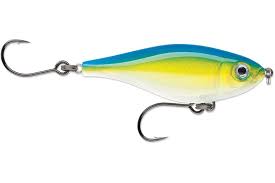
You can convert about any treble hook bait to single hooks if you feel so compelled. The trick is buying the right hook from the beginning, not modifying existing ones to try and make them work. Look here: Correct single hooks
-
Yes there is - prayer ? If you can’t feel the bite because you have no slack line sensitivity, and you can’t see the line “jump” at times as you mention, then prayer is your only hope. Pray that the fish holds onto your bait long enough for you to regain feel and tightness and can set a hook into him before he spits the bait. Personally, I use straight fluorocarbon so I can just feel ‘em and swing.
-
Round bend on everything. I go out of my way to either not buy lures with EWG trebles installed, or take the time to remove them and swap them out for round bends.
-
They are great - just learn slowly. If you have the depth, trimming down on take-off and lifting while running makes a big difference on both ends as opposed to a single height settting. Watch your water pressure gauge closely until you get comfortable with your settings, especially on turns when it's prone to drop. Might have to drop back down a little or run not as high overall. Dropping all the way down in very rough or choppy water can make a big difference in ride comfort and safety, also.
-
Ditto the above - I fish year round, so my drags rarely ever get the chance to be backed off. Never had any issues, but I don't overly rely on them either, so there's that - (how's that for subtle, @A-Jay ?).
-
Gaps the hook eye away from the plastic a bit so the hook doesn’t get wedged into some funny position? It can still free swing, so might aid in hooking and playing fish. Just speculating, as there are different line-through setups (premolded, threaded, plastic tube, etc.).