spoonplugger1
Members
-
Joined
-
Last visited
Everything posted by spoonplugger1
-
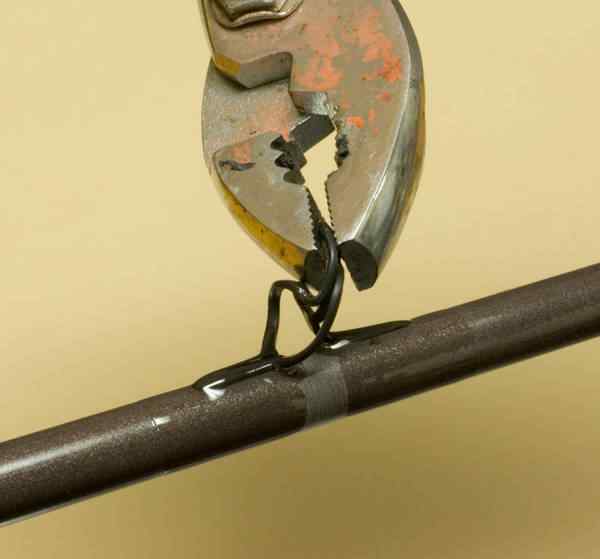
If it was me, I'd see if I could get the winding check to move out of the way, than instead of epoxy I would use PermaGloss rod finish, it is a very thin water vapor in the air curing polyurethane that is also an excellent adhesive and totally waterproof, it's so tough people have made threadless guide wraps with the stuff. An example. Sets in about 1/2 hour where I am in the Pac. NW. If the reel seat spins, I would do so while using to get a better flow.
-
I haven't but then I don't wander all over the internet looking for the best deal and then having to wonder if that is really them. All the sponsors at www.rodbuilding.org can be trusted, they have been around a decade or more, some I have done business with for closer to 22 years, no hackers here, but there are deals to be had from time to time also.
-
Makes zero difference other than guides may have to move slightly due to sections, but that's true no matter how you build one.
-
The IMMP84UL I suggested is not an UL trout rod type of stick, it has more power than the NFC P7000-1, not even close. If any of you have fished the G Loomis PR8400S you are closer in the ballpark though the Loomis has more butt power, they were designed for pretty much the same thing. Just put in the G Loomis model in Google and read up on it. Very light tip, lighter than a 2 power popping rod, it is also faster tipped than you would expect and goes further into the tip before the solid lockup you would not expect from its line rating. The Loomis blank for this rod and the Shikari clone was used for dropshotting before there was dropshot specific rods/blanks that weren't little short, stiff things.
-
I would has recommended another, but I heard the Rainshadow Immortal line is being discontinued, personally I thought they were world class blanks. Of those blanks my choice would be the fantastic IMMP70UL, I have had that rod in use for 18-20 years, it has more butt power than you would expect from its description, but than it is an inshore popping rod blank and those fish can have shoulders. The tip is still light enough to throw things like beetle spins, baby cranks, etc. really well.
-
NFC P700-1 X-Ray C6O2 Epitome.
-
A lot of the ols glass rods were built much like the Tsuka concept with the grips and reel seat built on an aluminum tube with the blank 4 to 6 inches inside the tube, a great way to get one of the limited variety of blanks to be adapted for many purposes and lengths. All the old pistol grip and longer offset reel seats designed for the old round reels had the blank on a ferrule that fit into the front of the reel seat and the foregrip many times was the nut that tightened it all together, lots of those old rods still out there in some old man's garage.
-
Myself I'm not an advocate for thinking that a smooth surface in use is somehow more likely to go flying out of your hand or is less grippy, my experience with hammers, axes, wrenches, monkey bars, jungle gyms you name it doesn't fly that way. When I'm palming a casting reel my hand isn't even on the grip, it's holding that smooth reel, spinning reels are held between the fingers in my hand, very little of the grips are held again unless you are using something like the Fuji IPS or VSS. all the new carbon reel seats are as smooth as your grips. I think you are blaming your grips bad result on the obvious visuals instead the ergonomics. That shape looks cool, doesn't mean it is cool, how many of your hammers, and axes would work well with that shape, or a screwdriver? These spinning grips are better, the taper has the biggest diameter at the butt, locking the hand in position, this is the old Lew's rod grip design, works just as well on standard pipe seats, the fore grip was the same way just more abruptly tapered. A Tom Kirkman photo.
.jpg.ae4d84c187322158da3c5771fb025904.jpg)
-
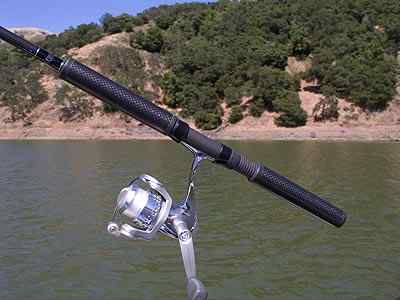
Rod built to Rooster's specs, it's a Rogue dropshot rod design, of old Skamania or Michigan salmon/steelhead rods. A long Tennessee grip also allows you the versatility to move your reel with no restrictions.
-
The KLH height guides are nothing new, that height guide was used in Europe since around the time of WW II, G Loomis has used them since at least the time off the business starting to build rods, my IM6 rods had them, and I bet the older LCI rods may also have used them. They were called "match" guides and came both with double and single feet. The issue is not so much ring diameter as ring height off the blank for best performance, we're talking 5% or less when we are talking about this though. The real advantage is balance and weight out on the tip of the rod; this can be cut dramatically. You very well may be able to use the existing guides you have to get a decent reduction path and just buy some small fly frame guides to finish, saving a bunch of money. The original Concept framed guides are not near the height of the Fuji KLH and similar guides, about half the distance between yours and the KLH guides, wouldn't hurt to try. A 20 mm concept is about the same height as your 25 mm.
-
You never see them do a whole rod or even two guides with the stuff, can you move the guide for alignment after you have laid it down? Also, you have to CP it to activate the adhesive I hear.
-
There is nothing about rod building that is rocket science or can't be done without machinery, when many of us started the internet wasn't around, so thought and common sense was all we had. Asking what if and then setting it up as an unglued prototype for testing, it goes a long way in ensuring thing are installed correctly, up or down threaded section, etc. with good fit and finish which is the most important part. As you remove things from your prototyping just lay them out as they come off the rod, just that simple.
-
You don't need a dryer to get a good finish on your rod repair, you can simply rotate the rod by hand, I don't mean continuously just enough to ensure the finish dries even, when you first put the finish on it will be most fluid and will run to the bottom side in a visible droop in 1-2 minutes, you simply flip the rod over 180 and it will flatten than droop the other way, at which time you 180 it again, it gets thicker and longer between turnings as it sets, you continue this till it sets enough to stay flattened, how do you reliably know when to stop? Check your extra you didn't use as your guide. Press the end of your brush in the extra, when you leave a dent, it will self-level, when it no longer does that, you're done. I just watch something, read a book, build grip assemblies, etc. while this is happening to pass the time.
-
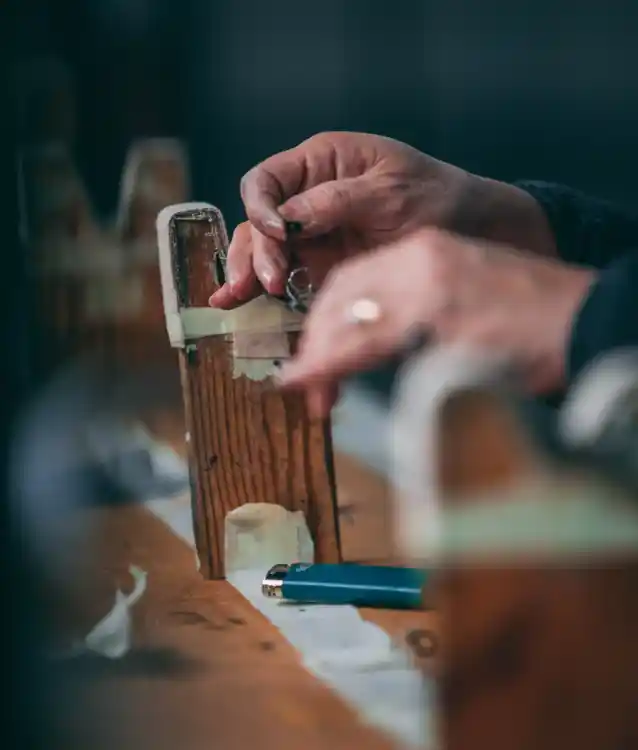
Over at rodbuilding.org in the library section are simple plans to build a rod wrapper out of wood scraps some of us have hanging around, a dirt-cheap alternative. Built mine from oak 45+ years ago, much fancier and pool felt lined the stand v's, rebuilding/upgrading it now to pass on, it could go another 45 years no problem. Other than being a bit longer and lower than the one pictured it is spot on to what I have, notice the thread carriage can turn in on the stand so it takes up no extra room and it slides undisturbed the full length of wrapper before you have to move it, the pins in the stand lets you tie the rod down if you have to cantilever a bit to get to something. Notice the high tech power wrapper in use Lamiglas used over the decades.
.jpg.09334af44732bc0ad59b3aee0e196908.jpg)
-
The first guide I repaired was when I was a teenager 60 years ago, I just laid the rod in my lap and placed the thread in the palm of my hand and ran the thread through my fingers, all we had for a finish was my mom's nail polish which even to this day is a lacquer finish, I imagine that rod can still be found with the fishing gear though no longer used as the primary salmon rods used by the parents. Not pretty but it has been effective all those years of use. As usual nail polish dries pretty fast and was no concern as far as drooping. Your quality sporting goods stores have always had the capability to remove and replace tip tops at the counter; you just pay for the tip top and maybe a buck for the special temp hot melt adhesive that dries in just a minute after it is applied, just enough time to line it up right. If you are just doing these light repairs I would just have a local builder do it for less than it would cost to buy the equipment, they would have the right tip top and guide so knowing how to size everything and where to get it wouldn't be a concern, or the need to buy all the finishes and glue. People at your sporting good counter will know the builders/rod/reel repair people.
-
It took me about 15 seconds to figure out how to make my own longer version that follows the rules of extension building, the pictures make it pretty obvious, and all might be available at your hardware store. Same basic design just make it longer both ends and use aluminum hardware to save weight.
-
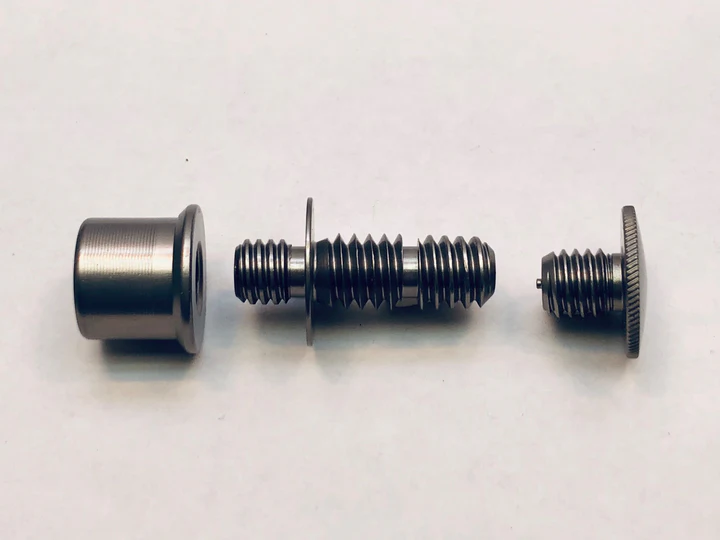
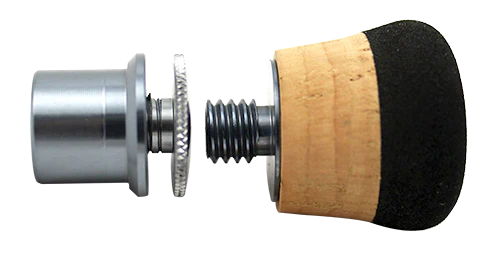
An 8 inch grip should be no problem to two hand cast, there are a bunch of crankbait rods out there with that length grip, the trick to getting the screw on extension, here is an idea from fly rods, the issue though will be the length of the extension that is needed to anchor both side when installed, a bit of ingenuity is needed due to the increased leverage over a fly rod's needs. If you keep it 1.5 inch extension you can modify this to work, from REC, cost 12 dollars. The piece on the far right of the first photo is the plug to cover the hole when you remove the fighting butt and give a finished look. I built the Lami above in the S Glass version 25+ years ago the blank is 3/8 oz. lighter and a bit livelier. The MB 705 1E blank was always available in honey, white or black. the SMB 705 1E S glass is a red brown,
-
I'm willing to bet you are not using the smallest and lightest and least number of guides that will work for your application, extending rear grip lengths can cause a rod to get in the way while wearing a life jacket, rain gear, etc. We shouldn't have to work around a rod, that does more harm then was accomplished by improving balance benefits. Myself, I was raised in long rod country and went through the balance thing with many others in the '80s, didn't last long, we all learned the long grip lessons. It's not just the rod length, the blanks, components, reels, etc. are all lighter, put one of the old 8 - 9 oz. reels on your rod and it changes the picture. Nothing is linear here, a 3 mm F frame guide is not 1/2 the weight of the 6 used by most, it's very close to 1/6 the weight. This has been known in Europe and Japan for decades, G Loomis has used 4 mm guides for decades on steelhead rods, Shimano brought those guides to the US on their Aero rods decades ago when they brought the long spool reels we used today here, Berkely did the same, reducing guide size on their Series One rods in the late '80s, early '90s, along with fancy reel seats like some today and trigger seats that exposed the entire blank from the trigger to the threads, Castaway used a similar reel seat, like many things in the US, even if it's better it doesn't mean we will use it.
-
Ersteman, It's pretty simple, use the smallest, lightest guide that will pass the knots, or other interferences that need to pass through them. If you are using light small diameter lines and no knots, you can go very small with the running guides. I have match and steelhead rods that were built with 4 mm running guides 40+ years ago, some are factory G Loomis rods, when Shimano first brought out the long spool Aero reels back in the 80's to the US, they had a whole line of spinning rods built with those guides, they have been used in Europe and Japan for a very long time, I saw a German ceramic guide set owned by the owner of Snake Brand fly guides that were made somewhere around WW II, they had beautiful white ceramic rings and bright yellow shock rings. Things aren't as new or untested as some would want you to believe. Do yourself a favor and install one of your spinning reels on one of your casting rods and put a weight you would normally use on it and go cast it. Just about anything you do with a spinning guide set will be superior, but I think even this terrible combo will surprise you. The knowledge needed to build your best rod is not in the box used by the factory rods, they have to build not knowing what you are going to use as far as reel, weight and line. this is not new to me I bought a long match spinning rod from England 40 years ago that has a 10 mm first guide, it casts 8 lb. mono on a 2000 Shimano Spirex reel into next week. I have built spinning rods that the first guide from the 2000 Shimano reel are high frame guides with 10 mm ceramic rings, followed by an 8 mm, 6 mm, then 4 or 3 mm guides depending on the rod and when I built it. All cast as well as my standard guide patterned rods on the same blanks. 8lb. braid, tied to an 8 ft. 8 lb. fluro leader that is long enough to spool on reel. I didn't come up with this pattern, and I have a write up from Bob McKamey the dad of Hunter McKamey the gentleman that does the Mudhole vids, Hunter built the rods they compared some 15 years ago or better when he was a kid, after learning about it from Pat Vinzant a rod builder who specializes in light, high performance spinning rods. I'll be happy to send it to you if you like, as always you don't have to build a rod out to try different things, you just need to tape on a guide set and go test cast it, there is no rocket science here.
-
SiC guides are needed for times you have high friction loads, wet lines on a bass rods are not high friction loads where the lesser ceramics can heat up and damage your mono or fluor line. I have 40+ year old saltwater rods that see far more of this then any freshwater rod using the same light guides you see on your rods with zero problems. One self built rod has been fed a diet of 80 lb. braid, 2+ lb. sinkers and fish approaching 10 ft. in length. Guide designs are way over engineered for the fishing loads they see, concern yourself with knocks, storage and transportation issues when selecting guides, if your rod is riding in the back of your truck with a loose spare tire, rods on deck to stepped on, etc. you have guide and blank selection issues already. By the way a gentleman with a Rainshadow Immortal, RX8 medium power steelhead rod rated 8 to 12 lb. line, 3/8 - 3/4 oz. lure wt. caught a 125 lb. salmon shark in the Sitka, AK area close to 20 years ago. The carbon used in your blanks has been long tested and used, like many of the RX8 line they are nevermore not because there was something wrong with them, but because the public wouldn't spend the extra $10 in the case of the above rod. I own many RX8 rods, most now discontinued, they are superior products in their category.
-
If you really want to know and use Stryker blanks, a $80 order at their already discounted price by 30%, gets you a free sheet of the stuff.
-
If you counterweigh your tip down rods, when the tip is down, and the weight is up does that weight act more like a heavier rod and reel or as you intended in balancing it? How about if you kneel and reel? Remember there is no need to guess, you could stand on a chair, your porch or other raised surface to imitate your casting deck and test it.
-
Thread will still be my choice, this stuff doesn't stretch, so how will it hold the guide in place? It may work for fishing tension and angles, but how will it do in a snaggy rod locker or when on deck with all the things that happen? It also has a lifespan before it is no longer viable, much, much shorter than stretchy thread that holds the guide firmly to the blank.
-
I encourage everyone to build rods they believe make them a better fisherman, confidence is a big factor in fishing at your best. I would just say there is no reason to not know for sure if what you are doing with any rod is what is best for you, there is no need to begin building a rod, or finishing it without testing your assumptions, the butt cap in this instance can go on at any time, it doesn't need to be permanently on there to fish the rod. Another option is the Alps DBE balancing system, you just add or subtract discs to get your balance or put none in at all and you only have added the minor weight of the hardware involved to make it work, either way you have a nice, finished result when you're done.
-
Since the rod was designed for treble baits and you usually fish those in a tip down presentation why would adding weight to the rod be an advantage? Most presentations are tip down so most rods don't need balancing, even so I don't add extra weight to any rod, as rods get longer, basic physics takes over, and they all are going to be tip heavy. Moving baits negate the tip heavy feel in use due to the drag they produce.