Way2slow
Super User
-
Joined
-
Last visited
Everything posted by Way2slow
-
Every time I look in the Browse, the heading for where this toping is posted says "Gun Forum". Some of us know a little more about things than just fishing and this site is setup to let us discuss other things than just "fishing". If you look, you will see a Hunting Forum and all kinds of forums for the discussion of topics that have nothing to do with fishing.
-
OK, been a couple of days and several more load test and it has a problem with flyers. Not real sure flyers is the proper term because they are not that far off, but enough to bug the stew out of me, trying to find the cause. It will place bullets a few bullets touching, then it will throw a shot or two 1/2" away. Similar to what it did on the target posted but twice the distance, and it does this fairly often. You would be hard pressed to get a touching five shot group out of it. It might shoot a 1/4" three shot group but it will usually send one or two out a 1/2" on a five shot group. I'm still shooting it with the factory polymer stock, even though I have pillar post bedded it and free floated the barrel, it might be doing strange stuff. I've never messed with one the tinker toy stocks and there's not much to it. I started to order a V-Block for it, but that would be throwing $150 away since I have no intentions on keeping this one. It could also be the crown. The last inch of this barrel ain't that pretty when looking at it from the inside. If it gets to bugging me enough, I will cut an inch off and re-crown it just to see what that does. It could also just be the stresses in this factory barrel as it warm up. Naturally, if a rifle shoots 0.6" five shot groups one would normally be thinking great, and that may be as good as it gets, but I'm still tweeking on it.
-
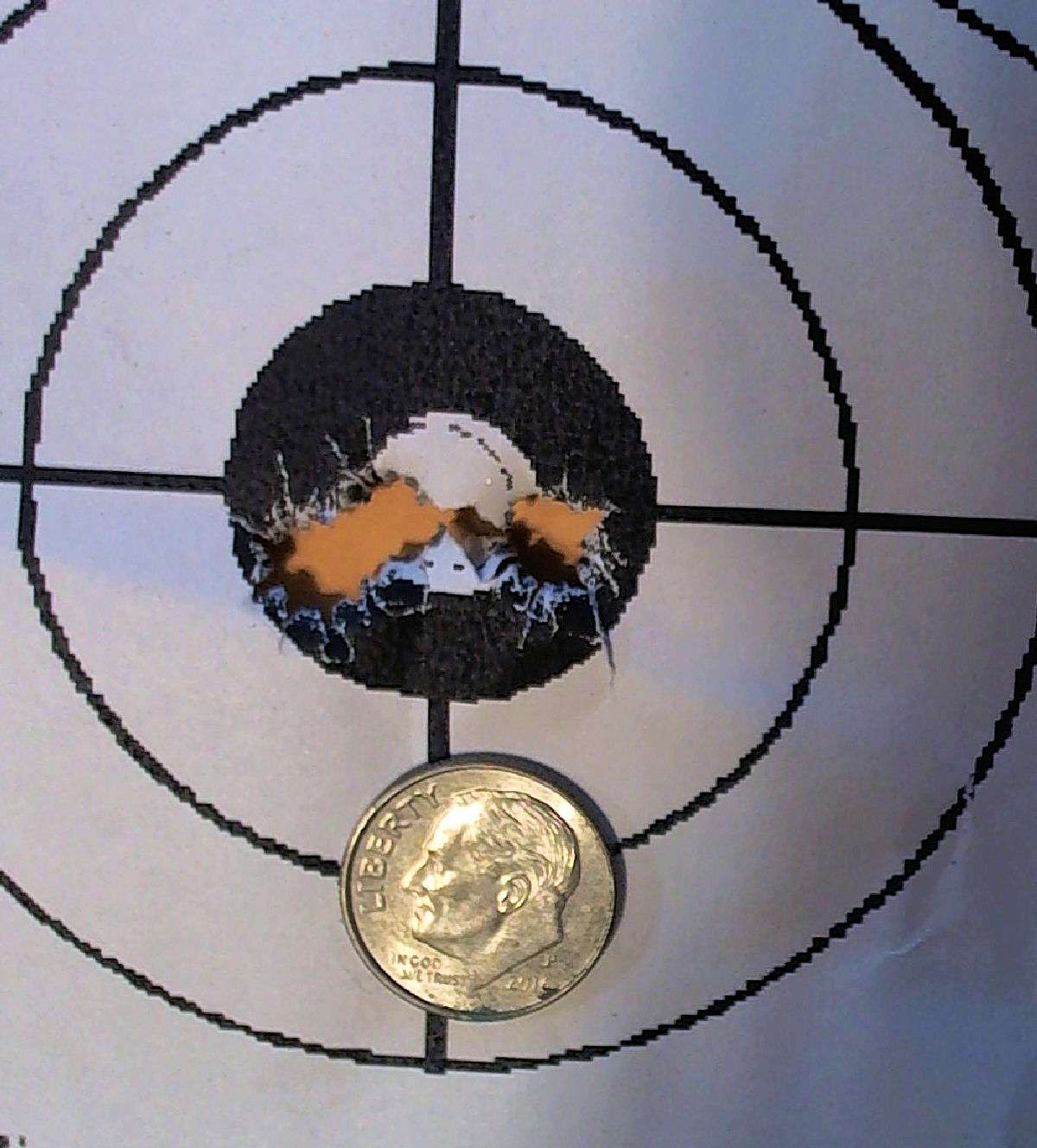
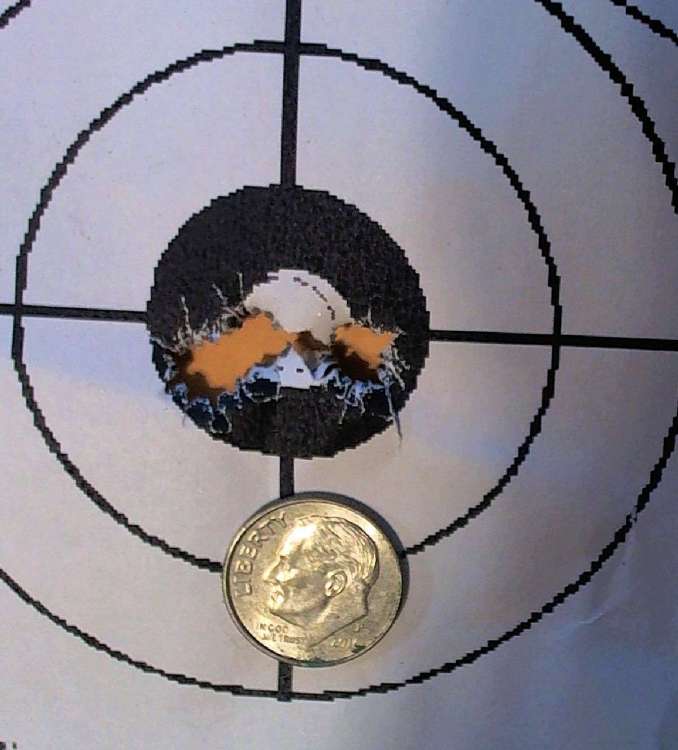
Well, I've talked so bad about it, I guess I should show how it shoots after the work I've done. This was just trying some IMR4350 powder I'm having pressure problems with in that 270, so I loaded up three 129gr Hornady bullets with 42 grains of it in the 700, Creedmoor to see what it would do in it. Shooting off the top of the tool box on my truck using the bye pod @ 100 yards I guess it did ok.
-
Yep, when they say non adjustable, they mean to the average user. Just means they didn't put the external allen screw in the trigger. The first thing I did was pull the action out, remove the magazine box, clean the epoxy out and adjusted it to a 2 1/2 pound pull, but it's doesn't have the fell I like. I will eventually disassemble it and do the same magic on it I do on all my Remington triggers. When I said I like the earlier triggers, I'm talking the late 60's to mid 70's. When they had to start paying all those law suits, that ruined their triggers for a long time but supposedly they got it right with the X-Pro. Guess I will find out when I finally decide to tear this one down. The fun part was, when I took the 700 to shoot, I also took a 270 I've about finished. I had changed the scope to the one I plan on using on it, but haven't changed the trigger spring back to a "more normal pull" and it has about a four ounce pull. Going back and fourth between a trigger you only have think about squeezing and one with a 2 1/2# pull makes for some interesting shooting. That 270 on it's worse day shoots 0.6", five shot groups @ 100 yards and consistently shoots in the 3/8" range, and every now and then will shoot one ragged hole. That's shooting 140gr Berger VLD Hunting bullets and 3,035 FPS average.
-
That's a nice group for a deer. I shot this one late yesterday doing a little breaking in on the barrel and zeroing the scope. After I had 10 rounds, cleaning after each, I shot one three shot group at 100 yards, double checking the scope zero and it shot about a 3/4" group, which would make "most" people happy. At least after those three, there was very little copper fouling, so a little more break-in will probably help that, plus I have also lapped the barrel some. Don't get me wrong, I'm a fan of Remington's. Between shot guns and rifles I've got a couple dozen, literally. Since I do my own customizing and blue printing/accurizing, I've just haven't bought any of their new guns in many years. I've always liked the triggers in the earlier models but since I've been looking for a few months now, and haven't found one, I was at Bass Pro Shops and saw this one on clearance at a price I couldn't turn down. Plus I've always wanted to check out their X-Pro trigger since it's supposed to be a very nice trigger once it has been gone through, and this one has that. It's just like everything else, since most everything now is made in China, with such poor quality, I guess what few American companies that are still making their own here in the US, has to cut every corner they can to compete in the lower end of the market, and they definitely cut a lot of corners producing this one. I've just drilled the stock for the pillars and in the process of pillar bedding it. I lapped the lugs on the receiver some but can't get enough for both to seat. The head space was already at .003" out of the box and I'm at .004" now so that's something that will have to wait until I blue print it. Yea, this is all sort of wasted effort but I've always like take so, so shooters and make them shoot bug holes. Right now my build is on hold until after this virus stuff, so I'm just playing.
-
I must say, I am more than a bit disappointed in where the quality of Remington rifles has gone. This is the first new Remington I've bought in probably 40 years and it's nothing like the older models I have always bought in the past. I usually buy an older Remington from pawn shops or used gun dealers for my builds but haven't found any suitable so I bought this new one. Basically one level above being junk as it comes out of the box. Very cheap built and very poor machining. Granted, this was one of their cheaper model 700's but it used to be a 700 action was the same, but I guess not now. I would hate to know I paid $1,000 for one and got this kind of machine work, just looked prettier. I can still use it, and when done it will be just a good as any of them but the initial quality of this one sucks.
-
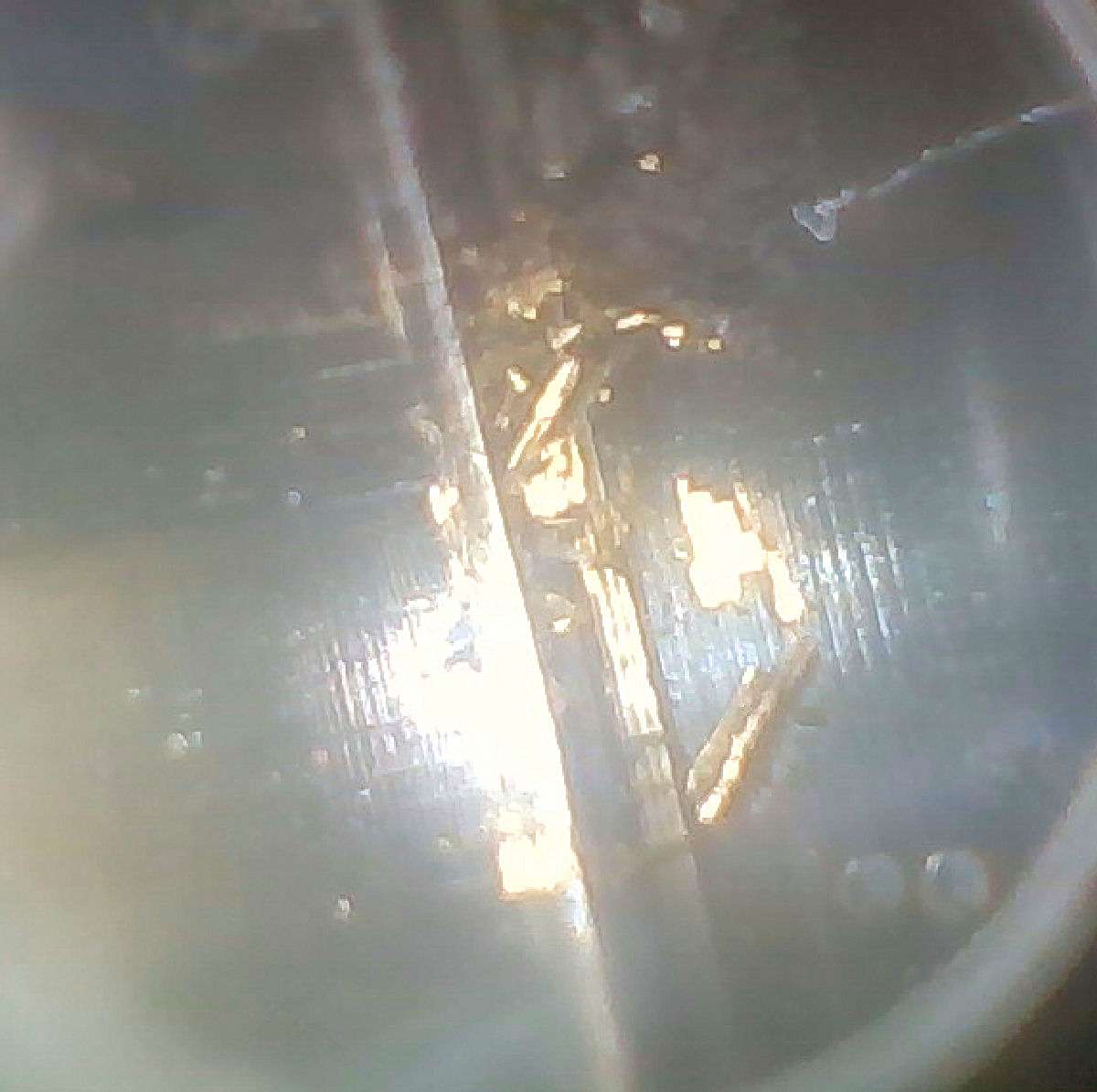
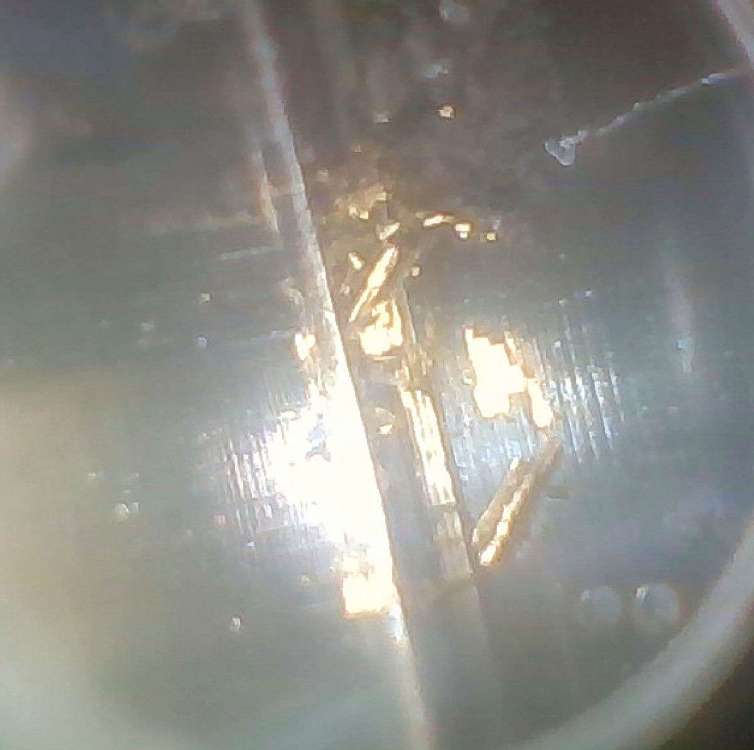
Brand new Remington 700 6.5 Creedmoore with 26" Varmint barrel. Just took it out of the box after getting it from BPS and doing my initial cleaning and inspection. This is what it looks like after Remington did their test fire. First picture is copper off the bullet when chambered pilled up in the throat. The second is the copper guilded to the lands in the barrel, and this was after a number of passes with a bronze blush and copper removing bore cleaner. This is a rifle I bought on clearance at a good price just for the action for a build I want to do. Been a long time since I've looked at a new Remington barrel, and dang glad this wasn't a rifle I planed to use. Just for the challenge, I do plan to lap the barrel, pillar bed the action and do some of my magic just to see how well I can get it to shoot. It's going to be some time before I'm ready to tear it down to start blue printing it and putting my Shilen Select Match grade barrel on it.
-
I've used it for years for a quick clean and wipe down when I don't have time to do a full cleaning or on a trip for several days and the stuff is great, but with some powders, it still won't get that doughnut without some work. H4831 cleans like a breeze after several rounds but after a hundred or more, it gets hard. Varget, and some of the Reloader powders, on the other hand does not clean worth a darn even after a few rounds. Matter of fact, I have almost totally quit using Varget because of that. I have one heavy load that I have not found a powder as good in my 223, but that load is used at 1,000 yards and since I rarely shoot it that distance anymore, I live with it. Pretty much stick with the 6.5 stuff for that now. If you do much shooting and have a barrel that copper fouls, Barnes CR-10 removes copper about the fastest of any I've tried, and over 55 years of shooting, there's not many I haven't tried. However, I don't think I would want to get it anywhere near nickel plating. I has a very strong ammonia base to it. I have a couple of barrels that for some reason, the last four inches will foul after a number of rounds and the Barnes takes it out with cotton mop and reasonable effort, and no brushing. I hate having to run a brush through the bore. When scrubbing the throat, I use an undersize brush (it doesn't hurt to reverse an undersize brush) and only scrub the first few inches of the barrel.
-
The water I think is more like nitros. It vaporizes and induces a whole lot more oxygen, making the EGT's sky rocket and just burns it clean. That's why is so dangerous to use it. A crack or leaking head gasket that's letting water into a cylinder will make it melt the piston in a heartbeat. A whole lot of people that owned the early 60 degree OMC V-6's (150's) learned that one the hard way. The early production years had a casting flaw that cracked and let water into the cylinder and they melted down. It can also spike the compression and cause break a ring and one of the groves around the piston. That's why I would never use it on and engine that I was not tearing down to rebuild. I've seen a lot of people that say they do it. However, that's like using starting fluid in a diesel, I've seen a lot of people do that, and I rebuilt a lot of diesel engines with broken rings and pistons back in my working days that they did that to. Kubota's were the worst about breaking with starting fluid sprayed in them.
-
Thanks, I may try some on and engine I plan to pull the heads or tear down and see what it does on a hot running engine. I know it won't touch the carbon on a cold piston. I'm a fairly avid shooter and have experimented with just about everything known to man searching for something that will dissolve that hard carbon ring that forms in the throats of a rifle barrel. I would do this by using a piston that had a carbon buildup on it and using different solutions on it to see if it would dissolve it. After 24 hours SeaFoam would not phase it. It would not even make a black spot on the rag I wipped it off with. Aqua Seal carb cleaner would take it off, but that stuff was a little harsher than anything I wanted to soak the inside of a good rifle barrel in. So, it's still a lot of scrubbing with a bronze brush and bore cleaners.
-
I'm a major fan of SeaFoam, years ago, a friend that worked at a parts warehouse got me 15 cases at $24 per case ($2 per can) and I use it in everything. Hate to see the day the last can is used, for what that stuff sells for now. I have never tried to use it decarb and outboard but I doubt it would do much good. The Mercury sells works pretty well. A friend of mine that was a tech rep for OMC, back when they were in business, said the additive that Yamaha makes works but never tried it either. OMC/BRP's and Mercury's are the only two I've ever used. You will also hear of using water, and I've used water on car engines before tearing them down, that works great, but I've always been a little gun shy of trying it in a good motor or an outboard. During WWII they used it in airplane engines, kinda like a shot of nitrous when they needed a sudden burst of power, but the engine was removed and rebuilt after they used it but it will definitely clean the carbon out. Now, if you are talking about just adding it to the gas, I almost always do that. If you happen to have some left over from a trip, it will keep it fresh a lot longer than just letting it sit. It also does good at keep the shellac cleaned out, but don't think it would do much for the hard carbon buildup around the pistons and rings. It does good and preventing it, but not sure it would do much for removing it.
-
I'm with WRB on the plugs. NGK is a good plug and a lot of the Mercury racers run them, but I always run the factory brand. If the factory installed Champion, when going with a new set, I would go with Champion. However, that would be another good question to ask one of the guru's on S&F. A lot of the racers run NGK, but those engines are so modified, there's not much left of what the factory did. Another thing, check into Mercury's thoughts on an engine that see's very little WOT and a lot of idle. I know some manufactures recommend going one range hotter on the plugs under those conditions. Sorry for getting it off track, but that's over and done with, so I hope it doesn't discourage you from continuing posting, and asking questions as they arise, and keep us up to date on what you find as you go through the process.
-
It's been a long time since I've posted on that site. There is one guy on there that seems to think the OMC Johnson/Evinrude site is his an gets very upset if you mention anything about modifying a motor. He only knows the factory stuff and will run someone off if they mention mods. Just for kicks I logged into S&F for the fist time in a couple of years, I had 11 notifications from different users so I logged back out. On there, I don't use my screen name I use hear. I had to change to keep people from doing a search and finding me and getting bombarded with question it's been to long since I done the stuff and would have to research a my notes now to find the answers.
-
You might want to try the S&F sight also. There used to be a whole lot of guys on there that live and breath Mercury's. I used to do lot of technical advising on OMC's on there but since I've gotten out of the hot rod motor stuff, I rarely get on there anymore. The last time I was on there, I got bombarded by people that said they been looking for me and wanting to know how to do different mods on their motors. It's probably one of the best technical sites on the web or at least used to be.
-
Nope! As stated, I just made my last post on the subject. What's that old saying about arguing with an*****. I've tried to explain, and it's not getting anywhere, so I give up.
-
You obviously know absolutely nothing about a two stroke engine and are ungodly hard hardheaded. I don't care if there is even no rings or even a piston in the cylinder, IT IS NOT POSSIBLE TO PRESSURIZE A TWO STROKE ENGINE CRANKCASE FROM THE SPARK PLUG HOLE DOING A CYLINDER LEAK DOWN TEST. I'm done, have a nice day.
-
Like I said, you don't have a clue as to what you are talking about when it comes to doing a leak down test on the cylinders in an outboard motor. You are still trying to use your references for pressure checking the crankcase on a motor cycle. I would luv to see you trying to plug the exhaust ports on most any outboard, much less something like a big V-6. I'm not trying to be argumentive, I just don't like someone posting bogus info and someone reading your post to think it's right. As I keep saying, crankcase pressure testing is a totally different animal. It's not even possible to pressurize the crankcase doing a cylinder leakdown test. So you have worked as a rigger in a boat shop for a short time, I have built, modified and raced outboards for almost 50 years and know a number of very well known engine builders and have never heard of an engine being damaged do a leakdown test on the cylinders. With 50 years experience and doing untold number of leakdown test, and knowing of others that account for thousands of cylinder leakdown test being done is all the verification I need. Oh, and just for gee wiz, check out this U-tube and a dozen more like it if you do a search. I deleted the one on the Yamaha 225, didn't notice it was a 4 Stork. Also, the gauge they are using works a little different than mine but serves the same purpose, theirs you pressurize and balance first and reads direct percent. My old style one, I pressurize to 100 psi on the first gauge so each pound of drop on the second gauge is one percent. Theirs the input can be less than 100 because it's reading differential pressure. Both systems are using high pressure, you just read them different.
-
Not sure what kind of two stroke you might be referring to, but all I have ever worked on, it would be impossible to get a reading at BDC. The exhaust port is wide a** open and there is no way it's going to build any kind of pressure with all the air going straight out the exhaust. If there is enough blow by on the rings that you pressurize the crankcase doing it at TDC, then it wouldn't matter anyway, the engine is so badly worn, it needs rebuilt anyway. However, I don't think a .040" orifice could ever hope to pass enough air to pressurize the crankcase even if you have perfect seal on the reeds, There's enough blow by on the crankshaft seal rings to bleed it off, and the siphon valves would pass more than that small of an orifice could ever hope to deliver. What you have referenced to is crankcase pressure testing. They are referring to as a leakdown, but that's of the crankcase, not checking piston ring condition. I think you have dug a whole into something you know nothing about and trying to dig your way out again.
-
Something like this https://www.basspro.com/shop/en/quicksilver-power-tune. It's sprayed in the throttle bodies. I wish I had more experience with Merc's because not having it, makes me a little leery on expressing my opinion. If that was one of my engines, I would say they are way too dark around the lower part of the insulator, but that may be totally normal for that motor. I would suggest posting that picture on Scream and Fly and asking them. Tons of Mercury gurus on there that can offer a whole lot more help that me. https://www.screamandfly.com/forumdisplay.php?20-Technical-Discussion
-
Another thought, since that motors has a pretty good track record of long idle periods, I would do some serious decarbing. I would get about four cans a do it twice. I would use two cans at once, one on each side, quickly going up and down each side of the intakes with motor with enough to just barely let the motor run with some pretty good throttle applied. As the cans get low, give a big dose, enough to choke the motor down. Let it sit over night, and do it again, letting it sit another night or so. Then take it to the lake and make a WOT run for a few miles. When you get back home, throw a new set of spark plugs in. If you have recently replaced the plugs, put an old set back in to do the decarb, the put the new ones back in after the WOT run. Just be aware, if you have neighbors, they are not going to like you, but you will probably chase every bug within five miles away because of the major amounts of smoke. Don't do it over your paved drive either, unless you have something to catch all the black crud that is going to drip out of the exhaust.
-
imbatman. I guess I missed something in your leak down test and not understanding what you are doing. The only leak down test I know of is using a special leak down tester that screws into the spark plug hole. It has two gauges on a manifold with a .040" orifice between them. The Crank is locked into position at TDC and 100 psi of pressure is applied (tester usually has s small regulator on it to set it to exactly 100) and read on the first gauge, it passes through the orifice into the cylinder and the second gauge reads the pressure that's on the cylinder. If there is zero leak down, the cylinder side will also have 100 psi, but that ain't gonna happen, there is always some bypassing the rings. Anything below 95 psi on the second gauge 5% blow by is considered to be not very good, it it's at 90, 10% or worse, its considered a motor ready for a rebuild. Now, the crank does not have to be locked, if it's on absolute TDC, it will stay there, but if it's off even a micro amount, the piston is going to fly to BDC when pressure is applied. I believe you are thinking about how to pressure the crankcase, which is a totally different animal than a leak down test. As a for gauges, I've seen too many times someone replaces the Schrader valve with something besides one with the white band around it, and see very low numbers or the Schrader valve just be bad. I've seen these Harbor Freight gauges have gauges on them that were 20 or more pounds off. The gauge itself can be easily be tested by comparing to a known good gauge but the Schrader valve (the one inside the end that screws into the spark plug hole) can only be tested by replacing it with a new one, WITH THE WHITE BAND. Those only require less the 10 psi to open them, the blue ones like found in car tires require as much as 30 - 40 psi to open them. The white band ones can usually be found on most of the MATCO or Snap-On tool trucks. Now, if you are 100% positive your gauge is accurate, and you are only letting it hit about six times on each cylinder and you are coming up with 90 PSI, you have a major problem. I've never seen a motor wear out so evenly that all six cylinders lost compression that equally. Usually, you will see as 10% or more fluctuations between them. Since I don't work on Mercs, I don't know what that motor should run, but I know on my DFI Evinrude it runs about 128psi compression. Since the fuel injected motors have a very good computer control system on them, they can safely run a lot higher compression than the old carb motors from back in the late 80s and early 90's. So, my first check would be if they offered different thickness head gaskets for your engine. If they do, I would consider getting a set of the thinnest set available and swapping them out. FordsnFishen, if your plugs run the compression rings, a lot of the speed shops sell indexing compression rings. They usually have about three different thickness, in each set, but some tend to be just a little bit proud of them. Just make sure they are the diameter that fits your plugs. If they are close, you can get away with just slightly over torqueing them but understand, I said slightly, you don't want to be stripping out no plugs holes. Unless they are extremely expensive plugs, I usually just buy about three sets and can usually find enough that will index properly.
-
I don't get too wrapped up in compression numbers being lower than normal. That could be caused by a difference in gauges or other things. The readings being within 5% is the critical part. That's why I prefer doing a leak down test over compression test. One thing people tend to over look, doing a compression test on a two stroke, the throttle plates should be fairly open so the motor can get the air it needs to give a proper compression. Granted, it's better and has a better indication of motor condition if it has been brought up to operating temp before doing a compression test. When I do a compression test, I warm the engine, open the throttle at least half throttle, and let it hit the same number of times on each cylinder, six hits is my magic number I use.
-
Once it's running, you should be able to see what the charging system is doing by the volt meter. It should have over 13.6 volts when running at about 2,000 rpm or more, so the battery would not be causing a problem. Where the under sized battery will get you in trouble is on a cold morning. When you try starting the motor, it may crank over but the voltage drop can be so great, the ignition system may not fire. It will also run down very quickly when trying to crank it.
-
You can't tell much about how it's burning once it has idled, most all two stroke motors are going to carbon plugs when idling. That's why you do what's called a plug dump, the WOT run and shutting it off or pull the kill cord. The butterflies should be going perfectly horizontal. 80% open means that's 20% of pedal response that's not being used. It also makes a difference if you index your plugs. I never install plugs without indexing them. Some manufactures make different thickness compression rings, if they run them. For those that just run a tapper seal, it takes have a couple set of plugs to work with. Looking at the carbon and what you describe you are seeing, it sounds like you have an over oiling problem. Now, you are getting into no mans land for me. I don't know crap about Mercury motors. I can build you one hellava OMC, but have not done much with Mercs since the early 70's. If have one sitting in front of me, I know motors well enough I can fix most anything one can throw at me, but, to be able to tell you what or how, since I've never seen your motor with the cover off, I can't offer much specific help. One other thought, I think that motor runs carbon fiber reeds. Those have a tendency to have a little extra blow back. Reed valve motors are going to have a small amount of blow back through the carbsl
-
I think you just told me what the problem is, and it's not the boat, it's the motor. Sounds like it's running ungodly rich. Next time you take it out, take something with you so you can remove the spark plugs. Do it in the driveway first just to make sure you have everything you will need. While you are doing the driveway trial run, pull the air silencer off so you can see the butterflies in the throttle body. Press the hot foot full throttle and make sure the butterfly's are going fully open and not beyond full open.as Now, when you take it to the lake, make a WOT run for about five minutes. Do this so you will be back close to the ramp at the end. While still holding it at WOT, turn the ignition off, do not let it idle. Use the TM to get back to the ramp and on the trailer if need be. Now, remove all six plugs and see what color they are. In that motor, they should be almost snow white. If a little tan, that's not too bad, but if any are dark or even black, that cylinder has a major problem.