



king fisher
Super User
-
Joined
-
Last visited
-
Currently
Viewing Topic: Braid color. Brown VS Moss Green Vs Black
Everything posted by king fisher
-
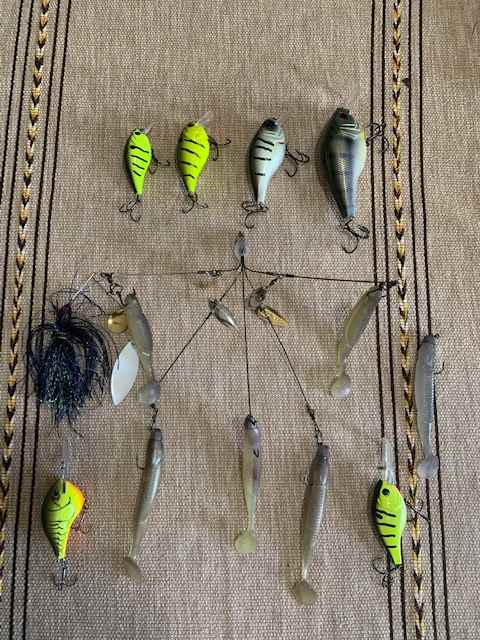
I have next to zero experience with these just getting started so please don't think I know what I'm talking about. Bass in Mexico can be less than smart, and at times, will hit improperly rigged junk. I used a full size model from Hog Farmer. It had 5 arms, with 4 willow blades. I put 5 Skinny Dippers on. The top two Dippers were nose hooked with hooks only, the bottom three had 1/4 ounce jig heads with the Dippers. I am going to try and find lighter jig heads, with bigger hooks to try next time. I'm trying to keep the cost down so haven't bought any special swim jig heads yet, but I'm sure I will be going down that road some time.
-
I caught my first fish on an A rig a couple days ago. I bought one a few months ago, tried it once and put it away. Tried it again and here are my thoughts. What I don't like 1-- Takes a long time to rig 2--- Takes up way to much space in my kayak 3-- Expensive, I fear snagging and loosing $40 on one cast ( must have been invented by Bait Monkey) 4-- Way to heavy 5-- Difficult to cast 6-- Need specialized rod, my flipping stick worked, kind of. 7-- May need expensive surgery on shoulder from bass trying to rip my arm off. What I like 1-- Catches big bass 2-- Bass try to rip my arm off 3-- Sore shoulder Way more good than bad. I am hooked. I will bring a salmon rod down from AK later this summer to see if it will cast the monstrosity better. If not, Bait Monkey got me again.
-
The knot in the video is called a double hang mans knot. If the doubled tag continued on up going through the top loop it is a San Diego Jam knot. If you take the doubled tag, and go through the bottom loop then go back up through all the coils it is a doubled nail knot, Doubled nail knot is a great floro knot, but difficult to tie without a nail knot tool or hollow tube. All three are good knots even if line is not doubled.
-
Bristol Bay Alaska, sometime in the 50's before any lodges were built. I would like to have my own Super Cub a good friend, unlimited time and fuel, and some modern fly rods, and conventional gear. As others have said I would trade all that for a day with my dad and grandfather on any water, any day.
-
You could try hollow core pencil lead. Just cut off a piece of lead the size you want and slide the line through the lead. Pinch off with pliers. When the lead gets stuck pull hard and it slips off saving your hook and bait. Advantage is you can use any weight you want, pencil lead snags less, is inexpensive, and you only loose the weight. Salmon anglers have been using it in rivers for years.
-
I only replace braid when I get low on the spool, which is rare, 2 to 3 years. Braid will last a long time unless fished around rip rap without a leader. Braid has very little abrasion résistance to rock, but other than that is bullet proof for years. I replace mono often, because it is cheap and I am always cutting the last few feet off before I retie. I also change mono every time I decide I want to switch to Floro happens about twice a year. I replace Floro every time it gets kinks, over stressed, or runs low on the spool which is often. I also replace Floro every time I decide to switch back to mono. Happens about twice a year.
-
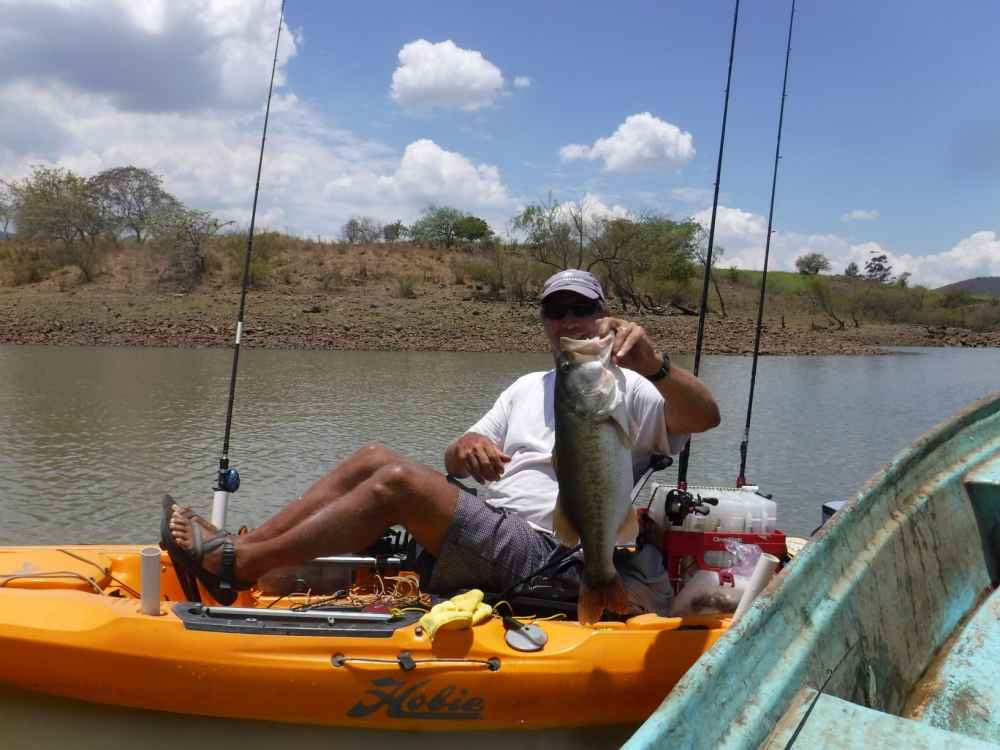
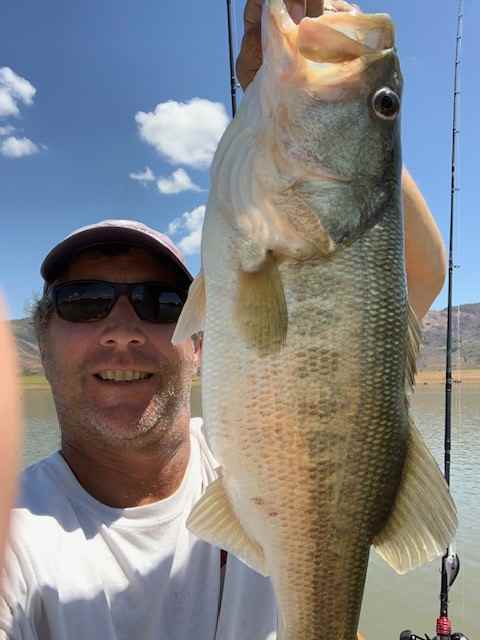
The weather at my favorite bass lake in Mexico, has been exactly the same for the past 6 months. I saw that there was going to be the first rain since November, so I changed some work projects and went fishing for two days. The first day was Thursday, I got to the lake and hour before light and the sky was clear, 68 degrees, and no wind. Not what I was expecting. I fished a few favorite spots for nothing. Marked a few fish on a drop off caught a few small bass and one five pounds, on a deep diving crankbait. I marked more fish there, but couldn't get them to bite. I spent most of the day fishing trees, for small bass, and one giant that hit a spinnerbait, and got away. An hour before dark, the predicted storm was approaching so I went back to the the ledge. I made a long cast up on the flat with a deep diving crank bait. I cranked one crank, and had a 5 pounder on. Next cast same thing. The bass I had marked in 12 feet of water earlier had moved up on the flat, in 5 feet of water, and were hitting. I switched to a square bill and landed a four pounder. The wind was blowing 35 knots so I put a bigger square bill on to cast further, and landed a 6 pounder with a huge tilapia tail hanging out its mouth. After seeing the size of the tail, I tied on the biggest square bill I own on. After that I hooked a bass between 5 and 6 pounds every time a drifted by that spot. I finally had to stop, due to the wind, rain, lightning, and darkness. One more drift, one last cast had gone on for way to long, but was worth getting wet, and scared. Camping that night was far from dry, but I was ready to fish at daylight. I went back to the flat, but only landed one about 5 pounds further out on the drop in 12 feet of water. I new there must be more fish there, but couldn't get a bite on anything. I tried crankbaits, spinnerbaits, worms, jigs not a single bite. I spent a couple hours of the flipping zoom old monsters into trees for smaller fish. When I went back to the ledge I tried crankbaits again for no luck. I was going to call it a day, but decided to try a Reaction Innovations Skinny dipper on a jig head before leaving. First two casts were big fish, that got off. Next cast was a 6.5 pounder. Just to find out if it was the lure or timing, I dragged a Texas rigged worm, slowly over the drop, and a couple casts with a crankbait for no luck. Put the Skinny Dipper back on and first cast landed a 6 pound bass. I caught a couple more then the bite finally stopped and was getting time to leave, but before leaving I wanted to try an A rig. I had never landed a fish on one, and thought if they wanted one swimbait, why wouldn't they want 5? The rod I have is way to light for and A rig, so the first cast resulted in a professional grade back lash. Next cast was a 7 pound 23 inch bass. I hooked a fish almost every cast for the next 20 min. then had to go home. Just what I needed, an excuse to buy another rod, more A rigs, skinny dippers, and giant square bills. I guess great days bass fishing are not free, but well worth the cost. Biggest bass was 23 inches, 7 pounds, numerous 4 to 6 pound fish.
-
yes
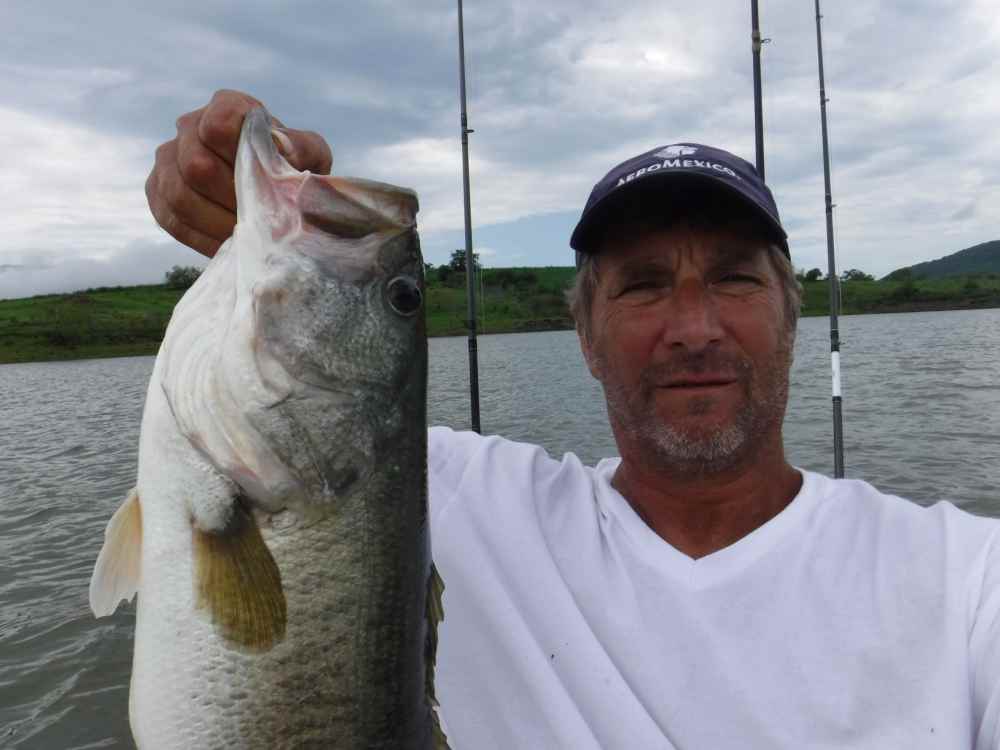
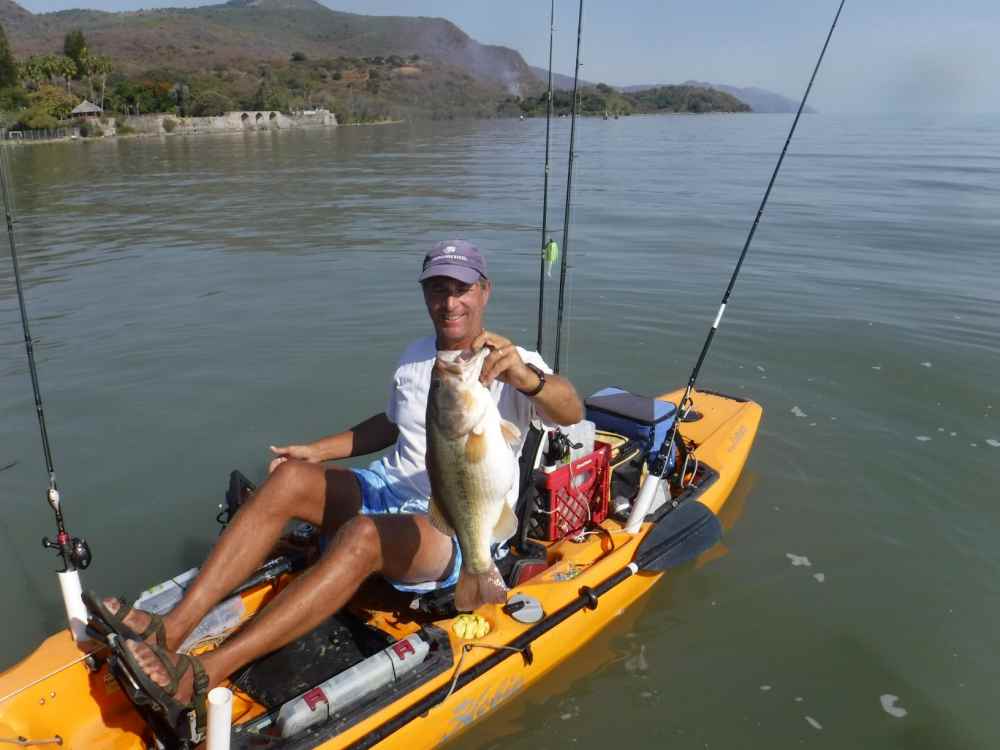
-
Kayak fishing can be frustrating, but the learning curve is faster than you think it will be. The biggest thing you have to learn is to plan your casts in advance far ahead of what you would fishing in a boat. Instead of pulling up to a spot and instantly casting to a target, you need to take some time and think about what position you want the boat, not only to make an accurate cast, but to be in position for a retrieve and be able to land the fish of a lifetime. After awhile it becomes automatic and you spend more time fishing, and less time frustrated.
-
I use a skirt, simply because a skirt comes with the bait and is durable. I spend enough on tackle, without adding to the expense with more soft plastics. Baby bass are constantly hitting my buzzbaits, and I would go through a pack of plastics every day. A skirt will last a whole season. Of course all it will take is one big bass with a toad, and the Bait Monkey will make me a hypocrite once again.
-
I use 3/4 ounce spinnerbaits with small blades to get down to suspended bass in tree tops all the time. I only use lighter spinnerbaits if I want to fish slowly near the surface. If the bass want a smaller spinnerbait, but I need the weight, I either use a hidden weight style, or put a bullet sinker on the line in front of the spinnerbait. I have seen pictures of guys using rubber core sinkers attached to the hook, and I am going to give that a try sometime.
-
I'm not sure if I believe the time honored belief that bass some how determine what it eats by how much energy it is going to use up catching it's food. Small bass chase around everywhere trying to steel food from each other, when there is plenty of food to catch, and still manage to get bigger. Bass can waste lots of energy being territorial, and not loose weight. A released bass doesn't have to go out and eat something right away after a hard fight. I believe big bass simply are not hungry as often as small bass. Large bass are skilled hunters. They have more experience hunting and can eat much larger and varied prey. A good hunter does not take very long to kill it's prey so therefore does not spend much time hunting. A full hunter is lazy, weather it is a bass a lion, or person. When I am hungry, I will do whatever is necessary to get something to eat. That may mean drive miles to the store, or thaw, cut, and cook a piece of meat no matter how much work it is. If I am stuffed with turkey dinner, and sitting on the couch, the only food I may want is a piece of candy, that is easily within reach. Big bass are the same. When they are hungry, they will chase down their food and get it regardless of how much energy it takes. When full all they want to do is laze around, maybe eating a snack if it swims to close to resist. I not sure if they consider how much energy it will take. The problem for fishermen is it is less likely to be in the right place at the right time with a big fish, because they are full more than they are hungry. A small fish is constantly looking for food, because they are not as skilled at catching their food as their bigger parents. I have witnessed big bass chase ridiculously small bait, working way to hard to catch a small meal. Why? because they were hungry. I have seen big bass go on a feeding spree, and stuff themselves, more than I ever have at Thanksgiving, and I assume experience a similar food coma. I have also watched big bass let prey swim right by, because they were full. They didn't have to consider how many calories the prey would produce or how many calories it would take to catch, they simply weren't hungry. In order to catch a big bass you have to be fishing where big bass live. You have to present your lure in a way it appears to be a piece of candy to a couch potato, be lucky enough to throw your lure when they are hungry and really looking for a meal, or trigger territorial instincts. All three will work at times, and a good fisherman can determine which one to use. Because big bass are sitting on the couch more often than cooking dinner, more big bass are caught by presenting slow baits right in front of their nose Of course if a big bass could read this she would probably say I'm in completely full of BS. and should spend more time fishing and less time in front of a computer.
-
I try them every time I fish, but always catch my best fish on something else, but I will keep trying.
-
As usual on this lake, I couldn't find a pattern. I caught the 8 pounder on a black and blue spinnerbait, in 25 feet of water suspended in tree tops. One of the six pounders on a flat in 5 feet of water on a 6th. Sense mini mag square bill. The other on a 15 foot deep rock pile with a deep diving crankbait. 7 inch Senko was best for small bass, but small ones were also caught on everything in box.
-
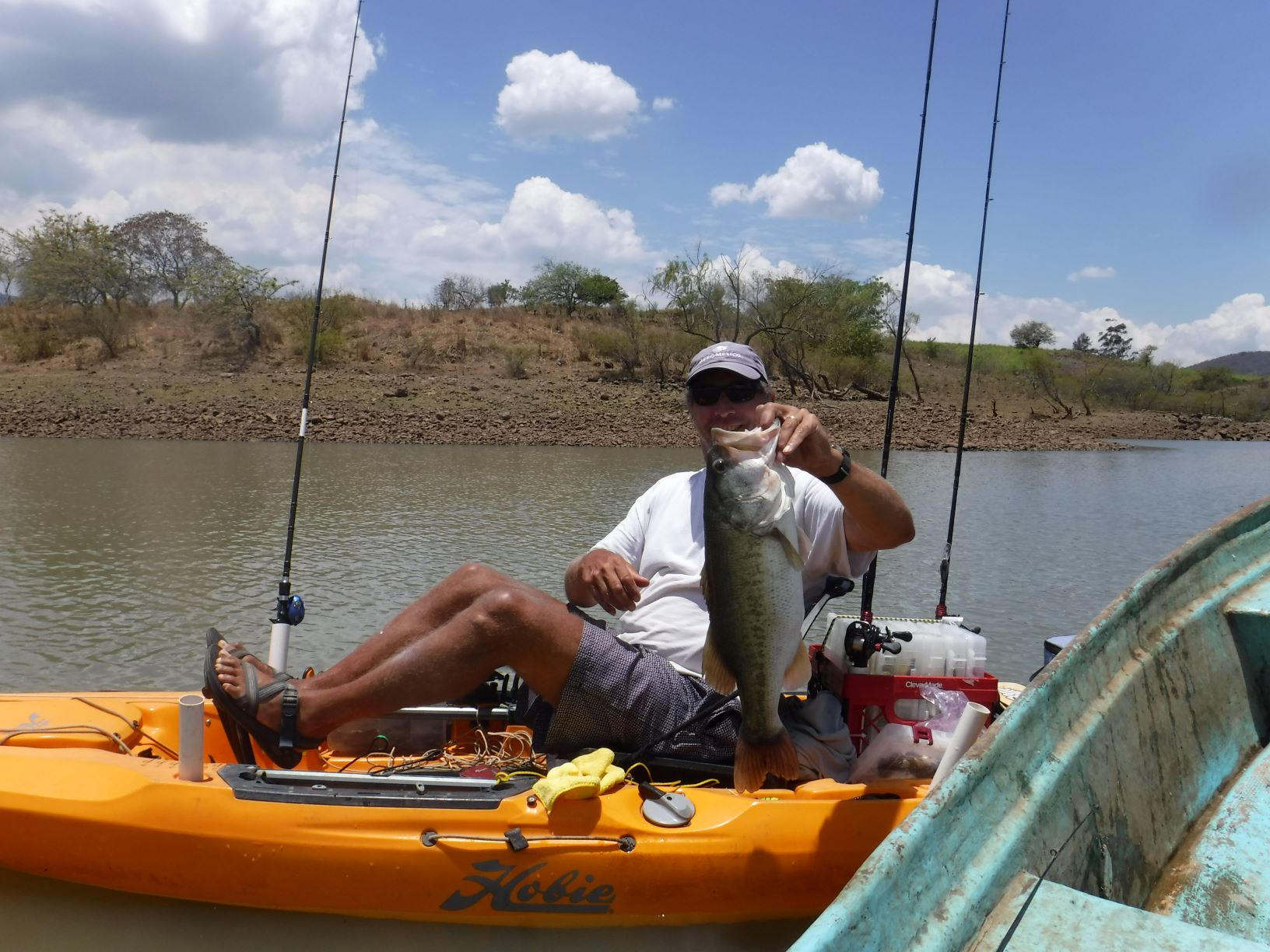
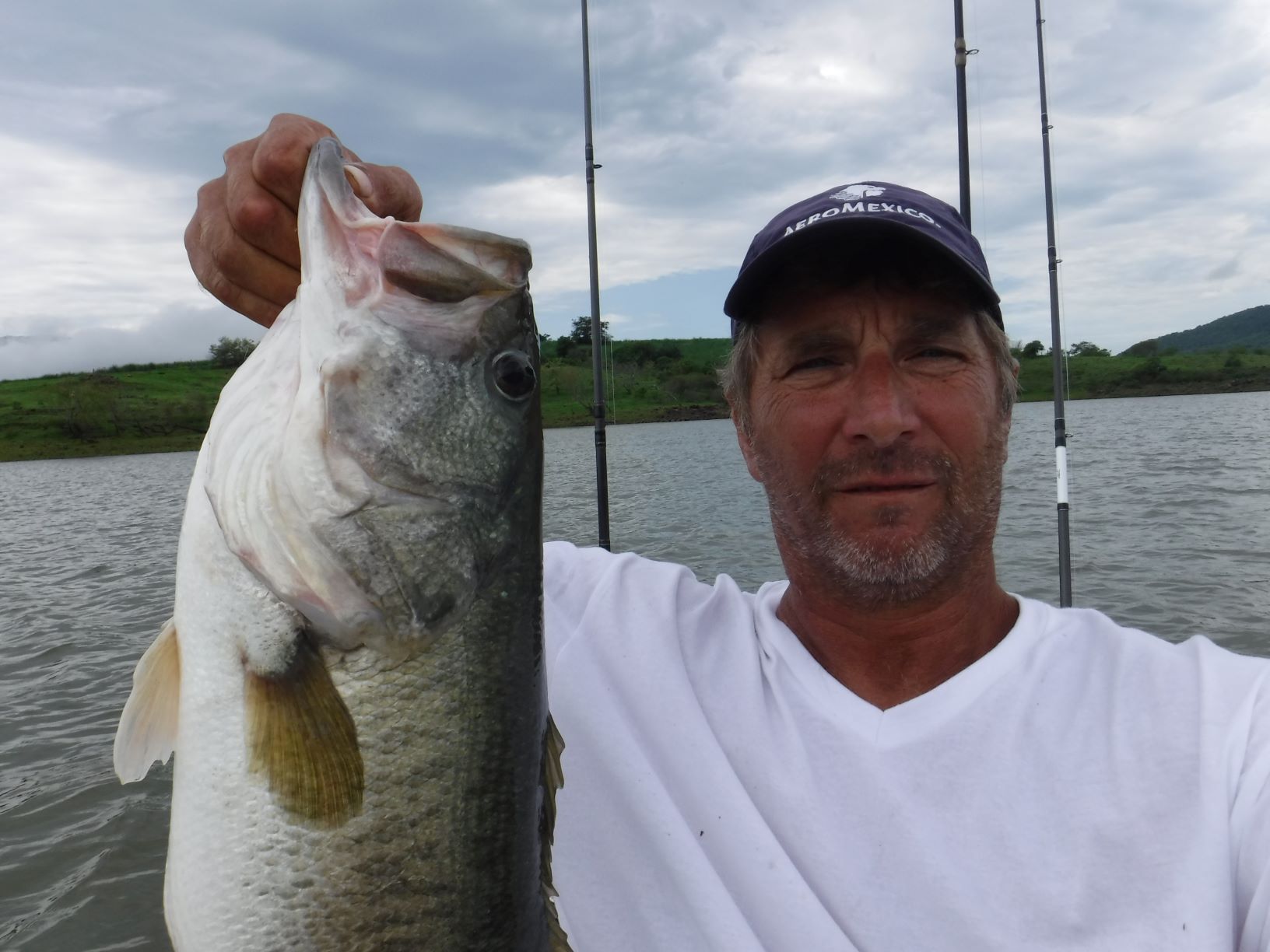
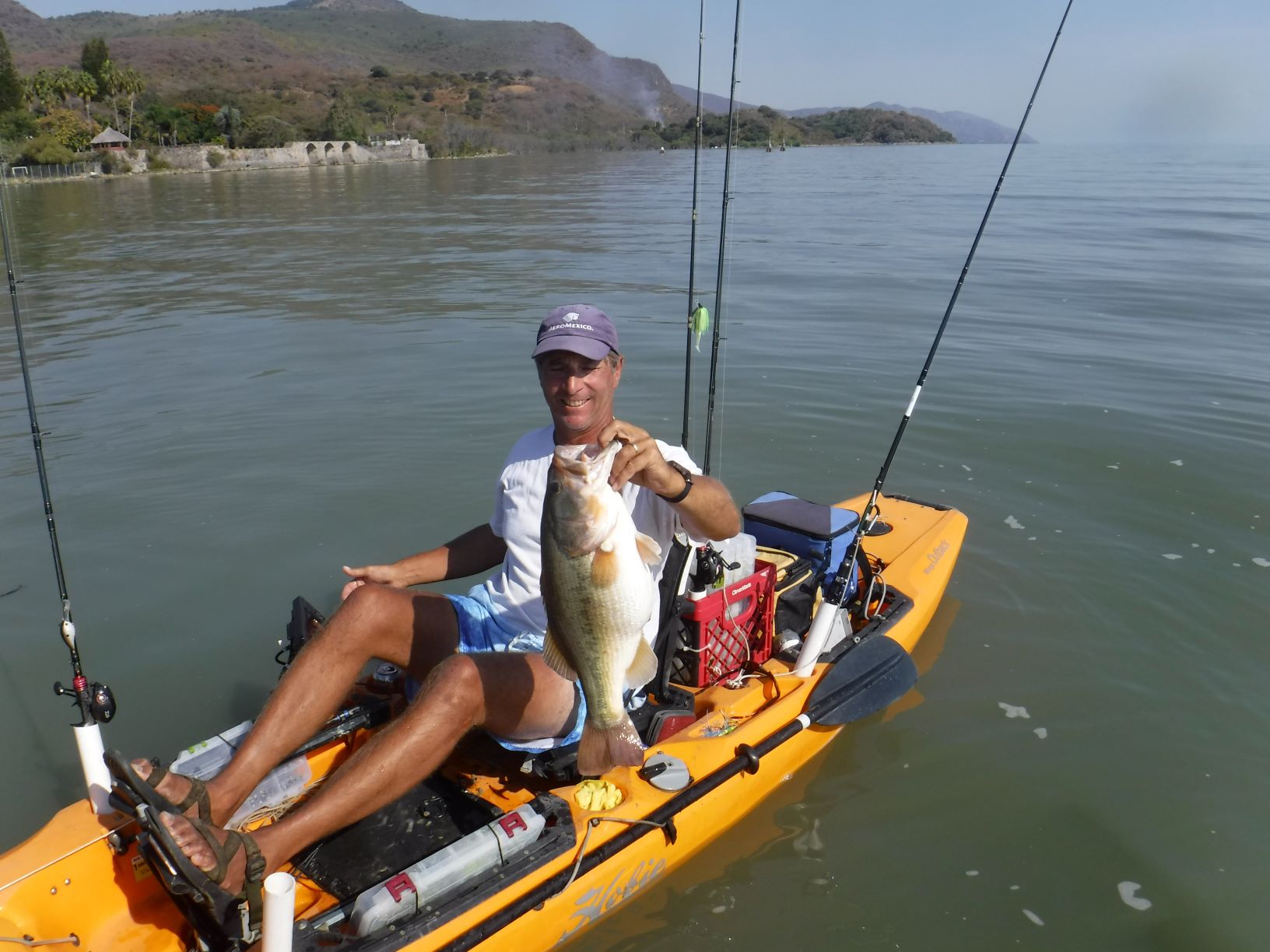
I fished Tepic yesterday. Fishing was good, but the afternoon winds were worse than normal, with peak gusts around 30 Knots. I did manage to land 3 big fish, as well as a few smaller ones. Biggest was 25 inches and weighed in at 8 lbs. The other two were 6.2 lbs., 6.7 lbs. and measured 23 and 23.5 inches I finally have a system down for landing, measuring, and taking a picture in my kayak while being able to release the bass quickly and un harmed. I have a lip gripper attached to a piece of rope. As soon as I land the bass I attach the gripper, remove the hook and put the bass back in the water while I get my camera, and scale ready. When I have everything ready, I pull the fish back out of the water, measure the length of the bass with marks on the top of my kayak, weigh the fish, then take a quick selfie with my phone. Bass is back in the water quickly and in good condition. Works great as long as I don't drop my phone in the water. If I lost my phone it would be a long time before the Bait Monkey would make it back to my house. The day did have its difficulties. I lost way more lures, than normal, and broke a rod tip. The wind made getting lures off snags, a nightmare. The bait Monkey is already knocking at my door.


-
Edie Pope Hot Shot ( now made by Luhr Jensen.) Second bass was caught two years later on a Heddon Sonic. May 1974 and June 1976. Most of my fish at that time were trout caught on worms.
-
One time I would change color before lure type is when I have been killing them on a certain lure, and the bite slows or stops. Before moving or switching lures, I will try a different color. I already know the fish are there, I was presenting the lure correctly, and they were liking my lure. Maybe all it will take to turn the bite back on is a different color.
-
Depends on what the bass are eating. If the bait is very large or very small and no obvious outstanding color characteristics, then size would be my main concern. If what they are eating swims very fast, on the surface as opposed to slowly crawling on the bottom, and is varied in size and color, than presentation would be my biggest concern. Color would only be the number one factor if the baits color is the first thing I notice while looking at it. If I see a crawdad and the first thing I notice is bright red claws, or a bright blue back, there is a good chance that is the first thing a bass notices too and will use that color to locate and catch his food. Maybe a bait fish has a certain bright flash that catches the eye more than the way it swims, then color could be the dominant factor. Most of the time the order of importance for me with all species of fish, are. 1 Location 2 depth 3 presentation,- speed and cadence of retrieve, presenting bait at in the correct positing in water column 4 size, 5 sound 6 color 7 scent. Can be higher on the list depending on species of fish. I have seen fish come from far away, change depth, hit the bait no matter how fast or slow, and not care if it is big or small, as long as it was the right color. Those times are rare, but can happen. I would recommend making changes in type of lure, and presentation first, then start trying different sizes and colors, once you find out where the bass, are, and what mood they are in.
-
Next time the wind blows, try a spinnerbait. Sometimes it is better to take advantage of the wind, rather than fight it. If that doesn't work, then use the good advice given by other members, on how to fish soft plastics in the wind. Also, a gut hooked bass and a frying pan make a good combination.
-
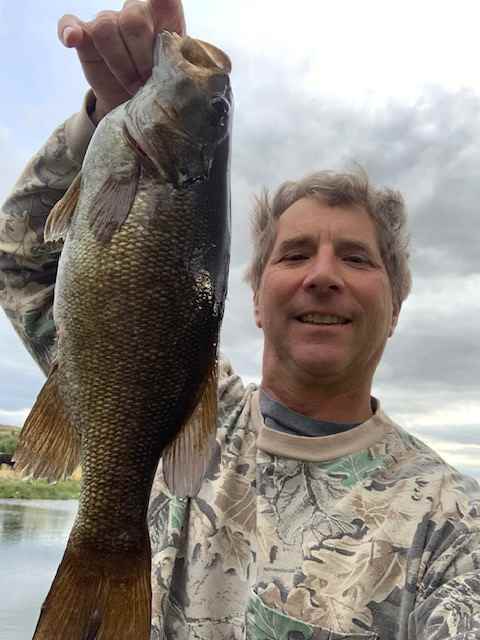
I went home to WA to visit family for a couple of weeks. I managed to get a little bass fishing in while there. The bass weren't big like Mexico, but were plentiful and full of fight. I caught this one fishing from shore casting by the same rock, with the same lure, ( Rebel Deep Wee R) in the same creek, I first started bass fishing in over 40 years ago. This bass may be small, but the memories are big.
-
I bought a scale and tape measure the next day.
-
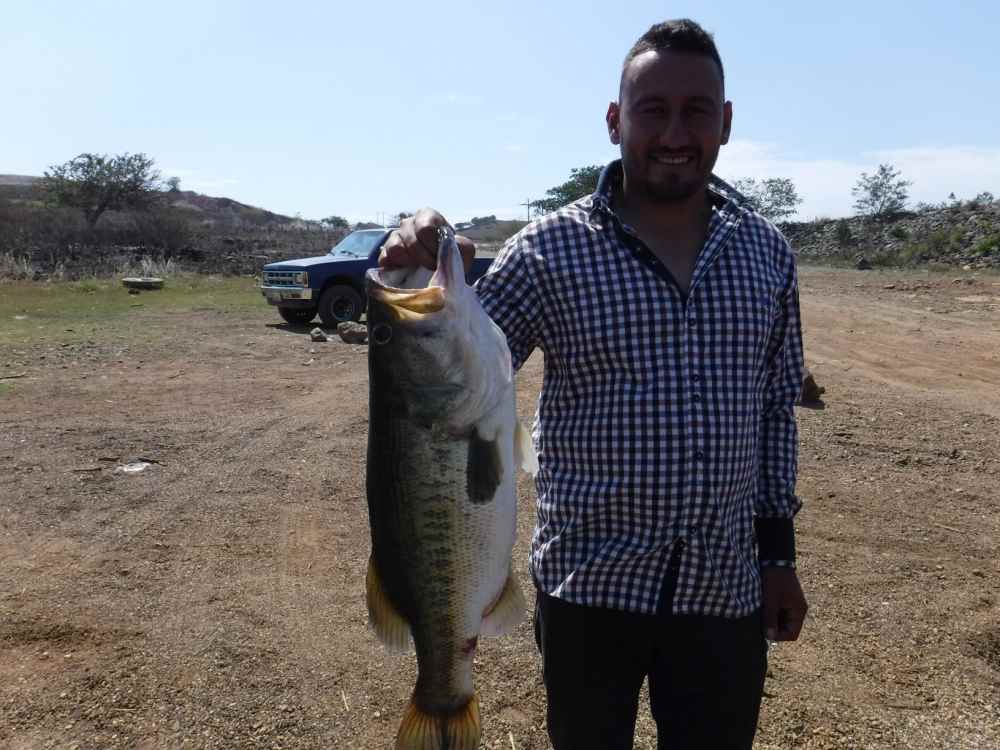
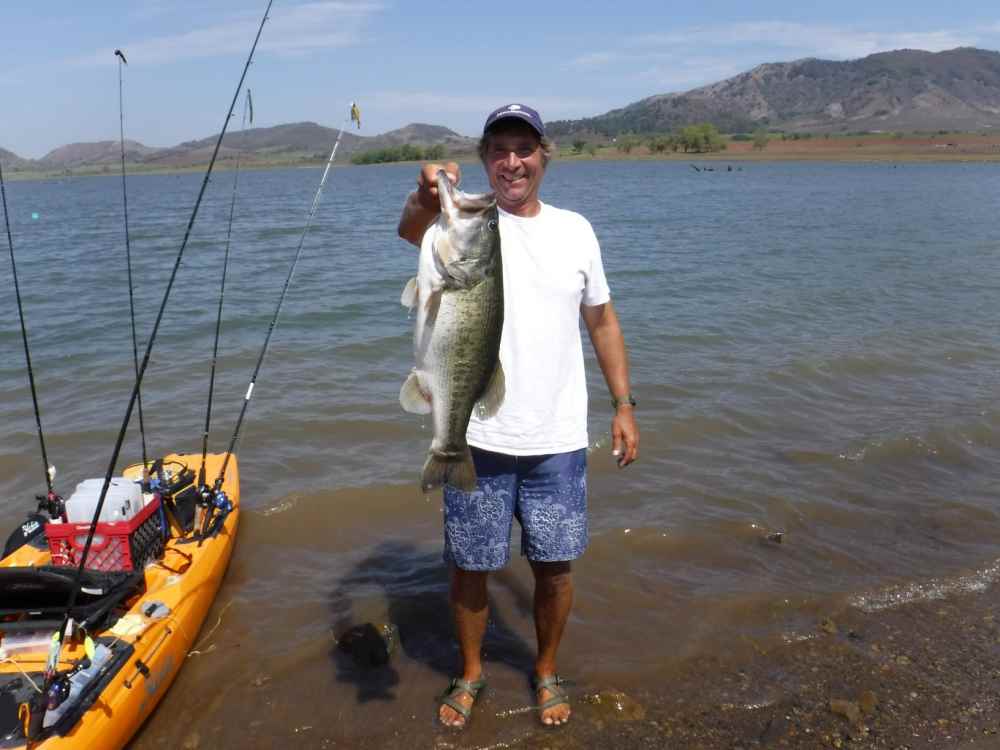
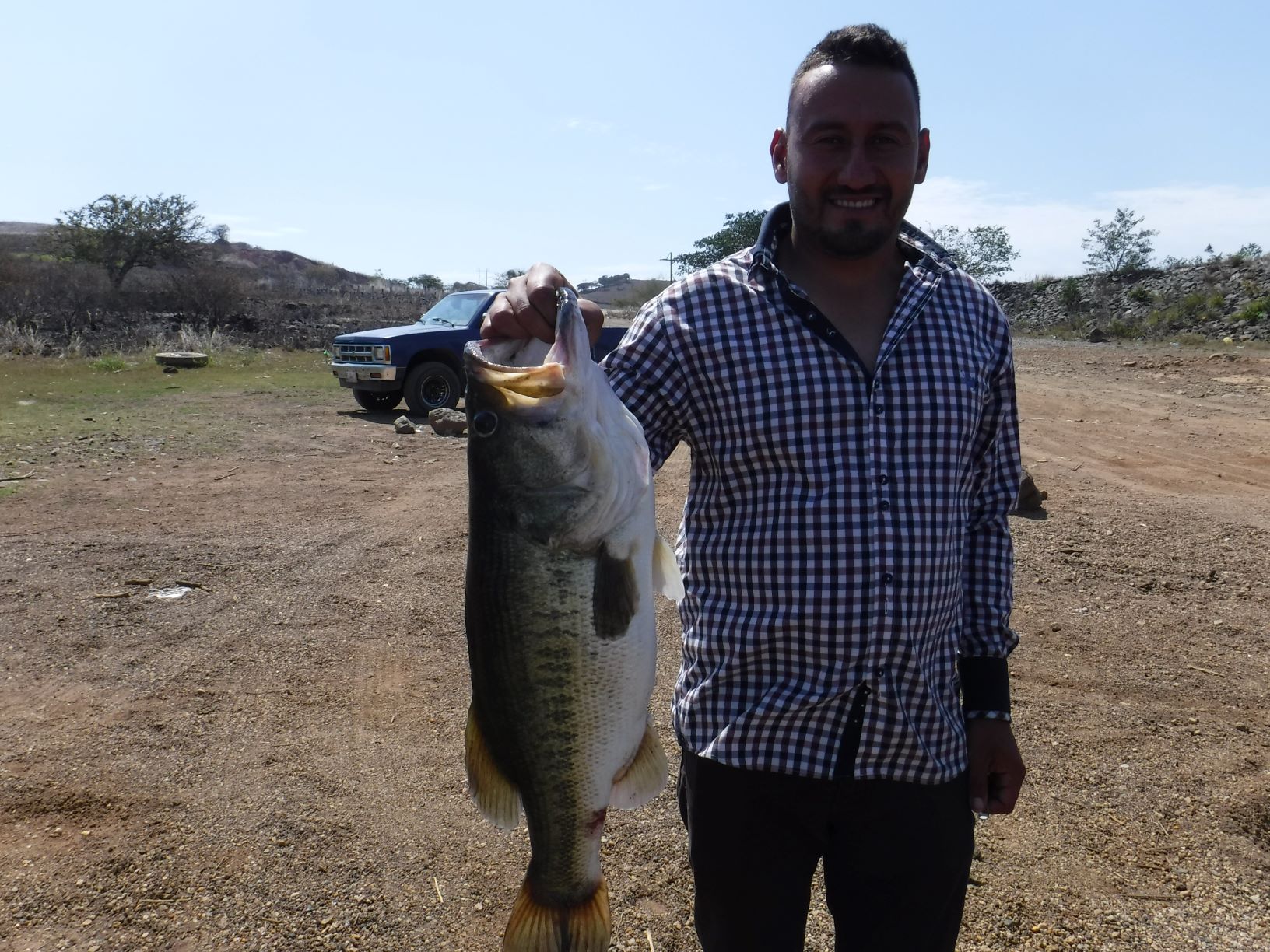
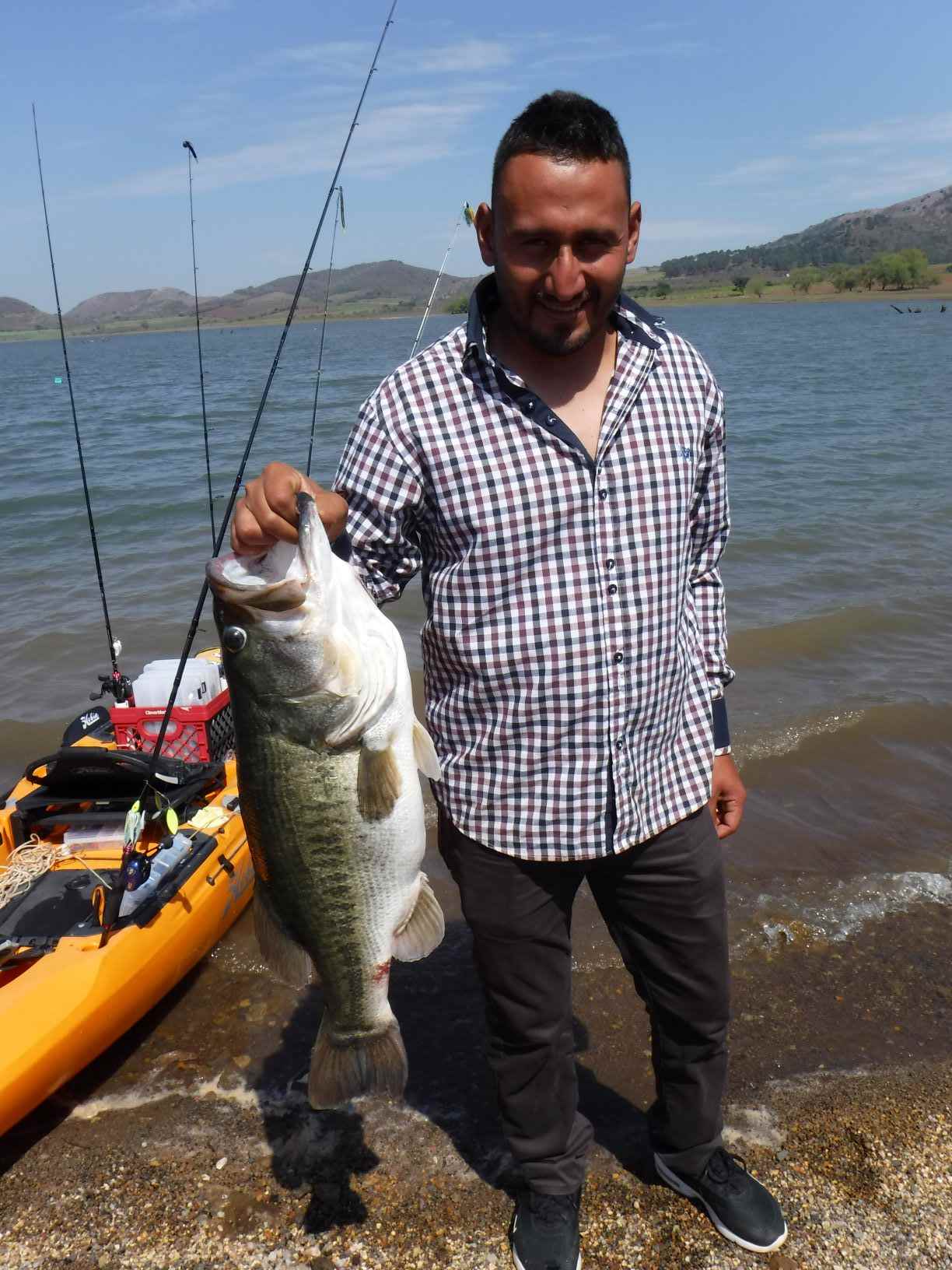
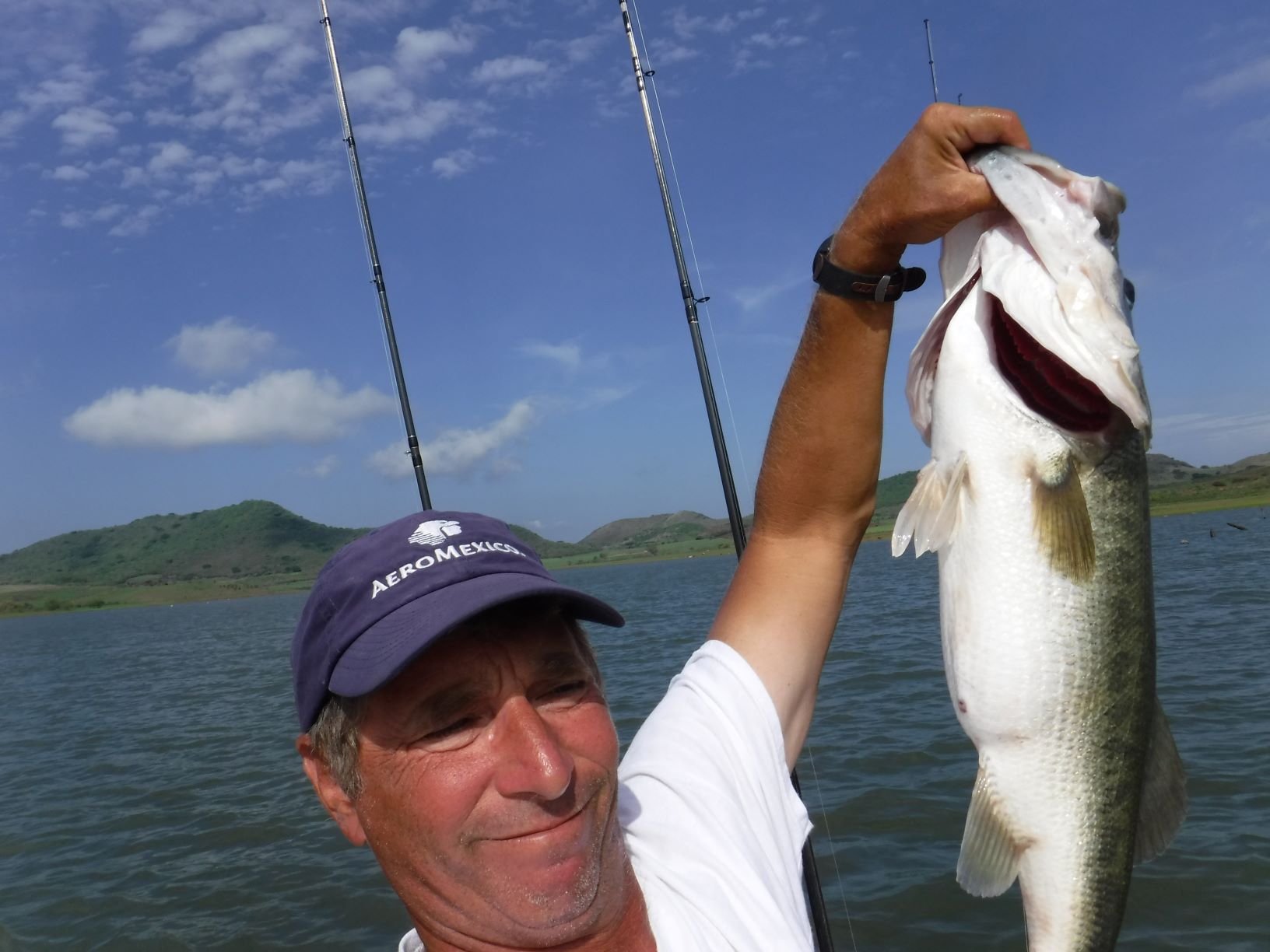
I say it is over 10 pounds. My friend says it is around 9 pounds. I caught the bass a year ago. I didn't have a scale or tape, but used a piece of string to measure the length. The string measured 25 3/4 inches. Unfortunately the man that helped take the pictures insisted on keeping the fish and taking it home with him. He is the manager for commercial fishing on the lake, and didn't want to offend him by letting it go to eat more tilapia.

-
Rebel Deep Wee R
-
Crank D Diamond Dust
-




Important Information
We have placed cookies on your device to help make this website better. You can adjust your cookie settings, otherwise we'll assume you're okay to continue.