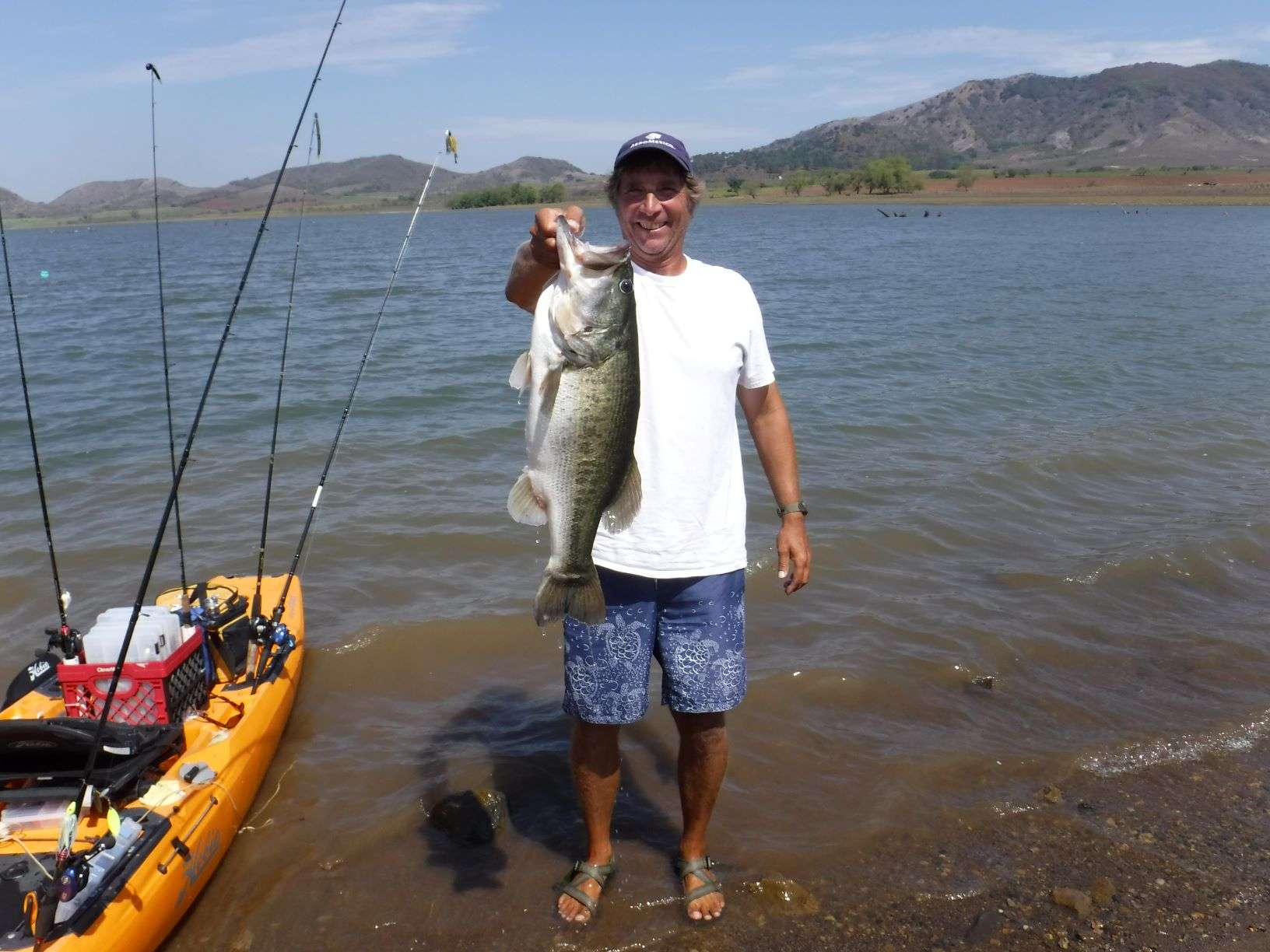

king fisher
Super User
-
Joined
-
Last visited
Everything posted by king fisher
-
I politely listen to what they have to say, especially since some of them are friends and family. I then tell them I don't think I am a cruel person because I enjoy fishing and I don't plan on stopping. I don't get sucked in to an argument that is not going to change any one's mind including mine. In all honesty I can't explain why I like fishing so much. I know I don't do it to torture the fish. I like the challenge of finding, hooking, landing, and sometimes eating the fish. I have always liked to fish, and always will. I know natives in Alaska that don't like sport fisherman. One of their favorite saying is they don't play with their food. My answer back was always, I do so now we know what are differences are. Some things in life can't be explained. My brother never liked to fish or hunt. He liked to eat what my dad and I harvested, but he had zero interest in catching it. He has always wondered why I let my fish go. He understands the obvious reason of I don't want to harm the resource, but he doesn't understand why I bother fishing if I don't eat the fish. He always says I could just stay home and let the resource manage itself if I'm just going to let them go anyway. One time when I was young my mom was driving us to our farm. We were on a gravel road, and it was a couple weeks before the pheasant season opened. We came around a corner and there were a couple of pheasants running across the road. My Dad yelled and tried to ge my mom two swerve and miss the birds. She of course didn't want to put the car in to the ditch trying to avoid the pheasants with the whole family in the car. She made a slight safe effort to miss the birds and only ended up hitting one of them. My Dad was furious. He expected her to perform a sliding skid that would make a hollywood stunt driver envious. He was not happy and neither was she. He told her she should have made a more aggressive effort to miss the pheasants and she told him he was crazy. She brought up the fact that in just two short weeks he was going to shoot the very same birds he wanted her to risk the life of the whole family to keep from harming the verys same birds he hoped to harm. Both my Dad and I thought that was perfect logic that Mom should understand. We wanted them to at least make it until opening day. It made perfect sense to my Dad and I, but sounded completely crazy to my Mom and brother. My sister just thought it would have been more fun if Dad had been driving. It was at that moment I realized that if you have hunting and fishing in your blood you simply will have a need to hunt and fish, and it will not make sense to those that do not have it deep in their souls. I can't explain it and neither can they. I don't like watching baseball and my brother does. It is as simple as that. No need to argue with anyone. I respect their different opinions and If they don't respect mine than we can talk about the weather. I fish, therefore I am.
-
The few times I have tried fishing at night for bass have been complete failures. After analyzing each of these failures I have determined what my problem with night fishing has been. Without a doubt, 100% of my lack of success at night can be attributed to once simple fact, it is dark at night. When I can see I can fish. When I can't see, I can't catch bass. Simple as that. There are many more skilled anglers than myself, that can catch bass without the advantage of daylight, I unfortunately am not one of them.
-
If you are not wanting to try an unproven reel, you can buy the old Diawa Coastal 200 on sale for $250 at TW. The Coastal 200 was one of the best reels I have ever owned. I used it in salt water for a few years, without any problems. It was also one of my favorite freshwater reels. I lost it overboard awhile back. Even the best reel can not make up for stupidity. I should have replaced it with another Coastal 200 right away, but I couldn't resist the deals on JDM reels at the time. Nothing against the reels I bought, but I do miss my Coastal 200.
-
I have wondered about this myself. I have heard nothing about anglers using live bait and FFS where it is legal. No You Tube videos, no pictures on Facebook, I have found nothing. I'm sure there must be some savvy trophy hunters somewhere, that have been crushing it and keeping their mouths shut about their success.
-
Dacron braid has been around since at least the 50's. In the early eighties Gudebrod tried to marketed a dacron braid called bass braid. It was inexpensive and strong, but very thick for it's pound test. It was not a commercial success, although they still make the same braid but simply call it Dacron Braid. In 1993 Stren came out with a Kevlar braid. It was the first super braid, which was extremely thin for it's strength. At almost the same time Izorline, Tuffline, spiderwire and many other spectra fiber braids hit the market. I was guiding for king salmon in Alaska at the time and another guide I knew had a Stren sponsorship. He talked me into spooling all of my reels with the Kevlar line. His big pitch at the sportsman's show in Anchorage that spring was the kevlar line was more resistant to heat than the spectra lines. He would demonstrate this by crossing a kevlar line, and a spectra line, while pulling on one or the other. The Kevlar line would always cut through the spectra line because of the heat produced by the friction of the two lines rubbing against each other. He then went on to claim the same thing would happen if a Spectra line was wrapped on a log, boat prop, or other object that line tends to come in contact with. What he didn't mention was Kevlar did not hold up to UV rays well. At first, with the exception of almost cutting a finger off trying to pull a lure from a snag, I was pleased with the performance. Then after a couple of weeks the line started to break with almost zero pressure applied. Both types of braid were extremely expensive to a struggling young guide, and loosing some of the biggest king salmon of the season did nothing to help my finances. Needless to say I replaced the line with Maxima mono and made it through the remainder of the season with a severe dislike of new super braids. The Kevlar line was a huge failure, but the Spectra braids didn not have a problem with UV, and became extremely popular. By the mid 90's There were dozens of brands of modern braided fishing line. All of them were and still are made of some form of Polyethylene. Spectra and Dyneema are two of the most popular types, but there are other proprietary Polyethylene fibers, as well as some made with generic polyethylene fibers. They are all very similar materials, and come in a variety of weaves, both in number of strands, (4,8,7,9,) and type of weaves measured in a certain number of weaves per inch, or centimeter. Many of the modern braids have coatings applied to make them slick, add color, or change the stiffness of the line. I was slow to give the new super braids a fair shot after my miserable Kevlar failure, and didn't start using braid for any application until around the year 2000. Most Bass Pros by the late 90's were using braid for some or all techniques. By the early 2000's braid was the king of fishing line. Around that time Fluorocarbon lines started to appear, giving anglers another choice. At this time some bass anglers started to realize that line stretch wasn't always a bad thing, and braid though thin was highly visible to the fish. Many switched to braid to leader, were experimenting with fluorocarbon, or even went back to mono for some applications. While straight braid has many advantages and a devot following among many bass anglers, more anglers now are only using it for certain situations. Fluorocarbon which is even more expensive that braid especially if you factor in braids almost unlimited useful life span, is as or more popular than braid, and mono comes in third, but still has some very loyal anglers using it for a variety of techniques. The advantages and disadvantages of modern braided fishing line makes for great winter time debates, but no one can argue the introduction of the super braids in the early 90's was one of the biggest advancements in the last 100 years of fishing.
-
Why is that snag moving?
-
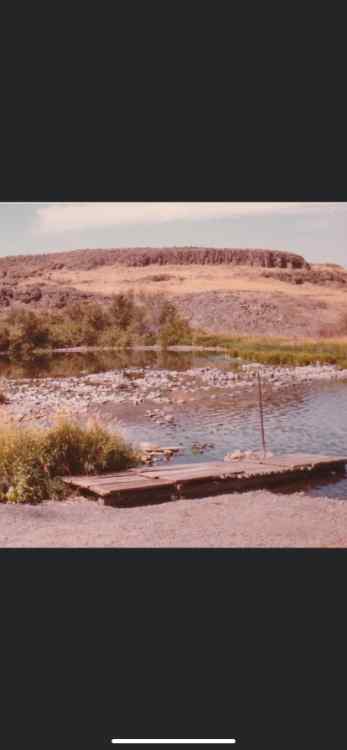
I must have been born a fisherman. I have always wanted to fish. I grew up in a small town, and my dad was a farmer. We grew wheat and raised cattle. He loved to hunt, and would always hunt a draw for pheasants, when he finished feeding the cows, or get up early and jump a spot on the river for geese before starting his chores. I would tag along with him from the time I was able to walk. He loved to be outside and so did I. When summer came he was to busy for anything but work, so he had never taken up fishing. I wanted to fish and my grandfather who lived on the coast of WA had a boat and liked to troll for trout. When it came time for me to go fishing he bought me a rod for trolling and would take me fishing when we would visit him on the coast. The problem was the rod may have been good for trolling, but I could not cast with it. He assured me I would never want one of those stupid spinning outfits, and trolling was the only sporting way to fish. That was fine for when I could go with him in his boat, but back home in Eastern WA I needed a rod that could cast like my friends had. I would talk my dad into taking my brother an I fishing on sunday afternoons. We would never catch anything. My Dad did not know how to fish, and even if he did our rods would not get our worms an bobbers more than a couple feet from shore. Our fishing trips would always end the same way. We would become bored, feed the fish the worms we had dug, and go hiking along the bluffs around the lake, shooting cans with our bb guns and my Dads 22. That was always a great way to spend a Sunday afternoon, but I really wanted to fish. Finally we found a place where I could catch bluegills from shore with my rod, and I was hooked. When I got old enough to be in the boy scouts, my dad bought me a spinning reel before I went on a camping trip to a local lake. Neither of us new how to use it, but the owner of the hardware store picked out the reel, and put line on it for me. My scout master showed me how to tie an improved clinch knot, and gave me some crappie jigs to fish with. I caught dozens of crappie that camping trip and could talk about nothing else but fishing for the entire summer. Now that I had a rod that could cast, I didn't have to wait until the next camping trip to fish. I could ride my bike to the nearest lake and catch trout. It was a long way to ride my bike so my dad would take the long way to the ranch, and drop me off at the lake and pick me up on his way back home. He never liked to fish, but he did love to eat fresh trout. Many days I would fish from sun up until sunset, catching my limit of trout almost every time I went. I never fished with lures, and was certain worms from the garden were the best way to catch fish. Some friends of mine lived a mile from the lake, and would ride their bikes down to fish off of the little dock at the launch. They had a few lures, but we could never catch fish with them, so were dependent on digging worms. The next summer the boy scouts went on a camping trip to the same lake where I caught all of the crappie the year before. The owner of the hardware store gave me a couple Cordell Big O['s and a heddon sonic to try and catch bass with. One of the other scouts new how to bass fish, and three of us paddled a canoe over to a riprap bank. We walked for miles on that riprap bank catching lots of bass. My best friend caught a 3 pound largemouth, and I thought it was the biggest bass in the world. To this day I consider a 3 pound bass a big bass. I eventually I lost all of my bass lures, but was lucky enough to find a Heddon River Runt lying on the bank. Someone had snagged it when the water was up, and there it was just waiting for me. That lucky lure was my only bass lure for the remainder of that summer. After that camping trip I was a bass fanatic. I started reading magazine articles on bass fishing and spent every spare money I had on bass lures. By the time the next summer came, I was ready. I no longer spent all day sitting on the little dock fishing for trout. I would walk miles of shoreline casting for bass. One evening a caught a 2 pound bass on a Jitterbug. It was my first bass on a surface bait, and it was at that moment the Bait Monkey became my best friend for life. The next spring I discovered the power of a spinnerbait, and would go on to use one as my go to lure for the rest of my life. When I moved away from home, I expanded my fishing to include fly fishing for trout, and started fishing mostly rivers with a fly rod. but I still made it to my home water in the summer to fish for bass with the latest tackle I collected all winter. When I was 25 I moved to Alaska and started guiding hunters and fisherman there. I spent many years living in the Alaskan bush, and even though I didn't ever think I would ever get the chance to bass fish again, I still kept up on all of the latest tackle, techniques and tournament success of all the best bass anglers. When I was 50 I was working the winters in Mexico and the summers in Alaska. Eventually I was so busy in Mexico I could only get a week or two a year in Alaska. I was only saltwater fishing in Mexico, but wanted to find a place to bass fish. I eventually found a lake, and broke my old PB of 5.5 pounds, with one easily over 10 pounds. After I caught that 10 pound bass I was instantly 13 years old again. It was as if I had never left the bass fishing club. The Bait Monkey moved in, and I started reading every article, and watching every video made on bass fishing. I will always like to catch many species of fish, and will miss the wilderness of Alaska more than I ever care to admit, but Bass fishing is what I was born to do. I am a bass fisherman, and that is not just what I do, but who I am. This is the dock where spent my youth fishing. The dock is gone now, but it is still a magical place.
-
I can't remember birthdays, my anniversary, or what I had for breakfast, but I can remember every fishing lure I have ever owned, what I caught on it, where I had success with it, what retrieve speed, and anything else remotely related to my fishing. I don't need a log book, and I definitely don't need Google. When It comes to fishing I have more storage space in my head than any computer at NASA. Now if only I could remember what my wife wanted me to pick up on my way home from work. Maybe it was that new topwater bait the Monkey wants me to try. I will stop at the tackle shop, maybe while I am there I will remember what she wanted.
-
I fish a trap when the bass wont bite billed crankbait, and fish a billed crankbait when they wont bite a trap. I give each a few casts and let the bass tell me what they want. I tend to throw lipless around grass or open water, and other crankbaits around wood, and rock.
-
I use a file to sharpen hooks, but I have to admit I have landed many bass on hooks that I wouldn't consider sharp. Thickness and strength is more of a determining factor for me when deciding what hook I use. A thin but strong hook is what I am looking for. I can always sharpen a hook, but I can't do anything about a hook that bends at the wrong time.
-
All of them are good for bass. I prefer Blue Fox Vibrax #3 but would not hesitate to buy any Mepps inline spinner and fish them anywhere for bass.
-
I cast with both hands on the rod. That is why I do not like the old style pistol grip handles. I don't see why a person will use both hands on a pistol, baseball bat, golf club, tennis racket etc. and not use both hands while casting a fishing rod. I do use one hand casting fly rods, but have been intrigued with two handed spey models. I use both hands while casting, but consider myself a right handed caster. I always have my left hand on the bottom of the handle, and my right hand on top, with both spinning gear and bait casters. The key for me on long casts is to make sure I get the most out of my left hand, by pulling the bottom of the rod towards my body while going forward with my right hand on the upper part of the handle. If I am not trying for distance my left hand is only used to steady the rod during the cast.
-
I don't keep track of the bass I catch, keep track of the lures I lose. If I catch more bass than lures lost it is a great day.
-
The lakes I fished where I grew up were basalt rock canyon lakes. The only place I could fish from shore were rip rap banks. The riprap was natural, so it may be different from the man made riprap more common to other parts of the country. The biggest thing I learned fishing riprap banks from shore was either I had a full tackle box and didn't catch bass, or my box was depleted and I caught bass. Nothing makes the Bait Monkey happier than fishing riprap banks from shore. Exposed hooks are not what get snagged on riprap. Sinkers are snag magnets. They wedge between the rocks and game over. I recommend using tubes with the wight inserted in to the tube over any other kind of jig. No T Rigs and if you insist on fishing a T Rig peg the sinker against the bait, making it harder for the sinker to wedge between rocks. Spinnerbaits crawled through the rocks can be deadly, especially when there is wind. They will get snagged but not as often as other baits. Crankbaits excel in riprap, but like all crankbait fishing, you have to bang them against the rocks and other cover. You will lose lots of crankbaits fishing them from shore. Lipless crankbaits work well too, but do snag more often. I spent almost a hole summer throwing nothing but a rattle trap parallel to riprap banks. I didn't lose my trap, but I did go swimming to retrieve it more than once. I was young and athletic when I fished riprap banks from shore. It was nothing for me to hop from rock to rock, and cover a mile or more of bank. Now I wouldn't be able to fish more than a few yards. Where I grew up there were lots of rattlesnakes living in the riprap. I never was bit, but had a close call or two. I don't know if the snakes like the rocky banks in other parts of the country, but in Eastern WA they were plentiful. Topwater lures can be successful cast parallel to the bank making helping out with the tackle budget, but there are many days when you simply have to accept the fact you may lose a small fortune to the rocks if you want to catch bass. I'm sure weightless plastic worms will work, if you have the patience to fish them. Pay attention to the angle of the bank, and size of rocks when you catch a bass. Many days I was able to skip over much of the shoreline, and only fish the size of rocks the bass were using that day. Any other cover, such as wood, vegetation, or floating pollen, are excellent places to cast. Points and pockets are also prime locations. Remember you do have to walk back, so don't make the mistake I made many times and walk further down the bank looking for that magic spot than you are able to walk back from in the daylight. Walking over rocks in the dark without a light was difficult even when I was young. Thinking about fishing riprap from the bank brings back many fond memories. Thanks for the post, and good luck.
-
If you like silent square bills, than try some made of balsa wood. No plastic bait thumps as hare, or goes through wood as well as a high floating Balsa square bill. I like the old Bagley's baits the best, but they are hard to find. There are many smaller companies that make balsa wood square bills. Buy a few of each, because they are all slightly different and there will always be one that works twice as well as one that looks exactly the same. If you don't want the Bait Monkey to move into your house permanently, fish the silent Strike King 1.5. They catch bass for a reasonable price.
-
I have two seasons. Dry and Wet. November - Mid June dry. July- October wet. The end of the dry season is best for me. The water is extremely low, and the bass on concentrated on off shore cover and structure. Rainy season is good fishing, but the bass can be spread out and be hard to locate. Surface temperature does not get below 65 degrees, or above 80 degrees the entire year. Rarely will a thermocline develope, making the whole water column a possibility any time of year. The depth the bass will be at is determined on water level, whether it is rising or falling, and water clarity. My work season dictates my bass fishing success the most. December - March I will not be able to bass fish more than a couple of days due to my work. July through October I have more time, but it is difficult for me to fish the best lakes. They are two far away for a day trip, and camping is not pleasant during the torrential rains. That leaves me with April and May. Most of my big bass have been caught during these two months. My fishing is best in April and May, but the bass fishing is fantastic all year if a person has the time to fish. The lodges are closed on most Mexico lakes during the rainy season, but big bass love buzz baits that time of year.
-
I have zero doubt of the accuracy of your observations of the bass behaviour in Florida. I do not live or fish in Florida, so I have to say if you if barometric pressure has a large influence in your bass fishing, than I have zero knowledge or experience to dispute your beliefs, so I defer to your expertise. What I would question is if the the behavior is associated with the cold front, or the change in barometric pressure. I guess it really doesn't 'make any difference since the outcome is the same regardless. I have been other places where high pressure does not lead to cold fronts, and the bass could care less about the pressure change. My other question is if a large pressure change in the summer makes much of a difference. In the spring the change leads to a cold front which shuts the bass activity down. In the summer a rising barometer may not result in a severe cold front. Do you notice a negative effect on bass activity from the pressure change in the summer? I have not fished in Florida in the summer so I have zero idea of what pressure or weather bass prefer there in the hottest time of year. In most areas of the country high pressure is associated with light winds, and low pressure brings storms, in the extreme all hurricanes are in areas of very low pressure. There are a few places where the exact opposite occurs. In Southern CA, the strongest winds of hurricane force, happen during times of extreme high pressure. These winds are called Santa Ana winds, happen often in the winter, and are predictable depending on high pressure systems. Point being that if pressure changes can influence weather in different ways depending on location and time of year than pressure could be responsible for fish activity differently in other locations. Where I fish in Mexico the weather is the same within a few degrees for 6 months of the year. My success bass fishing depends mostly on the water level, and type and size of prey. By June due to high ocean temperatures the weather changes and the rainy season starts. Almost every evening we experience extreme thunderstorm activity. The bass go crazy before during and after the first rain. I don't know if they are just bored and like the change, or if pressure or some other factor causes the bite to happen, but I do try and be on the water during the change. The bass start to bite long before any runoff starts to go in to the lake. After the rains have come for a few days and the water starts to rise, and the clarity goes the fishing can be good but the whole lake doesn't go crazy when it rains like they do during that first change in weather.
-
This was the point I was alluding to. The amount of light can make a difference on when the bass will feed at night. A night with a full moon and cloud cover has less light, than a clear night with half a moon. The moon phase alone does not determine the amount of light. There might also be times when the bass will have a distinct advantage over certain prey on nights when there is very little light. Again, other factors are at play besides the moon phase.
-
I couldn't care less about those secondary conditions. The barometric pressure affects the weather, which in turn can influence the fishing, but I believe the pressure change itself have zero effect. I know most anglers with more experience and expertise will disagree with me, but that will not change how I feel about the moon phase. I don't believe it matters in the least. Other than giving bass more light to feed at night, I feel the moon has zero effect on fishing, especially in freshwater. Saltwater the tides can make a huge difference, and the tides are caused by moon. So obviously the moon plays a major factor in tidal water. Same goes for bass fishing in tidal zones. I have a friend that swears by the lunar tables. He studies them every day and is quick to point out how we caught our fish during a major or minor period. What he fails to point out is when we don't catch fish during a major or minor period. It is common for people to only use statistics that prove what they believe and don't use them to prove what they don't believe. My friend never notices when the evidence points away from his believe, but quick to notice when it goes along with his belief. Many times I have to point out to my friend, that we were experiencing slow fishing during a bad mood phase, but another boat was smashing them. I guess the other boat had a different moon than us. In the summer we would catch bass every evening regardless of the moon. I told my friend I would take the evening bite and he could have all the midday major moon bite he wanted. Even night fishing on a full moon might not be an advantage. What if the moon isn't visible much of the night? That extra light will do you no good if it is below the horizon or the sky is clouded over. I learned this the hard way one night while guiding a moose hunter in Alaska. I spotted a large moose right before dark. The hunter was nervous about shooting it that late, because he was worried about not being able to get back to camp. I assured him that spending the night out would be no big deal, besides it was a full moon that night and we would have plenty of light. The moon did not come up until early in the morning, and the clouds and rain moved in making it one of the darkest nights I have ever had to pack meat in. We were plagued with bear problems, and walking in the rough terrain with heavy packs full of meat was not fun. We made it back to camp at 3 in the morning about the time the moon was coming up. The bass do not go home and watch TV if the moon phase is wrong. They still have to eat, and live in their environment. Water level, water clarity, temperature, and daily weather patterns can help or hurt their ability to hunt and kill their prey, but other than changing the amount of light at night, the moon does not give or take away any hunting advantages. The next time you are having a slow day of fishing, and the moon phase is wrong, find out if others were having a bad day, and if so, take a look at other more obvious environmental conditions that could have been the cause of your lack of success. In my limited experience, the days I catch them, I can usually point out many reasons other than the moon why I was successful, and the same goes for when I don't catch them. I get outfished by better anglers regardless of the moon, I guess they have a different moon than I have. Skilled anglers that pay attention to changing conditions and adjust to those conditions, will catch bass regardless what the moon is doing. If an inexperience angler does not notice and adjust to what and where forage is available, water temperature, clarity, and weather conditions, they will not catch bass even during the best moon phase imaginable. PH may have a big influence on the health of a bass population, but will not change enough from day to day to influence my fishing.
-
Keep making crazy statements like this, and you can expect a nock on your door in the middle of the night from the bass police or at the very least, a fanatical Bait Monkey.
-
The Rapala DT series is made of balsa, but they are heavily weighted. They do not float like other balsa baits. They almost suspend when stopped, but do float up slowly. A Strike king crankbait will float up more quickly than the Rapala DT Series. Both are great bass catchers, and I recommend getting many sizes and colors of both. If I had to choose between Strike King and Rapla, I would choose Rapala. The DT series are fragile, and the bills do break, but they cast a mile, and catch bass at times when other crankbaits don't. If I'm catching bass with my Strike King crankbaits, I find that I will also catch them on my 6th Sense, and Spro crankbaits too. I could not limit myself to one brand of crankbait. It would be easier for me to only eat the same meal every day, than to limit myself to one brand of crankbait.
-
Undressed #3 Vibrax is my favorite for bass both largemouth, and smallmouth, in lakes rivers and creeks. Dressed work fine, but I prefer undressed. Panther Martin catch more trout than any other spinner in streams. I have no idea why, but they do. Panther Martin will catch bass, but I prefer French style blades for bass.
-
Wind is good for the bass and the Bait Monkey, but not always good for me. I fish often in strong winds. It is one of the few things I can love and hate at the same time. This is me on some windy days. This is me on other windy days.
-
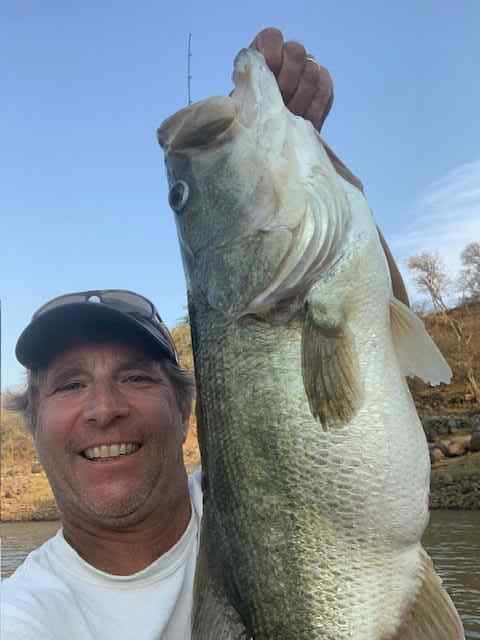
Buzzbaits catch big bass!
-
I fish a lake that half of the lake goes dry for part of the year. They pasture cattle on it when the water is down. There are many barbed wire fences crisscrossing the cow pasture. When the rainy season comes and lake fills back up the bass move out of the deep water structure and live in the shallow flooded flat. When the lake is at full pool I have to deal with the normal willow brush, and grass that most other shallow water bass anglers fish around. When the water is at mid depth, the bass like to hang around the flooded fence lines. They can be anywhere from shallow enough that the fence posts stick up out of the water, or deep enough I can't see the tops of the posts and anywhere in between. To make matters more difficult the wind blows 25 mph in the afternoon making it difficult to position my kayak. I even flipped my kayak once when I ran up on a submerged fence post I didn't see. A big wave lifted me up and dropped my back down on the post, and over I went. When the bass are on the fence lines, the fishing can be great. I have plenty of targets to cast to, and once I find the depth they are at it is easy to narrow my search to certain posts. The problem is fishing line an barbed wire don't get along very well. If I cast parallel to the fence line I can fish many posts with one cast, but it is very easy for a bass to turn back in to the fence after being hooked. If I cast perpendicular to a post it increased my odds of pulling the bass away from the post, but takes more time to fish the fence line, and also runs my line over the barbed wire more. I lose many lures to the fences, and have lost a bass so big it is painful to talk about. Trying to get a lure back, or unwrap a giant bass that is tangled in the wire, post or both has caused me to break more than one rod. I have fished many different types of structure and cover, and lost many lures and bass on all of them, but nothing compares to the frustration of fishing for bass tight to a barbed wire fence. To make matters worse I recently discovered how effective a bladed jig can be for the largest bass on a fence. It was bad enough when I would lose an occasional spinnerbait, topwater or soft plastic to the wire, but losing a $15 bladed jig really hurts. For those that would recommend I fish heavy braided line, all I can say is barb wire shreds braid like a swarm of locusts goes through a crop of wheat. Mono or Flouro fairs better, but is still no match for the posts and wire. With all the difficulty of fishing the fences I still can't complain. Even though I lose more than my share of bass to them, the excitement I get hooking a DD bass is worth throwing a bladed jig into even the worst corner, where more than one fence intersects. I have to hook em to land em, and I can worry about the fight once the bass is hooked. When I get to the lake in the morning and look at the water level, the only sound I hear is the Bait Monkey asking if we can fish the fences today. I always reply maybe, but with a T Rig, and he always answers back, wait until the wind picks up and throw the bladed jig. What are bests friends for?