
Captain Phil
Members
-
Joined
-
Last visited
Everything posted by Captain Phil
-
Here in Florida, heavy weights are not normally required. Most of our lakes are shallow with a soft bottom. Under those conditions, we use the smallest weight possible. There are a few exceptions. One is when punching through heavy cover like hydrilla mats. The other is when Carolina rigging hard bottom. A heavy weight lets you feel the bottom. I use a 1 oz. weight when Carolina rigging. I can cast it a mile and I feel every rock, bump and shell bed. If I feel any resistance, I set the hook. If you use a bullet worm weight over 1/4 oz. in Florida, you will most likely find your worm covered with junk from the bottom.
-
The best month for fishing Toho is March. The top water bite is off the charts. Back when I was guiding, I booked a three day Father and Son trip to Toho. I dumped a pile of Devil's Horse lures on the deck and told them to have at it. They caught so many fish, their arms got sore and we went in early the last day.
-
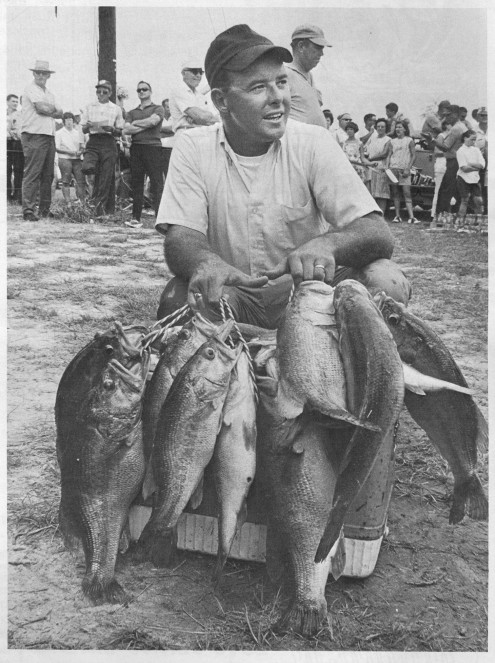
Bobby Murray won the first Bassmaster Classic in 1971. He won an unheard of $10,000 prize. I fished my first bass tournament around that time. Some of the things we did were comical if not downright dangerous. Shotgun starts were the norm. Overpowered boats were everywhere. Mix those two with 100 boats in the dark and it's amazing so few were killed. Bill Dance was king back then. I fished a tournament in Kissimmee where a young good looking Roland Martin was the guy to beat. Tom Mann, Hank Parker, Rick Clunn, Don Okiebug Butler, Johnny Morris and Jimmy Houston were tough. Back then there was little electronics and no GPS. Pros couldn't see fish on a TV screen mounted in their boats. Yesterday's tournament winners were better fisherman. You would think with all that help an angler today would never get skunked. I imagine this gives the bass a chuckle. ?
-
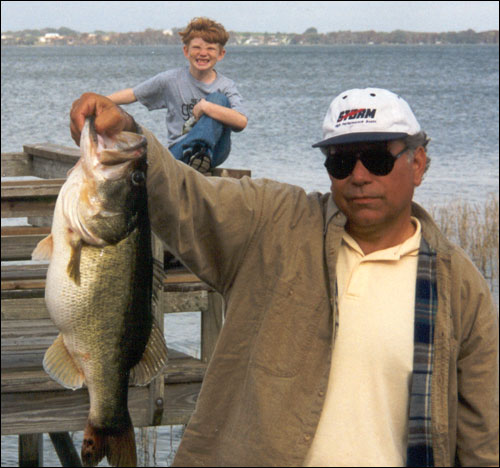
The Kissimmee Chain is a huge chain of lakes connected by canals and locks. It starts in West Lake Toho at the City of Kissimmee. If you lock through to the South you will come to Lake Cypress, Hatchineha and Big Lake Kissimmee. East Lake is land locked and near the City of St. Cloud. Big Lake Kissimmee is connected to Lake Okeechobee via the Kissimmee River with numerous locks. All this water runs south into the Everglades. Each lake is somewhat different. The canals and the river itself hold lots of bass. These are natural lakes with fields of grass and very little homes. It's a bass fishing paradise. The Harris Chain is similar, but vastly different. It runs north draining the water into the St. John's River and the Atlantic Ocean at Jacksonville. The Harris Chain near my home in Eustis are residential lakes. These lakes are large, shallow and contain very little obvious cover. They can be challenging to fish at times. On the positive side, the bass average larger than down south. Harris Chain bass are fat footballs. You won't get as many bites as down south, but you could catch a fish of a lifetime.
-
Welcome. I grew up and lived in South Florida until about 25 years ago when we moved to Eustis. I have fished for anything that can swim and hit a bait. Spent a lot of time fishing for Snook, Redfish and Tarpon. Got into offshore fishing for a time as well. When I retired from business, I moved to Central Florida. I have fished every major body of water in the State. The Kissimmee Chain is by far the best overall bass fishery in Florida. Okeechobee is second. The Harris Chain is challenging, but it's the best place to catch bigger fish. Rodman depends on the water level and the state of hydrilla. The St. John's River can be good if you can stand the numerous manatee zones. Central Florida is dotted with thousands of smaller lakes. All of them have a good population of bass. If you are serious about bass, you should join a local bass club. You can learn more by watching than fishing.
-
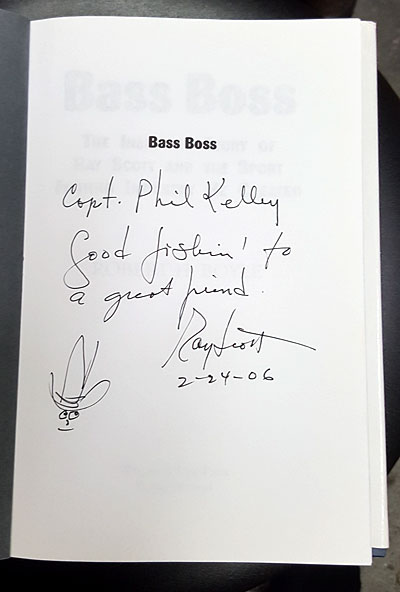
I have a hat autographed by Dean Rojas. He signed it for me the year he made his 45.2 pound five fish catch in Toho. I also have a rod signed by Jimmy Houston and a copy of the book Bass Boss signed for me by Ray Scott. I don't believe they have much value other than to me.
-
Are there are pads in that lake? If so, fish are there.
-
Your lake is a microcosm of practically every natural lake in Florida. Bass are primarily ambush feeders and will gravitate to any cover. As stated above, cover can come in many forms. Weeds, ditches, docks, inlets, downed trees, even concrete blocks and old tires fit the description. Whatever you find, you can be sure that spot will be a consistent producer. The Harris Chain is over 50,000 acres of water. The average depth in the middle of our lakes is about 10'-14'. Except for some occasional hydrilla, there is nothing obvious sticking out of the water. Anglers become frustrated because they have difficulty in finding fish. This gives locals who can put together a milk run of "spots" a huge advantage. Depth means nothing to a bass that lives in Florida. I have caught huge bass in two feet of water and they don't seem unhappy. ☺️
-
I started fishing bass tournaments in the early seventies. My fishing buddy and I wanted to learn to be better fisherman. We researched all the local bass clubs and joined the best one we could find. It was one of the first B.A.S.S. affiliated clubs in the State. They made us "apply" to join their club by fishing a day with one of their members. This made us both nervous, but we passed their test and became members. I learned that tournament fishing is not the same as fishing with a buddy. I learned that having a fancy boat and expensive tackle alone won't make you a winner. I also learned I wasn't nearly as good as I thought I was. A few of our competitors became professionals. One was a well known guide in Okeechobee. Two others invented bass fishing products and owned tackle companies. A third started a well know plastic bait company. We eventually caught up and won our share of tournaments. I quit fishing tournaments about ten years ago when my body started getting in the way of my wins. I know of no better way to up your game than fishing in a tournament. You can learn a lot by watching the guy in the front of the boat even if it's what not to do. Tournament fishing is not for everyone. If you're going to give tournaments a try, leave your ego at home and let your fish do the talking.
-
My wife is a light skinned Irish girl with green eyes. I have Italian heritage. When she gets a sun burn, she turns red. I get darker. We both spent a lot of time outdoors. When we were kids, sunscreen was call "sun tan lotion". She is always getting chunks cut out of her or spots burnt off. She is used to it now. I never thought I would have this problem. To make her happy, I started going with her to the dermatologist. They never found much until two years ago. I had a cancer on the top of my head. It's wasn't anything serious, but I ended up with a big circular slit in my scalp. My advice is go to the skin doctor for regular checkups. As you get older, lots of things that you did when you were young will come back to remind you.
-
Most fisherman are hooked in an arm, hand or leg. A fishing hook can be removed with a piece of string as long as it's only in the skin and not near an eye. Youtube.com has videos showing this procedure. The first time I hooked myself was when I hung a Rattle Trap in some pads. I tried to free the lure by pulling on the line. The Trap popped off and stuck me in the leg. Mono stretches and when the lure comes free it will come at you like a bullet. If you get hung up, don't pull directly toward you. You don't want a sinker or anything else hitting you that fast.
-
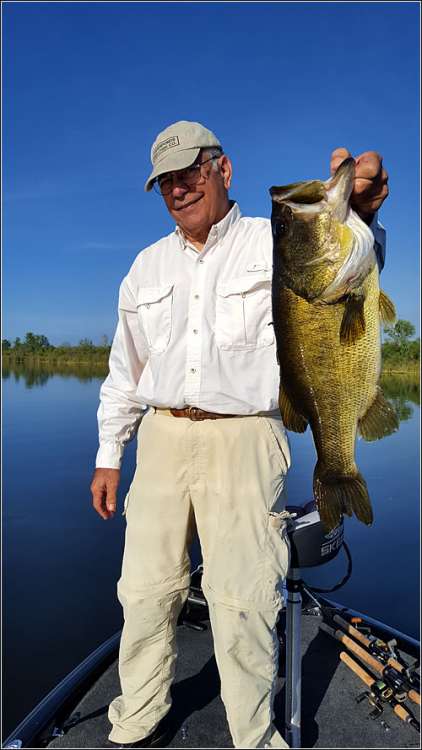
I don't believe rod length is that significant when flipping and pitching. Back when Dee Thomas first started flipping in tournaments, he was trying to emulate an old cracker technique call "doodle socking". This fishing technique was done with long cane poles and a short piece of line. Fisherman needed the long pole to reach as far back in the cover as they could. The 8 1/2' maximum tournament rod length was set because Ray Scott asked Dee how much rod he needed. I flip with a 7 1/2' rod. A light rod is easier on your arms and wrists. Holding up an 8 1/2' broom stick is murder on your arms and joints. Sometimes the fish are on the edge and sometimes they are back in there. If I can't drop the bait straight down to the fish, I pitch the lure. Flipping is tedious. You may only get a few bites a day. As long as you are comfortable, you will stick with it. Otherwise, you will give up and try something else. Almost all my bass over ten pounds were caught flipping. Flipping is not about numbers of fish, it's about quality fish.
-
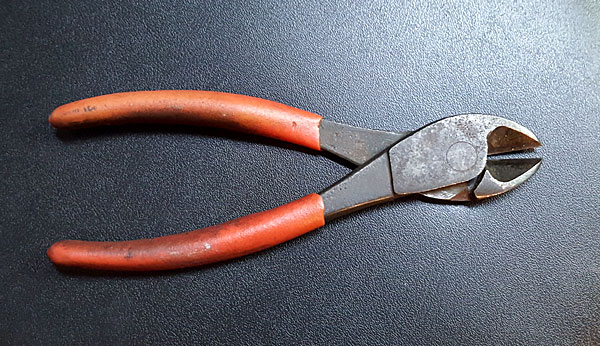
Over the years I had numerous customers hook themselves or others in the boat. The first thing I always said when they got in my boat was "We have two rules, stay in the boat and don't hook the Captain!" Most listened, some didn't. Taking someone to the clinic with a Rapala hanging off their face is not pleasant. It interrupts the fishing trip and makes for a bad day. I can get 99% of fishing hooks out with a piece of string. This is nearly impossible if the hook is still attached to the lure. Side cutters are used to cut the lure away from the hook. The worst lure hookup I ever had was when fishing alone. I was fishing a Devil's Horse lure. When I tried to unhook a bass, the fish went crazy and hooked me in the chest. The bass was pinned to me with all three hooks, one in him, one in my chest and one in my hand. Thankfully, I had my cutters with me and we all got away. If I had not, I'm not sure what I would have done.
-
Never go fishing without one of these in your boat. Fishing with a lure hanging off your face or hands is no fun. Ask me how I know...
-
I loved turtleman. I grew up with a few boys like that. Brought back lots of memories. A few of them I wish I hadn't remembered. ?
-
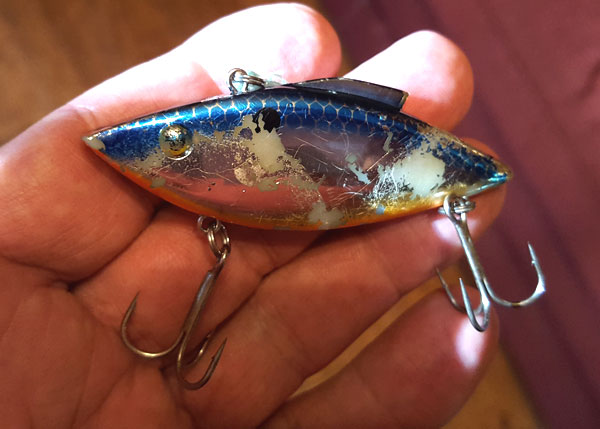
Lures are meant to imitate bass food. Bass are predators. Crippled fish are especially attractive to a fish predator looking for an easy meal. Anything that makes a small fish stand out, is going to be noticed. I carry a red magic marker in my tackle box. I use it to paint red lines on my rattle traps. This was taught to me years ago by someone who fished these lures exclusively. If you notice, many successful bass lures have similar markings. Dots, lines, eyes, mouth and gill slits all have the same purpose.
-
Otters eat fish, bass included. They have been known to kill alligators. They kill to survive. They are much better fisherman than we are. Bass will flee the area if a hungry otter shows up. Otters can be dangerous in a fight. When I was young, a fisherman wading in Okeechobee was killed when he was bitten by an otter. He bled out before he could get help. Mostly, they stay away from humans unless they feel threatened. There aren't enough otters left in Florida to harm fish populations. That's sad as they are among God's most amusing creatures.
-
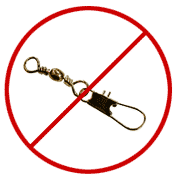
I use a blood knot to connect the two. Swivels, snaps and clips have no place in bass fishing. They destroy the natural action of the lure. If the lure came with a slip ring, use it. Other than that...
-
Years ago I knew a group of guys that hunted the Everglades Skunk Ape. The Skunk Ape was similar to Big Foot only stinky. They were a bunch of Soldier of Fortune types armed to the teeth with all sorts of weaponry. They made a few videos. Mostly they drank a lot of beer and tried not to shoot each other. When I was young, I did some things that weren't real smart like fishing alone at night in the Everglades. The Everglades is criss crossed with miles of drainage canals. Fishing alone in the dark at 2 AM 30 miles from the ramp is asking for trouble. I scared myself a few times. Never did see or smell the Skunk Ape.
-
My son lives in Weston. He and my grandson, fish those lakes regularly. They catch a lot of bass on plastic worms and small bass colored swim baits. They also catch fish on Heddon tiny torpedos. The water in those rock pits is clear, so they use light mono line. Those lakes are also deep. The best fishing is where you find debris on the bottom. Look for points and canal and culvert junctions. Pads are always good. Some of those fish could be large, especially this time of year.
-
About twenty years ago, I was fishing alone in Little Lake Harris. Other than myself, the lake was deserted. I saw something out of the corner of my eye that got my attention. When I looked back, it was gone. Shortly thereafter I saw what looked like a big black stick raise out of the water. I thought I was seeing things, but a few minutes later I saw it again. At first I thought it was a person in the water, but it was much bigger. It was damned spooky. I started my big motor and idled out to see what it was. It kept appearing and disappearing. When I got close enough to see what it was, I found a dead bloated cow floating in the water. A huge gator was pulling on it. I assumed the gator was trying to take it down or bite off a piece? What I saw were the cow's legs as the gator turned it over. Over the years I have seen some strange stuff, but that was one of the strangest. I have fished all over the world in both fresh and salt water. When you're offshore and alone, your eyes can play tricks on you. I have never seen a sea or a lake monster.
-
There are currently about 5,000 fishing guides in Florida. Fresh water and Salt water guides have different requirements. A bass fishing guide needs a minimum Coast Guide Certified Captain's license. My license was issued about 20 years ago. My license is limited to 6 passengers total. I no longer actively guide. The life of a bass fishing guide is tough. As most young anglers, I thought it would be a great way to be paid to fish. It turned my love for fishing into a job. Because I could catch fish, I assumed others could too. My best clients were tournament fisherman looking for local knowledge. I fished with numerous bass anglers with their names in print. They aren't any different than anyone else, but they are highly skilled, dedicated and focused. It's a very tough way to make a living.
-
When I first started bass fishing, lures were heavy chunks of wood or spoons. Casting them with the reels we had was a chore. I decided to try fly fishing. I bought a mail order bamboo fly rod, a cheap reel and some C level line. Most of my fishing was done with popping bugs. I caught a lot more bass with my fly rod than with those old bass plugs. I started tying my own fly flies and experimented with streamers. My best streamer was nothing more than tin foil wrapped on a long shank hook with a short piece of white buck tail tied on. Most of my fishing at the time was done from the bank. Everything changed for me when my fishing buddy bought a Mitchel 300 spinning real. This was also when plastic worms started appearing. We loaded our reels with 4 pound mono and could cast a Creme worm all the way across the canal without a weight. No more whirling reel handles, tree hanging back casts, or tangled line to step around. Plastic worms caught more and bigger fish than our popping bugs. I still have a fly rod in my garage. I get it out once in a while. A fly rod is not the best tool for bass fishing. It's challenging. Those that enjoy it, love it. I think it's the wrong tool for the job. I'm not against fly fishing in general. I've caught bone fish, tarpon, snook, permit, jack crevalle, barracuda, red fish and even a sail fish on fly tackle. There are more effective ways to catch these fish, but it's the challenge that fly fishing is about.
-
I am right handed. Back when I was actively fishing tournaments, I trained myself to use left handed casting reels when worm fishing. I seemed to have better control when working the worm and my hook set was much firmer. It wasn't hard for me because I also use spinning tackle which I hold in my right hand and crank with my left. I still have a few left handed casting reels laying around. These days, I fish worms with spinning tackle because it is easier on my hands and arms.
-
Having nothing to do on Christmas day, I read through this thread. This debate has been going on since Perry entered his fish in the magazine contest. I believe George Perry caught the fish he entered. At the time, he didn't even know there was a contest. Someone else told him to enter. Back then, no one cared about world record bass. All he knew was he caught a big fish. He took it to the local post office and they weighed it. Good enough for me. End of story. Even if his fish was a hoax, it has been inspiring bass anglers for nearly 100 years. As a small boy, I used to dream that I would catch a bass like that. It never happened, but that dream kept me fishing. As you can see by the California and Japan records, it is theoretically possible to engineer a world record bass. Frankly, I am surprised that it hasn't happened. A bass over 20 pounds is a freek of nature. To produce a bass that size, you need the right combination of genes, food and habitat. Florida strain bass are not native to California or Japan. Should stocked fish even be measured against Perry's bass? The largest bass I have seen with my own eyes was mounted on the wall in a Howey-in-the-Hills tackle store back in the early seventies. That fish was reported to be 17 pounds. It looked to be every bit that big. The Toho record is in excess of 17 pounds. Some people wonder if Florida will ever produce a world record bass? I believe that ship has sailed. Habitat loss, fishing pressure and the introduction of non native species and plants make this nearly impossible. If there is a world record bass swimming in Florida, it's in Lake Apopka. This giant lake on the outskirts of Orlando was so polluted by agricultural runoff, that no one fished it for years. Restoration efforts have had little success. However, stocked bass have taken hold. It's a nasty place to fish, but the fish are healthy and big. Keep your eyes on this lake. I'm sure the ghost of George Perry is fishing it. ☺️