


haggard
Members
-
Joined
-
Last visited
Everything posted by haggard
-
A great starting point that catches fish is a 6'6 to 7 ft medium power, fast action rod and a spinning reel (or baitcasting reel if you prefer, check the youtube for the differences and tradeoffs). $50 to $100 should buy you a decent rod, and same for a decent reel. Put 10 lb mono line on it, tie on a 1/4 oz bullet weight followed by a 3/0 hook and a Texas rigged 4 inch soft plastic worm. Bring needle nose pliers in case you need help removing the hook and, if you can, foreceipts (in case you deep hook one, you can go through the gills to remove the hook). Set the hook fast. If you wait too long you risk deep hooking the fish (harder to release).
-
Congrats on the Hobie. You're going to love that thing! Wonder if something like this would make load/unload easier.
-
Planning on getting a reel to replace the one "lost at sea" and could use some input from the group. Combo will be used alongside a L/F, a ML/XF and a M/F, and will generally serve as the go-to "heavy duty" setup. Characteristics: - sensitivity - strength Applications: - deep (up to 40 ft) Texas rigged worms 5+ inches - deep or shallow bottom contact jigs+trailer - thick/shallow cover - docks, laydowns, frogs in pads Rod: - Avid 6'6 MH/F baitcaster (AVC66MHF) rated lures 3/8 to 1 oz. Line: - Braid. For now, 40 lb with copoly leader (braid for sensitivity and no stretch, given the deep water applications) Reel: This is where I really need your help. I'm brand loyal to Shimano but won't rule out other brands. Lost reel was a Curado 201K, prefer brass gears to aluminum, prefer torque to speed, and smaller reels such as the Curado 70/71 fit my hands better than bigger (200/201K). Reel budget: Around $200 Favorite reel right now is the Curado 70/71 but I'm wondering if this isn't heavy duty enough for the applications, particularly compared to the Curado 200/201. Or are there other Shimano models (or even other brands) that I should consider. In my limited experience, line capacity between the 70/71 and the 200/201 hasn't been an issue. Are there other differences?
-
I could be wrong but I'm not sure that's too low to worry about. In terms of cavitation, I'd think it's better too low than too high (prop grabbing air). Thinking you might be allright as-is, at least get it on the water and see how it performs before making any adjustments. Congrats on the new boat!
-
-
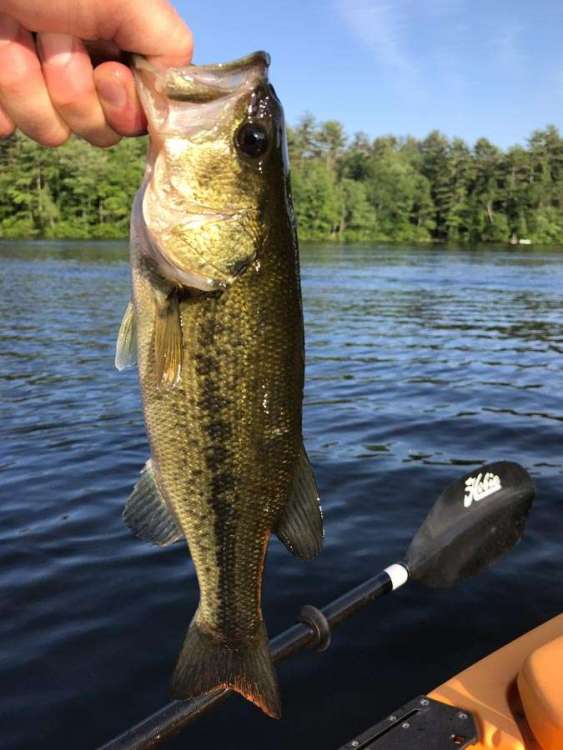
Good news: Got on the lake on the yak Bad news: 10-15 mph winds with gusts to 25 Good news: fished the protected coves Bad news: not even a nibble Good news: No good news Bad news: Gust caught bimini top, snagged rod & reel in holder behind my seat, launched it overboard Good news: Guy on shore saw it and says hey you lost a rod, and it was in relatively shallow water in a narrow channel Bad news: Forgot power cord for the fish finder, can't mark the spot Good news: Guy on shore tells me where to go Bad news: Wind is blowing me off the spot Good news: Had 2 other combos, combed the site Bad news: Came up empty Good news: Of the 3 combos on hand, the one that went over was the cheapest Best news: Continued fishing and finally landed ONE largemouth. Not a biggie but this day would have sucked a lot more without that. Bonus points: Bald eagle sighting.
-
^^^ We grew up on salt water and swimming every summer was a given. When my neighbor taught me and my sisters how to swim without a PFD what I remember most was her saying just lay on our backs, relax, we'll sink down a bit but we'll float. If our legs started to drop just stretch out our arms and sweep them from head to toe, with a gentle kick of the legs. When we finally had the guts to trust her and try it, we floated and it felt like magic, and opened up a new world of swimming freedom. That was around 25 years ago and since then I tested the water only on a few occasions. Wouldn't hurt to see if the skills still work - capsizing, swimming, reboarding - under controlled conditions (shallow water, with someone else along as a spotter).
-
Got to second that. I own worse and better but find the Premier series a real sweet spot in terms of cost and quality, maybe the last step before stepping off the Bait Monkey cliff. Sometimes I wish I had stopped there.
-
-
Depends on how high the deck sits above the water line. As a point of reference, I had a Tracker 1448 jon whose deck was only 6 inches above the surface. I went with a 36" but wondered if it might be a little short, but it was a great match.
-
Jim... the title is "strangest" not "scariest" I was in the yak on a pond using ultralight gear for panfish. Got a fish, unhooked it and laid the rod across the yak while I released the fish. I didn't realize it but the lure was dangling a few inches below the surface. Released the fish, picked up the rod to make another cast, and there was a fish on it.
-
If you're used to a StC and it feels a bit too heavy, I'd stick with StC, even the same model lineup (Triumph) and go one step lighter, since you already know what the StC feels like. Going to another brand you'll be starting from mostly scratch again, with no reference.
-
Not the same. Seat belts keep you in control of brakes and steering, possibly the two most important controls on a vehicle. If someone gets hit, or even if simply swerves or makes a minor "off road excursion", they'll probably find themselves out of control of 5,000+ lb of vehicular matter :D Then there's that part about getting ejected through the windshield, but that's more about personal choice because the rig has probably already come to an abrupt stop at that point. Or by imposing some type of fee :D
-
Agreed, as far as PFDs and helmets go. Seat belts and (motorcycle) eye protection are different - they're about prevention, keeping you on the controls... safety of others, not just self. As a former NH resident I always appreciated they mandate motorcycle eye protection but not helmets. Live free or die.
-
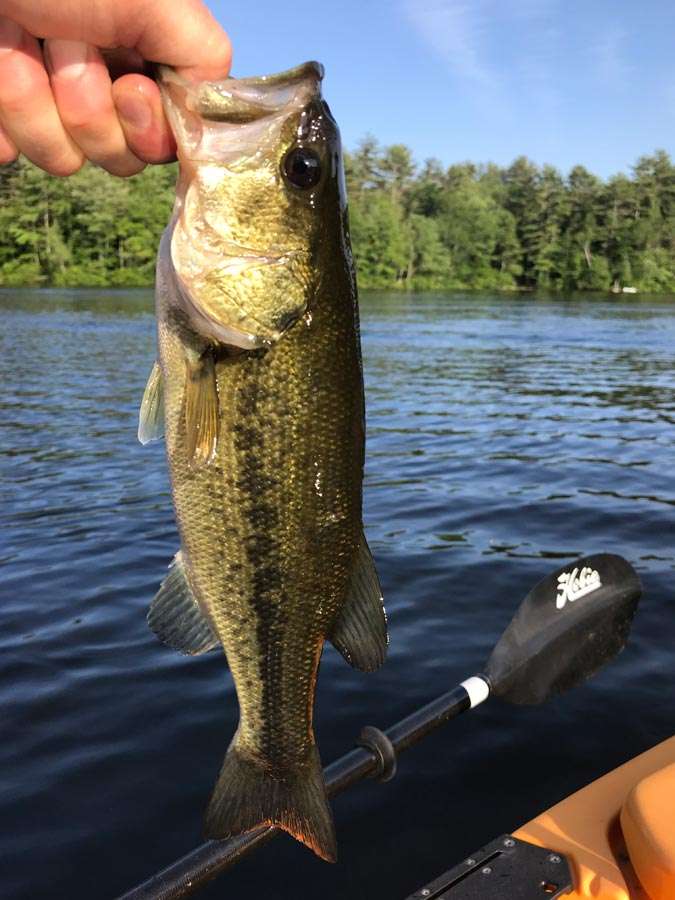
Congrats on the quick thinking. First reaction might be to scramble down the wall into the water but that won't end well. Glad this one did.How about copoly such as Yo Zuri hybrid? Best of both worlds?I've been using a Curado 201K and 71HG for two seasons now. I use the K as a heavy duty workhorse, paired with a MH/F and braid for - deep worms & jigs - bottom contact - heavier cover (frogs etc) I use the 71 as more general purpose, usually TX rigged soft plastics, paired with a M/F and copoly. The 71 is by far my favorite, feels much more comfortable, palmable, just right (I generally fish a little more on the finesse side). Line capacity has never been a problem.Not long enough. Now trying to make up for lost timeA Texas rigged 4" Yum Dinger caught my first fish, a smallmouth. When my son wanted to try fishing, I set him up with a Texas rigged 4" Yum Dinger. Caught his first fish, a smallmouth. Bonus points: Made in the USA If you get a bass that big, you don't have to apologize for the tongue hang.They say you can't go wrong with natural colors. Green pumpkin?3/8"Yes it's a good start, should work but as others said more line capacity might help if your'e after bigger stripers. For schoolie stripers I use a StC 7'0 MH/F with a 5000 size spinnig reel (it's smaller than it sounds), 17 lb mono and lures up to about 1 1/4 oz. Schoolies are a blast on this setup.For maximum panfish fun I'd recommend a 5'6 UL/F (I used it with a 500 size reel and 6 lb mono). Easily handles sunfish/bluegill/crappie. 6 lb might be overkill but I have a harder time tying knots with 4 lb. Now I use a 6'6 L/F with 1000 size reel but only because it needs to handle an occasional bass.




Important Information
We have placed cookies on your device to help make this website better. You can adjust your cookie settings, otherwise we'll assume you're okay to continue.