Bankc
Super User
-
Joined
-
Last visited
Everything posted by Bankc
-
Nah. They look like they might, but they hold up about like normal plastics. It's just the smell that goes away. Personally, I'd rather leave them on the hook than unhook them. They're pretty soft, so it seems to me like if you unhook them, you're likely to tear them up. You can glue them back, of course. But they still catch fish even without the scent, and if you're worried, just spray some scent onto them. That's my take anyway. So far, I've caught more fish with these after they've lost their scent than when they still had their scent. Not that there's anything wrong with the scent. It's just that I will fish them until I lose them.
-
There's been a lot of recent research to back this up that's challenging 100 years of conventional thought. For the longest time, it was assumed that calories in minus calories burned equals weight gained. It made sense, so no one thought to question it. However, there's been a lot of recent studies suggesting that this isn't so. It now looks like unused calories are passed through your body. And the idea of having a fast or slow metabolism is a myth. Afterall, if you had a faster metabolism, then logically you would also have a higher body temperature. Since you literally burn calories, the more calories you burn, the more heat that would be generated. So everyone has about the same metabolism. We are warm blooded animals, after all. The research is pointing to the hormone insulin and suggests that it is responsible for taking excess energy and converting it into fat. And limiting your intake of sugars (regular sugar, processed sugars like corn syrup, and carbohydrates), limits your body's production of insulin which limits its ability to add fat. This also explains the obvious genetic component to weight gain, as not everybody produces the same amount of insulin or reacts the same way to it. I can speak from personal experience that after reading some of this research, my wife and I drastically cut down our sugar intake, and with making no other changes to our diet or exercise, we've both managed to lose about 30 lbs. each in the last 8 months. Also, the research is suggesting that fat cells live for around 10 years. So once you've added them, it takes a long, long time to remove them. However, they can shrink in the short term, so weight loss is still possible. But you have to keep the weight off for a long time to prevent it from coming back so easily. So you really have to think of it as a lifestyle change, and not just a short-term diet to get the full benefit. Obviously, all of this is still new and not proven. It'll be years and tons of studies and experiments before we know anything for sure. But that's the direction the medical community is leaning, for now.
-
To me, this kind of record is held by the fish, not the angler. Sure, there's some skill involved with catching a record fish, just like any fish. But there's also a whole lot of luck, indicated by the names at the tops of these lists (several are not serious anglers). And it requires access to a body of water that holds a record fish, something most of us do not have. If you want to give the record to a person, I think a more deserving recipient would be the people who managed the water that allowed a fish to grow to record size. Having a bunch of poorly managed lakes near me, I can't stress the importance of that enough.
-
That's where I'm at. I fish to achieve a mental state. Fishing forces me to live in the moment and listen to what nature is trying to tell me. It's a meditative act where I quiet my mind and harmonize with my environment. I melt into the earth to become nature herself. The only time I have problems with achieving that mental state is when it's too windy and I spend more time fighting the wind and current than fishing. And that's probably why I'll never tournament fish. While I'm sure it would be thrilling to win one, it would take away what I love most about the activity, which is to just enjoy the pure peace of simple existence.
-
I had considered the horizontal rod holder. But I was afraid of not securing one in correctly and losing it (since it hangs over the water), banging it against something (because I'm always bumping into stuff on my kayak), and it would be in the way of my paddle (which I don't use primarily, but do use). But hey, if it works for you, then it works! I don't think there's a perfect solution. If there was, that's what we'd all be doing. It's just a matter of figuring out what works for you.
-
I enjoy throwing spoons, but not in shallow water, due to their potential to snag. I tend to save them for open water situations. I prefer to jig casting and flutter spoons over rocks on points and casting or dragging them through balls of baitfish. They can also work on a steady, straight retrieve, or a stop and pop retrieve. The spoons also work well around floating docks, if you know where the cables are and can avoid them. They're really common lures for white bass. Less so for black bass. But anything that works on white bass will work on black bass.
-
I just use a bait bucket. I prefer the kind with a floating top and a million holes in the bottom of the bucket (or mesh) that slide into a second bucket without holes. That way I can drop the bucket into the lake to keep the water cool and circulated and put it into the solid bucket full of water when I'm traveling.
-
I just store mine upright in rod holders I made of PVC pipe. I did lose one once as I passed under a tree and a branch silently slid it out and dropped it into the water without making a splash. That made me determined to find a solution. After that I tried rod leashes, rod floats, and locking rod holders. I hated all of them because they all introduced more hassle. So I eventually went back to my original system, and haven't lost a rod since. I changed my behavior and learned to avoid situations where one might lose a rod. And I became hyper aware of my rods when I'm doing things that put them in danger, like passing under a tree branch or casting. So for me, it wasn't a product but a change in mentality and experience that solved the issue.
-
Probably Yo-Zuri Top Knot. It's the cheapest I've found. It's okay stuff. It's a bit stiff and is bad about memory, but I've used worse. I mainly use it for leaders (the mainline version). It doesn't like to be stretched though. So if you get snagged, be sure to check it for knicks, as you might find it breaking off on the next big fish you hook if you don't. I can't recommend it for mainline, as I think you'd have to replace it too often due to its memory and stiffness, and it would be cheaper in the long run to use a higher quality brand. But for leaders, it works pretty well.
-
Try cinching it as you do your weaves. That's what I do, and without it, I've noticed sometimes the knot doesn't get tight when trying to cinch it all down at the end. I'll give it a good tug once every four weaves. Not a full cinch, just a good tug. And I keep the knot sandwiched between two fingers in my left hand so it doesn't unravel. Also, sometimes with lighter lines, it helps to do several overhand knots at the end, and flipping the orientation (direction) of each knot. Sometimes I'll do six of these. I've used leaders as light a 4lbs (FC for crappie fishing) and not had an issue with the FG knot holding. Also, the point about doing more weaves is a good one. Thinner line requires more weaves than thicker line.
-
And salt! Table salt (sodium chloride) is an important electrolyte that your body sweats out, hence why your sweat tastes salty (because it is). Without salt, you can't absorb water. Water will travel towards the salt in your body, which is why sea water will dehydrate you (it's saltier than your body and thus pulls the water out of it). Granted, most of us get plenty of salt in our diets (too much in fact), so it's not normally necessary to add salt. However, if you're sweating heavily for prolonged periods, salt can become necessary again. So if you're drinking gallons of regular water and sweating heavily over the course of a day, then salt becomes an important consideration. Hence why most sports drinks contain sodium, to help cover the loss.
-
Sorry. I've never messed with a two-piece shaft. I'm sure it's still possible, but obviously a bit more involved. You'd have to cut it from the bottom and removing the shaft from the motor housing doesn't look easy. Plus, you'd have to put new threads on the shaft after you cut it. You might be able to avoid that, however, if you can get a 36" replacement shaft from Minn Kota. Technology, right? Whenever they "improve" something, they make it harder to work on, don't they?
-
I use MIO in my water. I don't like the taste of our tap water and am not paying for nor storing bottled water. So a squirt of that in the water and it's good to drink. Sometimes I'll use Lemon Juice if I don't have any of that. Also, it's important to hydrate before you need the water. Your body can only absorb a maximum about one liter per hour in extreme conditions. Under most situations it will be less than half that. So if you start sweating heavy enough, you'll sweat out water faster than you can absorb it, not matter how much you drink. The hydration game is really won or lost long before you start sweating. Another thing nobody ever talks about is adaptation. You can slowly, over the course of a few weeks, adapt your body to the heat if you avoid too much air conditioning. This makes all the difference for me. A freak 100° day in May can be unbearable. But by August, I don't mind that kind of heat. That's what I learned from working so many outdoor labor jogs in the summer. If you know you're going to be out in the heat a lot over the course of the summer, get yourself used to it so your body can handle it.
-
As noted, cutting down the shaft is easy. So I say, go with the longer, and you can always cut it down. Go with one too short, and there's not really a good way around that. If you do need to cut it down, just be sure to mount the trolling motor upside down to a table or something. That way, all of the dust falls out, away from the motor. It shouldn't be a big deal if a little bit gets in there, but it certainly won't help it. There are some YouTube videos that walk you through the process. It shouldn't take you more than an hour, and that's including the time it takes to constantly recheck your video reference and dig out all of your tools. It's a 5 minute job if you know what you're doing.
-
I've seen people do it, but I've never done it myself. It seems to me that you'd probably be best off with an extremely stable kayak if that's what you intend to do, as using the foot control will rob you of some balance. Personally, if I were to try this, I'd rather have outriggers than a stand-up bar.
-
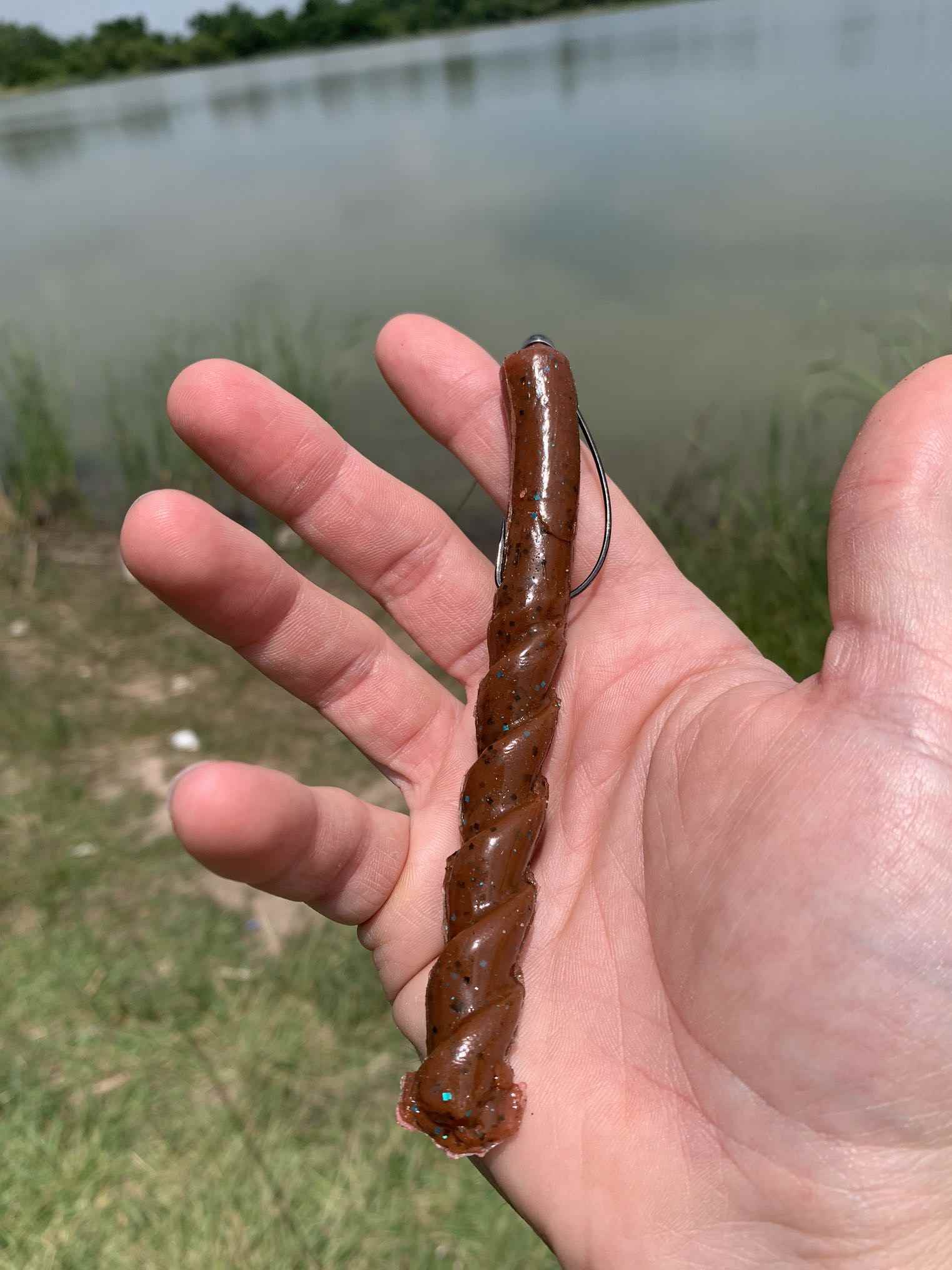
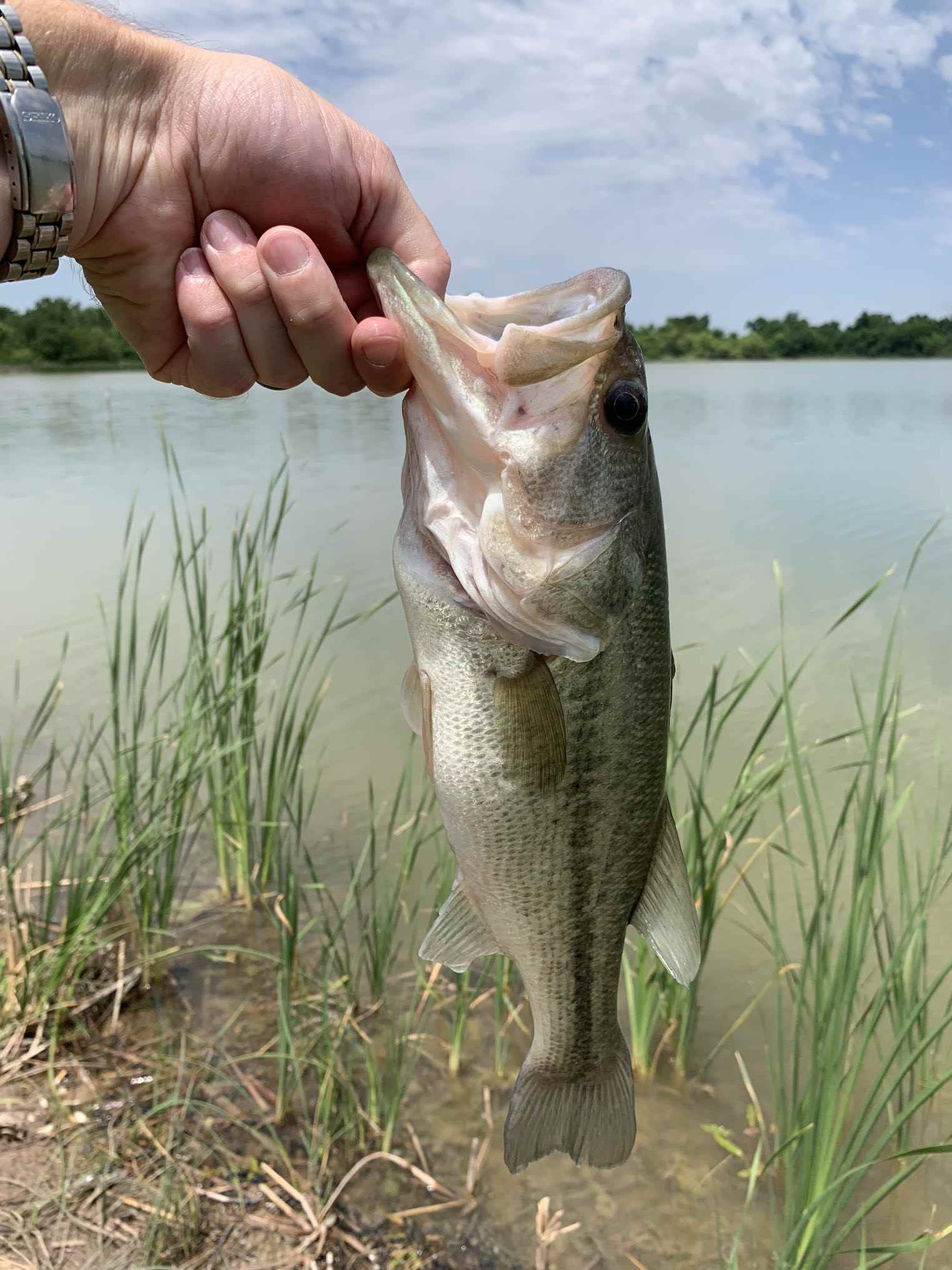
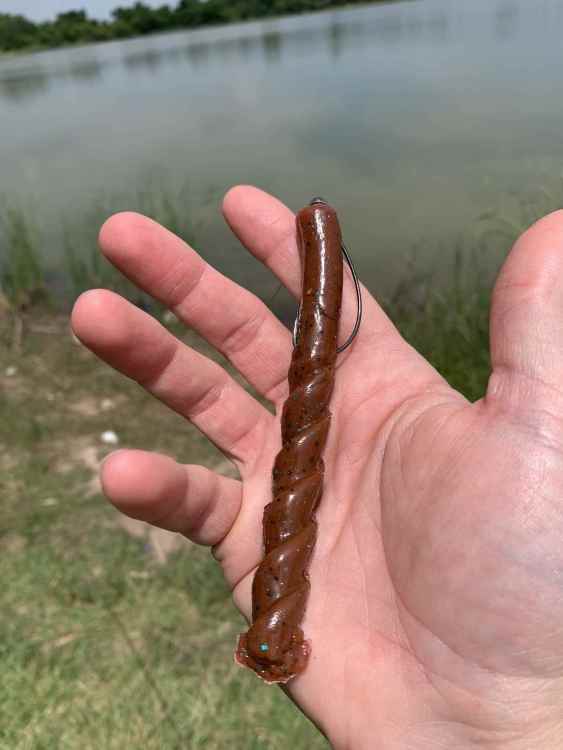
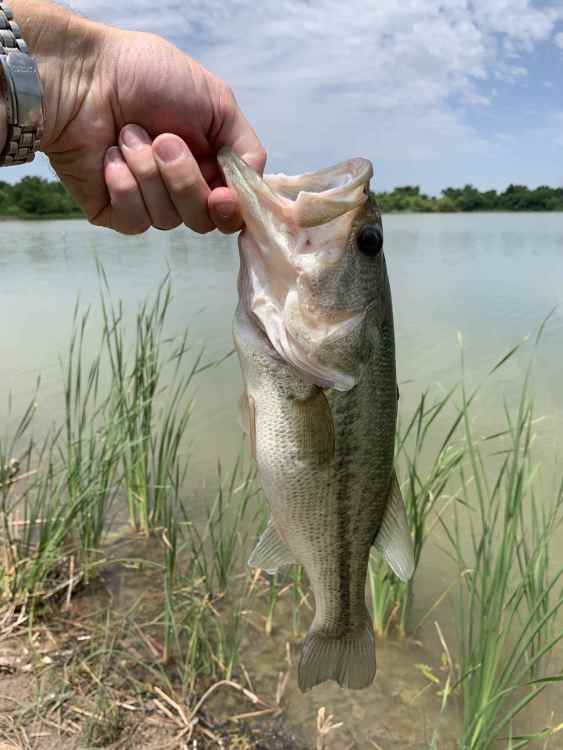
Will bass eat a 5/8" masonary bit? Yes, they will! I decided to try my hand at making my own soft plastics. This was my first test run using recycled baits while I finish up my first prototype.
-
I don't use my drift socks often. And, honestly, I don't know if I would at all in a canoe, since I mostly use it for drifting sideways. But the one situation where I'm glad to have one is whenever the wind is blowing parallel to the bank, and I can point my kayak towards the bank, hang a drift sock over the side, and slowly drift along while casting or pitching to the bank. Sometimes, if it all aligns right, I can fish a mile or more of bank with very little correction. It's like having a GPS trolling motor running a route for you. But that's not an everyday scenario. Most days, it never gets wet.
-
I prefer braid. 30-40# depending on how it digs into the spool. With a deep diver, you'll get down deeper with a thinner line diameter. Floating or sinking line doesn't really matter for depth, as it's all about bill geometry. And you'll likely be throwing further out than normal to allow time for it to get down deeper. So if you have a lot of FC or Mono out, it can be hard to set the hook with all of that stretch if you get a bite early on in the cast. I've lost quite a few fish due to that before switching over to braid. I pair it with a moderate action rod to give me some flex to keep the fish pinned to make up for the lack of stretch close up. For shallow to mid depth cranks, I go with mono or FC. But once you hit around 15ft., I prefer braid.
-
I use a tiny, keychain knife. It slices through braid with ease. I've tried several different cutters and scissors. They all seem to work at first, but all seem to fail eventually. I like one with just a 2" blade because it is easy to get close to the knot and convenient to keep on your body. If you do go with scissors, I'd get some Fiskars. They're the cheapest scissors you can find that are worth owning. If you go too far above them in quality, you'll likely find that the scissors rust easily due to the higher carbon content that makes them hold an edge so well. If you go below them, you'll likely find the scissors either dull or the pivot point wears out and they no longer shear. Fiskars tend to strike the best balance for everyday use.
-
I prefer to use an ancient 5'6" Medium/Moderate rod with a pistol grip. I like pistol grip rods for working that type of action, as the split grips tend to get in my way and I'm not bombing these lures anyway. I also use the shorter rod, because I fish from a kayak, and it makes it easier for me to control since I'm actually standing below the water line. I'd go for a longer rod if I were standing on the deck of a large bass boat. Though I don't always bring that rod with me, as it's pretty specialized and space is a priority in kayaks. When I don't bring it, I'll use a variety of different rods. So long as it's got some give to keep the treble hooks pinned, that's all I care about. MH/M, M/MF, or ML/F all seem to work well enough for me.
-
That's what stakeout poles do. If the ground is kind of soft, you have to push them in really, really deep or they won't hold. If it's too soft, like loose sand, they'll still fall over anyway no matter how hard you push them down. If the ground is too hard, they won't work at all, because you won't be able to get it deep enough to get enough bite. I have the exact same stakeout pole, by the way. It works for me, but as you've noticed, it's fairly limited in what you can do with it. Sometimes I'll have it buried 4ft into the ground, making it only useful in 3ft of water or less. Mine will hold in stronger winds (I've used mine in 30mph winds before), if the bottom composition allows for it. I only use it for a few lakes, as most of the lakes are either too deep everywhere, or don't have a good bottom composition for it. I use a folding anchor more than anything else. It takes up less space and is far more versatile. As for an anchor trolley, I don't know what to tell you there. You might try installing some type of cleat at the bow and stern. Usually, when you use an anchor trolley, you want to run it up to the end of the boat. However, you'll want to make sure you can access the far ends of the canoe to get to the cleat without tipping the canoe over in roughish water. Or else, being tied down with no way to access the anchor while the canoe is rocking will be very dangerous. Consider using an Exploding Clove Hitch Knot to attach your anchor with plenty of line so you don't have to move in the canoe to instantly release yourself. You might add another pair of cleats in the middle for the drift sock. I find I use my drift sock most often from the middle. But the good thing about an anchor trolley is it holds the tie down point lower, so it's less likely to tip over you canoe if a big wake hits you. You might check into using some SS bolts and fender washers on the kevlar to attach the anchor trolley. As for where to buy a drift sock, it doesn't matter. I got mine from Academy, mainly because it was close and in stock. They're all pretty much the same. I recommend to get two small ones. I find it's good to have a second, because sometimes one isn't enough. And sometimes one big one is too much. Two, allows you to choose between having one hang off the middle, or two at both ends. Be careful with them, however, as they love to get snagged any anything below the water, and you'll come to an abrupt stop which can tip your canoe. Also, sometimes I'll use a drift sock at one end, and an anchor at the other to keep my kayak aligned, especially if the wind is whipping around, but the current is steady.
-
I'd be worried about the transmission in a Subaru. They use CVT transmissions in all of their vehicles, and those transmissions aren't known for their towing reliability. So it may pull it, but you'll likely shorten the life of the transmission considerably. And you may not want the towing package offered by Subaru, as I believe they only offer Class II hitches, which themselves have a max rating of 3500 lbs. I have a Forester, and one thing I noticed is the same vehicle is rated for 1500 lbs. in the US, but rated at 4000 lbs. in Australia, if the trailer has brakes (1650lbs without). The only real difference is an upgraded transmission and oil coolers, plus the different regulating powers that govern over their respective markets. There are two types of SUV's on the market. The first is made on a truck frame, and the second on a car frame. The ones made on a truck frame, which tend to be larger and more expensive, can tow about as much as a truck. The ones made on a car frame, usually can't tow near as much, but have a much smoother ride and get better gas mileage. All Subarus sold in the US (except the BRZ) are made on a modular unibody car frame, the SGP (Subaru Global Platform). So if plan on towing often, I'd probably look towards getting a larger SUV, built on a truck frame. The Jeep Wrangler and Toyota 4 Runner are probably you're cheapest options there.
-
It may limit the number of lakes you can use it on. In Oklahoma, a lot of lakes don't allow "personal watercraft", where they will allow bigger and more power bass boats and smaller kayaks. Plus they can't be used at night, which means you'll have to wait for the sun to rise before going out, and have to back in before the sun sets, unlike most other craft.
-
Nothing. I didn't see anything I wanted at a steep enough discount to get me to bite. And right now, I feel better about saving that extra spending money than actually spending it.
-
I know a few people with anger management issues. This kind of behavior reminds me of them. I'm not trying to diagnose this guy, or really say anything about him one way or the other. I have no idea who he even is. But the people I do know with anger management issues are always getting into fights with other people/companies, and frequently having to change how and with whom they do business due to their habit of constantly creating unnecessary feuds. And to do business with them is always a risk. You can often have a positive experience and usually save some money with them (as they don't like raising their own prices because they don't like change), but the chance that everything blows up and goes south on you is a lot higher with these guys than other people who are much better at rolling with the punches and adjusting to the ever-changing world we live in.