Bankc
Super User
-
Joined
-
Last visited
Everything posted by Bankc
-
Okay. So upper leg means near your hips and away from you knee. I get you now. I thought you were meaning the top of your leg while sitting down with your legs out in front of you, not the top of your leg while standing. In that case, it might be the seat. Is the bottom of the seat adjustable? On my kayak, there are some straps on the bottom that can adjust the tension and amount of sag in the seat. I have to keep it really tight to make it comfortable in the long term. And my butt would bounce on the rear support brace in that seat, which would wear me out after a day of fishing. So I wrapped that brace in a pool noodle, and it's much more comfortable now.
-
30-40# Sufix 832. Lots of small trees where I throw spinnerbaits, and braid helps to ensure I can get my spinnerbait back.
-
I prefer to buy in person. That's not always possible, however. Especially the last few years. But I have bought quite a few online, and more than half were destroyed in shipping on the first attempt. There have been a few knit-picky problems with some of those rods. Things that I would have seen in store and probably picked up a different one over. But nothing that was so bad that I wanted to send them back. So I try to avoid it. Just like clothes. But it's not always an option. Just make sure they have free returns and will pay the return shipping if something goes wrong.
-
Upper left leg... like your quadricep? If it's cramping, that probably means you're tensioning it, lightly. Or it's not getting proper circulation, likely from not being used at all. Perhaps consider changing the foot-rest position. Maybe move it in a bit, or move it out, depending on where you have it now. Also, it's a good idea to occasionally move and flex your legs and back while out on a kayak. Cramps often happen from too much inactivity. It's also a good idea to stretch your muscles before you go out. And eat more bananas and drink more water or sports drinks. An ion imbalance can cause cramps as well. And here in America, we get plenty of negative ions through our salty diets (unless you're sweating like crazy), so it's usually more potassium that we need.
-
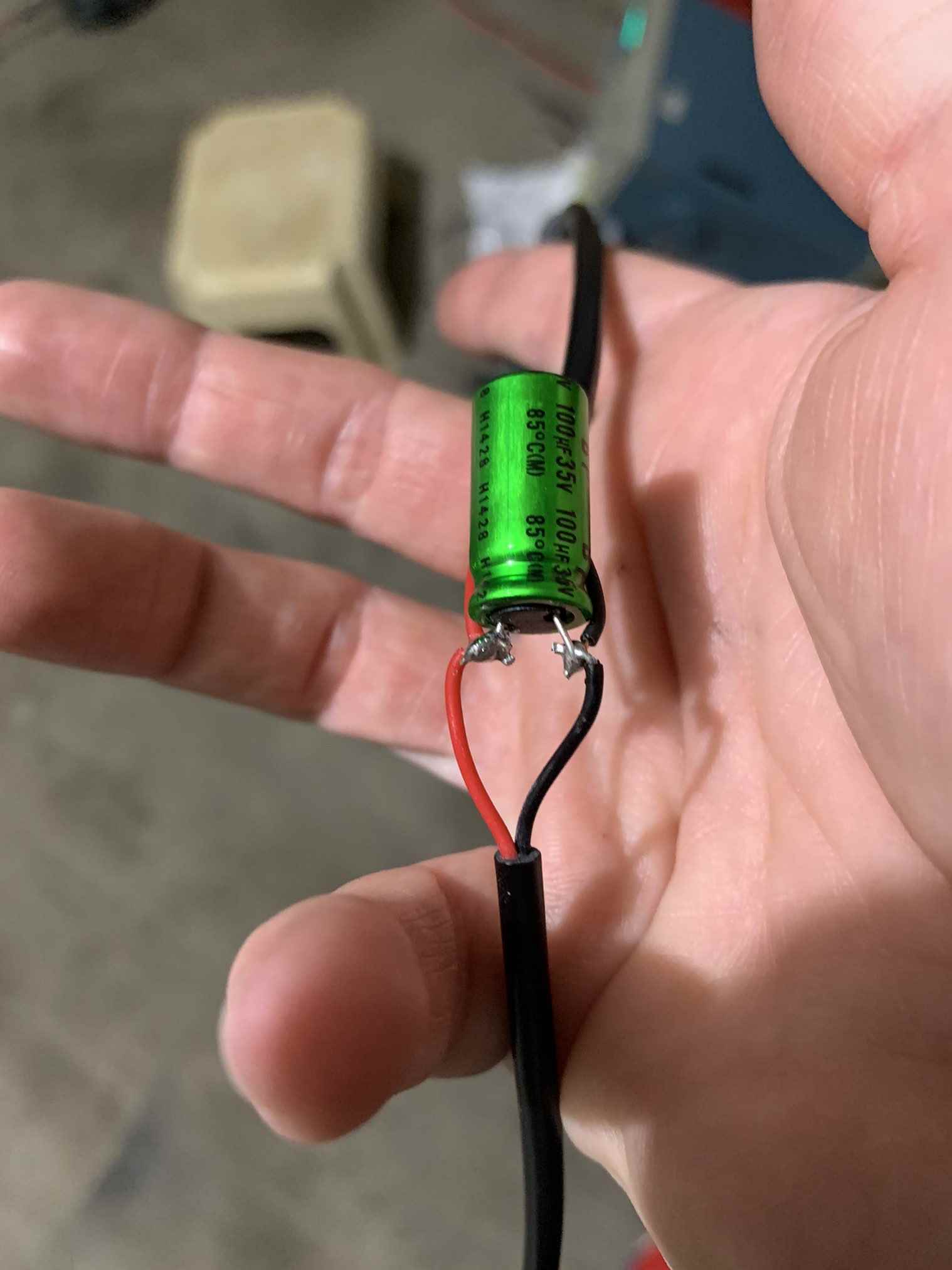
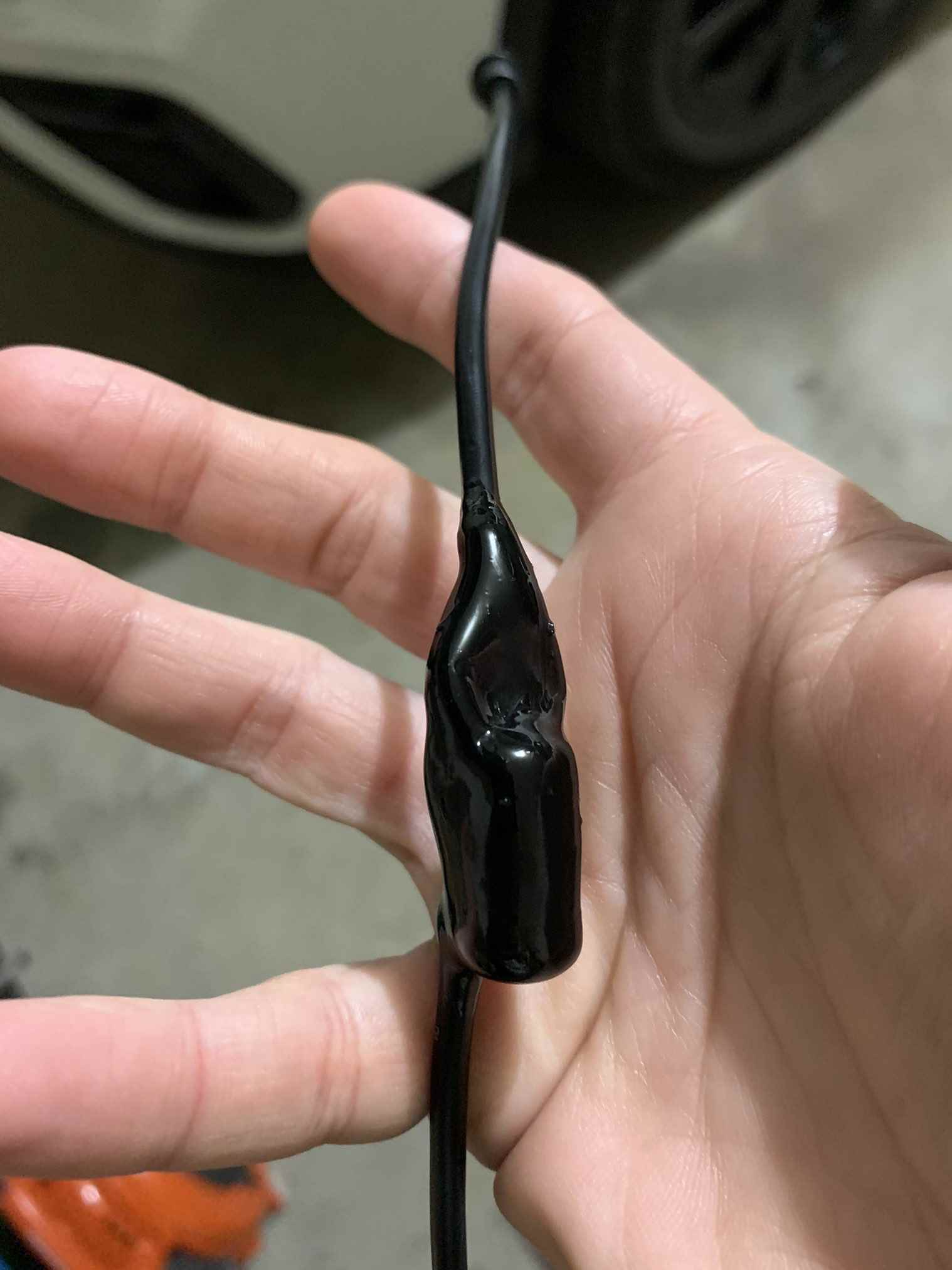
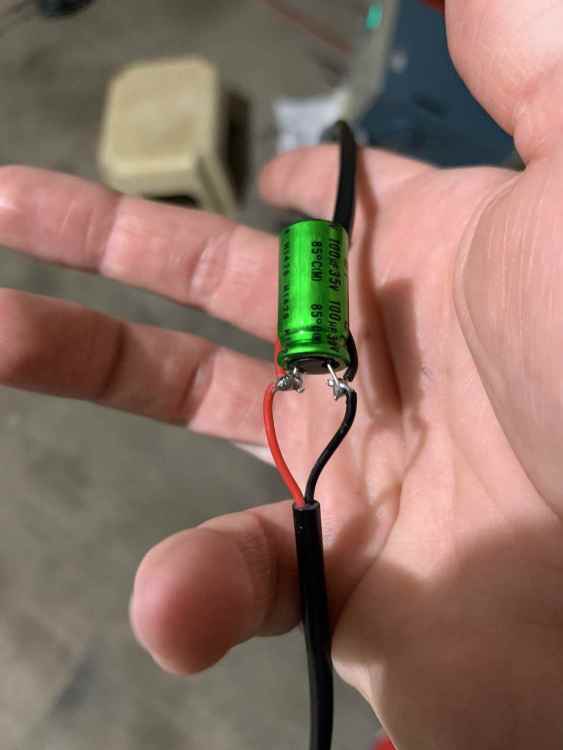
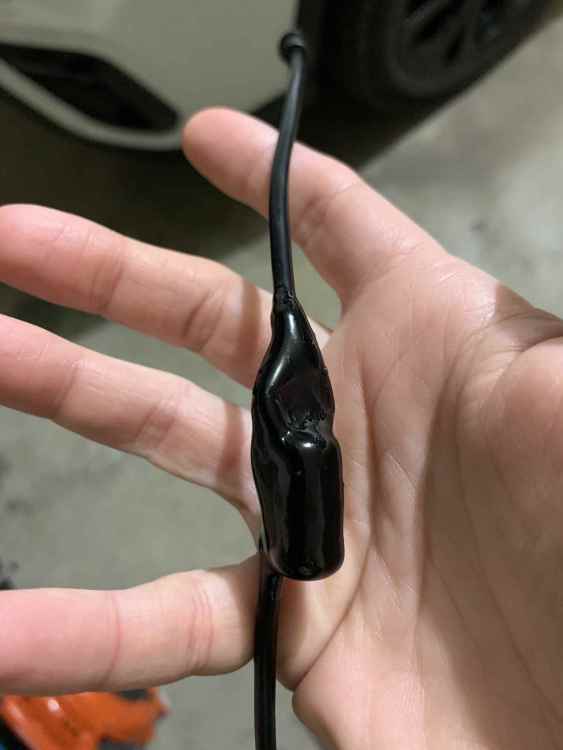
I recently installed a PWM controller for my trolling motor on my Kayak. Like many, I started experiencing noise on my sonar when I ran my trolling motor off the same battery (a problem I didn't have before the PWM controller). I run the TM wires on the starboard side and sonar wires on the port, so I knew it wasn't from the signal bleeding into the transducer's wires. And the transducer and motor are about 8 feet apart so, I knew it wasn't EMI from the motor itself. I hooked up a scope and saw a 15kHz signal being backfed into the battery from the PWM, into the Sonar's power supply. To clear it up, I installed an RC LPF (resistor, capacitor, low pass filter) to filter out the high frequency noise. The Sonar draws one amp at 12 volts, so it provides the resistor function of the filter by applying 12 Ohms to the circuit. So on the Sonar's power cable, I soldered in a 100uf, 35v, low EMF audio grade electrolytic capacitor in parallel with the sonar and covered it in liquid electrical tape. I calculated this would give me a cutoff of around 132 Hz and give me 35ish dB of noise reduction at the 15kHz point. I tested it on my scope, and with the sonar, and sure enough, it worked! The interference is gone! And done with parts I already had! A capacitor won't pass DC current, but will pass AC, so it shorts out the AC noise while blocking the 12v DC from shorting out. The capacitor is about $2 (plus shipping) and can of liquid electrical tape less than $10. I used a bipolar capacitor, but that's not necessary. A low ESR/ESL electrolytic cap is necessary though. You might could get away with a 16 volt one, but it would probably be better to go up to 35 volts just to give yourself plenty of protection. Also, I'm betting you could go as low as 10uF or a bit higher than 1000uF and still get ample noise rejection, though 100uF is a good size as it's not too large or expensive, yet gives you massive amounts of noise rejection. It's a LPF, so as long as the filter frequency is well below the frequency of the PWM of the trolling motor, it should work. So it's a simple and cheap solution to a common problem. Just be sure to place the capacitor right before the sonar for maximum effect. It won't solve problems of EMI leakage into the sonar wires or transducer. You'll need to ground the motor's housing for that. And it won't solve interference from two sonars, as you'll need to get them on their own frequency for that. But it should solve power supply noise created by infinitely variable trolling motors and other high frequency noise injecting circuits. Oh. And if you don't use a bipolar electrolytic capacitor, then you'll need to make sure that you solder the negative lead on the capacitor to the negative wires of the sonar and the positive lead to the positive wires.
-
Put the old battery back in. If everything works, then you know it's a battery problem. Otherwise, it's probably a wiring problem. Something might have gotten jiggled loose when you switched them, and you're not making a solid enough connection somewhere for the full amperage to conduct. Also, check the specs for the battery. I've seen some lithium batteries with fairly low max output currents. I would think, if it's a starting battery, this shouldn't be an issue. But it's good to double check. It would be a good idea to check the voltages when running the power poles and stuff, both at the battery and at the power poles. Use a DMM meter. Don't rely on what the Bluetooth says.
-
It's smart to. They can overheat if not in water. Though, that's mostly just an issue for high powered saltwater transducers. I think most sonar units for bass fishing should be fine. But I try to remember to turn mine off, just to be safe.
-
My favorite thing to do while drifting is pitching a jig to the bank. My kayak always drifts sideways, and if the wind runs parallel to the shore, I'll just set up upwind and drift along it, facing the bank, and pitch jigs the whole way. Sometimes I'll have to correct a bit by using my rod tip as a paddle. And other times I'll have to sit down and grab the actual paddle. A drift sock really helps to control speed, but can get hung up, so you have to keep your knees flexed so you don't fall in when you suddenly stop. I'll also drift out in the open water with a drop shot. Or sometimes a spoon. I'll have to give the jerkbait a try. That's a good idea.
-
My brother-in-law ridicules me for bass fishing. Calls it boring and says it's just a bunch of pretentious, lonely men casting all day. To him, real fishing involves stinkbait, a folding chair, and beer. But he's army. He picks on me for my hair cut and how skinny I am. I give back by asking if he knows any marines, and if so, could he get me an autograph? And I call catfish "the dung beetle of the sea". My wife thinks we don't get along. I think we both enjoy just barely tolerating each other. He's good people.
-
Charteuse and black Norman Fatboy. If they don't bite that, you need to wake up, because you're having a nightmare.
-
Ditto. Well, I also use the 5'5" pistol grip for poppers. Though really, it's personal preference. It all depends on how high your boat sits above the water, how tall you are, what angle you like to hold your rod, and what you're comfortable using. Even the action isn't standard. A lot of people like extra-fast for these lures, to give them more snap. I like moderate speed rods, because I don't have an issue with the snap, but I do have an issue with keeping fish pinned on those treble hooks.
-
At its regular price, I think it's a fair rod for the money. I'd put it up against any other $100 rod. On sale, it might be the best you can buy in its price range, depending on whatever else is on sale. At least that was for the last generation. They just released a new model this year, and I haven't tried that one.
-
I do use a 100ah lead acid battery in my kayak, and even on big lakes where I'm making a run of a mile or more, each way, I'll still get 6-8 hours out of it (Minn Kota Endura C2 30 that pulls 30Ah at max). I've never had it completely discharge. Though I have dropped it below the 50% threshold several times. I'm not too worried about damaging that battery. My thoughts when I bought it were to get a cheap lead acid battery at the time (because I had already spent a bunch of money on my kayak that year), and in a few years, upgrade to a lithium battery. I've been running it for 3 years now, and it's still going strong. But I might upgrade it later this summer. We'll see. The size and weight of it bother me more than anything else. I haven't decided on size yet. But I wouldn't feel comfortable with a 54Ah. I'm thinking at least 80Ah. Another thing I forgot to mention was to check the maximum current draw of any battery before you buy it. It's not usually a concern with lead acid, but some lithium batteries won't be able to output a full 50 amps at once. Usually the more Ah the battery has, the more it can output at once.
-
I could see it. I do ridicule catfish anglers, myself. They're the dung beetles of the water. ? My brother-in-law ridicules me for bass fishing. He calls it boring. He'd rather cast a stinkbait and drink beer in a folding chair. But he's army and ridicules me for my haircut and thinks I'm too skinny. Ridicule is just his way of letting me know he cares about me.
-
First off, are you launching near where you fish, or are you going to have to travel a ways. The reason is, the faster you go, the more energy your kayak consumes. And it's not linear. At half speed, you're consuming probably less than 1/4 the amount of energy as you would at full speed. So if you're making long runs, you'll need a lot more battery than you would if you just putted slowly around for 6 hours. Also, battery type matters. You're not supposed to drain a lead acid battery below 50%. With a lithium battery, you can use the full capacity of the battery without damaging it. So, a 54Ah lithium battery has about the same amount of usable power as a 100Ah lead acid battery. Plus lithium batteries output more voltage and weight less, so you can often go the same speed at a lower setting on the trolling motor. Quick math. The Xi3 draws 52 Amps at full power. Add a fish finder to it, and you'll get 1 hour of full speed operation out of a 54Ah lithium battery, assuming it's new and fully charged (they do lose capacity over time). That means you'll probably get about 3-4 hours of run time at half speed, and maybe 10 hours at low speed. That's all just me guessing though. Each setup will be different and there are a lot of variables that can effect those numbers.
-
That's the truth! I bought a 2021 Subaru Forester last March. Within a month, I saw someone selling a used one with 8k miles for $10k more than I paid. I'm still seeing people asking $8k more than I paid for a year old Forester (same trim and options) with about the same amount of miles as I have on mine. I briefly considered selling it to turn a profit. How often can you do that on a new car? But then I thought, what would I drive? I'd have to BUY a car in this market. No thank you. And I really like my Forester. It's one of those "jack of all trades, master of none" type of cars. It's been great on long road trips and bad weather. Much better than expected. My biggest issue is that it's slow to merge onto the highway. But not dangerously slow. Just slow enough to remind you that it's a big, heavy car with a NA, 4 liter engine. I drove a Nissan Altima before this one. They both have CVT's. But the difference between them is night and day. The Altima always felt like a rubber band. Like the engine had more to give, but the transmission couldn't deliver. The Subaru feels much more like a regular automatic transmission. Nothing spectacular. But it works well enough that it's easy to forget it runs on a CVT. The Altima never let you forget that.
-
Maybe I've been lucky. But no rod I own that was under $50 has issues with fit and finish. Honestly, the worst rods I have are a $10 fiberglass Zebco rod combo that came with a 33 reel (for when I want to take someone out who's never fished before), and an old Daiwa Apollo with a crooked line guide. But that rod is 30 years old and was stored in my attic for 15. So I can't say that it came from the factory like that. And that Zebco rod is actually fine. I just remember I had to dig through like 30 rods at Walmart to find the one good one. Then again, I rarely buy rods online, and I inspect them carefully in the store before I buy them. I know I've seen quite a few that were bad, but I can't remember what brands they were, since I didn't buy them.
-
I have a few trout colored lures that catch bass in lakes that have never had a trout in them. Bass don't care. My most productive color is probably firetiger, and there's never been a chartreuse and black striped fish in the history of earth. If the trout doesn't work, consider that it might be because there aren't any bass big enough to eat that bait. I wouldn't blame the color right away. I tend to catch more channel cats with that lure than anything else, as 5+lbs bass are extremely hard to come by in my local lakes. And those 2-3lbers just can fit a bait that size in their mouth.
-
I haven't used one, but I'd think they should be fine. Just make sure they're not in the same container. As long as the gasses coming out of them have to circulate with the normal air around them first, they usually can't build up enough to cause a problem. And most modern plastic storage boxes (I've only used Plano and Pascifun), don't have issues with Elaztech. So it's kind of one of those things that you want to watch out for, but not one of those things where you have to go to extreme measures. I've kept my Elaztechs in a regular 3600 box stored right next to another 3600 box full of plastisol baits in a zipped up tackle bag, and nothing ever happened.
-
I prefer EVA. Cork, if it's high quality, is also fine with me. I'm not a fan of Winn grips, but if everything else on the rod is to my liking, then I won't let it stop me from buying it. To be fair, I don't really care too much about grips. They all work. I haven't ever had an issue with any of them. I have preferences, but they're not strong preferences. I care much more about the hook keeper.
-
Keep in mind, there's two types of lithium batteries commonly in use today, and they're very different in how they work. Lithium ion, like in your phone, don't like to work below about 20° F (though that can vary). And they don't like to be charged when below freezing. They also don't like to be ran above 120°F. They tend to be lighter and more powerful than the other type of lithium battery, and they tend to put out too much voltage for many marine electronics, like trolling motors. Lithium iron phosphate (LiFePo4) batteries, the kind you're mostly likely to find in marine, deep-cycle battery, usually can be ran from around 0°F-140°F (again it can vary). They also don't like to be charged below freezing. But neither do lead acid. So pretty much any battery you have, you need to bring it inside to charge it if it's below freezing.
-
I mix a couple of all of my plastics into a single 3600 box. I have them organized by type, and have different colors all together. Sometimes the colors fade into one another, but I don't really care about that. Then, when I get back home, I'll replenish as needed. I do keep the Elaztech plastics and Berkly Gulp plastics in their original bags, and keep them in pouches in my tackle bag. Again, I'll mix up colors to save space. I try not to buy a million types of soft plastic baits. In my experience, the fish usually aren't as picky as fishermen. So I'll usually just have a stained water variety and a clear water variety of each type, and typically stick to just one brand for each basic plastic shape. So I won't ever have ten bags of different types of senkos. Two is enough. And even then, I'll only bring one bags worth out to the water with me, and if I run out of green pumpkin, I'll either switch over to blue and black, or cut the curly tail off some speed worms.
-
Are you sure that everyone else knows about these high percentage spots? In my experience, the overwhelming majority of people who frequent pressured lakes aren't avid anglers, and don't really know what they're doing. Serious anglers usually avoid small, pressured lakes. I say "usually" because for time constraint reasons, I do frequent these lakes. One of them, I fish daily. And I always do much, much better by hitting the "obvious spots". The reason being, none of the other people out there know they're obvious spots. They're fishing the places that have the nicest land around them, not the places with the nicest water in front of them. One thing I have noticed as well, all of that stuff about downsizing and finesse fishing for pressured waters, is not always true. Since most of the people on those lakes are throwing live minnows, live worms, and stinkbait, your best bets are going to be crankbaits, spinnerbaits, and all of those big, power fishing presentations. Dropshots and wacky rigs are nearly worthless.
-
The only monofiliment line I still consistently use is Yo-Zuri Hybrid. When I do use a mono or fluoro (which I have one reel spooled with each right now), I usually go with whatever I can find that's cheap and not garbage. At the moment, that's Sunline FC Sniper and Berkley Big Game. They both work good enough, and I'm not paying Tatsu prices.
-
Increase the sensitivity on your sonar until you start seeing a lot of noise. If there's a thermocline, you'll see a definite line of noise starting at one depth, most anywhere you look (though it can vary slightly in depth from spot to spot in the lake). One thing I've noticed is to keep water clarity in mind. I fish a lot of dirtier lakes, and when fishing deeper, offshore, I find that you often need to go with bigger and louder baits than you would in the shallows. It gets harder for fish to locate your bait in deep, dirty water, and it gets hard to hit your target as the water gets deeper (especially if there's some current). So the strike zone narrows as the difficulty to hit it increases. So I like to throw things like crankbaits, spinnerbaits and such that allow me to try over and over again rather quickly. I find T-rigs and Jigs, even with rattles, aren't as effective. Though if the fish aren't in a very active mood, then sometimes you have to go with the jigs and T-rigs, drop shot, etc. and just try your best to hit them on the nose with it. Now if the water is clear enough that the fish can still see relatively well in deeper water, then it's not such a big deal.