
bulldog1935
Super User
-
Joined
-
Last visited
Everything posted by bulldog1935
-
@Big Hands The solution is having 100% thumb in your pocket (more accurately, a mm from your spool). Even if you're not using thumb, keeping it so close you feel the "fuzzies" of incipient backlash and can react. If you're using your thumb right, it's always the final elevation on your cast distance, so it should already be there to adjust spool speed as needed. 40 years ago, I was casting this weightless (of course no end tension) and my forward centrifugal cast PO'd two different guides, because I consistently outdistanced their weightless spinning cast (while they were trying to correct my cast error). The physics of all of this has always been intuitive for me, but my thumb has been educated through experience. Whatever it is, I can cast it. If you want some serious thumb skill, play with an antique Meek or Talbot: Or you can do like @TnRiver46 and cast an old Ambassadeur with all the LW parts removed. If it takes 100% thumb and casts 1/8 oz into next week, it makes me giggle. If I take the same reel and modify it for BFS-threadline w/ mag brake and no thumb, bringing working weight below 2 g, so much the better. Honestly, I only remember 2 backlashes - of course I know there were more in 50 years - the first time I cast my neighbor's Ambassadeur and swore I would never backlash again. Second was April 2018 when I had a single line wrap on my rod tip (plus casting into wind). Plugged in my back-up reel and fished a great morning.
-
Yamaga Blanks.
-
Any time you're trying to cast an under-loaded rod - fishing too light weight below the rod's low-end capability - your cast windage will continue off in the direction of your rod swing. This is how you find the low-weight end of your rod. The rod sweet spot will be the lightest weight that doesn't do that, but goes where you aim it. You get really good at this when you're evaluating a baitfinesse rod to fish 2 and 3 g, or finding the base mag set on your BFS reel.
-
I take exception with pretty much all of the above that @Big Hands pulled out of post contexts. I built BFS-mod frogger and surf reel both fishing PE#2 in YGK WXP1, which has 45-lb breaking strength. Again, we lose context talking about braid test instead of braid diameter. I fish down to PE#1 in surf micro-jigging, which does count as a "normal BFS" niche, though an unusual BFS-CT reel. I filll all my shallow spools to max capacity, but I make sure the stacked line beneath is dig-proof. If you do this properly, you can't fish a line dig. If your system is working, it ain't broke. But if it's not working, you need to look for something different. I also didn't consider braid before 832, so 8-strand, round, coated braid is the only braid I've ever fished. The reason- I saw too many wind-knot catastrophies w/ my friends fishing yellow power pro on their Penn spinners. The only time I've ever experienced line dig was on 4200SS and SpiderWire copolymer - my daughter was catching giant sheepshead on the flats, which turn into UPS trucks trying to get back to deep water. The SpiderWire, in its first and last fishing trip, extruded to half its diameter and sucked deep inside the spinning spool, shutting down my daughter's day - that's ok, we brought home a meal of schoolie specs. That was 2010, btw. Also, backlash is so far from my memory, the only time I think about it is initially setting up a reel, finding the point of incipient backlash to start my brake set-up. But if backlash is something you think about, you probably shouldn't be fishing threadline braid on BFS reel.
-
Yes, this is very clearly a para-taper rod. Smith has one in Super Strike series (actually several, but this is the only one named Machine Gun): Here's the load curve for the Smith Machine Gun - fast tip, more flex in mid and butt: We've covered the difference between para taper and progressive taper before. In progressive taper, increasing cast weight loads a band moving progressively down the rod - this makes for a forgiving rod with wide lure-weight range. Also, generally a longer rod - short soft tip, long fast mid, powerful butt. Progressive is the best choice for casting light weights to distance, also for skip casting. In para taper, increasing cast weight loads more of the total rod length. A shorter para rod will cast to greater distance than a progressive rod, but has a narrow lure-weight range. Para taper also fits the classic glass short worm rods of the 70s and 80s. Para taper strikes quicker because of the fast tip. I marked on these load curves showing Para and Progressive The Japanese also call Para rods "sticky" (stick-like), and they call the soft tip of a progressive rod "berry" (as in berries at the end of a tree branch). All rod tapers are a blend of both, but it's accurate to say a rod taper is more-para or more-progressive.

-
@Big Hands - here's what doesn't sound right to me. You're getting line dig on 0.23-mm dia braid with a factory-BFS reel that should already have increased LW pitch for wide line lay. BTW, I did begin with 600-yd spools of 832 when I began using braid. I fish that diameter on deep-spool Super Duty using 20-lb mono backing for a built-up spool arbor. Maybe you're not properly tensioning your line when you load it. Here's how I always load my lines - reel secure on a rod in a clamp rod holder; line through the 2 guides closest to the reel; line through a phone book with an adjustable weight; source spool on an axle in a vise. I can walk away from this and come back to it, and the line still has proper tension. As far as line differences, Jun Sonada used to recommend never use a coated braid on a baitcaster, for the reason that soft coatings make the braid more susceptible to line dig - this put Power Pro at the top of his list. He also used to divide his PE Braid Spectra into two categories, Coated and Non-coated. He can't do that any more in Japan, because they only sell coated braids now. So he's adjusted to recommend hard-coated braids for use on BFS. One of the first coated braids Jun recommended was Yamatoyo Resin Sheller, which I found the coating didn't hold up, especially compared to most YGK braids, and Duel X-wire stood out as one of the first-best hard-coated braids - I just replaced a hard-fished 3-year-old X-wire spool with Varivas Si-X. I think Varivas wins across the board on braid coatings, though their hardest coating, Si-X, is still pretty expensive. However, every one of my salt reels that needs new line gets Si-X, and can find good deals if you're already shopping in Japan and can add it into a cart with other items you need. Where I'm stacking spools, I still have old pieces of larger-diameter 832 for backing. What you gain with braid - no stretch, huge breaking strength, less drag through the water, and of course, increased cast distance at light end. ... almost left out the most important thing, Totally Limp, NO MEMORY - this sent me to 100% braid, except on loaner tackle.
-
The croaker and drum family (scienidae) makes up about 80% of all inshore species around the world. Freshwater drum can be a hoot, also - I caught a 10-lb'er on fly rod fishing off a dock on Lake Livingston. I never ate redfish either, mostly because the slot fish are too big to pan cook well. I went out of my way to catch speckled trout (same family) for fish tacos. Next to flounder, this is pretty much the best food the coast offers. But when my buddy Josh showed me how to grill-blacken half-shell (skin-on) redfish fillets, this became my favorite seafood. You scoop it out of the skin, the vitamin A makes it sweet, and you pick the charred ribs like pork ribs.
-
Yes redfish, during our fall kayak Redfish Rodeo - wind and storms last October week limited us to 3 short days. There was no wind on that first day, but my limit took me off the flat at 10 am. My buddy kept up with his dad by text and we got off the water on the 2nd morning just as thie storm front advanced to us. We were loaded up and driving to Mexican food when the rain hit. But not before I got my best photo of the trip - this one was on PE#1.2 to 15-lb hard fluoro leader. Short days on the water also aren't a problem - we make up for that around the fire pit - this was Sat nite's shrimp boil.
-
I think you're going to have to evaluate the "slight rubbing noise" in perspective. My Shimano Twin Power C3000MHG does something that may sound similar, and different from all my other (worm-drive) Shimanos - the reel is such a beast, the sound doesn't bother me. The sound you're describing almost has to be light contact between the spool and the rotor. See if it only happens at the bottom of the spool oscillation. If I'm right here, adding the smallest spool shim will eliminate the noise. HOWEVER, spool shims have a very specific purpose - to adjust oscillation position to improve line lay, and not something you want to mess with until line lay needs adjusting. The one thing I can read about 24 Certate is Airdrive Rotor and Spool are both new designs. The drag-pay clicker was somehow removed from the spool. The rotor shape was changed to beef up deflection points under line load, and shed mass everywhere else.
-
@Robin I think I can explain that as a deep backlash loop in your spool. Biggest problem with tiny braid - you can't find these because they make 180-tight loops that disappear. Without backlash, you can take PE#0.8 to the bank. this morning, I was on fish sign, and when I found the right lure blend color, caught 7 in 12 casts This was all in a couple of days last fall, with 12-lb (max breaking strength) hard fluoro leader.
-
On that reel, you shouldn't go smaller than 0.15-mm dia. (PE#0.8) The smart thing to do is stack line, with thicker backing, and your thin working braid on top. Use the capacity calculator I linked https://www.pattayafishing.net/advanced-fishing-reel-line-capacity-estimator/
-
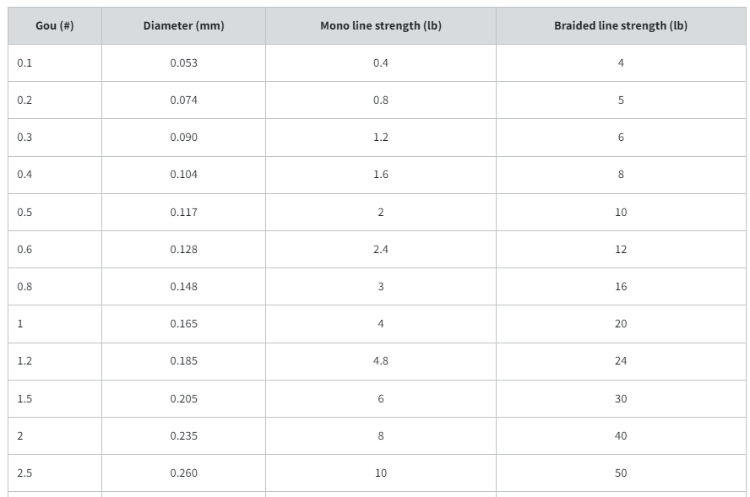
that's all I do. Please don't be offended, but 8- 10- and 15-lb braid don't mean anything. We're going to have to talk braid diameter (with the rest of the world). The smallest braid I use on deep spools is equivalent diameter to 20-lb 832 (0.235-mm dia). I build up an arbor using 20-25 yds, 20-25-lb mono, tie with an Allbright knot that will pass line guide, and top with my working braid. If you want to calculate stacking line capacities, use this capacity calculator from Pattaya The easiest way to keep up is talking diameter and, better, Japan silk thread diameter scale (PE#). You'll note braid strength on Japan X-braids is much higher than USM equivalent diameter. (All braid is not created equal - this chart is a standard from Japan Line Committee) For standard LW pitch on shallow spools, Jun Sonada recommends nothing smaller than PE#1 (0.165-mm dia) to avoid line dig. But I fish one smaller size, PE#0.8 on Zillion/Steez and big inshore fish with no line dig problems. That said, I much prefer PE#1 all around (equiv dia to 4-lb mono). To go to smaller braid (if you'd ever want to), you need a BFS reel, which come from the factory with increased LW pitch. This lays line wider on the spool to prevent line dig. Silver Wolf PE Special is rated to fish down to PE#0.4. The smallest I fish on this reel (with aftermarket spool lighter and shallower than Daiwa Boost 1000 PE spool) is PE#0.6. Even this small is kind of the limit of sanity, but it shows up in cast distance. General rule - don't mess with tiny braids until you're backlash-proof.
-
JDM Stradic is the no-brainer spinning reel. $140 in mid-frame 2500 size. Don't expect shipping before May 6 because of national holidays next week. $5 more gets 3000MHG, which is beefed-up mid-frame with braid spool and large-frame drag. @Awainer1 - I fixed my 3000MHG link just above.
-
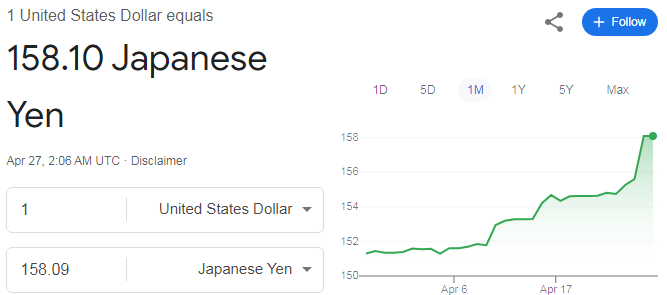
JY hit 158 to US$ today - weakest Yen against the $ in 34 years - and should continue to drop during next week holidays. Go over everybody's JDM recommendations and buy from Japan. Sometimes difficult to grasp. JDM vendors may list US$ prices (assumed exchange rate), but they bill you in JY, and you will be charged the exchange rate by your credit card. On a rising JY, I've seen additional 5% I paid over US$ listed by vendor. On a falling JY, I've seen 10% less billed to my credit card than vendor's US$ list price.
-
While this conversation always begins at visibility, that's rarely the issue. Lining a fish is touching him with the moving line (same thing would make your skin crawl, too). All waters contain natural stringy fibers. The purpose of a leader is to have some measure of shock-absorbing elasticity in your rig.
-
In this whole mass-produced-utensil marketplace, whatever you spend on your tackle, the tackle will always be worth less to someone else. The value of the tackle is what you can fish out of it. If you need to sell it, it will be the buyer's market. Biggest part of this, it's always being supersceded by something new, possibly better, and certainly better hyped. It's always a joy to find a rod that perfectly fills your niche, feels right, does everything you need, and costs less than you can afford to pay - watch for the close-out and get a half-price back-up. There is another side to this, tackle that if you buy well will always be worth more than you paid. But that's most always bench-made tackle that by definition isn't new tech, but hand manufacturing, tuning and finishing effort, small batch, small market, hard to come by (looking for it is like paying your dues on the water). But when you need to sell it, it will be the seller's market, because someone else has been looking just as hard as you did to find a good buy.
-
Improved Allbright
-
N + 1 marketing If they didn't tell you, you wouldn't know you needed to replace last year's OK, between the different lines, you pay for different things. Weight reduction in the rod blank - advanced MOC that gets the same strength and bulk modulus (rod taper) in a structure using less total material. The other thing you pay for is finish grade in the components and labor details.
-
no rubber grip, but KDW makes an easy alloy clutch bar replacement https://www.hedgehog-studio.co.jp/product/1763
-
It's a perfect spool for that range. In my inshore ML niche, Ray's is a better choice, and finesse shore-casting, my hottest spool now is the AMO I show above. I keep my stock Silver Wolf spool loaded w/ PE#1.2, 120 m - capacity is greater than Daiwa lists - it stays handy in a spool can for backing up my ML reels. On all my Ambassadeurs, down to 1500CI, I prefer the solid Avail spools to honeycomb.
-
Now you have a Black Cherry, too, Robert. btw, YGK 1st version Oddport WXP1 is closing out most places (when introduced in 2018, it was $1/yd) - 100 m now is closing out for $28 at most shops. If you can get your spool to end on an even 50-m increment, it gets the candy-cane finish. Editing in about the Silver Wolf spool (34 mm). it casts very well, reliable, but weighs 13 g. It won't quite cast 1/8 oz w/ a Ray's SV spool, and a fixed-rotor Roro or AMO spool (5 g) will cast 1/16 oz farther than Wilver Wolf spool will cast 1/8 oz.
-
Who needs Ito.
-
BFS = reel, by definition, combination of shallow lightweight spool, low-inertia spool bearings and threadline. The capacity of your deep spool is excessive for line w/ diameter equivalent to 4-lb mono (15-lb braid, etc.) One way to get around that is back your spool with 20-25 yds 20-25-lb mono, tie to your working line with a low-profile knot such as improved Allbright, and finish out the spool with your small-diameter working line. My deep-spool reels set-up this way have BFS bearings. But since aftermarket spools are made for your reel, you might be remiss not trying one. What you can gain with a $40 or $60 spool might blow you away. I pm'd you a couple of links
-
JapanTackle lists Daiwa choice - this is moving SV inductor - Silver Wolf Spool https://japantackle.com/tuning-parts/spools-casting-reels/daiwa/tug0000277.html Roro-X spool, this is fixed inductor (linear mag only) for lightest weights to greatest distance. https://japantackle.com/tuning-parts/spools-casting-reels/daiwa/tu002410.html Deeper Roro spool https://japantackle.com/tuning-parts/spools-casting-reels/daiwa/tu001753.html black in same spool https://japantackle.com/tuning-parts/spools-casting-reels/daiwa/tu001733.html Your reel should also take Ray's Studio SV spool for Steez/Zillion AMO (fixed inductor) spool for Steez/Zillion Ray's Studio SV and Daiwa Silver Wolf 34-mm spools: My 34-mm Daiwas, all set up for BFS
-
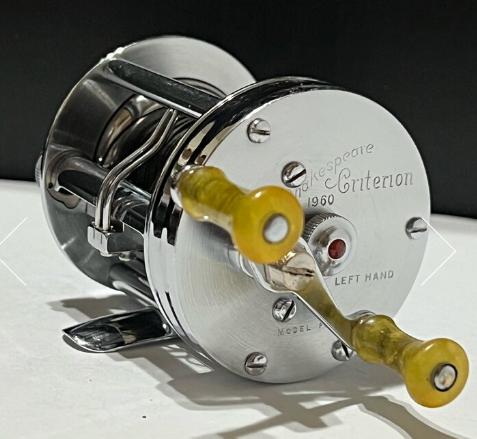
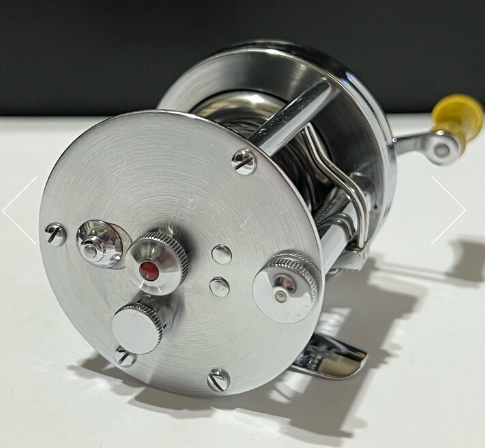
My friend Nick found a 1950 Left Hand Shakespeare Criterion to match a Payne bamboo casting rod. He's been wanting a split-cane casting rod to tinker and fish for awhile, but the left hand reel find to match for him was kind of spectacular.