


Buzzbaiter
Members
-
Joined
-
Last visited
Everything posted by Buzzbaiter
-
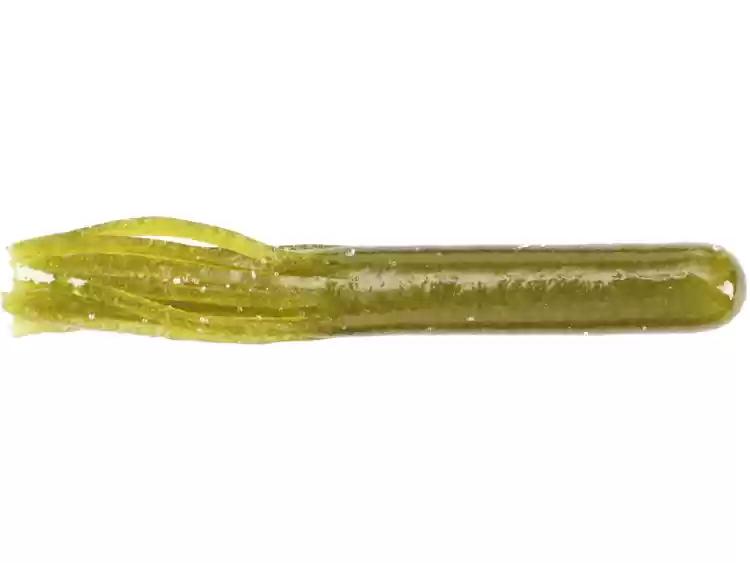
When the bite gets really tough, I like to use a Netbait Crush worm. They are not durable at all, but they put fish in the boat. They’re relatively expensive so I typically don’t start with them. The Strike King Rage Menace is a great craw imitator, although it might be a hair too big for an 1/8 head. The Baby Menace might fare better. If you want to think outside the box, take that head and shove it up a 2.5” Netbait Finesse Tube. It’s a killer little profile that lasts longer than most threaded plastics.
-
I don’t see it doing anything a spybait can’t do, except maybe go backwards. Regardless, it seems really technique-specific to FFS; I wonder if it’ll actually do well commercially.
-
Since moving to Florida, I haven’t spent a ton of time targeting black bass. My last bass fishing trip was in early November, and the temps have dropped quite a bit since then. Recently, I dedicated some time trying to figure out how to catch Florida bass in the winter, but with no luck. The problem is that I have no clue what the fish are doing, how eager they are to bite this time of year, how they react to changes in conditions, or where they even are. I would imagine that the fish are prespawn right now, and are relating to warmer water (i.e., sloughs, springs, and shallower water). I would also assume that they’ve moved out of current in favor of slower water. As far as baits, I’ve mostly been junk fishing trying to put something together. I’ve tried worms, craws, creatures, spinnerbaits, chatterbaits, and senkos. Do I have the right idea, or am I off base? These fish are confounding me, and I’m about ready to drive all the way to the panhandle to catch some northern largemouth or Choctaw bass instead (assuming that they’re more tolerant of cooler water). How do you Florida folk fish during the winter? Edit: Also wanted to add that I’m fishing nontidal rivers in central Florida. I don’t know the water temp, but we’ve mostly had ~40* nights and ~60* days, plus the occasional warm and cold fronts. The water is tannic, and the main baitfish (to my knowledge) are sunfish, although there are also mullet that run up the river. Crawfish also seem to be a big part of the diet here.
-
“When you replicate someone else’s pattern, the best you can do is as good or slightly worse than them.” -Matt Allen I’m paraphrasing there, but I remember hearing Matt Allen say that in one of his videos, and it stuck with me. I don’t pay attention to fishing reports because that forces me to approach a situation from someone else’s eyes. I do things my own way, not so much to escape pressure or show the fish something new, but because I know what works for me. I have my own understanding of what bass are, and how to catch them. I stick to what’s tried and true for myself, until I get some new idea or am forced to switch things up. For instance, I fish a small creek every summer that holds a ton of small bass. A kicker fish is anything over 11”. Last summer, my usual grubs and worms weren’t getting the job done. Where I would expect to catch a bunch of >8” fish, I was only getting sunfish and some ~6” bass. I was forced to adapt. I had a little lipless that was oversized for the water I was fishing. I tossed that out and started winding it back, and I realized that the lipless was hardly able to stay up. It just sort of ground itself against the bottom, much in the same was that a swinging jig does. I fished it anyways, and started catching fish I didn’t even know were there. I found that grinding a lipless was fantastically effective. I have yet to try this on bigger smallmouth, but that’s a project for next summer. Here, I had to change things up and ended up adding to my toolbox. Change isn’t always forced. I often change just because I get some crazy idea or because things get revealed to me in my sleep. When this happens, I start asking myself questions. Does this stream have a lot of sculpin? I’ll fish bottom baits that imitate those. Does this river get a herring run? I’ll start tying on larger shad imitators. What size/color are the crawfish? I’ll turn over some rocks and fish baits that imitate my findings. A lot of times, these changes don’t help. Sometimes they do, and become part of my repertoire. Regardless, I do not pay attention to what other people are throwing when I make these decisions; if I zag instead of zigging, it’s because I have to change, or because I’m testing out a hypothesis.
-
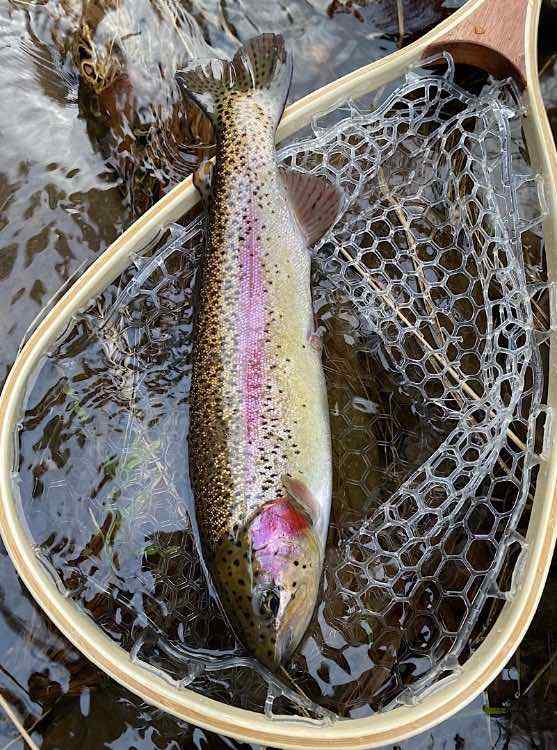
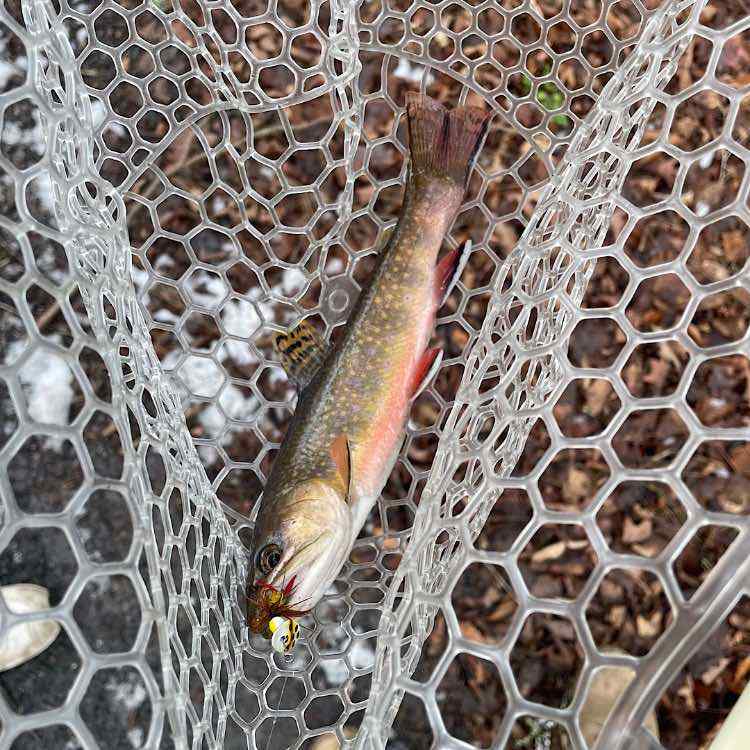
I went trout fishing in the Savage River Valley with a friend. We drove along a road that paralleled the main river (more like a stream) and hopped around a bunch of spots at several different bluelines. At the very first spot, I caught this native brook trout on a Panther Martin. After that, I was obligated to put him on a fish. Small trout streams aren’t conducive to multiplayer fishing, so I had to play guide for most of the day. He’s not that experienced when it comes to fishing, so he struggled quite a bit. Casting in congested trickles of water is challenging as is; bluelining as a novice angler can be quite difficult, and is understandably frustrating. After spooking a great many char and casting into a great many trees, we decided to head downstream to fish more open water for rainbows. These were stocked fish (I think holdovers), but were fun nonetheless. I didn’t get on any, but my friend showed me up. He caught this rainbow on a Rooster Tail, and I netted the fish. I did a spectacular net job.
-
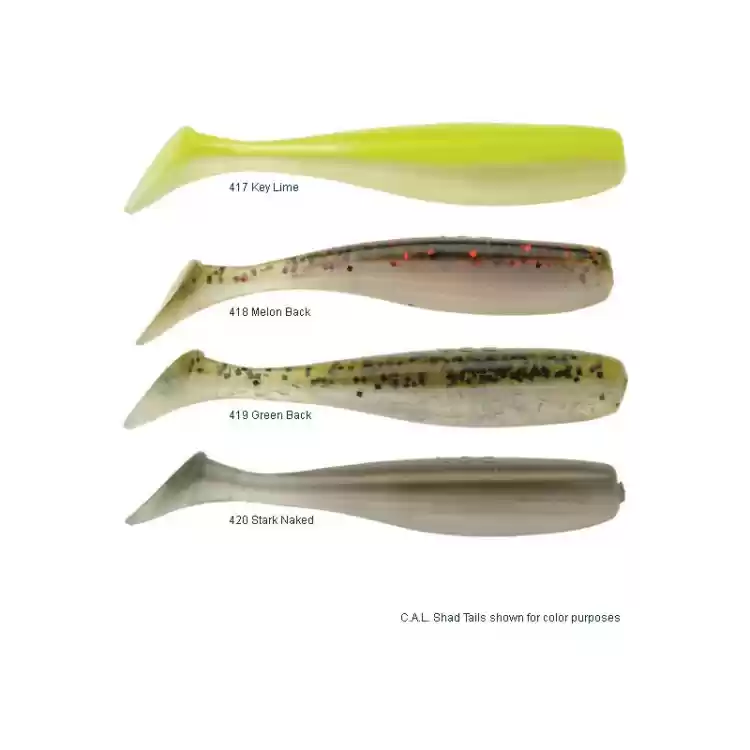
I take it you like purple?The DOA CAL Shad has accounted for many redfish, snook, and rockfish; whenever I get the chance to fish the Bay again, I’ll be slinging a 3” DOA Shad. They work. As far as black bass go, a 5” stickbait has done its usual wonders on largemouth and Florida bass. Since moving to Florida, I have found the Zoom Trick Worm in watermelon to be particularly effective on Suwannee bass when rigged on a flickshake head. Cast it ahead of a log or rock, let the current drift it by, then set whenever you feel a fish pick it up. I learned this method while fishing the Patapsco for smallmouth, but I have really put it to use on the Santa Fe. Beyond Suwannee bass, I have found the Dry Creek Tournament Tube to be an incredibly effective smallmouth lure. It has found its place in my river smallymouthing box this year. I highly recommend picking some up in Old Ugly. That color is natural, but more unique than your standard green pumpkin. Rig it on a 1/4oz jighead, bomb it out, and let ‘er drift. Once it reaches bottom, give it a double hop and let it sink again. The brown fish love it.
 Went mucking around the mangroves this morning in Tampa Bay. I ended the day with a solid red and two snook, one of which was tiny and wasn’t photographed. It was a slow day, but I caught a couple of good fish. ^two shots of the same snook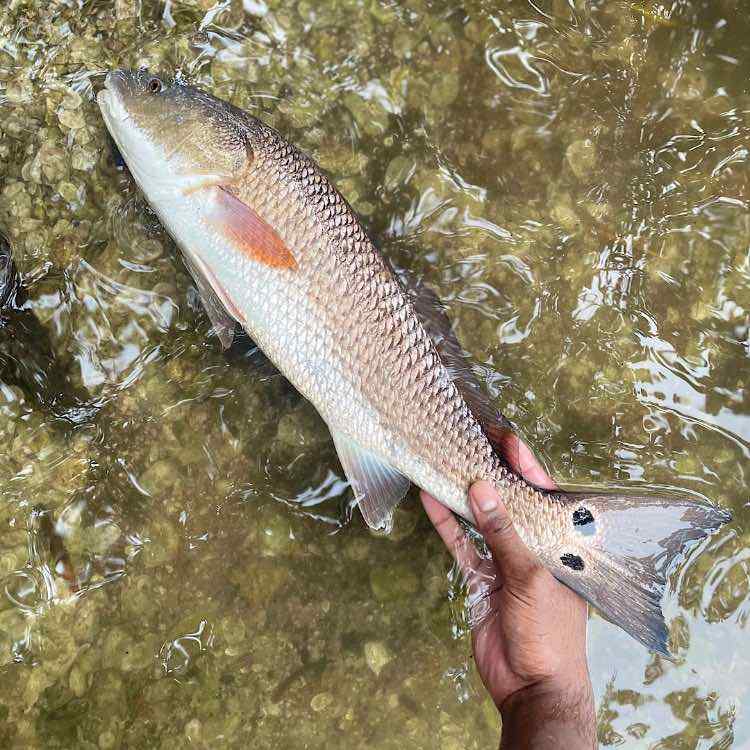
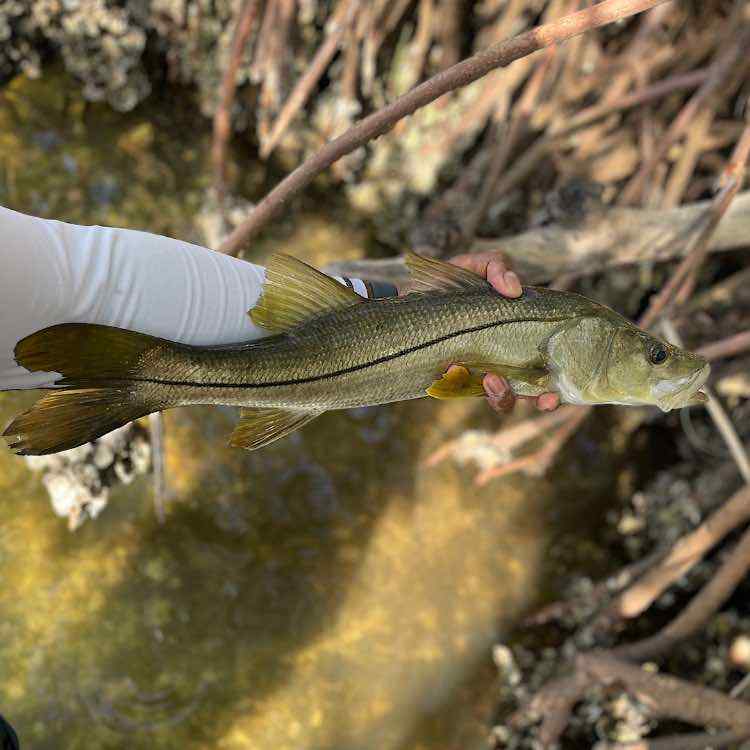
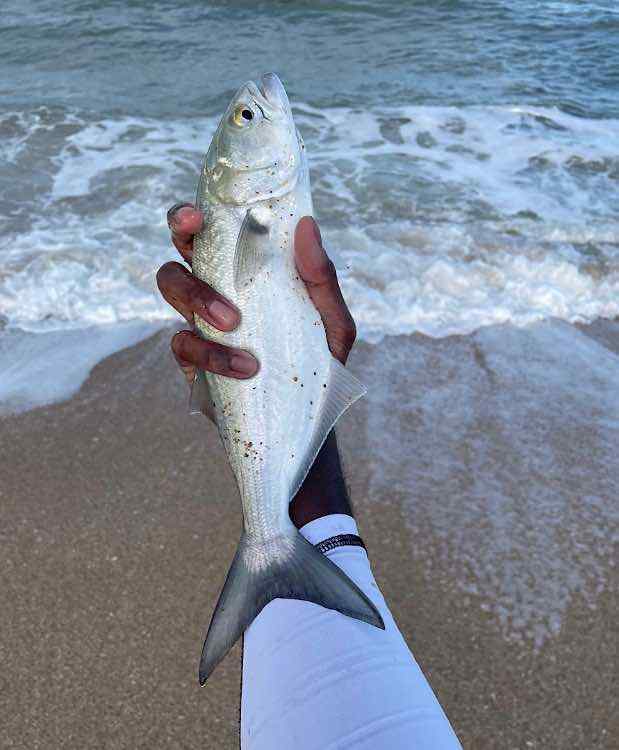
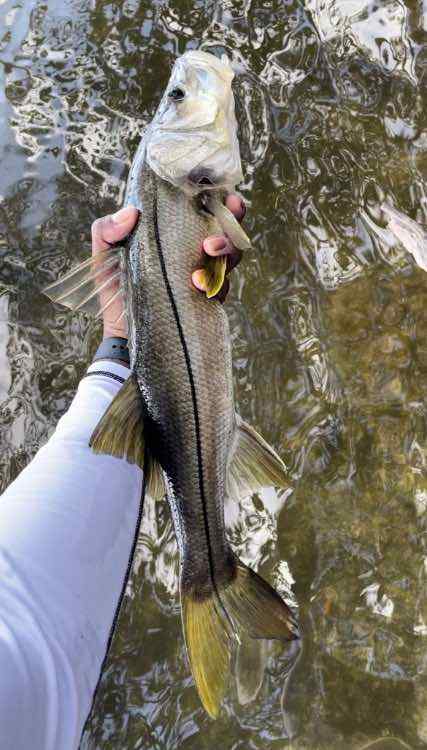 I’ve been hard at work racking up my species count. Saltwater is a new frontier for me, and I’ve been exploring it more every weekend. Here are a few of my more interesting catches in the last two months: This is a little redfish I caught in October (not a pb, but the best picture of a redfish I have). I don’t have a boat, which makes navigating the marshes difficult. I’m stuck fishing by boat ramps, salt ponds, and places where tidal creeks cross or parallel roads. Puppy drum like this are about as big as I can expect to catch, but they’re a ton of fun. They strike lures with a lot of force. You’ll work your swimbait just under the surface when you see a reddish-gold flash; at that point, you rod starts going crazy. Redfish fight hard, even at smaller sizes. I hope to hook into a bull someday. This is a speckled trout I caught in the same marsh system where I caught the pictured drum. It’s my pb trout. I’ve hooked into bigger fish, but trout have an annoying habit of short striking lures. I suspect it has something to do with the two fangs located at the forefront of their mouths. In my limited experience, a trout that’s been swung on is unlikely to come back to bite again. They’re smart fish. From the aforementioned marsh system, I’ve caught a number of smaller fish. This one is a pigfish, which I think looks pretty enough to picture here. I learned after the fact that they make good bait. I didn’t know what I had caught at the time, so I let them swim off. The marshes are cool, but the beaches offer a lot more in the way of biodiversity. It also helps that they’re easier to access. This pompano was caught on the Canaveral Seashore, along with some spot, whiting, and a bluefish (pictured below). I want to keep a pompano because I hear they’re really good eating, but I don’t know how to target them. This bluefish was caught that same day. I used a spot head on an Owner Mutu Light circle hook to catch him. I wasn’t expecting to get anything on cutbait, so this fish was a welcome surprise. I went back to grab another chunk of spot, but I think a bird stole the rest of the fish while I wasn’t looking. As they say, lessons not learned in blood are soon forgotten; I’ll be careful about how I store cutbait going forward. Of all new species I’ve caught in Florida, the common snook is my favorite. I caught this fish on a trip to Tampa Bay on Saturday. This was the smallest fish of that excursion, and my first snook ever. I caught this fish while walking along a muddy, mangrove-choked backwater creek. The rest of the day was spent wading slightly more open water (though still in an estuary away from the main Bay). Because my phone was sealed away in my backpack, this was the only snook I photographed that day. It’s a shame, since I caught some beautiful >24 inch snook that would have made for gorgeous pictures. 24+ inches is pretty big in my eyes, considering I wasn’t expecting to catch anything that day. While I don’t have pictures of the other fish, the memories are etched into my head. Snook are like largemouth, just more extreme (dare I say, more better). They hide tight into the mangroves and strike with sincere aggression. Occasionally, you’ll see a school of mullet shoot out of the water and scatter. Just a second behind them is a snook in hot pursuit, launching himself clear out of the water. It’s like something out of NatGeoWild. If you cast into the boils, you have about a 50% chance of getting tight with a fish. You have to guesstimate where that snook is, since they move fast. It’s as good as fishing gets, and offers a suitable substitute for smallmouthing while things are still cold up north. On thing that’s particularly frustrating about snook is that they know too well how to spit a hook. I probably hooking into about 15 fish (rough estimate), but only brought 5 to hand. Maybe I just need to get better. Most of the fish come unbuttoned after a jump. I’m going back home for thanksgiving, but I’m eager to come back. The main reason I went to Tampa was to catch a tarpon. I think I saw a couple jump, but they might have been big snook. I now understand that I have to go even further into the backwaters to find the silver fish. I’ve got a game plan formulating, and I’m feeling confident. I’ll be back into Tampa the next weekend I get. I need to settle the score and catch my tarpon. I’ll update you all when that happens.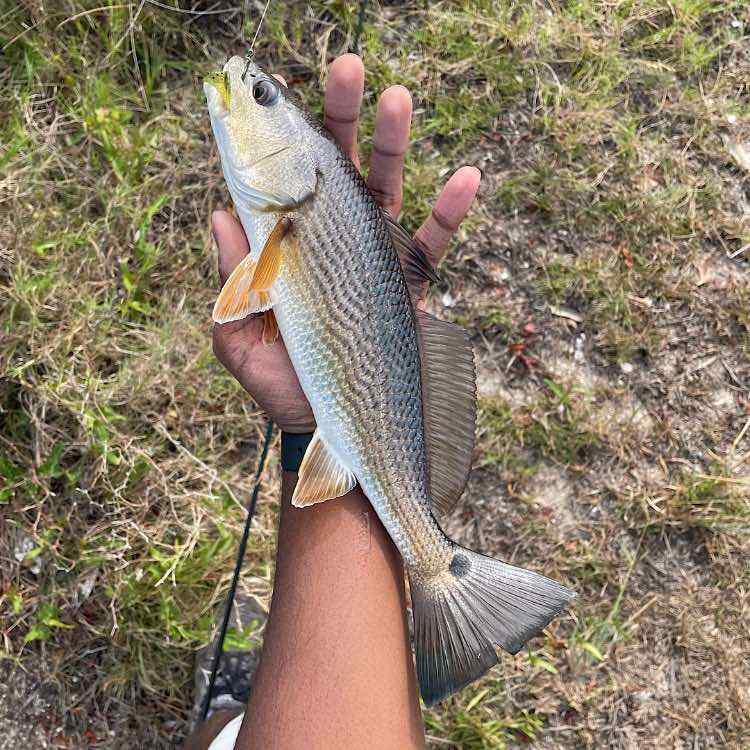
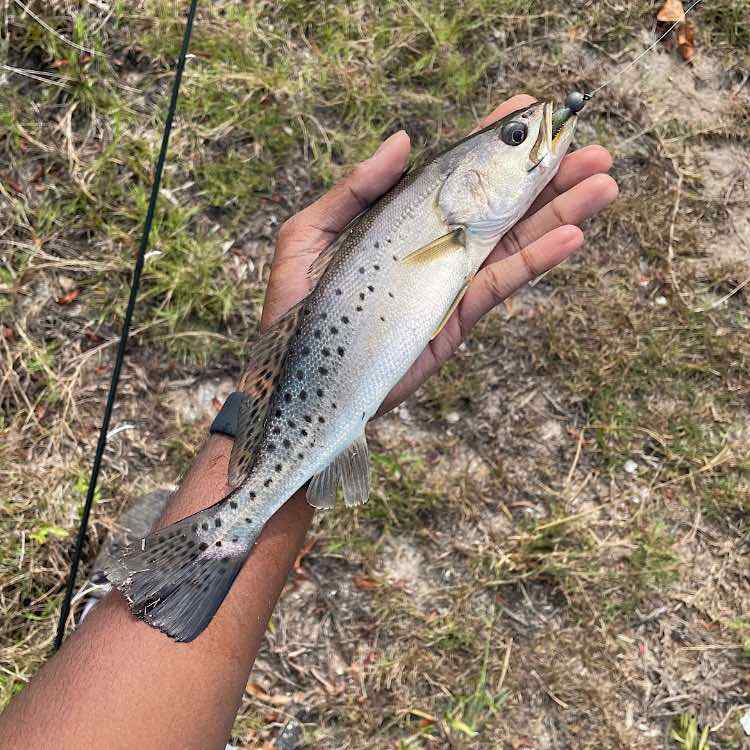
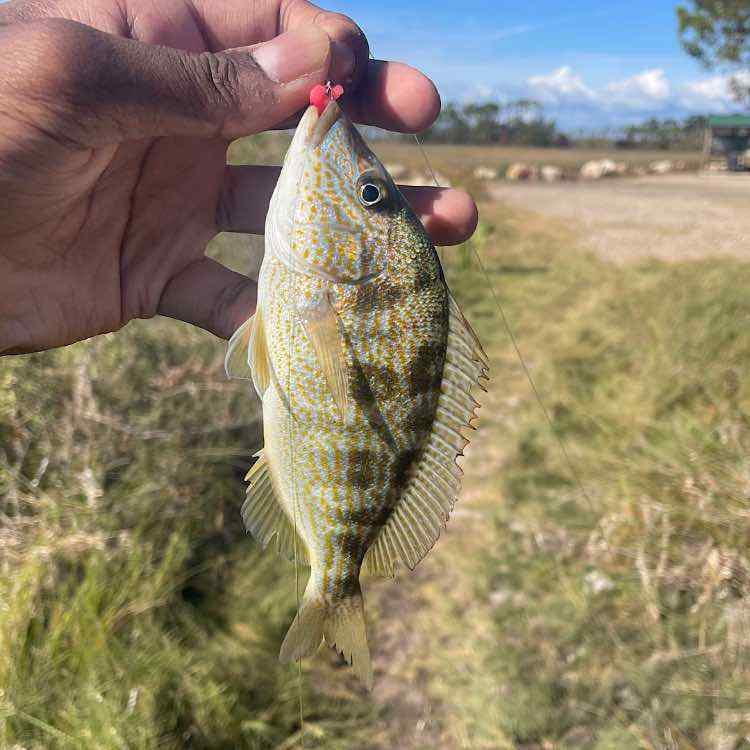
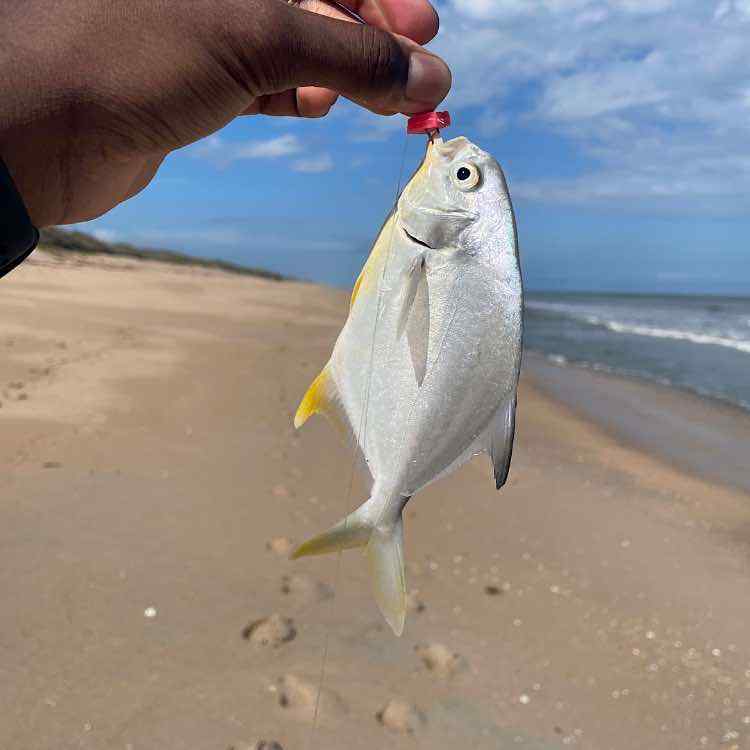
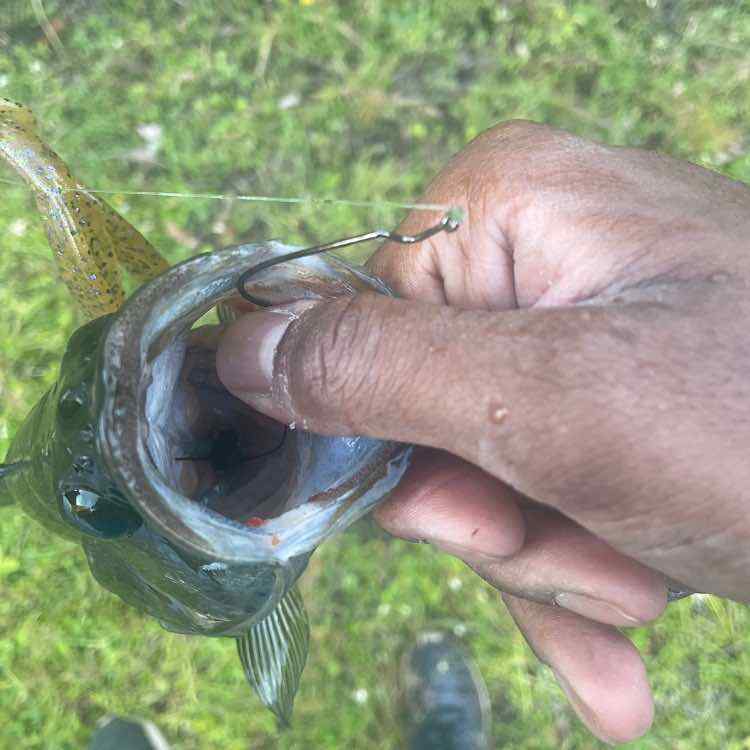
 Normally, by this time of year I would switch to whitetails and brook trout in MD. Now that I’m in Florida, I’m trying to balance the bass fishing with the saltwater/multispecies fishing. There’s a lot of really cool species I need to get out and catch, but I also want to start catching those massive Florida bass I’ve heard so much about. This week, I’m going to fish for Florida bass and then spend the weekend going for redfish. Next week it’s going to be snook and tarpon. The following week, I’m going try and catch a Choctaw bass. I’m used to spending the fall months fumbling around trying unsuccessfully to pattern fish, then quitting once winter rolls around. I’m still in awe that I’m actually catching fish (and a lot of them) this late in the year. One thing I have yet to learn is how much I need to slow down once winter comes in full. Do I need to start throwing bladebaits and dropshots or can I keep slinging around buzzbaits and Texas rigs? Edit: Just checked and this Saturday is a full moon. Redfish can wait, I’ve got bass to massacreIt really is horrible. You stay up all night thinking about dropping the dirt on that deer, then spend all morning dreaming about it. Tree stand sleep is simultaneously the best and worst sleep you can get.I was using a M-F spinning rod with 20lb braid and 15lb leader (started with 8lb, but switched before I started catching fish). The Suwannees fight hard, so I want to get them on lighter gear but I can’t imagine using 6lb test on the Sante Fe. Maybe I just need to get better lol. I normally use a light rod with 4lb leader for creek smallmouth, but between the grass and the cypress knees I felt more confident roping up. I’m gonna head up to the Ichetucknee River this weekend; while I’m there, I’ll try my normal creek gear. I do agree that Suwannee bass are beautiful. They’re so dark that none of the pictures really do them justice. Out of curiosity, what would you consider to be the prettiest bass?This trip is pretty high on my list. The giant snakehead is a massive, beautiful predator without much relevant info floating around on the internet. I think figuring the fish out for yourself adds to the excitement. I disagree with the assertion that you get more by targeting similar fish in more accessible places. My #1 bucket list fish is the Sakhalin taimen. Information on these fish is scarce. The only way for me to catch one (a wild one at least) is to go to Hokkaido or Sakhalin island and figure it out myself. The idea of being in foreign wilderness, having to decipher an unfamiliar species, and experiencing different cultures is what makes it so appealing to me. I could just fish for big trout in the States, but that wouldn’t be taimen fishing. I relate to the feeling of wanting to do the most with one life. Regarding @Darth-Baiter’s proposed trip, I’d say go for it. You have nothing to lose but a bit of money. And time. Well worth it for good memories, imo.Yesterday I went to the Santa Fe River to catch a Suwannee. The area I fished was a fast flowing shoal which seemed reminiscent of the smallmouth rivers back in Maryland (only with much darker water and subtropical flora). I figured that Suwannee bass would behave almost identically to smallmouth, so I had high hopes. I caught a single Florida bass (not pictured) and had another fish follow my Texas rigged tube to the bank. This fish was shorter and stouter, though I didn’t get a good look at it. It had been holding onto the tails of my bait before it realized something was wrong and spit it out, never catching the hook point. It might have been a Suwannee. Today, I went back to the Santa Fe in an area that was downstream of where I fished yesterday. While this spot was slower and deeper, which made me less confident of success. However, it was surrounded by a couple of springs, which I figured Suwannee bass would gravitate towards. I fished the main river above a major spring for a bit, and hooked the same bowfin about three times. They seem to have very hard mouths, because he spit the hook all three times. It was frustrating and exciting at the same time, since I’ve never caught a bowfin. I moved downstream and had no action for a while. I fished the mouth of the aforementioned spring, but still had nothing. I was confident that Suwannees would gravitate towards the clear water and fast flows of the spring mouth. I went even further downstream and found a section of bank with cypress trees along it, and started working that area. It took a few casts, but I got my fish when I pitched my bait (the same Texas-rigged junebug Dry Creek Tournament Tube from the day before) near a cypress, a short distance way from the bank. I was half paying attention when I saw my line acting up. In an instant, I tightened my line, felt a fish, and set the hook. It immediately swam towards me, making me unsure of whether I had hooked him and how well he might be hooked. I tightened up and it was on. The fight was short but intense; the fish at the end of my line pulled hard against me—harder than the bowfin from earlier—and stayed down. I pull the bass out of the water under the assumption that it was a decent Florida bass. To my surprise, it was a small Suwannee. Interestingly enough, the bass never jumped despite have the opportunity to do so. I think this is one of the many quirks of Suwannee bass. Moved a bit above where I caught that fish, and find a tiny spring. It formed a wide, shallow pool less than a foot deep before flowing into the river, just above where I caught that first fish. I looked in and didn’t see much at first. I casted into the pool anyways, and say a plethora of fish swim out. Most were smaller fish: black spotted sunfish, bluegill, and a few juvenile bass of unknown variety. However, behind them were at least two Suwannee bass of catchable size. They look very pretty in the water. Having shown no interest in my tube, I can only assume that these shallow spring pools are refuge, not feeding grounds. I moved back to the main river and casted my tube under a cypress tree just above the creek. This time, I was watching the turtles when the strike came. The bass ran off with my bait and nearly tightened my line before I realized and set on him. Again, it was a dogged fight. This fish rolled and splashed at the surface without ever jumping, much like a rockfish. I worked the stretch of cypress tree for a while longer before I turned my attention to a large tree that was half submerged near the far side of the river. It created a nice wake, and I just knew there had to be a fish hiding in the eddy. I switched my tube for a Zoom Baby Brush Hog in watermelon candy. Despite being a natural color, the watermelon showed up in the water far better than the junebug tube. I casted the rig out towards it. It took a few tries to place the bait exactly where I wanted it to go. When it got there, the bait drifted down with the current and the line shot tight. I cranked down and pulled into it, and I had my third Suwannee bass. Again, this fish never jumped despite having ample opportunity to do so. I ended the day by working the bank at my feet. I went downstream and casted into the seams. Having gotten a decent idea of where Suwannee bass like to live, I put my Brush Hog in a riffle right next to a cypress tree and let it drift down. After doing this I few times, I got a bite. This time, it was a Florida bass. I realized that I still didn’t understand Suwannee bass, and that they truly are fascinating critters. The Florida bass i caught didn’t even realize it was hooked until it was right at my feet. This fish did jump, which revealed its identity to me. Overall, I had a great day on the water. I’m grateful for the opportunity to take my mind off of my Calculus class, but I’m even more grateful that I caught—not one, but three—Suwannee bass. I’ll be back in due time to catch even more and figure them out. By the end of the winter, I’d like to be able to pattern them and target them specifically, without pulling into too many Floridas. What struck me as being surprising was that these fish are NOT just the Florida equivalent of a smallmouth. There really aren’t that many similarities, outside of having an affinity for crawfish and wielding smaller mouths. I’ll report back as I go through the process of learning more about Suwannee bass. I look forward to the journey 🙂


 I used to fish similar environments. If we’re going outside of the lures originally specified, my ranking is as follows: 1. Tube (tournament style tube, ideally) 2. Ned rig 3. Walking bait Towards the end of the summer, I started playing with lipless cranks and did quite well. Still, I didn’t use them quite enough to regard them as a staple. I’m surprised you haven’t been successful with Ned rigs. Even in areas with large rocks, I do well with them. I hang up a few, but I still consider them effective (at least for my rivers and fishing style)Ned Dropshot Wacky i almost never fish wacky rigs for smallmouth, unless we count flickshake rigsGrinding a lipless crankbait along rocks can be money. I supposed it plays into the same ideas as a swinghead. However, you’re going to snag if you have wood on the bottom. In that case, I would use a squarebill or just swim a swim jig along the bottom.I personally wouldn’t want to be any sort of fish, just because the first year or so would be a nightmare to live through. If we’re allowing extinct species, would like to be a dinosaur of some sort. Seeing what things were like back then would be cool.Sounds like a lot of fun. How hard do peacocks pull compared to striped bass?I’ve never fished a sand river, but I have fish structureless sections of rivers and creeks where everything looks the same. Whenever I come across these flats, I fish moving baits. Walking baits, crankbaits, and tubes get the job done. The tube in particular is great because you can rip it high off the bottom, which draws attention and brings fish to you. I hardly drag it around; instead, I usually do some variation of a “hop-hop, pause.” It’s a great system for flats since the fish tend to move around a lot when there’s not much structure. Just make sure to make long casts, and lots of them.In addition to being too lazy to scout, they’re also unwilling to manage land so that native gamebirds have habitat to live on. There’s not much point to sportsmen’s conservation if hunters and fishermen aren’t interested in conservation. It’s sad to see a sport watered down to such a degree. I’d just shoot clays at that point.Are these “spots” actual spotted bass, or Alabama bass? I haven’t been able to find a source that describes what exact species the Toledo Bend “spots” are. Whether those fish are spotted bass, Alabama bass, or a mix of both will affect how they interact with the largemouth. Spotted bass and northern largemouth evolved alongside each other, so they should be able to coexist. Largemouth and Alabamas share little native range, so the combination of the two species in a single system would be a lot more volatile.My thoughts exactly. To be honest, I’m not super concerned about what these fish do in manmade reservoirs. Smallmouth and largemouth are not particularly unique fish, and there’s plenty of them around. Moreover, they were stocked in these reservoirs for sport. Yes, Alabama bass would probably hurt the sport fishing (and other local industries affected by it), but worse fishing at a particular impoundment is not the end of the world. What worries me are the riverine bass species that are already challenged by land use changes. As I understand it, Chattahoochee bass and, to a lesser extent, shoal bass, as well as a number of other upland bass species are becoming increasingly difficult to catch now that the Alabamas have started hybridizing with them. Many of the riverine basses already have limited ranges; it’s not inconceivable to think that, without intervention, some lesser bass species could go endangered or even extinct.






Important Information
We have placed cookies on your device to help make this website better. You can adjust your cookie settings, otherwise we'll assume you're okay to continue.