
A-Jay
Super User
-
Joined
-
Last visited
Everything posted by A-Jay
-
Not certain how many big brown bass there are in Japan but using 6lb line is not an effective option for that presentation here. At least not for me. A-Jay
-
I do a fair amount of jerkbait fishing, with some success. Mostly on brown bass. Good portion of it comes on Megabass 110's. For what I do & the fish I'm targeting, I do not like the stock treble and change each & everyone tight out of the package. They are replaced with either #4 Mustad KVD short shanks or Gamagatsu EWG Magic Eye. Finally, Berkley recently came out with the Fusion19 Md. Shank EWG Treble Hook Black & Red. Haven't tried these yet but I intend to. Looks like a quality option and being offered in the 'odd' sizes of #3 and #5 is appealing. A-Jay
-
Site's blowing up Can't handle the workload. A-Jay
-
-
What that number may actually represent ~ Going to fish a body on water, that very well might be The Very Best Giant Bass Lake on the Planet. One that has produced so many true Monster Bass over the past 20 years it's mind blowing. A lake that doesn't get a ton of pressure and is managed effectively to keep it fertile & healthy. Now let's imagine for a moment, that due to circumstances no one could see coming, there's been virtually Zero bass fisherman fishing for these Mutant Bass for over 6 months. And YOU will be one of if Not THE FIRST basshead to get a crack at them. Can't wait to hear that report ! Good Luck Sleeping as your fly-in date approaches. . . . . . . A-Jay
-
Yes. Try to find and fish clean moving water. If fishing off the rocks, the fish are at your feet. Not 50 yards away. If fishing off the beach, find and fish structure. Humps, slews, steep banks, rocks, cuts and anything else in the sand that's different. Look for bait. Big stripers will be right in the wash; white water is good. Casts parallel to the beach produce. Low light is nice. Good Luck and whatever you do, don't thumb grab a bluefish . . . . A-Jay
-
-
A-Jay
-
You were doing it right Roger. I fished a lot of 'rigged eels' - that was a process. #longneedle But unless a blue go it - I could fish & re-freeze the same one for months ! The gents who owned /ran the shop I worked at, were commercial fisherman, specifically bunkerheads. I met them when I 'Boarded' them. Always had killer bait. and when the giant black drum ran in the bay, their 'connections' kept us in fresh clams 24/7. Those things were like gold . . . . Fun times. A-Jay
-
I am not Roger ~ Was initially assigned on the Jersey Shore in 94. Although there were a ton of shops sprinkled along the coast, and I visited many them; specifically looking for the Biggest Live Eels and the freshest Bunker, I do not recall that shop - might just be CRS. Eventually solved the bait deal by moonlighting in one for a few years down in Cape May. Besides always having access to great bait (so important) I met some very good sticks and Learned a Ton. Now back to out regularly scheduled program. A-Jay
-
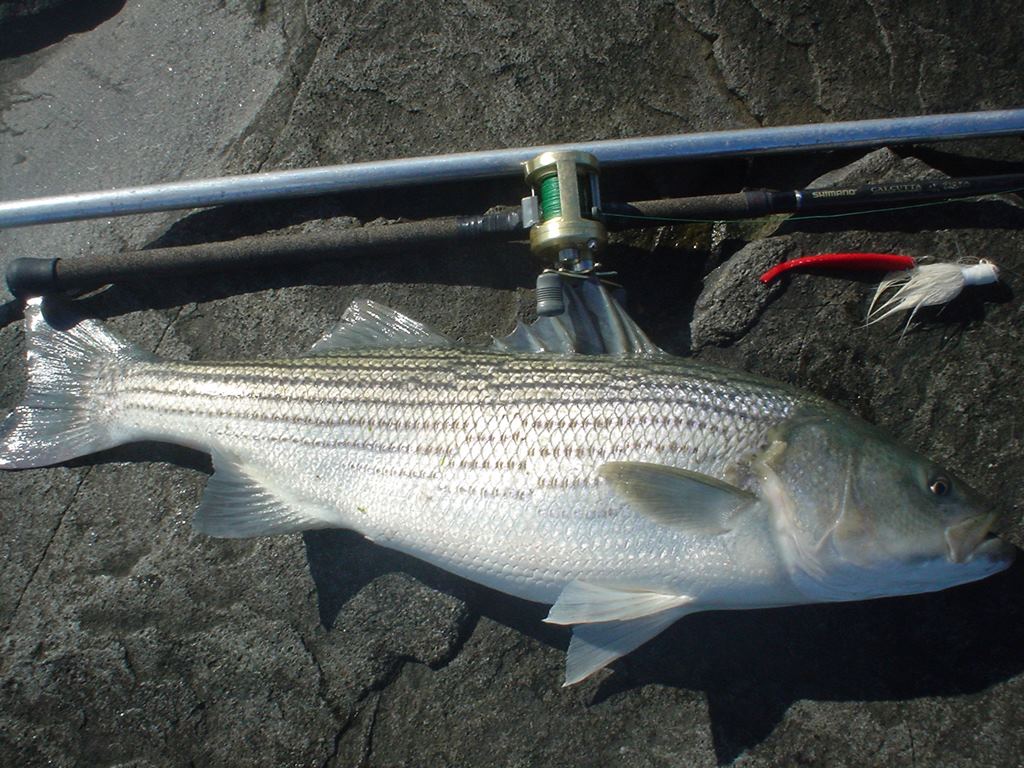
I was seriously addicted to chasing linesiders for over 20 years. Chased them up & down the east coast from Maine to North Carolina. Did a ton of damage off the New Jersey Coast - Both from the beach and the rocks - almost exclusively at night. IME, while some of what happens in sweet water bass fishing may translate to the salt water bass, most of it revolves around schoolies or smaller fish. The Big Girls are a completely different animal and are driven by food & tides. Live baits rules, dead bait comes in second and day in & day out, it's tough to beat a jig & eel day or night. Surface baits produce but like sweet water bass fishing, it's a small percentage of the time. If you hook into a stout striper, especially in current, standard bass gear will be tested to it's limits and beyond. Tip time - the transition from ebb (low tide) to flood (high tide) can be very productive period. Bait has to reposition as the current changes direction. Makes them very vulnerable and stripers know it. Good Luck A-Jay

-
A-Jay
-
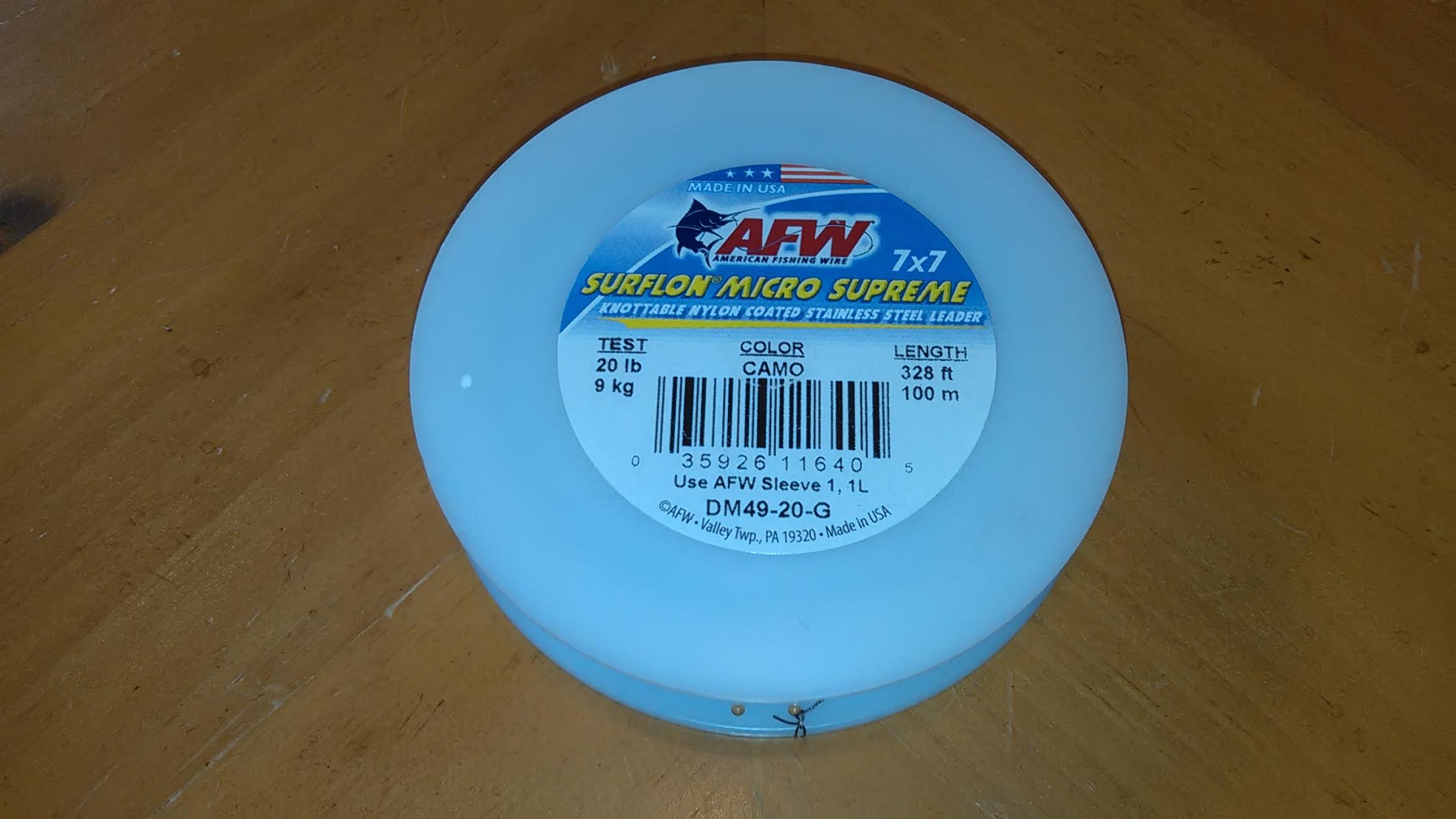
Been there ~ just not recently. A few thoughts: Perhaps keep your knots 'fresh'; meaning retie often. Perhaps try a longer leader. Perhaps bump up a test or two. Perhaps lighten up on the hookset power a little. Perhaps just say the heck with it and switch to a mono leader. I bet your problem will go away and you'll still catch bass A-Jay
-
I like the baits and have had some success with them. Initially I was throwing them with a - 7' MH Mod with 15 lb FC It was too much rig. Switched to a 7' M Mod - with 12lb FC - Much Better. Personally, other than a shad rap, I can't do cranks on spinning gear. Hurts my brain. A-Jay
-
I watched that last night - Wasn't hard to guess why he did it. Makes me think about the "flotillas" that used to follow KVD, Ike and a few others all around the lake during the big derbies back in the day. Going Stealth was really a Good Idea, but may be a one & done kind of thing now. At least he got the most out of it - to the tune of $125K also - nice 'Trophy Room' my word. A-Jay
-
-
PSA ~ About Ultraviolet (UV) Radiation and Sun Exposure The sun sends energy to Earth in a few different ways: visible light that you can see, infrared radiation that you feel as heat, and rays of UV radiation that you can’t see or feel. Fortunately, the Earth’s atmosphere protects us from most UV radiation. While we need some exposure to sunlight to help our bodies make vitamin D, too much UV is dangerous. Broad-spectrum sunscreen provides protection from the sun’s Ultraviolet (UV) radiation. Source: U.S. Centers for Disease Control and Prevention (CDC) There are three types of UV rays: Ultraviolet A rays (UVA) The atmosphere does little to shield these rays—most UVA radiation reaches Earth’s surface. UVA rays cause skin aging and eye damage, and can lower your body’s ability to fight off illness. UVA rays also contribute to the risk of skin cancer. Ultraviolet B rays (UVB) The Earth’s atmosphere shields us from most UVB rays—the amount of UVB rays that reach the Earth’s surface depends on latitude, altitude, time of year and other factors. UVB rays cause sunburns, skin cancer, skin aging, and snow blindness (a sunburn to your cornea that causes a temporary loss of vision) and can lower your body’s ability to fight illness. Ultraviolet C rays (UVC) UVC rays do not reach the Earth’s surface because they are completely absorbed by the atmosphere. Harmful effects from UVC rays are minimal. The UV radiation that reaches the Earth’s surface is mostly UVA and some UVB. Almost half the daytime total of the more harmful UVB radiation is received between the hours of 10 a.m. and 4 p.m. Even on a cloudy day, you can be sunburned by UVB radiation. Skin cancer is the most common form of cancer in the United States. While everyone should protect themselves against UV radiation, it is particularly important to protect children. Most of an average person's UV exposure from the sun occurs before the age of 18. Too much UV exposure or frequent sunburns, particularly during childhood, can make developing skin cancer more likely. What You Can Do Limit time in the midday sun. The sun's rays are strongest between 10 a.m. and 4 p.m. Limit exposure to the sun during these hours, even in winter and especially at higher altitudes. Do not burn. Sunburns significantly increase the lifetime risk of developing skin cancer, especially for children. Seek shade. Shade is a good source of protection. However, keep in mind that trees, umbrellas and canopies do not offer complete sun protection. Use extra caution near water, snow and sand. These three materials reflect the damaging rays of the sun, which can increase your chance of sunburn. Avoid sun tanning and tanning beds. UV light from tanning beds and the sun can cause skin cancer and wrinkling. Wear protective clothing. Wide brimmed hats offer good sun protection for your eyes, ears, face and neck. Sunglasses that provide 99 to 100% UVA and UVB protection will greatly reduce eye damage from sun exposure. Tightly woven, loose fitting clothes will provide additional protection from the sun. Always use sunscreen. Apply a broad-spectrum sunscreen with a SPF of 30 or higher on all exposed skin 20 minutes before going outside. Reapply every two hours, or after working, swimming, playing or exercising outdoors. Watch the UV Index. The UV Index provides important sun safety information to help people plan outdoor activities. Regardless of your exposure to UV rays, conduct a monthly self-check to look for any skin abnormalities. Have a friend or family member check your back and scalp. Look for bumps or sores that don't heal or for moles that have changed size, color or shape. It’s important to visit your physician or a dermatologist for regular skin checks and to have any new or changing mole evaluated. When caught early, most cases of skin cancer can be cured. A-Jay
-
106 Days & a Wake Up ~ A-Jay
-
If you really want to teach him, you are going to need to not fish much and be a mentor. Trying to do both may slow down the learning curve quit a bit. It should pay off later down the line Rig your M spinning rod with a Texas rigged weightless stick bait, go shallow and let him catch fish. So many 'teaching moments' there for you. From casting /accuracy, strike detection, hooksets, as well as playing and landing the fish. You can even show him how to safely hold/handle the fish as well as hook removal and a safe/effective release. Good Luck. A-Jay
-
I love that head. They make a killer swim jig, an underspin & a spinnerbait too. Extremely Beefed Up. A-Jay
-
In a moderate to heavy cover deal, which is where Texas rigged plastics do some of their best work, there can be occasions where having a bass take a bait can 'feel' similar to having the bait getting slightly hung up in the cover. Especially if there's not that discernible Tap-Tap. May mean a really big fish just inhaled the bait. So some bassheads, like to pause & feel for something more than just 'pressure'. Sort of a 'proof of life' type of thing. I have a couple of thoughts on it. 1. After teaching & watching others fish- very closely, it does surprise me just how long a bass will hold onto a bait sometimes. The times where I can see that there's a bass on there persons line, but they don't know it . . .yet. The bass may be just sitting there or could even be swimming off with it. Once they finally detect the take, sometimes it's too late, but most times it's not; fish may have swallowed the rig by then however. 2. Don't wait - Sink the Steel at the earliest opportunity. Hooksets Are Free. A-Jay
-
-
IME - they both work early & late season, although I don't fish them a ton. I have success when I work it 'slow(er), regardless of the time of year or the water temps. Just seems the boot tail thump gets more bites when the waters warmer. Finally, a Big Underspin with a 5.5 inch SK Shadalicious Hollow body swimbait trailer is a BIG Player south of the border for us. The water temps are in the high 80's usually. Giant green bass totally choke the thing and the one we use has an 8/0 hook ! A-Jay
-
I like both An Action type trailer (boot tail) in warmer water temps and something that does less (fluke) in cooler water. Both work well on the fall with and without a tight line. But you already know that. A-Jay
-
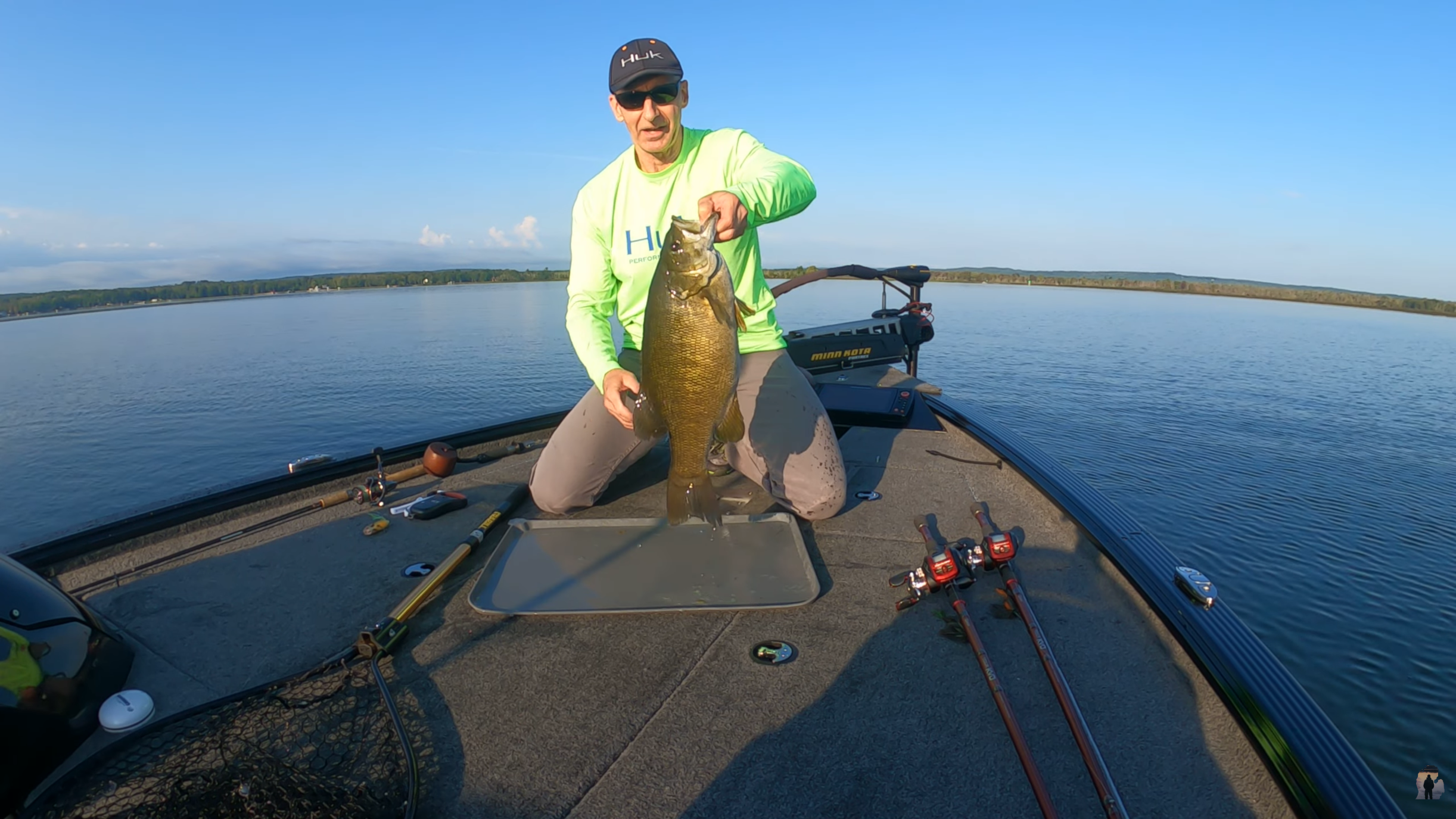
Great Bass ~ PB's are Always a Good Time. Congrats and Welcome to the "I think it's an 8lb Club". A-Jay