
A-Jay
Super User
-
Joined
-
Last visited
Everything posted by A-Jay
-
I'm a sub to Wheels channel myself. Learned quite a bit and certainly appreciate that aspect of his presentation. It's interesting after watching events live MLF, BASS & now PBT and then watching the 'broadcast' especially after the 'edit'. Seems very simply to cut & paste and turn most anything into whatever they want it to be. Sometimes it represents what actually happened (or what I may have felt was the general mood or feeling of the event). Other times - doesn't even seem like the same event. Not a fan of that but at this point believe that is more the norm than the other way around. A-Jay
-
Guess I'm going to have to watch this one - I'm intrigued. A-Jay
-
For me it depends on a couple of factors. Initially, how confident I am that the area is holding fish, the water clarity, and the depth - and that's just to start. Unless I'm super confident the area is holding bass - first thing I'm changing is my location. If I think I'm on the fish, depending on what part of the water column I think they are looking to feed in, I may change my presentation of offer something in or at a different 'level'. I may change my presentation speed, size or profile type, well before I'm thinking about a color change. I might even drop down a line size if I believe that matters one way or another. Another concern for me is getting 'too close'. If I think I may have 'burned the spot' by alerting the fish to my presence, I may leave for a bit and return; but will often make whatever presentation I choose either from further away or from another direction or angle (if that's possible) - the wind can also dictate how that whole thing plays out as well. Quite certain there's more - but I'm going to stop right there. A-Jay
-
Thank You and Good Luck my friend ~ And when 'retrieving' your swinghead, perhaps give the follow retrieve cadence a try: Once your bait gets to the bottom - go one slow turn of the reel handle followed immediately by one fast turn of the reel handle - then pause for a one count (you're waiting for the bait to get back to the bottom) and repeat. Go 5-7 times like that and then pause for a 2 or 3 count and then start the deal all over again. Remember that depending on your reel's IPT - your bait is most liking traveling at least 3-5 feet in those two turns of the handle - so don't think you're fishing 'slow' because you're not. You're fishing effectively. Bites can come anywhere along there but 'on the pause' (however brief) is a fan favorite. And be very careful - you just might get your arm broke . . . . btw - Megastrike is your friend. A-Jay
-
Hello and Welcome to Bass Resource ~ Nice Intro A-Jay
-
Thanks @Jeff Browning That's really great to hear all the way around. A-Jay
-
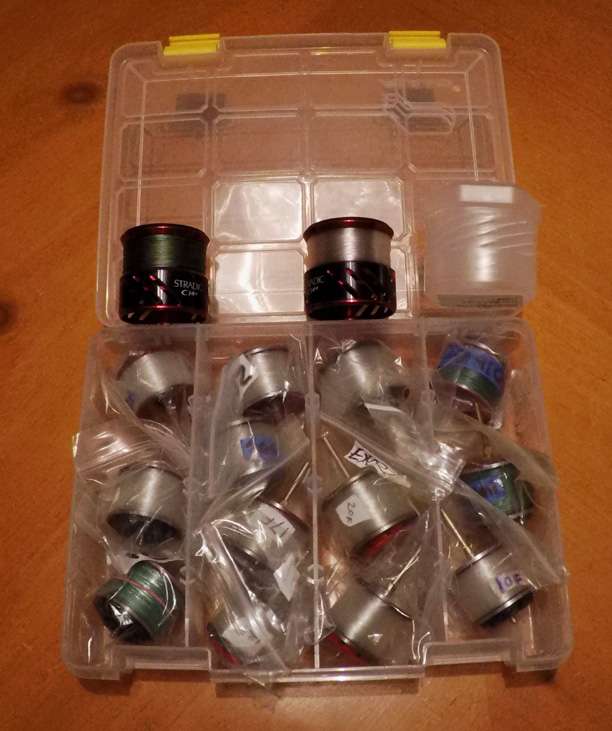
I've been doing this for several years ~ Allows quite a bit of flexibility between line types & sizes. Works well for me. Pictured are Quantum casting reel spools but if you're will to spend the $$, most any quality Brand offers spools. As mentioned usually straight from the manufacturer. A-Jay
-
-
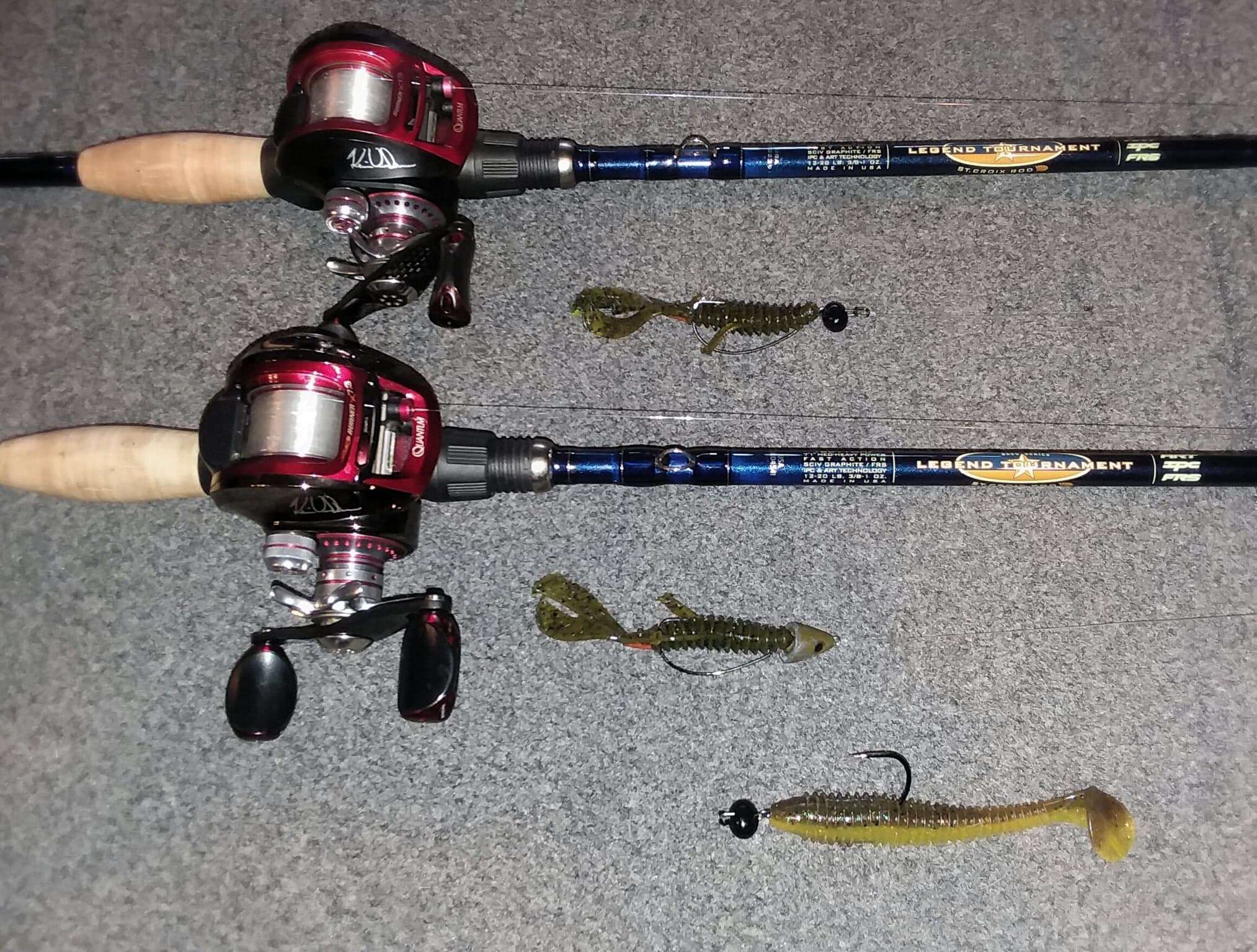
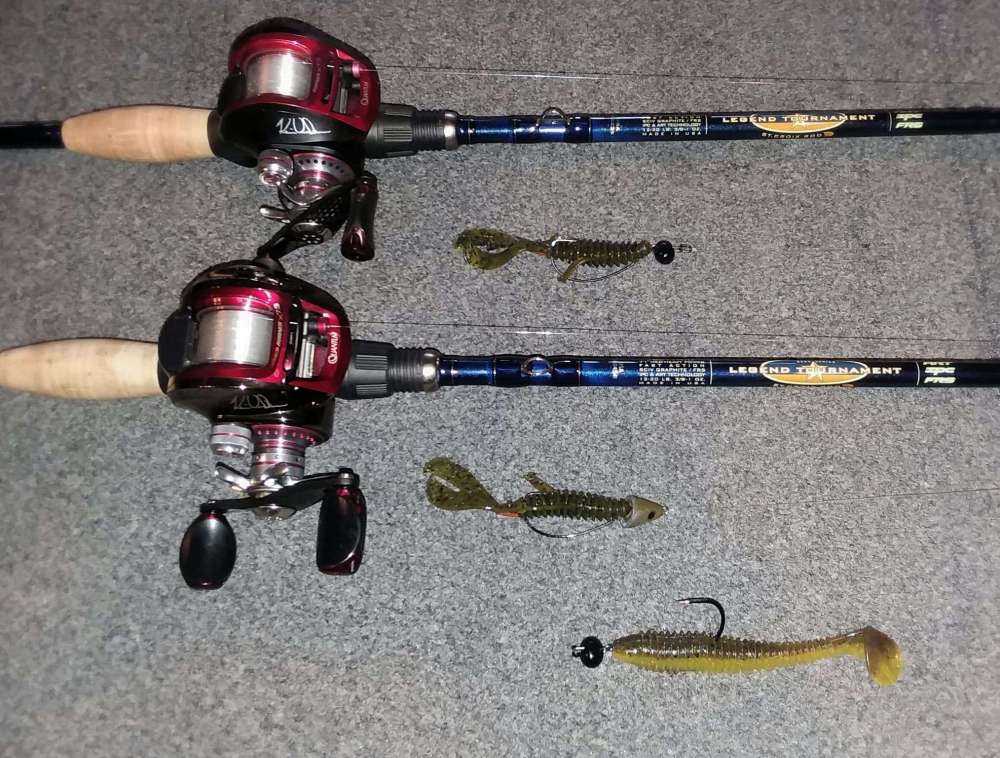
SWINGHEADS FOR SMALLMOUTH For the past two seasons at least, and it may be closer to three, a swinghead has been one of, if not my most productive bottom contact presentation for brown bass. I've mentioned it quite a few times both in threads and in some of the videos I’ve posted, however I’ve really ever gone into much detail regarding the what, when, where and how, I have the most success with it. While the majority this centers on using a swinghead for smallmouth bass, as that’s what I target most, I’ve caught many largemouth (as well as Walleye & Pike) with this presentation and do believe that quite a bit of this information will translate well in many green bass dominated fisheries. The What ~ for the purposes of this document, the ‘swinghead’ can be any one of the lead or tungsten, usually football shaped heads (but not always), with a loosely attached hook. Many models of this bait include the hook permanently attached, while others offer the ability to change or utilize the hook of your choice; I prefer and use this style exclusively. Routinely this is an EWG worm hook but doesn’t need to be; more on that later in The How. This type of rig allows the attached trailer to move quite freely during the retrieve while at the same time, can be rigged fairly weedless. The When – Seasonally, I have yet to have a single month during open water season here, where I could not get bit throwing a swinghead. If & when the fish are relating to or feeding at or near the bottom, this is a viable option, regardless of water temps. The trailer I chose and the ‘speed’ at which I present the bait, usually must match the water temps, but I’ll cover that coming up in ‘The How’. The Where ~ Places that have excelled for me as killer Swinghead spots all have at least one thing in common – Fairly clean bottom; meaning NO or almost No Weed. The ‘traditional’ swinghead is NOT going to fish effectively in or through places that have anything more than the sparsest of vegetation on them. Hard bottom zones of rock or wood can be prime. However, a sand bottom may be my favorite. Perhaps a decent way to access effective swinghead waters is to understand that this bait fishes much like a lipped medium or deep running crankbait. So while these baits have that in common, there are a few major differences and these may be contributing factors to the swinghead’s effectiveness. Although both are, for the most, horizontal moving presentations, the swinghead does not need to be ‘cranked’ to get & stay deep. A swinghead does have its own ‘action’ and will deflect off bottom cover, but it’s not the same hard, vibration, rattling deal many crankbaits possess. And lastly, you can cover A TON of water with a swinghead - effectively. Unlike a crankbait, where a decent chunk of the cast is spent either getting down to or coming up from the bottom (where the fish are), the swinghead, when allowed to sink on a slack line – can be in the juice for a very high percentage of your cast. In cooler water situations, spring & fall, places where I may fish a blade bait or bounce a rattle bait along the bottom, can also be swinghead waters. Either way, Drop-offs, Points, Humps, Saddle Areas, Mid-depth & Deep Water Flats – just about anything clean enough to fish it through, can be good. The How ~ I am going to break this one down into four sub-sections. These will include, the swinghead’s themselves (the ones I use & why), the tackle I like to fish swing heads (rod, reel, line & hooks), the retrieve(s) and finally the Trailers. Swingheads ~ Perhaps don’t quote me on this, but I think the first version of a swinghead was the Gene Larew Biffle head. Tommy Biffle may be the first one I knew of fishing it professionally and his Biffle Bug was making it happen. Still available & popular today, it was the first one I purchased and fished probably 4 years ago now. My first several swinghead adventures were not very successful. I was trying to present the bait in places that had too much bottom cover. I did this because ‘nothing’ and ‘open water bottom zones’ weren’t where I was usually getting bit with soft plastics. My thinking & approach were wrong & pretty far off point. I kept at it and once I started thinking about the bait like a crankbait, the light went on. As mentioned previously, I prefer the baits that allow me to change out the hook. Before coming to this conclusion, I fished several different fixed hook swinghead types / brands – including but not limited to, the Biffle Head, as well as offerings by Dirty Jigs, Eco Pro & Strike King. These can & will mostly all get bites but once the hook is no longer serviceable, the bait’s toast. Wasn’t cost effective for me. What I also learned here was that Tungsten, although more $$, clearly cast better, fished deeper and totally transmits what I'm fishing over & through better than the lead heads. However in some, mostly shallower applications, lead was better (and I’ll get to that in a bit). So after quite a bit of trial & error, I determined that for my swinghead fishing, there are two qualities that the bait needed to possess. It needed a very stout ‘hook hanger’ – however the hook was attached, it needed to be able to endure repeated hook changes as well as the rigors of fighting big brown bass on stout gear. Several early models I tried failed here – while I was changing a hook and also snapping while fight a fish – both highly undesirable. The other important characteristic revolved around the ‘shape’ of the head itself. I wanted & needed two separate and specific styles; a tungsten football shape for the deeper presentations where I wanted to grind & bounce off the bottom; and a more pointed or streamline version head for light eel grass areas. These places for me are generally shallower so this is where the lead material shines. The two baits that address and satisfy my desires/needs are the RPE Tackle Tungsten Swinging Football Jig (No Hook) (Pictured Top & Bottom Bait) and the Freedom Tackle Stealth Swim Jig. (Pictured Middle Bait) The RPE rig is obviously Tungsten, come without a hook, can be purchased in bulk, and possesses a unique and very secure hook hanging system. I use the ½ & ¾ oz only here and do add an Owner Oval Split ring to the front line tie. Big Fan. The Freedom Tackle product is offered & sold as a complete bait. And while I do retain the hook & quality skirt that comes with the bait to use in different applications, for my swinghead fishing applications, I am just using the head. And what a killer head it is ! Available in different weights, the ½ & ¾ oz are lead and the ¼ oz offering is plastic – all have a very stout hook hanger. Haven’t had one fail yet. This head design fishes much different than the football head. It’s much more of a swimming, almost gliding action across & along the bottom; rather than bouncing & digging into it like the tungsten head will do. Superior for shallower & light weed areas. HUGE Fan of this one ! The Tackle ~ Went round & round on this one – and I totally get that we each have ‘the way we like to do it.’ Here’s mine – regardless of the conditions, depth, water temp, you name it – I like a 7’ 1” MHF graphite stick, 17 lb. Fluorocarbon line & a 7.3:1 reel. So all my swingheading is done with a St Croix LTB MHF, 17lb Seaguar InvisX or 20 lb. Tatsu, and a Quantum PT Tour KVD high speed reel. The hook choice, and this can be a tricky deal. I prefer to and have my best success, staying well off the bass. This requires fairly long casts. The longer the cast the more challenging it is to drive home the hookset. Smallies have a tendency to really clamp down on these baits and then swim at the boat. That adds to the hook setting challenge. High speed reel helps, as does having the patience to keep reeling after I feel the strike (bait often goes ‘weight-less’) until the rod loads up before setting the hook – that’s a hard one for me. But set too early, and she’ll often not make it into the Frabil. So back to the hook – needs to be fine enough to penetrate on that long distance strike yet stout enough not to bend out on the strike or during the fight. I tried compensating for all this by using braided line – but I didn’t like it. While my hook setting ability clearly went way up, as did the sensitivity, seemed the bass could feel me as much as I could feel them. Missed a lot of fish – might have been all in my head but either way, I dumped the braid and went back to fluorocarbon. My very first swinghead deals were made with mono – it worked but on the longer casts, the stretch was just a little much. To rig a bait Tex-Pose, I use one of two hooks and I use them interchangeably. The standard Gamakatsu EWG and an Owner Wide Gap Plus EWG. As always, I match the hook to the bait but I’m using a 3/0, 4/0 & for bigger baits a 5/0 the vast majority of the time. With the Owner, I can crank on even the bigger bass but the wire is quite a bit thinner on that Gamakatsu, so after the hookset I need to be mindful of that. For a top hook type presentation (rare but I do it) all the same characteristic need to apply. And this is a solid option when using bulky trailers like paddle tail swimbaits. I use a 3/0 or 4/0 Owner Jungle Flipping Hook made with ZoWire. It’s thin & stout, has a decent keeper and is just about perfect for this. (Pictured on the Top Bait) The Retrieve(s) ~ This is another one of those aspects of bass fishing where there just may be no wrong answer. Like jerkbait fishing, any number of ‘retrieves’ can produce bass. And on any given day one may work better than another and then the next time – it changes again. For me – I prefer to try and trigger that ‘chase’ deal. So I like to keep the bait moving but will impart brief pauses randomly throughout the retrieve. The speed and the length of a pause can be & usually is dictated by the season, water temps, water clarity, type of bait possibly present and lastly the mood of the fish. However, I absolutely refuse to say ‘Let the fish tell you what they want’. Nope not gonna do it. I fish this bait with the reel - Think crankbait. The Trailers ~ The options of effective trailers for a swinghead are probably endless. Most anything you want to hang on it will work. Could get overwhelming. I have caught several respectable bass on worms (both curly tail & straight), Craws, Hollow & Solid paddle tail swimbaits and an assortment of creature type baits. But my number one brown bass producer has been the Strike King Rage Bug. And second place isn’t even close. At this point I rarely throw anything else. If they are going to eat, they’ll eat that. I’m that confident in it. One bait that I just start ‘experimenting’ with is the Rage Tail Eeliminator. I’ve had several bags for years and have not done much with them. Early indications are, we just may have a Rage Bug contender – more to follow on that. In conclusion – I’ll add my version of Why. Why is this Swinghead deal so effective on brown bass? One of the more common adages in bass fishing is – “show them something different”. And while I’m not 100 percent certain that showing a big wary smallmouth, something it’s never seen before is the magical secret to Trophy Town, in this case, there may be something to it. I believe that smallies enjoy or perhaps even need, to chase their prey; they are just wired that way. And while I do take many quality fish each season with stationary presentations, like drop shots for example, given a choice, I believe I can almost always get a few with something moving. Doesn’t always pan out, but nothing works all the time. So a swinghead fill’s its own little niche. It’s a moving bait that I can present at almost any depth, utilizing various retrieves (including long pauses), I’m able to use a wide variety of hook types / styles to fit almost any situation and the trailer options are endless. Maybe that’s why. So if you have some water that seems to fit the swinghead bill, and you haven’t yet given this a try, I’d encourage you to do so – immediately if not sooner. That’s my story and I’m sticking to it. A-Jay
.thumb.jpg.481a42d8e153edb539c490cb5411a7ee.jpg)
-
Hello Adam and Welcome to Bass Resource ~ While I've fished 'several' drop shot rigs, I don't really feel any singular stick can do it all. I prefer to have at least a couple - specifically one each for lighter / shallower applications and a deeper / heavier deal. That said, I picked up a Diawa set up last spring and have been duly impressed with it's versatility. If I were to fish only one - this Tatula Elite AGS 7' 1" Med Brent Ehrler rod would probably be it. A-Jay
-
I hear ya ~ So go for it and perhaps report back with your results. If it helps you successfully hook and land fish, you're Golden. Good Luck A-Jay
-
Mustad KVD 1x Strong 2x Short Triple Grip Treble Hook ~ # 2 on the front and a #4 on the back. A-Jay
-
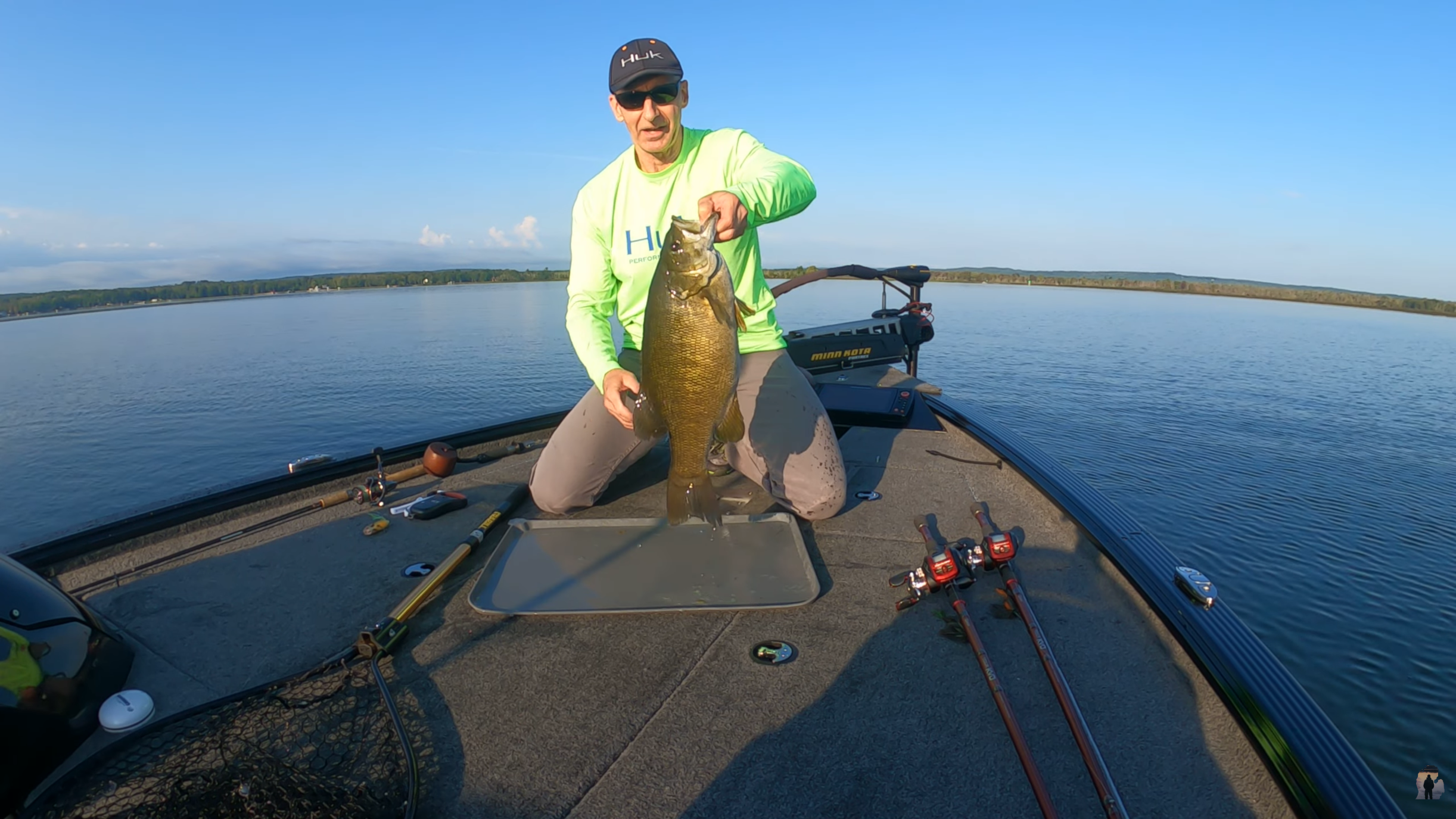
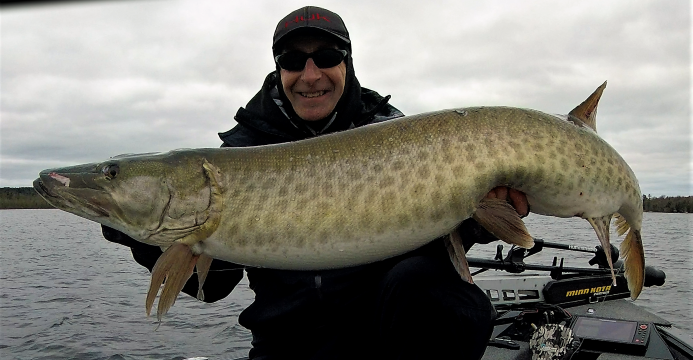
I do have several rigs - and knowing exactly how pounds of drag I have on each rig, is not something I track or even need to know. What is definitely important to me, is that when I cast every rig - it's set up and ready to perform effectively in that particular situation. Several decades of experience hooking, fighting, landing (and even losing) a bunch of of trophy class fish, has helped me to learn & know, what that is. My fishing may not be an exact science - where pounds of drag a calculated & then set to precise levels - Then again - it may not need to be . . . Caught this fish in May on 10 lb line - and I have no Idea how many pounds of drag my reel had - But whatever it was, it worked and did offer me this sweet photo op. A-Jay
-
Hello and Welcome to Bass Resource ~ Interesting first post. Although your question seems simple enough - without some additional information about what, where, how & when you're fishing, it's pretty hard to answer accurately. Perhaps if you could offer more details regarding your fishing, there could be some useful advice offered here. A-Jay
-
I've never done this or even considered it. In my mind this does a poor job of replicating what actually happens on the water. The forces in actions here have too many variables in play. Between the different sizes & attitudes of the fish, the movement of the boat (either forward or backward away from the fish or even up & down because of wave action - or both) all of which can happen during any point of fighting a fish; including the hook set. In big game fishing scenarios, where giant fish make several super long runs, anglers use a scale to set the drag. Seem you are trying to do that, but IMO it's not needed in bass fishing. I say you'd be better served by attaching the end of your line to something secure, walking back whatever distance you feel your average hook set is made from, adjusting your drag, and then set the hook. Granted the object you're hooked to doesn't move like a fish will, the ground you're standing on doesn't move either, like a boat will, but you'll still be able to see how much pressure you're putting on your gear, how your line & knots hold up and finally at what point your drag slips (or doesn't). The actual pressure applied on the 'hookset' only needs to last a second. After that, and once the fish is on, then it's time to fight / play the fish back to the boat and you'll rarely need that more force again at any point in the fight to land the fish. Most times I benefit from quite a bit less. It's a feel thing and when I set up my rigs, the lighter ones are set up to where I can not apply too much before the drag slips. Conversely, the heavier the tackle set up, the stouter the settings. Hope that helps A-Jay Here's a hookset I made on a fat brown bass using 10lb braid & a 10lb mono leader that hit on topwater - hooksets here need to happen fast - just like the strike. You'll see me adjust the drag as the fish nears the boat. Also note how the boat moves toward the fish during the fight, quite a ways too. If the wind was blowing in my face -that could have been another force acting on my gear & the drag.
-
Depends on the hook. I use 10lb braid & mono leaders on spinning gear as well. My gear, rod & line, needs to be 'matched' to my presentation. With anything less than an 8 lb leader - my hook set is a 'reel set' with a thin wire hook. My drag will be set to a sufficient level where I can sink the barb (or barbs in the case of treble hooked baits) but it will still slip a little. That's a bit of a safely value designed to prevent me from setting up on an over-sized fish that may already be heading the opposite direction; which is a good way to pop a fish off. Generally, my 'hookset' is the most 'pressure' I prefer to put on a big fish. Unless there's a reason for it, horsing or rushing a spirited fish to my frabil seems to have no real advantage. I also have no problem 'adjusting' my drag on the fly (while fighting a fish) and often do loosen the drag as a big fish gets close to or gets a first look at the boat in anticipation of a last lunge for freedom. A-Jay
-
Hello and welcome to Bass Resource ~ A-Jay
-
-
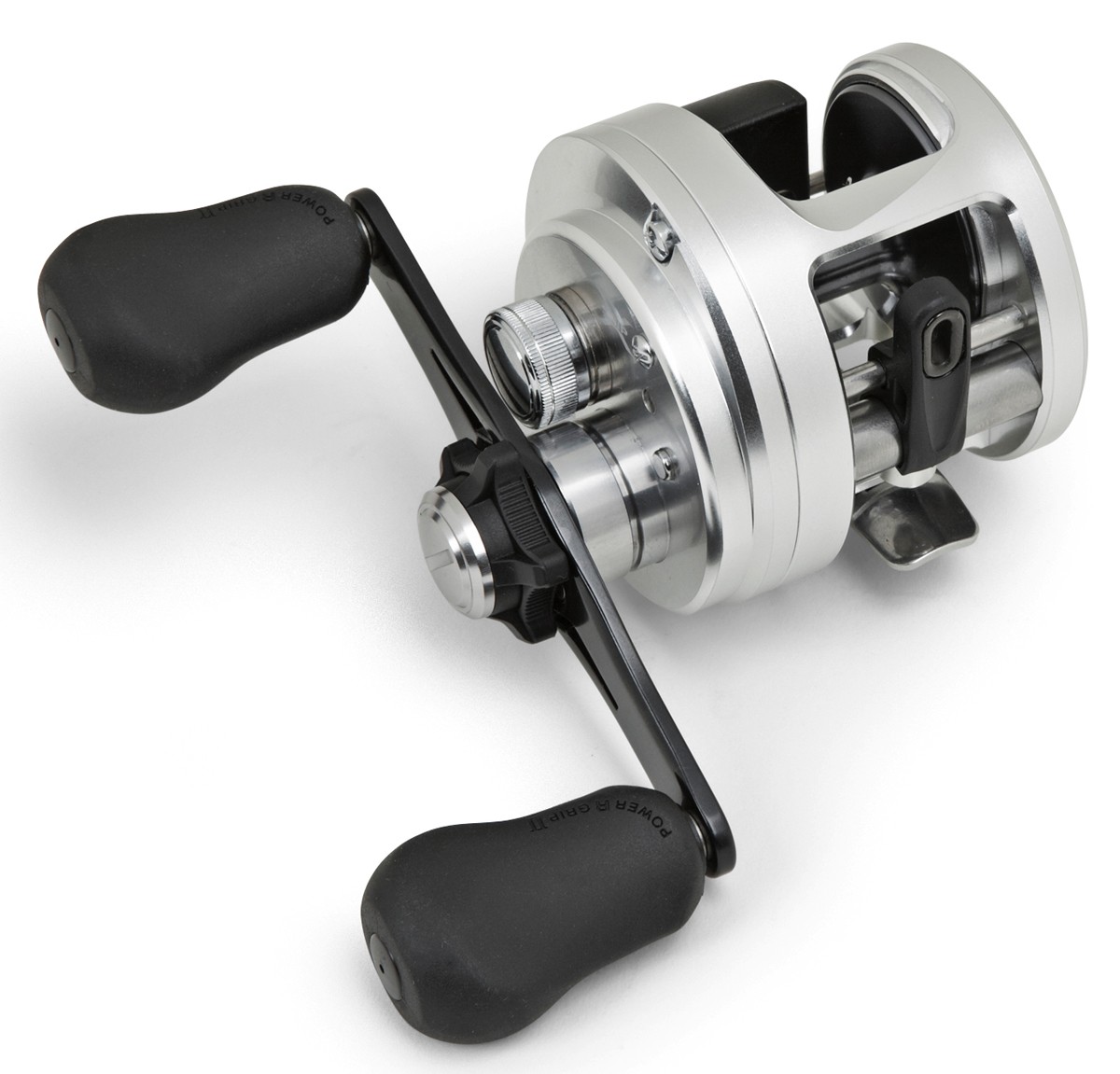
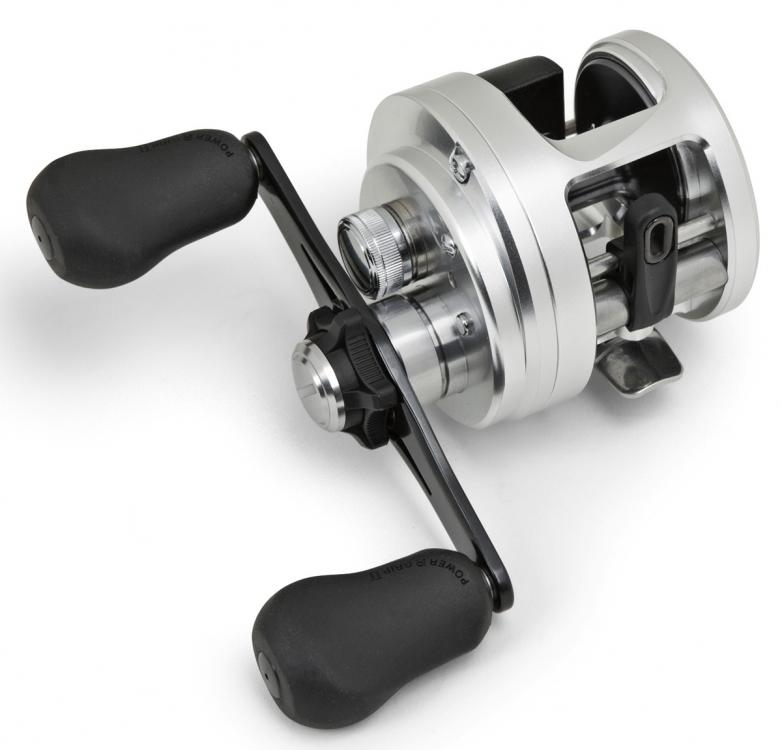
May depend on how far back you want to go. This one . . fishes a whole better than these two ever did . . A-Jay
-
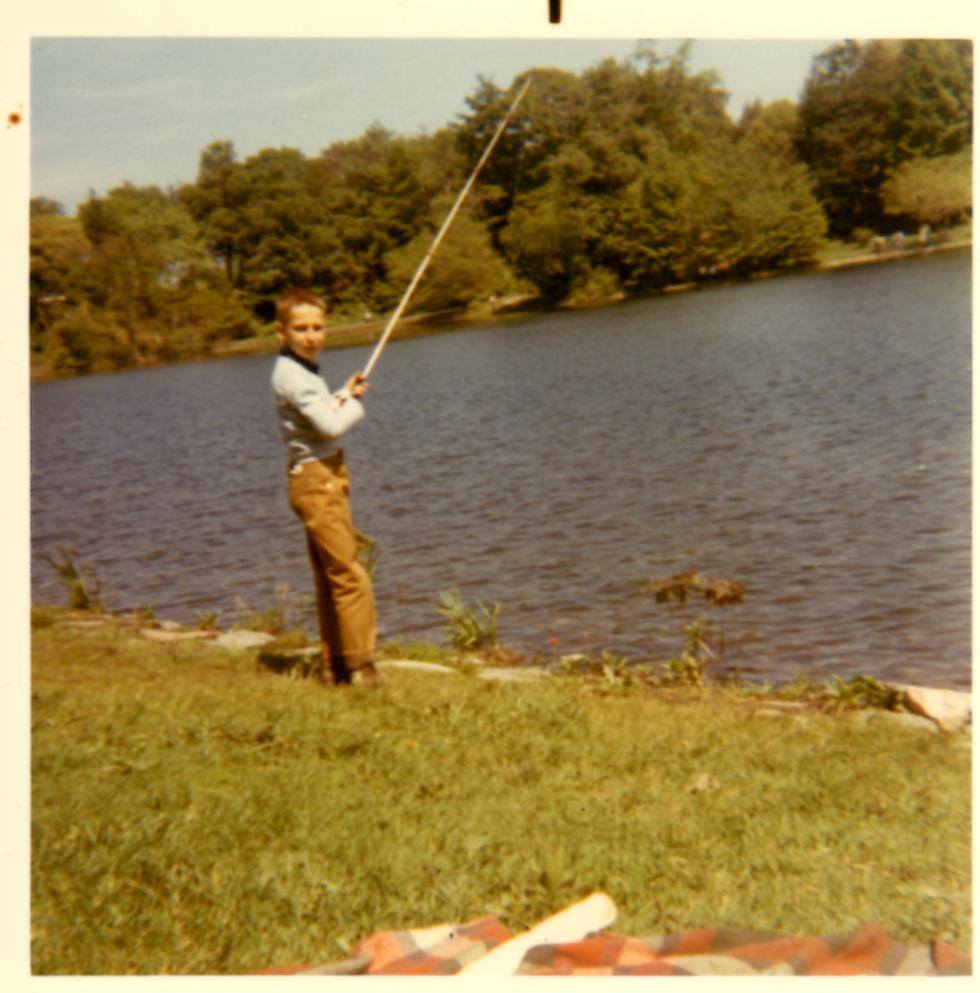
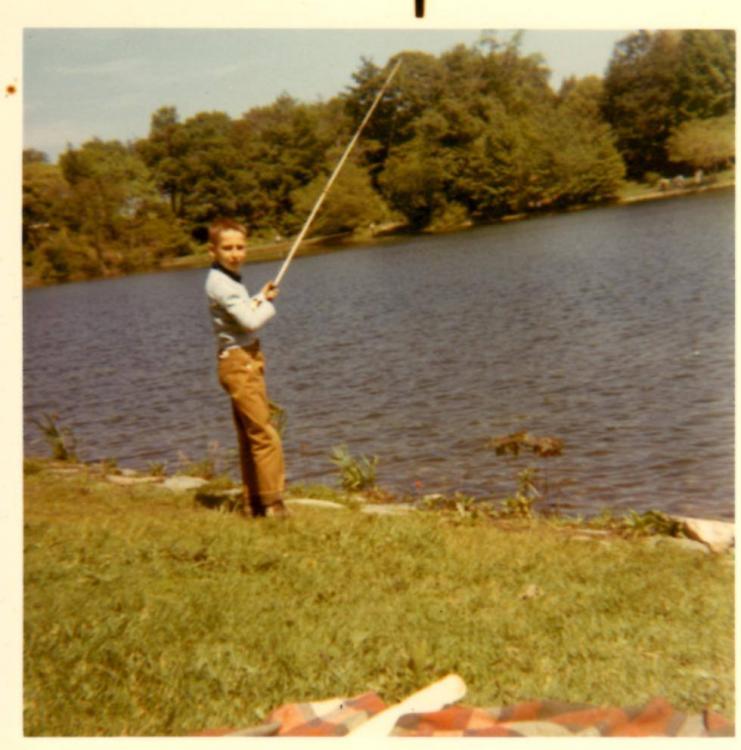
Growing up in MA during the mid - 1960's, my Mom & Dad took my younger brother and I fishing on weekends. I lived for it ! We'd go to small state & county parks that had lakes. My Mom loved to sit in the sun and read or knit (believe it or not) so these were almost always mid-day affairs. My brother & I would pick night crawlers from my Dad's garden the night before and then beat up on the local panfish population that next day. Every once in a while, we'd get a bass and that was always a big deal. Routinely took fish home 'for supper'. Once I was old enough to ride my bike around by myself, all bets were off. With my Sears & Roebuck Ted Williams Signature (pistol grip) Spin-Casting rod & reel securely (sort of) strapped to the frame, a small assortment of pre-rigged Creme worms (the ones with the little propeller on the front) along with some Mr Twister curly tailed worms, I'd be up at the crack of dawn all summer long to ride that one speed, coaster brake Schwinn, several miles to fish all day. Always had to be home by dark (used to bum me out as I hated leaving 'early' to make it). At 16 1/2 years old, I got my drivers licence, a job and bought my Mom's 1970 Ford Maverick: fished from the bank all over New England for a couple more years until I joined the service - didn't have a clue what I was doing but I was learning every trip out. A-Jay
-
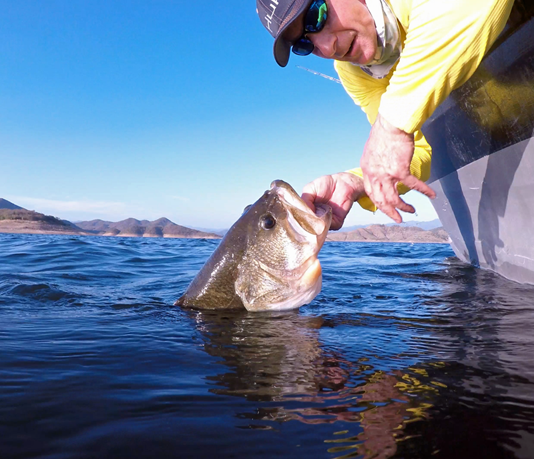
May depend on where you go & how you get there. While I shoot & rate the "E" - never felt like I needed it while I was there. Fishing decent too. A-Jay
-
I've managed a few plus sized fish every now & then on both spinning & casting gear. Unless I'm fishing the slop - the most pressure I ever put on a fish is on the hookset. After that I let the drag do it's job. Works for me. A-Jay
-
-
Congrats. A-Jay
-
LOL - Yup. While I can live with some fish less days, but hate when the forecast is just not even close. Fall bites coming though . . A-Jay



.jpg.eb40ba477da17fedecd519252030a049.jpg)