



A-Jay
Super User
-
Joined
-
Last visited
Everything posted by A-Jay
-
Thanks - I am getting a little closer each winter to doing some steelhead fishing. A-Jay
-
Has to be the Smash-Tech Custom Baits Bubble Fry Stick Bait ~ Just look at this beauty ! A-Jay
-
Hello Michael and Welcome to Bass Resource ~ A-Jay
-
Nicely Done Ryan ~ I've been catching brown bass on tubes for a long time; some pretty decent ones too. Here's my version . . . Tubes ~ Such a simple & super versatile bait. One that's been catching fat brown bass for a long time. A bait that has perhaps fallen a little out of favor recently, something I've been guilty of the past two seasons myself. Looking backing, that was probably a mistake. A TUBE really is perhaps The One Brown Bass bait that I should almost always have tied on. There's been a lot written about it and with good reason frankly: there's a lot to say. It's common knowledge in many brown bass angling circles, just how many different ways & places a tube can be presented effectively, and how easy it is to fish. Some may say that there is no wrong way to fish it. Long before the 'stick bait' came along, the tube way was same deal for me: Just whacking'em ! Rather than attempting to name each & every tube deal, I'm going to cover a few of my favorite & most productive. First - a tube for me is almost always a hard(er) or at least semi-clean(er) bottom deal. While a couple of inches of eel grass is OK (and sometimes exactly what the doctor ordered) anything more than that, I'm usually presenting something else that will fish through (or over) any bottom cover a bit more effectively. And while Texas rigs are good & Tex-pose is popular - by & large, I prefer to fish tubes on the plain old tried & true, lead head, open jig. I fish the standard 3.5 inch size the most but will do 4" and even 2.75 inch is some instances. The SK Coffee tubes have been great. And before that - and still quite a bit now - the Provider Tackle 3.5 inch "Performance Series" tubes are one of my all-time favorites. Great colors for clear water and super durable. As for jig head weights - 3/8's get most of my fish but lighter & heavier have their place when fishing shallow & deep. What a tube 'imitates' is anybody's guess - crayfish, little bottom bait - now the goby. May not matter. Pick one and go with it. This one's easy to have confidence in. What may not be a surprise, I fishing tubes in places & at times when brown bass are relating to the bottom. For me - the clearer the water (better vis) the better. Tubes can & do work when fished with a variety of "retrieves" - hop it, drag it, pop-it; whatever. When the brown bass are looking to eat, these will all get bit. I usually fish 1/2 oz & less on Medium spinning gear - 10-15 lb braid mainline and a 8-10lb Fluorocarbon leader (AbrazX). Heavier than 1/2 oz, I'll either pump up my spinning gear (rod & line) or go to casting gear that will present, hook & land a spirited Smallie. 3/4 oz heads are reserved for deep (more than 20-25 ft) and or big wind & waves. This size can & does get "thrown" on the jump by bass more than the lighter heads - so that's something to be aware of. My standard 'way' to fish tubes is the same regardless of depth - I fish them like a jerkbait. Meaning there's a couple of twitches & a pause. How many twitches & how long a pause can be dictated by the water temp, and the mood of the fish. As mentioned previously, I believe smallies like to chase - so I like to offer them that opportunity - if they're willing. I might keep a tube moving along with a series of twitches where the bait travels 2-3 inches, pauses for a split second and then moves another 2-3 inches - I may continue this for 4-5 feet and then pause . . . . . . for like 10 seconds . . . . . . and then do it again. One may need to 'practice' this in shallow water where you can watch your bait. There's a tendency to 'move' it too far on each twitch, which seems to nullify its effectiveness. So it's a good Idea to check first - it requires a small movement, especially with braid. Using Fluorocarbon can make it a little easier to get the small movements, but I lose so much hook setting power on the long casts I like to make, that I don't use it; Zona swears by the Flouro for this - I can't do it. So I stick mostly to the braid. So that's just an example of ONE way - there's no limit to the number of different ways to fish it - just like the jerkbait. Of course the old stand-by of 'drag & stop' can be all one needs to do to get a savage take. There's also what's often referred to as "Snapping a Tube", where a heavier head is used and the bait is literally 'snapped' 3-5 feet off the bottom and then allowed to fall back on a slack line. The tube will spiral back down to the bottom - which is where the vast majority of the strikes will come from. Can be deadly but will also twist the heck out of your line - I'll often use a small swivel between my braid & leader to help with that when doing this. I'm throwing tubes up & down drops - all around and up on top of humps, off the tip and both sides of points, along the bottom of deep weedlines and across a promising deep water flat. There's also a few times where I found some fat brown bass cruising up shallow and I'll use an 1/8 oz head and fish the tube like a stick bait (before I knew what a stick bait was). So I'm dead sticking it more than I'm moving it. This is in 2-5 feet of super clear water - fish can be very skittish and easily spooked. So I'm well back from the fish, making as long a cast as I can and sort of letting the fish 'swim into the bait'. I try to not to move the bait too far, too fast because the 'strike zone' is right there. So the less I do with it- the longer it's there in their face. Less is more in this instance. That's my story and I'm sticking to it. A-Jay
-
When the Chiefs and Patriots face off in the AFC championship game on Sunday, they’ll do so on a fresh playing surface. The Chiefs grounds crew has been hard at work the past several days to get the turf at Arrowhead Stadium in good condition after a snowy divisional playoff game against the Colts. The Chiefs hadn’t planned on resodding the field, but they weren’t left with much of a choice on account of the condition the field was left in following Saturday’s game. https://chiefswire.usatoday.com/2019/01/18/kansas-city-chiefs-arrowhead-stadium-resod-field-afc-championship-game/ A-Jay
-
Ok - and I hear you about the bills - So any you have lying around that you Just Hate, can totally be mailed directly to TW for me - just write "Towards A-Jay's Bill" on the envelope - they'll know what to do. A-Jay
-
Not to hi-jack this rod thread but ~ Here ya go ~ These 'silvers' are a little tricky to find - so my bill choice could be a reflection of what may be required over & above MSRP. A-Jay
-
Yup ~ A-Jay
-
Doing The Right Thing, at The Right Time, in The Right Place can often produce above average results. How one goes about it, may be a matter of personal preference. Topwater, including walking baits, on spinning gear works for me. A-Jay
-
WAKE UP ! A-Jay
-
Yup ~ Really the best way to go IMO. A-Jay
-
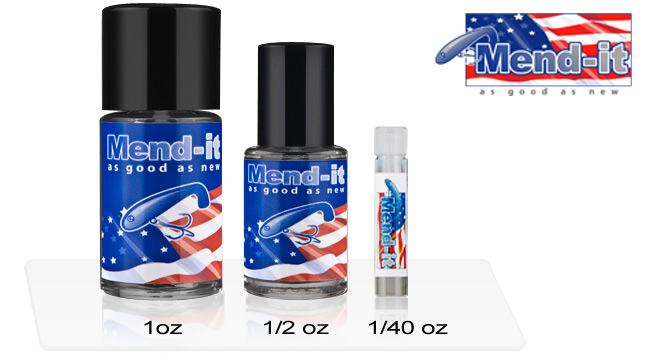
Each blade type & configuration offers different qualities. Knowing what they are & how that can benefit each presentation can be helpful. Here some info from the BR articles section . . https://www.bassresource.com/beginner/spinnerbait_bass_fishing.html https://www.bassresource.com/fishing/spinnerbait_bass_fishing.html There is quite a bit more on spinnerbaits available there as well. A-Jay
-
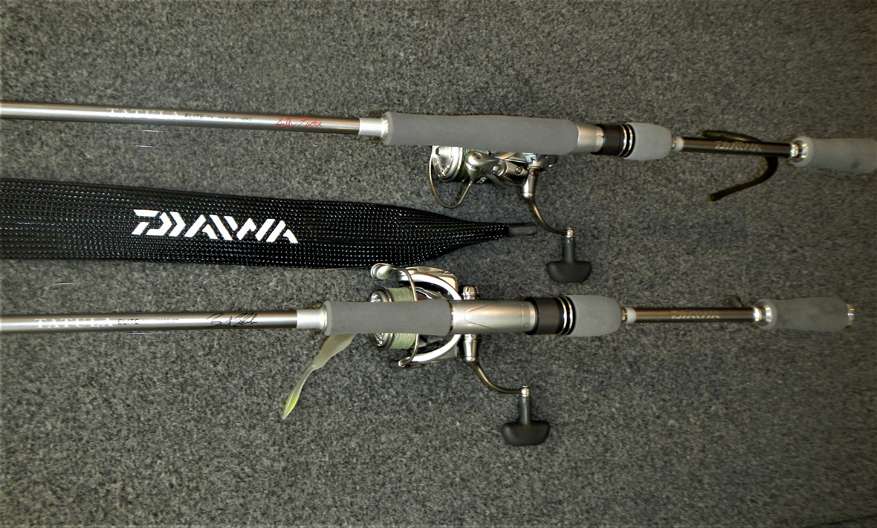
Yes - very happy ~ I use 8-10lb braid & leader on these rigs. Line capacity is perfect. I'll post up a size comparison friendly pic in this thread for you tomorrow. @kschultz76 and @fishwizzard IMO - as a guy who has been fishing many different types, sizes & brands of spinning reels for 50 years - (wow, I'm old) For the money - this Silver Diawa is one of Best. Here's a nice look at the internals and the actual reason I purchased these in the first place. A-Jay
-
-
The 'front' blade is closest to the lead head and the 'back' blade will be one the end of the wire. Here's a small Colorado blade on the front with a larger willow leaf blade on the back . A-Jay@Janderson45 - It's all good. I knew going into this that it would present some 'reading challenges', but it's pretty much the nature of the beast when there's a lot of info like that. In this day & age where there's so much info out there floating around - I've read a ton of it myself. So much of what I read is the same old regurgitated stuff that seems like it's copied & pasted from place to place. And there's a ton about Tackle, Baits & Specific Techniques, which is valuable & needed - however some of what has benefitted my fishing just as much, has been "Everything Else". So while tackle, baits & specific techniques are offered here as well, the rest of what I'm offering up here revolves around 'the everything else'. Hope it helps you out and if it does - I'd love to hear about it. A-JayThere are ~ it's a specifically Daiwa Tatula LT SS 3000-CXH Spinning Reel - Limited Edition TATULASS3000CXH A-JayThe following article appeared in Bassmaster and was written by Peter B Mathiesen with help from John Tertuliani, a biologist for the U.S. Department of the Interior in Columbus, Ohio. I think this one may have been penned more with Green Bass in mind, but realizing how hard the Brown bass up this way hunt, consume & routinely depend on crawfish, as a major portion of their diet, I found this essay quite useful. Understanding Bass Forage: Crawfish "Knowing the mating and molting rituals of crawfish will give you the upper hand when using imitation baits. Most bass anglers use crawfish imitations without a very clear understanding of why they should be throwing them, and more importantly when. All of us know that crawfish lures are often effective and sometimes the only go-to bait of the day. But to truly understand when you need to use a crawfish bait, you have to understand why bass eat them and when this forage is most appetizing to the quarry anglers seek. Crawfish are everywhere: ditches, frequently flooded agricultural fields, almost all ponds and, of course, your favorite impoundment or river. There's not a state in the contiguous 48 that doesn't have millions of them swimming around feeding the local bass populous, not to mention Cajuns and the occasional Cajun wannabe. Intimate knowledge of crawfish behavior will empower you to fully exploit baits that imitate this popular dinner item of bass — and going back to science class is your ticket to information. Bassmaster wants to take you back to school with some of the most knowledgeable freshwater lobstermen in the industry. Keep in mind that the parameters, times and conditions that will be discussed vary from water to water, subspecies to subspecies and latitude to latitude. Like all creatures, crawfish are determined to mate, eat and protect themselves from predators. Understanding the timing of these events is key to consistently taking bass on crawfish imitations. Love on the rocks February through May is the first major period of crawfish activity, based on geographic location. When the water temperature reaches approximately 50 degrees, crawfish emerge from rock crevices into the great wide open and begin looking for receptive females. Many of the emerging crawfish males and females are still sexually active from the previous fall. What's significant about this two to three week period in spring (depending on rising water temperature), is that it's one of the few times males walk on top of rocks, exposing themselves to bass. Trapping studies have revealed that below 45 degrees, crawfish have little to no activity while buried in mud burrows or rock crevices. But when the water rises to 50 degrees, it's a whole new ballgame. Where will bass be picking off these vulnerable mudbugs? Rocks will point the way. It may sound oversimplified, but rocky substrate has the highest concentration of exposed crawfish, which in turn translates to the greatest numbers of feeding bass. Prime conditions in most bass watersheds combine 50-degree average water temperature with rocks clean of silt or mud. Unlike bass that clean their spawning ground with their tails, crawfish rely on current or wave action to do their housework. The rocks must be clean to open up caves that can create endless lattices of spawning habitat. That may be at 3 feet of water on a wind-swept point, or at 30 feet on a small hump in the middle of the lake. Whether you're fishing in Alabama in February or Michigan in May, the formulation of season, clean rock and ideal temperature is guaranteed to attract most of the mating crawfish — and feeding bass — in the area. Depending on the species, crawfish can and will spawn in mud. However, they rarely do so if clean, rocky habitat is available. One of the ways bass locate crawfish is by sound. "A crawfish moving on a rock makes a tapping/clicking noise. Bass use this sound to locate crawfish," said Tertuliani. Crawfish also are light sensitive. Water clarity and penetrating sunlight are key ingredients to active, quality habitat. If the prime habitat happens to be in shallow water or is more exposed to direct sunlight, low light or cloudy days often provide better fishing than bright afternoons. The naked truth After mating, the females burrow into a cave and fertilize their eggs with the sperm that has been deposited on them by the males. The males then molt, losing their calcified sexual organs, and quickly hide. "The molt" as it is often referred to, is supposed to be the time bass gorge on crawfish. This may not be the case. "Many anglers associate molting with intense bass activity on crawfish baits in the spring. And actually, this spike in activity is most likely due to the vulnerability of crawfish during the mating cycle," said Tertuliani. After the molt, males return to a reclusive pattern and are not as available to bass as they were when they were mating. They will feed in their cave burrows if possible, and only expose themselves in the evening or in low light conditions. The molt will dramatically change the color of crawfish from a camouflage olive/brown, to a bright orange or red cast, making them an easy visual target for bass. But understand that a bass must work more diligently, and expend much more energy to catch a crawfish during the molt than during the mating cycle. Meanwhile, the females will hatch their eggs in 30 days or so (depending on water temperatures). The hatchlings stay attached to the female and molt every two to seven days, depending on species. After the third molt, when they reach approximately one-half inch in length, they fall off their mother. The females quickly molt and go into a quiet summer low light feeding pattern, staying in the rock crevices as much as possible. The little crawfish fall into the rocks, where they molt multiple times and eat, until the fall — when most become adults, depending on the length of the growing season. During their early summer growth period, the greatest threat to the juvenile crawfish comes from chubs and bottom feeders, not bass. Fall is the best When fall arrives and you're throwing a shad imitation, revisit the rocks you fished in the spring with a crawfish bait. The fall mating cycle is actually the most intense and often is completely ignored by bass anglers. The process can be especially intense in southern latitudes. The fall mating period is made up of all the adult crawfish that are sexually mature. There are species exceptions, and temperatures falling too rapidly below 45 degrees can shut it down early, sending the crawfish into a dormant state. Fish the fall the same way you fish the spring, and you'll find the fall mating cycle is a bonanza. No legs, no claws, no glory The research group at Pure Fishing in Spirit Lake, Iowa, is actively seeking information on crawfish behavior. Pure Fishing manages one of the largest live fish behavioral test facilities in the world and statistically measures fish reaction to baits and key foods. "We are amazed at many of the findings that have been discovered in our facility in the last few years," said John Prochnow, Product Development Manager. Led by Dr. Keith Jones, multiple tests were made with live bass over several months in a controlled environment to measure what kind of shape the bass preferred when keying on soft plastic crawfish imitations. For 60 days, 450 largemouth bass, plucked from the same environment, were tested using a robotic arm and a strike counter. Each group of bass was presented a crawfish bait at the same speed and angle of attack. The bass tested had never seen the bait that was presented (it was a prototype). The test then continued, with one pincer removed, then a second pincer removed, and finally, the legs. The soft bait that had no appendages (no legs or pincers, just a body and tail) had the greatest number of strikes. "The final bait looked almost like a large shrimp," said Proctnov. The research was incorporated into the Berkley Flippin Tube. "We wanted to market a craw with no appendages, but our market research said no one would buy it," Proctnov added. Living on the bottom Crawfish live on the bottom. That's not to say you can't catch a bass in open water with a crawfish bait. But a live crawfish will not leave the rocks unless it is forced to. During the summer, bass feeding patterns shift to low light or darkness. Again, bouncing a plastic craw over prime habitat in daylight hours can result in catching bass that are keyed into the pattern, waiting for a midday meal. But for consistent action during dog days, move to deeper, darker rock substrate. One of the best ways to fish crawfish baits, hard plastic or soft, is to work them parallel to rocky banks, changing depths until you find fish. One of the most important elements of making a believable presentation with a crawfish imitation is to keep contact with the rock or cover you are fishing. The ticking of a crankbait bill or lead sinker against a rock imitates the clicking of real crawfish — enticing bass to strike. Plus, contacting the cover ensures your bait is hugging the bottom, where crawfish live. Add internal rattles to plastic baits, and allow the bait to sit for an extended period of time. Small shakes of the rod tip will activate the rattles, drawing bass to your offering. Most importantly, follow closely the rituals of this favorite bass forage, and you'll be catching bass on crawfish baits because of knowledge, not just luck. Cutting edge soft bait Ken Huddleston, the creator of the famous Castaic Trout, is now in the custom soft bait business. "I want to make the most accurate imitation I'm capable of manufacturing. Right now, I make all the baits personally and am committed to keeping my manufacturing in the U.S.A., and refuse to move it offshore." Said Huddleston. If there has ever been a modern-day renegade bait designer, Ken Huddleston is the guy. His attention to detail and assurance of perfect action has created an almost cult-like demand for the few anglers in the know. The Huddleston Deluxe Bait Co., makes a very lifelike crawfish bait called the Huddle-Bug. It can only be purchased at a select handful of shops in California. You can buy them on the Internet at Ken's site (www.huddleston deluxe.com) for about $6 for a pack of five. Pro's tricks Curt Samo, a fishing pro from Rockford, Ill., takes the guesswork out of color and size. In every lake or river system he fishes, Samo launches a crawfish trap the day before the tournament he is fishing. He uses a simple South Bend Crawfish Trap, and stops at the local convenience store on the way to the lake and buys cat food for bait. "I walk several yards down the bank from the boat ramp, because it's almost always a rocky shore, set the trap and leave it overnight. In the morning, I pull the trap and see the color and size of the local population, match the baits and get to work. On a northern lake, Samo found an almost fluorescent orange crawfish occupying the trap. "I changed baits, matched the color and have cashed a check in 90 percent of the tournaments I've fished on that water since," said Samo." While I do not utilize the crawfish trap deal to check on the status of the bugs in my area, that doesn't seem like a bad plan, if one has the opportunity. However, once I can get a few and if & when the state regs permit fish retention, my live well is often littered with all the information I might need. A-JayI have one season on these spinners and do like them as much or perhaps a little better, than my St Croix sticks. These Diawas are indeed, lighter. A-Jay
 In case you were wondering how big an eagle foot is. Yup ~ It's that big. African Crowned Eagle. A-JayDude ~ I about spit Maxwell house all over the monitor ! That was awesome. But Not in my Wildest Dreams . . . A-JayThat's 30 degrees WARMER than it is here right now ~ A-JayFair enough but just because you're used to it - 5 & 6 FEET of snow at a time ~ is crazy too. A-Jay
 ONLY 3 months or 12 weeks and 5 days or 89 more days . . . . And for The BR Members who are currently employed ~ 61 working days (488 hours, assuming 8-hour workday), 28 non-working days including: 13 Saturdays, 13 Sundays, 2 federal holidays (US) falling on weekdays Inching closer & closer to getting on a few more of these every day. A-Jay




Important Information
We have placed cookies on your device to help make this website better. You can adjust your cookie settings, otherwise we'll assume you're okay to continue.