
Team9nine
Super User
-
Joined
-
Last visited
Everything posted by Team9nine
-
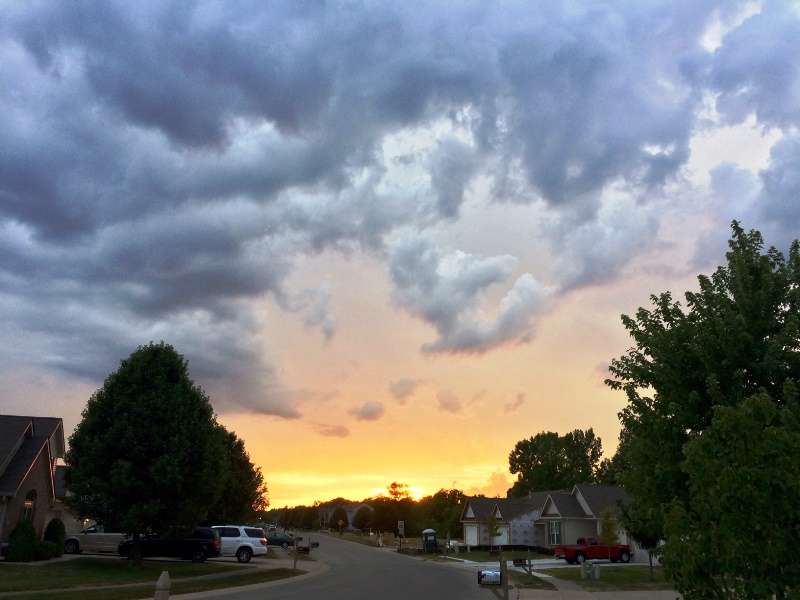
Had a few really nice sunsets in this area when the heat wave moved through last week thanks to a lot of late afternoon popup thunderstorms. Caught this pic one evening while walking the dog.
-
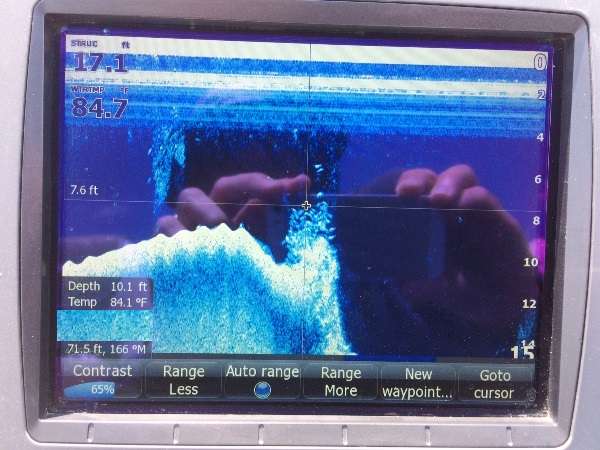
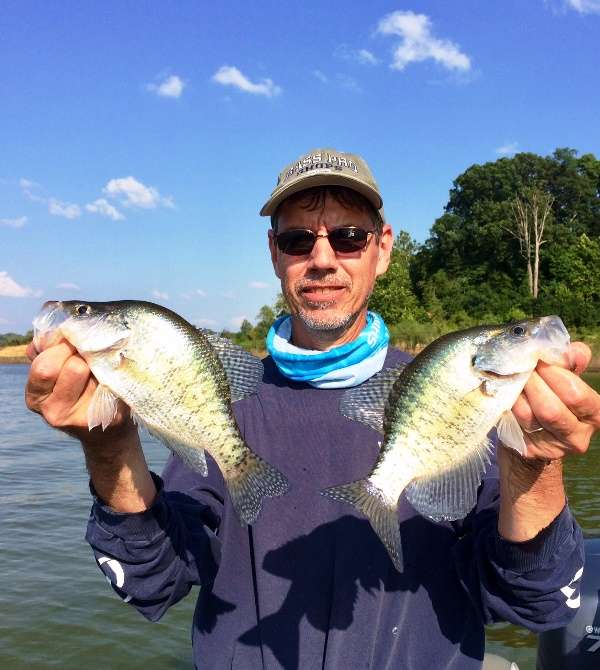
Switched gears on Saturday after chasing bass all afternooon Friday. Hit a 1400 acre reservoir for some crappie. Bite was a little slow with the heat and the boat traffic, and the late start to the day that we got. Still found a couple good areas and managed a nice limit of fish.
-
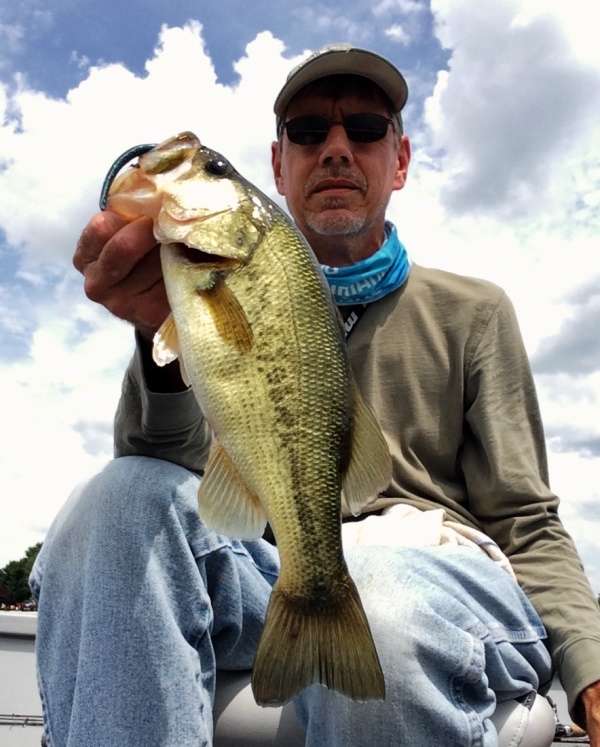
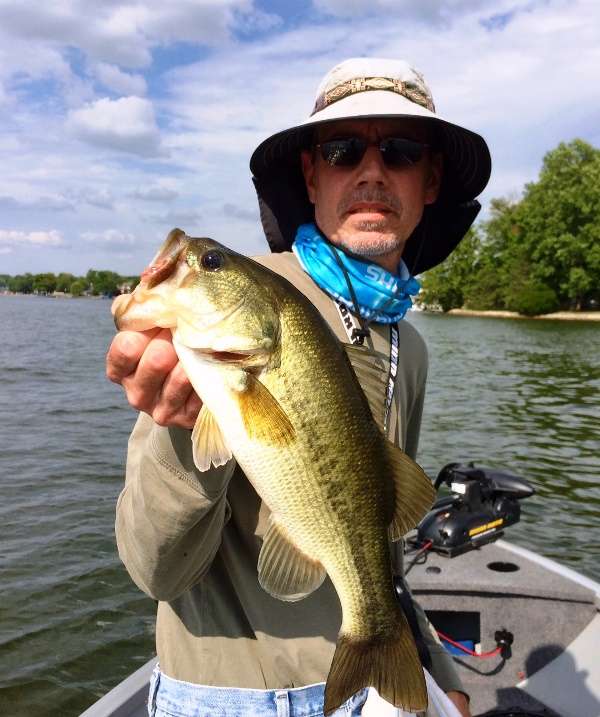
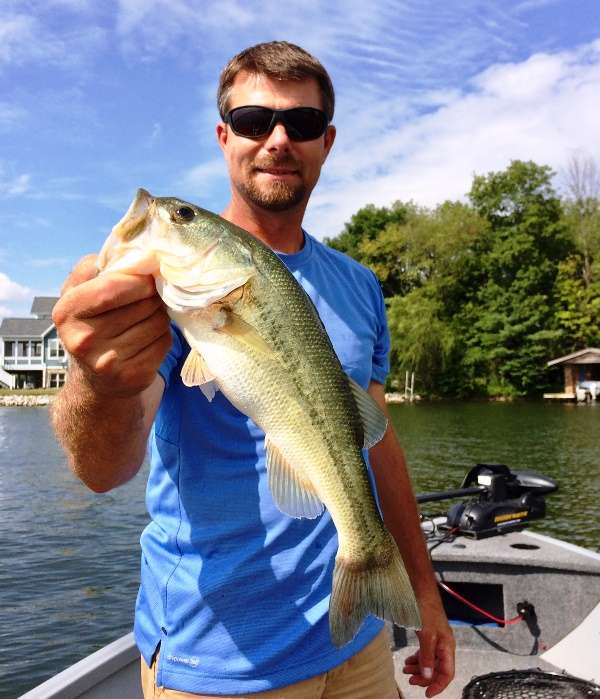
Finally got the boat out after a couple month hiatus on a 400 ac. community reservoir. Put the finesse gear to work in some hot weather and high boat traffic to land around a dozen keepers. Slider came through again for me, along with a Ned rig for my buddy.
-
On my waters, I’ll take Junebug over GP any day, but GP variations are a good backup
-
Sufix 832 Neon Lime or Original PP in yellow...and like Brad mentioned, nothing over 10lb., preferably lighter.
-
Just one lure for each? I think I can catch all 4 with just 3 baits...maybe 2-1/2 if you count the first two as somewhat of an overlap - lol 1. Ned Rig 2. Jighead and 3” fluke style bait 3. Mepps Musky Killer in-line 4. Mepps Musky Killer in-line
-
Same. Have my preferences, but when faced with a potential fish catching option, I’ll take catching something over nothing most days. Drove over a tiny creek the other day I fished as a kid for creek chubs and thought I really need to try that again some 35 years later to see if they’re still in there - lol
-
I use ML for everything small and finesse from crappie to bass gear. As long as you pair the reel and line properly, you won’t have any issues.
-
And then there are channel locks, thumb bars and anti-reverse switches for some of us Whatever works for you. I actually vary between baits and setups as to which way I go on my settings...but I've never used my thumb to lock down on a hookset.
-
No milfoil or coontail in any of these ponds, and very limited Chara with the one exception. Most is with shoreline related algae clumps or some type of submerged pondweed that only grows to the edge of the shoreline drop. Once past that, there is almost nothing beyond, and I rarely catch fish out there, to the degree I no longer even throw out far. Get 20’ outside the weedline and you’ve gone far enough. Most of the activity is from the deep weed-edge in.
-
So that was a question I was going to pose to you. After a little more experimenting, what I believe is happening is a diel movement. Right at dark or just after, the fish come poking into the shallows and patrol the small stretch of water between the shoreline and the inside weedline. Max depth is 2’ in these areas, but even big fish (rel. speaking for pond fish) are doing this...and in good numbers (double or triple day time catch rate). Slim chance they are there earlier, but I doubt it because I don’t see them, I don’t spook them and I don’t catch them (again, random exceptions). Thoughts? Any on water observations on your end to concur with? It has repeated consistently now on 2 separate ponds. Outside this evening window, most everything is deep weedline related except for the treated ponds that have little to no weedgrowth.
-
Two options I’ve played with. One, give the fish immediate slack line when you know he’s heading up to jump. It’s the line pressure keeping his head pointed up as you fight him that is partly responsible. The other option is to pull on him hard just as he’s breaking to roll him over before he can jump. Each option has its pluses and minuses, and nothing works all the time, but both these have worked for me at times.
-
It really doesn’t matter how you approach it. Bring as much crap as you want (rods, reels, baits) or just an outfit or two and a handful of baits. There are guys that catch plenty with both approaches. From the bank, I go as simple and as light as possible. From a boat, I’ll bring more stuff for what I expect the conditions to be and live with it. Besides, my boat isn’t close to being big enough to hold all the tackle I own - barely all fits in the garage as it is ?
-
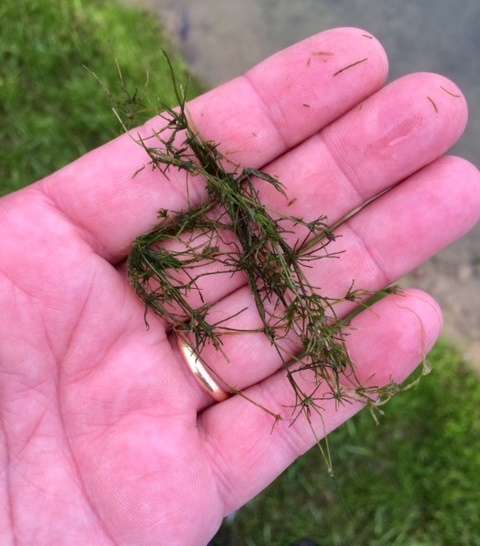
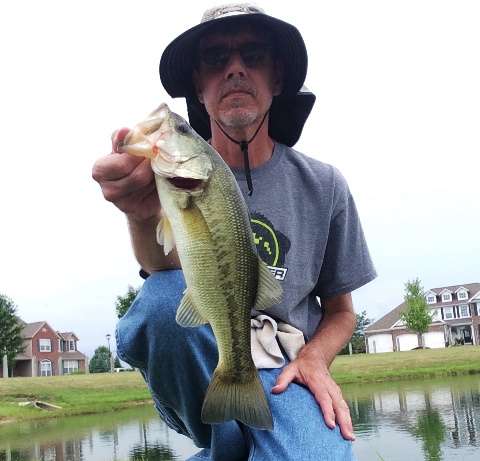
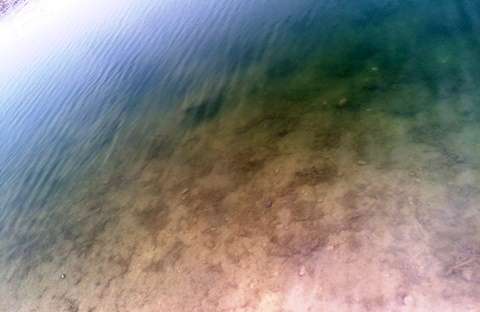
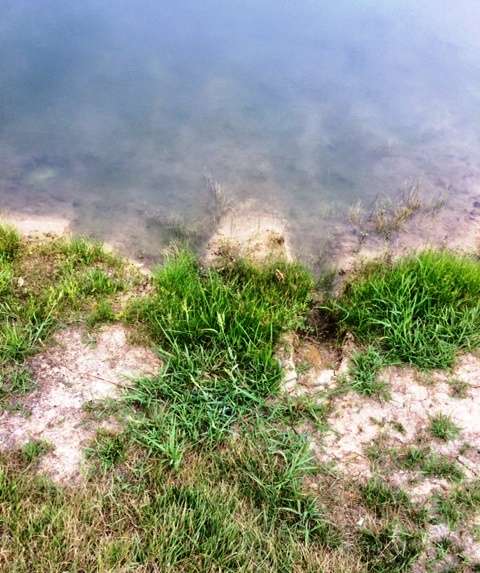
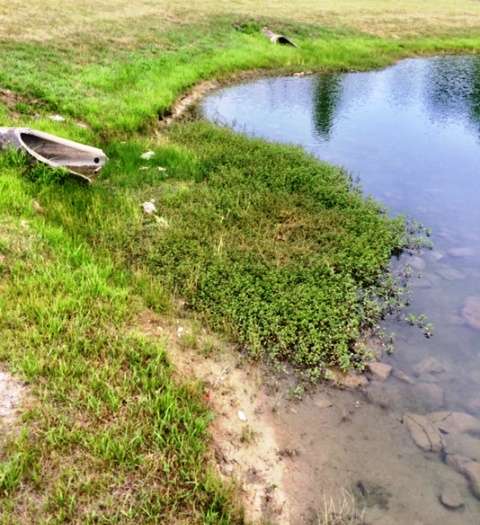
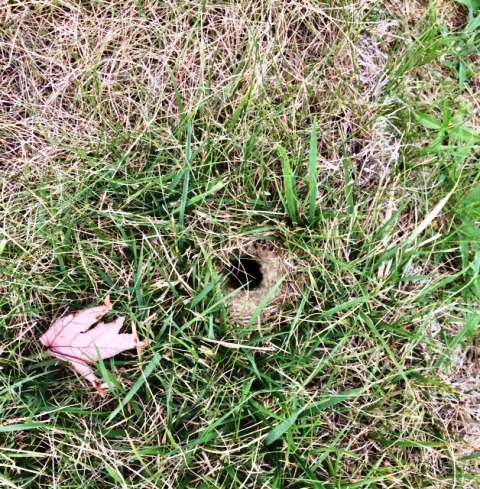
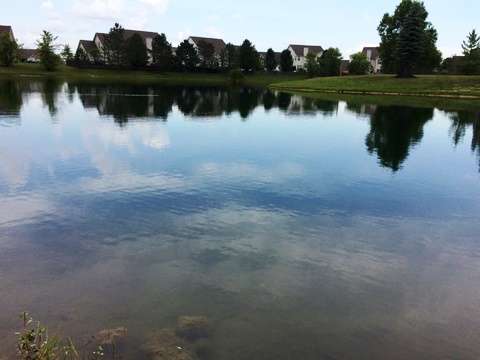
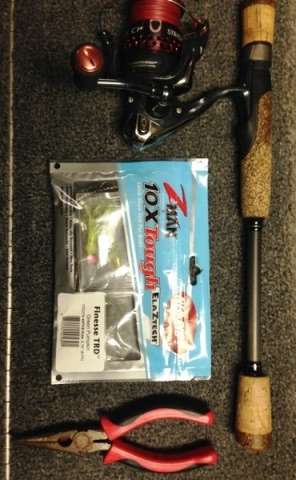
Thought I might do a little something different in this report. I really enjoy fishing new bodies of water, and got to spend a couple hours walking the bank at a little 1.25 acre pond I had never fished before. Here's a few pics of some of the things I look for to help me understand what is going on in a body of water, and putting the pieces of the puzzle together quick (hopefully). BTW, I ended up catching 15 bass on this initial trip. Nothing big yet, but I now have a much better feel for this place. First, the pond and my view when I walked up to it. About 1.25 acres, a little bluish in color suggesting a recent weed treatment. I didn't take a water temp, but the pond I was at yesterday had 91 degree surface temps, so well into summer and some of the highest temps we'll see all year. Today, we were again running between 90-94 degrees outside, but the clouds were building from storms to the west, and a breeze actually picked up. The first thing you'll notice is no weeds appearing in the shallows, at least nothing obvious. I had seen some patches from driving past this pond a couple weeks back, but there didn't appear to be any left when I arrived. I was soon to figure out why, though the bluish water color had already pretty much gave it away. Always look for tire marks indented into the bank, usually at a spot nearest the street. This is a sure sign of a pond that has been treated, and that observation quickly answered the question why it seemed the weeds were gone that I had previously seen, and why the water had the bluish tint. Other things you want to pay attention to are everything you see in the shallows. Look for bluegills or other critters which are usually tight along the shorelines. You might see cruising bass, invertebrates, or who knows what else. Also pay attention to bottom conditons and slope of the bank. Walking around the pond, I quickly found the remnants of the bluegill spawning areas. These are always critical to know where they are located. For one, they will always been on slightly firmer bottom, usually sand or gravel. For another, they also tend to be on a little flats that project into the pond a ways. Yet a third reason is because bass will invariably cruise these areas even well after bluegill have left the nests, but especially more so when they are hanging in the area. I did catch two of the 15 bass from these type areas, one on the deep edge and another that was cruising through the nests. Drains are another thing you always want to pay attention to. They are usually the primary source of fresh water, and almost always hold bass in ponds. Another little key is that they will also almost always form either a hole or a flat. In this pic, and in this pond, all the drains formed flats with emergent weedgrowth. This is because of the incoming silt load. Still, these little projections act as ponts or bars, and give the shallow shoreline related bass something different to relate to. More commonly, drains will create little holes or depressions from the force of the incoming water after storms. These areas can be killer for bass, one of the most regularly producing spots on a pond, especially right after a storm. Always well worth paying attention to. A little more walking revealed the presence of crawdad holes. Often these will have "chimneys" attached to them, though this one was located next to the community playground, and kids like to smash and stomp little chimneys, so they aren't always present. If you locate these though, there's a decent chance your pond has some crawdads in it from time to time for the bass to feed on. Another thing I didn't see in this pond but I have in many others in the area is greenish clams or mussels. These guys are a sign of clean water and more firmer bottom substrate. Usually you'll know about them because ponds that have the mussels also almost always have minks or otters. You'll find areas around the pond where all the shells get left along the bank, as these are the spots the critters take the mussels to open them up and feed on them, leaving the shells behind. Not seeing any in this pond suggests that the bottom might be a little less firmer than in the other ponds I frequent. As for the fishing, covering the first half of the pond and fishing shallow produced just one 6" bass. I didn't see any bass cruising, and didn't miss any bites. I quickly found out though that there were quit a few weeds out a little deeper than what you could see. Water clarity was probably a foot and a half or two, and once my baits got out a ways, I was constantly pulling in this: This is a type of chara or muskgrass, also called skunk weed in some places. It grows in short clumps along the bottom, usually on firmer bottom types, and has a very musky odor to it, especially when you crush it or rub it between your fingers. I started making longer casts looking for deeper water, as every short cast that went to the bottom brought in a little clump of this stuff, and what I found was once you got a bait out there a ways, you didn't hit any more chara. Knowing it also grows on firmer bottom, I started throwing as far as I could, well beyond the chara, and working my baits back along the bottom slowly. Suddenly I started catching fish. So I found the bass using the deep weedline at the end of the chara. About half of my fish came out off this deep weededge, and the other half came right at or just inside the weedline. The nice thing about chara is that it is pretty crisp, so when my bait finally worked its way into the weedline, I could often tighten down and snap the bait free from the grass. This often elicited a strike from a bass, and accounted for the other half of the bass landed. In total, I picked off one cruiser sight fishing the bluegill bedding areas, 1 at the deep edge of a bedding area, a little runt just up in the shallows, and another holding outside a drain. The other 11 all came from the deep weededge as I just described. None of the bass were overly fat, and none of them were over 2 pounds. A couple looked a little thin like they might not have enough food. The above factors are usually a sign of an abundant bass population. When this happens, the bluegill are often rather large, but I didn't see anything too big cruising the shallows, so I'll need another trip to tease out a little more of the dynamics in this pond. For tackle, as always, I kept it simple for this first trip. It's always a combination of observation as much as it is catching, and I can usually manage to land enough fish with a small selection of plastics and a spinning rod to get a good idea of how I need to fish the pond in the future. Obviously, if I had walked up to giant weed or algae mats, I'd bring different gear the next time out, but those type conditions are usually rare around here since so many of these places are controlled by HOAs. Looking forward to getting back out to this one and seeing if I can find a few bigger bass next time. Still, 15 bass in just a couple hours is a good afternoon in my book, especially since this one is just one addition over from me and within easy walking distance. Hopefully this gives you a little insight into some of the things to consider when banking it at your local waters.
-
Stanley (Vibrashaft) made the best bluegill colored skirt I ever saw. Guess you might call it "bream." Honestly not sure what they called it, but between that and their baby bass color, those two would cover me for the entire summer around here.
-
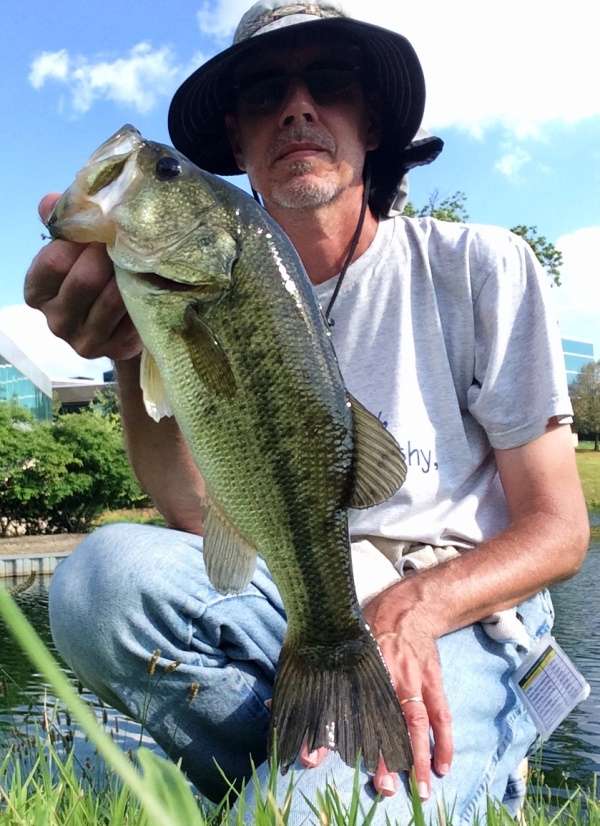
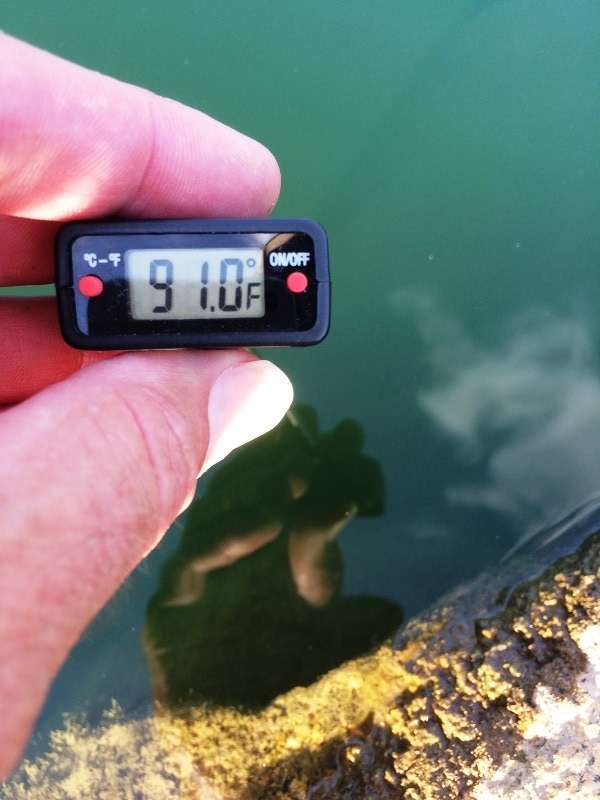
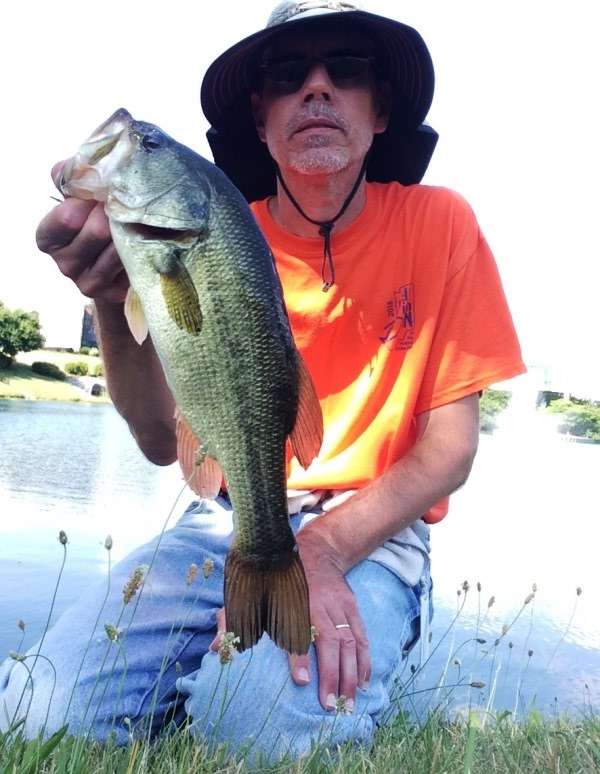
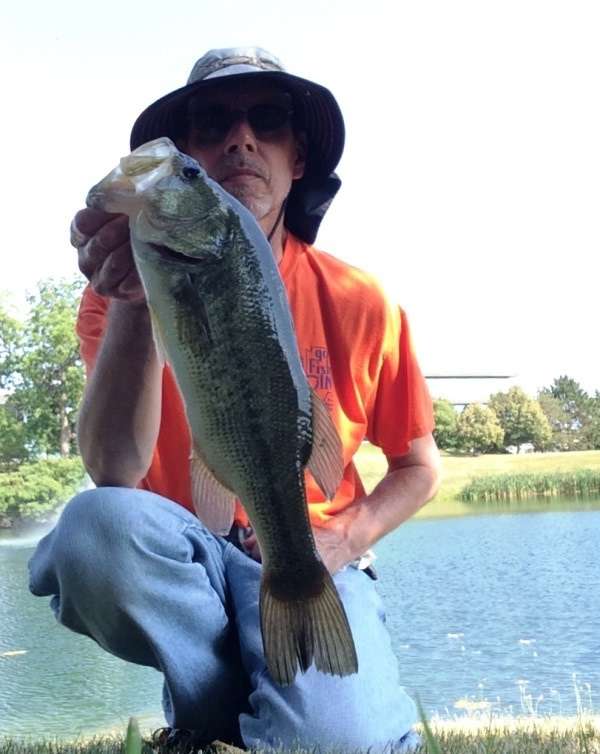
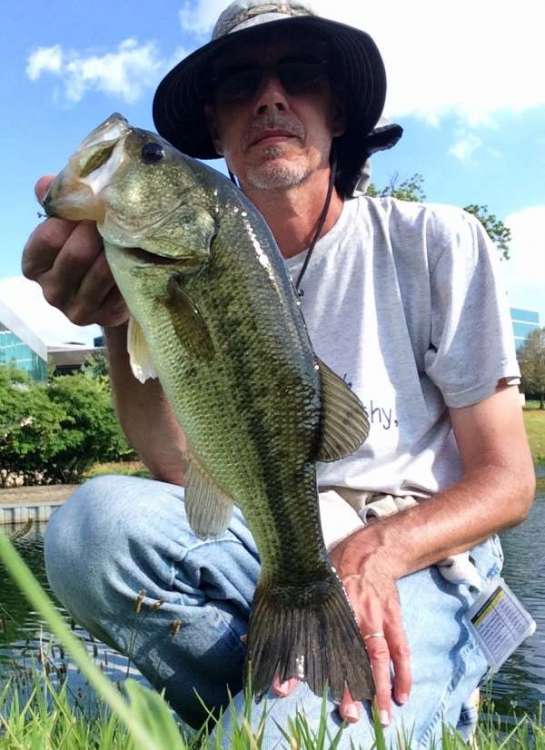
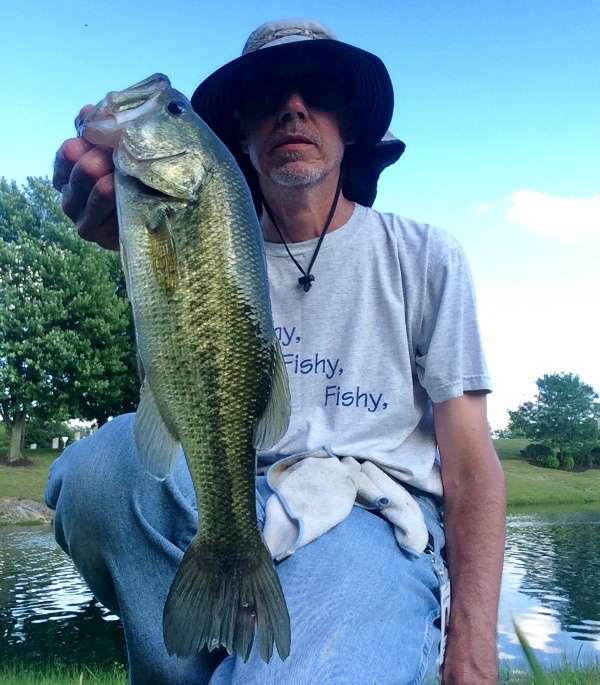
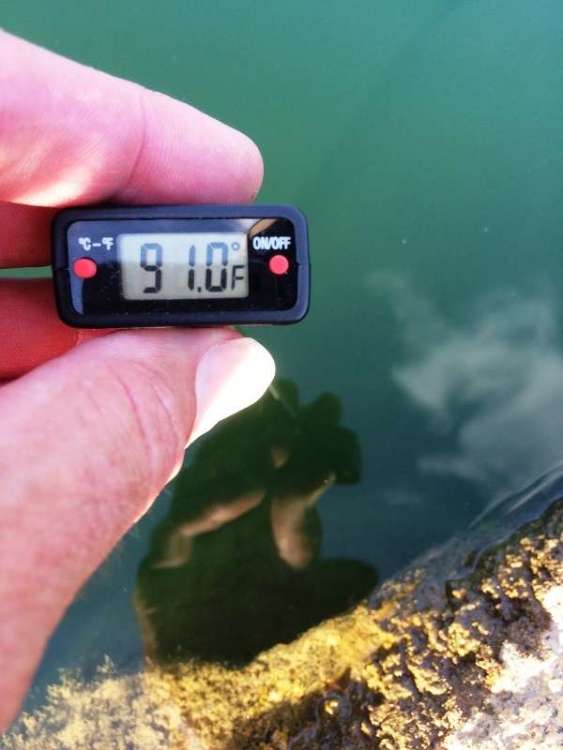
...the weather, of course. High of 95 today with a 107 deg. heat index. Surface temp at the 4 acre lake I fished was 91 degrees. Still managed an even 40 bass from the bank under partly cloudy skies with a nice SW breeze. First dozen on a wacky jighead setup, the rest on Sliders.
-
Braid: Original PP, 832 Fluoro: Seaguar (InvizX, Tatsu), Toray
-
Looks like a Tru-Turn hook if I had to guess, albeit a bit rusty. Lots of models available, some specifically for bass. Designed to rotate in a fishes mouth for better hookups. You can Texas-rig with larger sized ones just like any other worm hook.
-
Had a buddy that just got back from two weeks of walleye fishing on Vermilion (MN) say the same thing. Locals up there aren't fond of muskie stockings either
-
Good point - lots of studies show the majority of fingerlings stocked in a lake from a single access point like a truck often end up being consumed in the first 6-24 hours by existing predators.
-
Sucks, but I really just want to know what bait he was using to land 32 bass ? I need to buy a couple... jk - you did good.
-
Studies show 85-95% survival rate, though some agencies have claimed 99% - all pretty good odds, either way.
-
Keep in mind, they frequently stock fish by dropping them from airplanes. I think one slipping from your hand now and then will be fine ?
-
Save your money and “invest” it in something else that will give you a better return on your $$
-