
Team9nine
Super User
-
Joined
-
Last visited
Everything posted by Team9nine
-
It’s because it is not 12# line...?
-
I spent a lot of time one fall/winter comparing braid side by side on the water with hair jigs; leaders, colors, etc., and pretty much determined that it generally made little difference in numbers and size of catch most of the time. That said, I still use a leader about 85-90% of the time for a wide variety of reasons. This is all with spinning though, as I feel braid has very few applications where it’s needed on a bait-caster.
-
Good question. I spend as much time in a boat chasing crappie as I do bass, so I’ll bring along one of the sticks with the new line and test it out next time I go. Gut feeling is if you like 1/8 oz or larger baits, it will probably work fine. I use primarily micro-braid for crappie fishing, 3 and 5 pound tests. SS112 on TW website lists 10lb as lightest available. If you ordered that, I’d have to believe it would work fine. The line has 4 Esther monos tied in with the 4 PE filaments. I spent a year and a half testing Nanofil for bass and crappie, but ultimately had to walk away. Would be hard to match its limpness, but as you mentioned, there are other issues with this type line (Nano, Gliss, etc). I’ll report back when I try the new line on crappie.
-
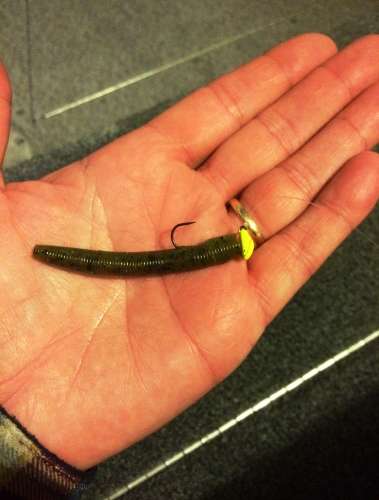
Made another quick trip from the bank this evening to throw the new line, this time on an outfit that is a more modern reel, a Lews Mach I Speed Spool (spinning). I also had this paired with a true Medium powered rod, which was good as I was throwing a much lighter setup tonight - a 3" Stik-O on a 1/16 oz jighead with a #4 hook. Same 14# YGK SS 112 line and 8# leader. Good news - one trip around the pond tonight, just over an hours worth of fishing, and not a single hint of a wind knot. Everything else pretty much still applies; great casting, quiet and smooth through the guides, very limp and manageable line, easy to see. I even got a sense for the sinking ability of the line with this smaller bait, and it certainly seems like it does help. Still the same great sensitivity. Overall, I'm impressed so far. Even managed to land a dozen bass to help test everything out I plan on continuing to throw this line quite a bit, so we'll see what the long term assessment is...how well it holds up; how it handles line twist; and other small things that can only be determined with more use.
-
VanBibber is separate and private, but Glenn Flint is public. Been taking 12-13 pounds to win out there the past month or so, but 15-18 pound sacks were winning in the spring. Has some big bass in it if you hit it right. Bite gets better once the water cools down in fall. Usually stained water, lots of timber. The entire arm where you launch is idle zone. You have to idle in the creeks too because of so much standing timber. Easy to ding a prop if you’re not careful.
-
I might do that. No issues though - I even use FG on my crappie setups with 3# braid to 5# FC leaders. Got it all down pretty good, finally. This was an older, discontinued Cabela’s Fish Eagle reel, so similar lip style to your older Shinano, I’d bet. I even slightly underspooled which I normally don’t do.
-
Went with my standard 8# leader and it worked just fine. Did have it on my M St. Croix which I felt was borderline overpowered (too much rod).
-
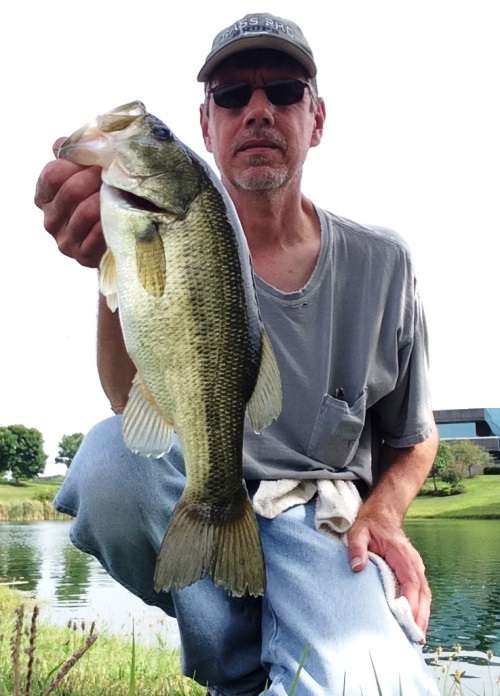
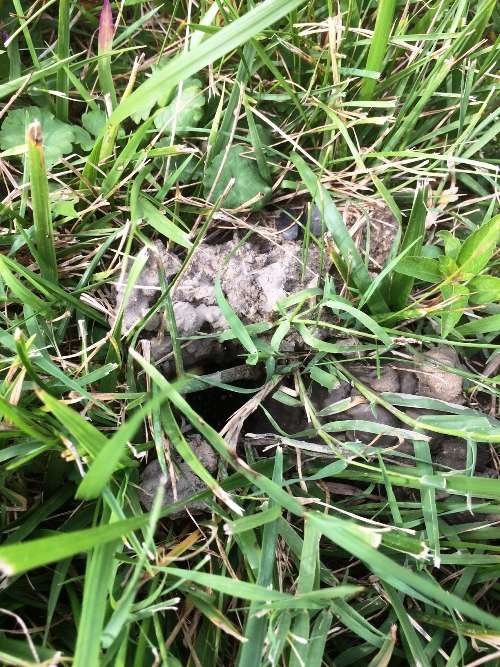
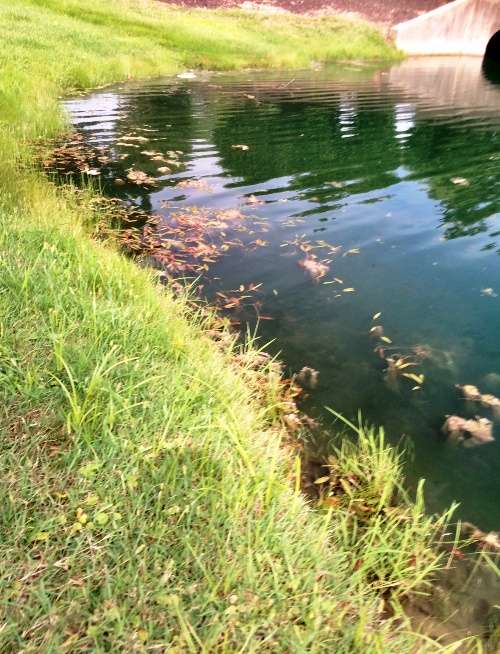
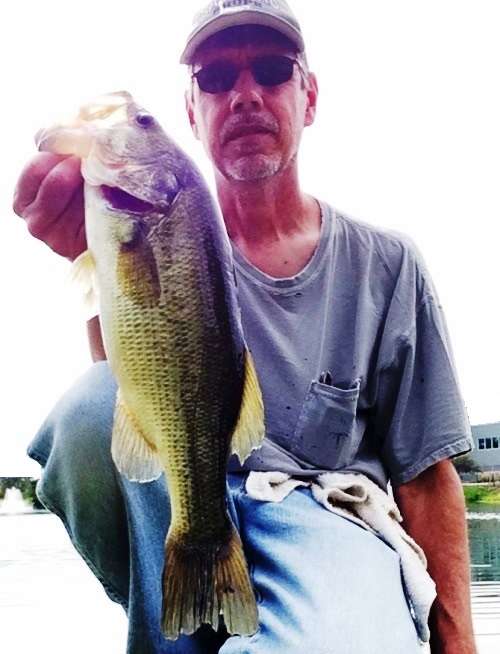
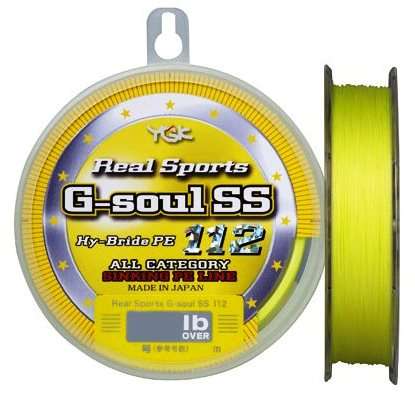
Made a short trip to a 4.5 acre lake this afternoon chasing green fish. When I walked up to the bank, I saw a lot of crawdad holes. Additionally, the bottom looked mostly sandy/clay with some nice scattered weed growth that looked to end fairly close to shore. I figured the active bass would likely be within 20 ft of the weedline, so I tied on a 3/32-oz mushroom head jig and tipped it with a green-pumpkin/red AirRig. It was a good call, as the area outside the weeds was clean, and I slowly worked my way along the bank, pitching outside the weed edge to deeper water and working the bait back to the weedline. Managed 16 bass doing that at the halfway point. Instead of going the rest of the way around the lake, I doubled back on the half I had already worked, primarily because the light breeze that existed was blowing toward and along that shore I had just worked, usually a good thing in small bodies of water. Switched baits up to a finesse worm to work into the weeds and moss a little more on the way back, and scored 20 more bass doing that for a total of 36 to hand. Not a bad day for about 2.5 hours of work I just had the one spinning rod with today (like always), and had recently spooled on a new braid I wanted to try. Yoz-Ami G-soul SS 112. It is an 8 carrier braid, with 4 strands of typical superline along with 4 strands of esther PE to give it a density of 1.12, heavier than water and as such, a sinking braid. The positives noted on this first trip were I like the color, it casts great (above average), seems strong (I was using 14 lb. test) and holds an FG knot well. It also had all the sensitivity you'd expect from a braid, actually better than some brands because it is so limp, thin and manageable. Very quiet going through the guides. Was hard to determine the sinking aspect, so I'll have to play more with that. One more positive...it has the best little line spooling mechanism built into it that I've come across. Very compact and butter smooth. I even saved it for possibly reloading and reusing somewhere down the road. The only negative was that I did get 4 small wind knots, 3 of which I was able to get out relatively easily, but one that locked down about 20 ft up the line. I was able to simply snip the loops off and keep fishing with the full length, but a little surprised to have that many "issues" on the first trip. Split the 150 m spool in half and put it on two reels, so will be interesting to see how it performs on the other reel, a more modern reel with different spool design. I guess one more negative was the cost, about 75% more than what my usual Power Pro and 832 runs. After one trip though, I'd say certainly more positives than negatives. I'll spend more time with it and update again down the road.
-
Most braid twist, or at least the worst of it, gets restricted to the last lengths of line. Simply prop your rod/reel and open the bail and pull off line until you see the twist mostly clear. It's usually pretty obvious, and almost always within the first 10-20 ft. Then close the bail, and simply use your fingers squeezed on the line to slide most of the twist out of it by walking it off or pulling it through your fingers. You may need to do this a couple times. You can also literally twist/spin the line from the very end in the direction opposite that it twisted to return it to normal. There will usually be a small section (2-3') at the end when done that will need to be cut off. I do this as needed all year long and go years with the same braided line spooled on my reels.
-
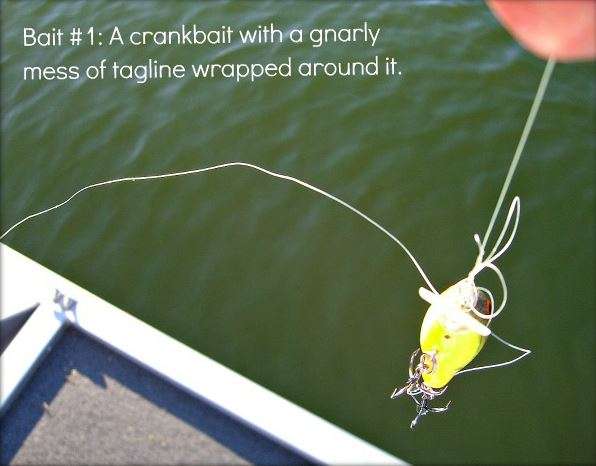
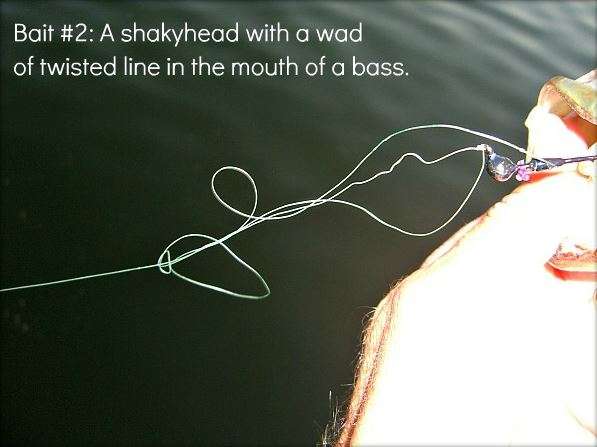
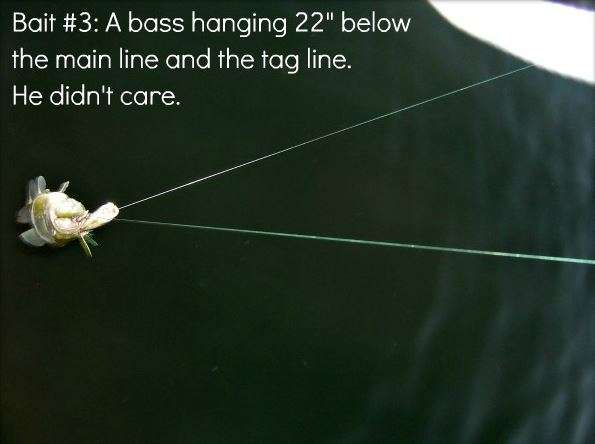
I like playing around on the margins because I feel like that's where you learn things and see differences. The above quote was from a fairly recent G. Swindle video, and I saw it about the same time that I found some of my pics from a tag line experiment I did out on the water. This was a 400 acre community reservoir that holds weekly bass tournaments, so these fish are not "unpressured." I basically set the rules at one rod/reel/line for all baits used to keep equipment the same. Line was 10# mono clear. I used a Palomar knot to tie on several different baits, but in every case, I overtied considerably, similar to what you would do if setting up a dropshot. In all cases, the minimum length of tag leader line was 20 inches. This leader tag was never trimmed, and I tried not to rearrange it on casts, instead just letting it ball up or wrap around the bait to whatever degree it wanted to, unless it physically impaired the action of the bait. I started with a crankbait because I felt it might be the easiest to catch a bass on doing this since it is considered a reflex type bait and can be fished fast. In each case, and to dispell random chance or luck, I fished the same bait with the long tag end until I caught 3 bass on it, any size. After catching 3 bass, I would remove that bait and try another. This first pic is a shot inbetween bass of the crankbait (Bandit 100) I was throwing with the oversized tag line. It got wrapped up pretty good at times, but I still managed to land 3 bass rather easily despite all that extra line. On to bait two, which I decided to slow down and see if fishing something slower would deter bites due to the extra line floating all around the bait. I tied on a Shakyhead with a Zoom finesse worm and went to casting. After a time and 3 bass later, it wasn't looking like fast or slow made any difference. Again, as you can see in the pic, if the line balled up or tangled, I just kep casting with it. So bait 3 turned out to be a topwater Pop-R. This time a 22 inch tag line left streaming behind the bait while I popped and chugged the topwater along the shoreline. And, just like the previous couple baits, I was able to manage 3 fish landed on the mega tagline. Of course, none of this proves anything other than at times, or with certain fish, line likely plays little if any role in deterring bites if the bait is presented correctly or the fish is hungry enough. It does give one a lot of confidence though after going through this type of on-the-water experiemnt to realize that you don't have to do everything "right" or "perfect" to catch bass.
-
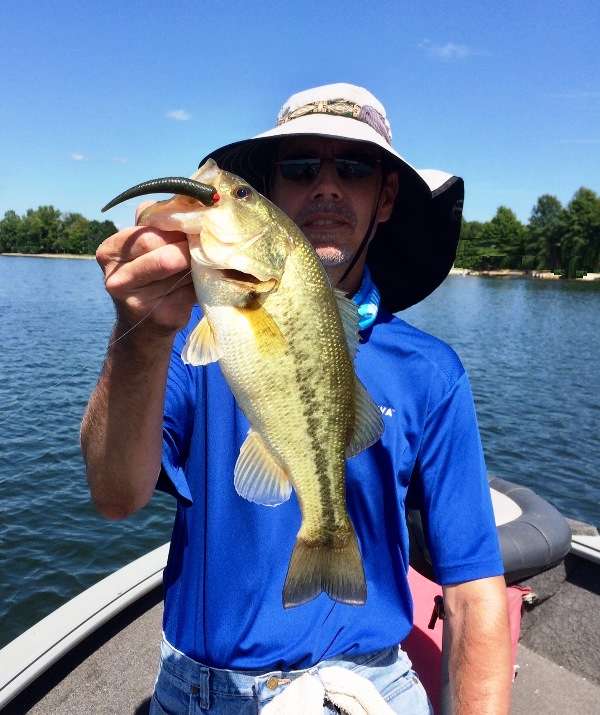
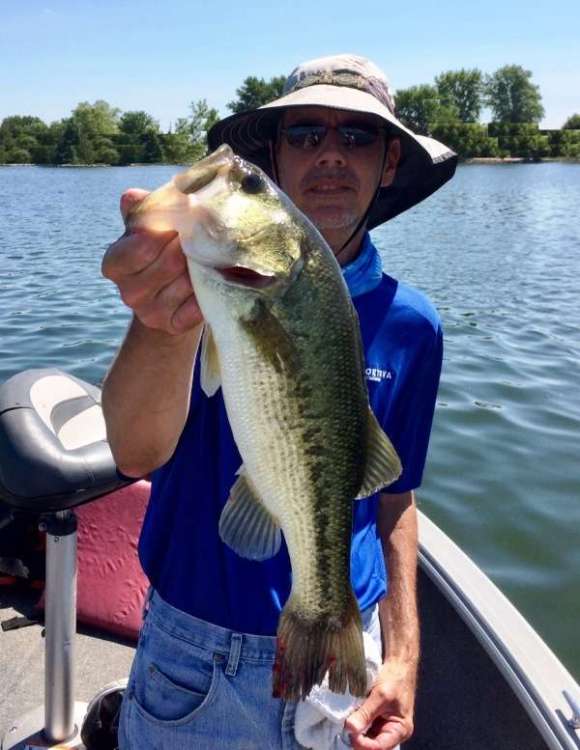
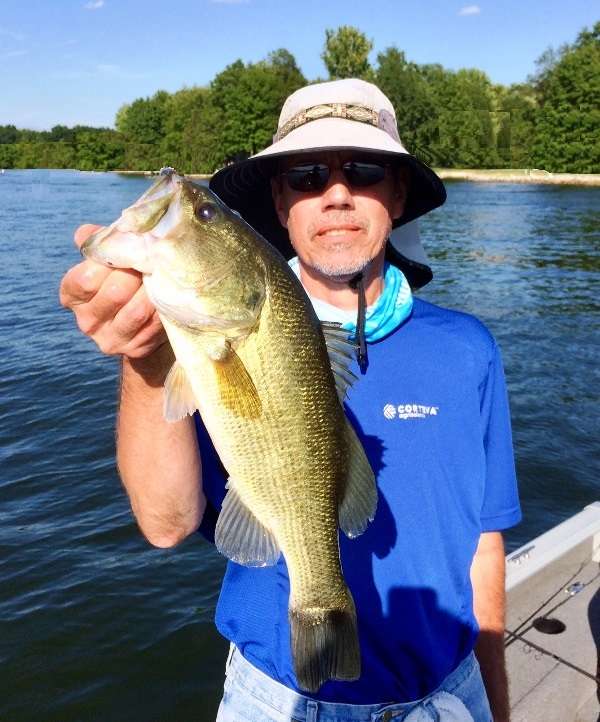
Out chasing crappie today, which we quickly figured out were hanging around shad schools now roaming much of the lake. Spotted several larger arches under some of the schools and was able to drop Ned down on them when I did and score some green.
-
You can bend the wires a little bit, but you won’t be able to completely correct the alignment in most cases, and might have speed control issues afterwards (rolling). You’ll likely have to adjust both the lower arm and R-bend tie, and as Tom mentioned, always keeping in mind where the pull and drag forces of the upper arm will end up. Getting the hook and upper arms more or less parallel might be a challenge while still maintaining good running abilities and weedlessness
-
Lots of heavier wire models available now for guys that want to go that route including the Zman ProShroomZ and NedlockZ heads.
-
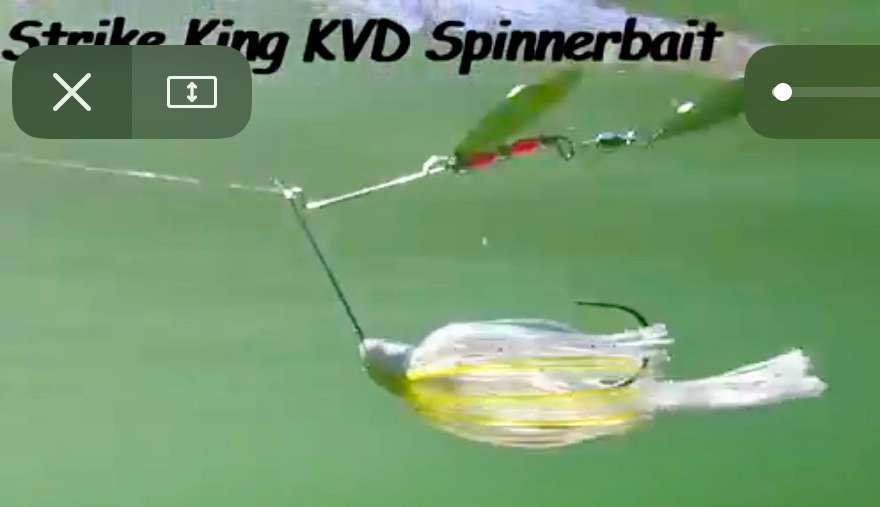
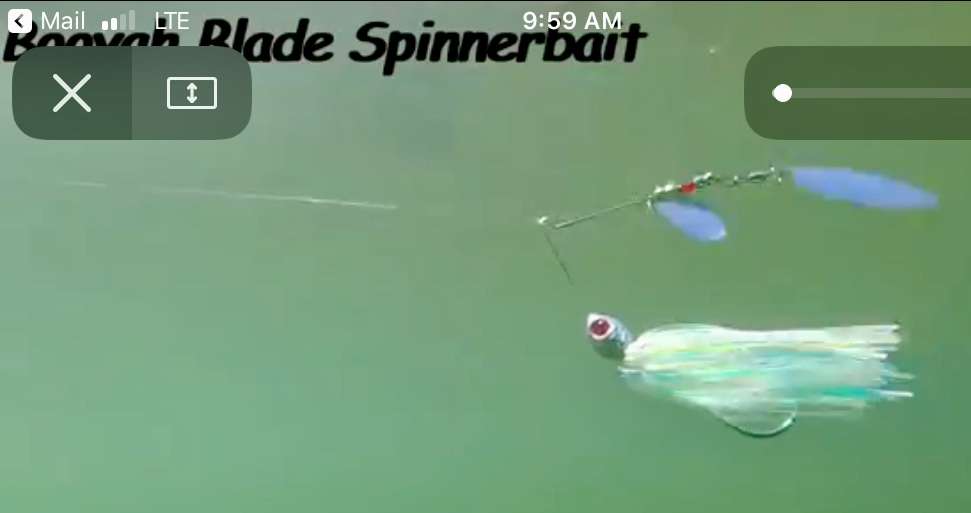
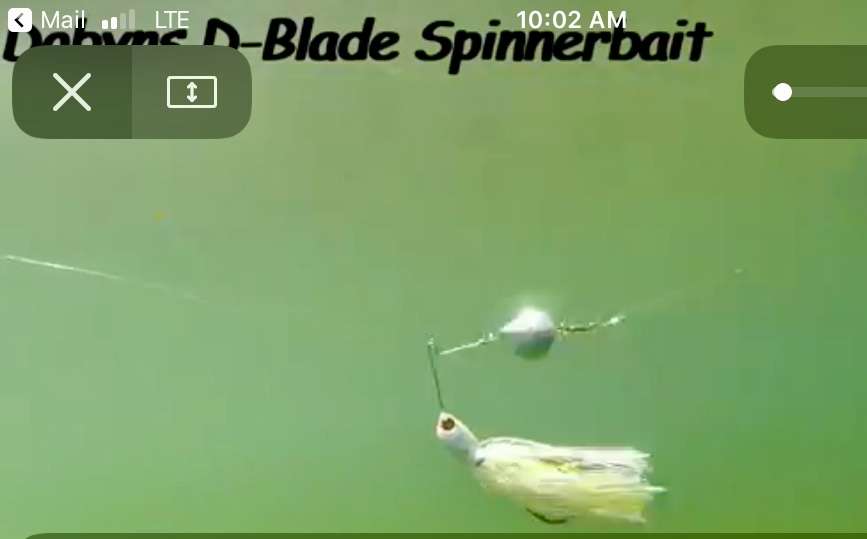
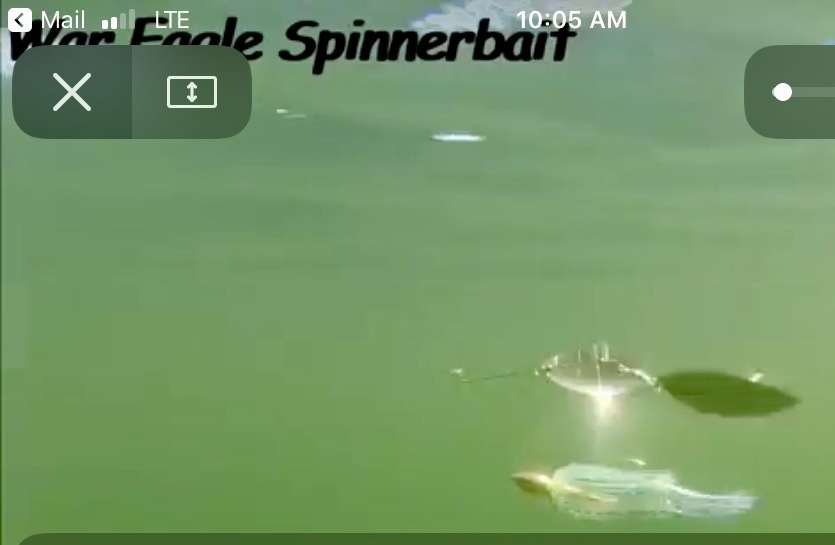
Here’s shots of all 4 baits from the video. Two spinnerbaits run with the hook hanging low, and two don’t. In all 4 cases, you’ll notice the top wire arm is running at nearly identical angles. This is the physics of all spinnerbaits. The difference in the hooks riding below the skirt or not largely comes down to how it is molded in the factory. If you tore the lead off the head to reveal the connection underneath where the wire arm attaches to the hook eye, you’d see the exact reason why this is occurring. Since that connection angle is basically set once it is embedded in the lead head after pouring, you are fairly limited in your ability to adjust to correct for this without risk of ruining the bait. Here again, different bait brands will allow more or less playing around with wire angles depending on design, but your best bet is to simply not purchase spinnerbaits that are going to run this way if it is an issue in your mind. Pretty easy to tell right in the package which ones will and which ones won’t ... simply hold the bait with the top wire at that near parallel to the floor angle (slight incline) and see where the hook ends up.
-
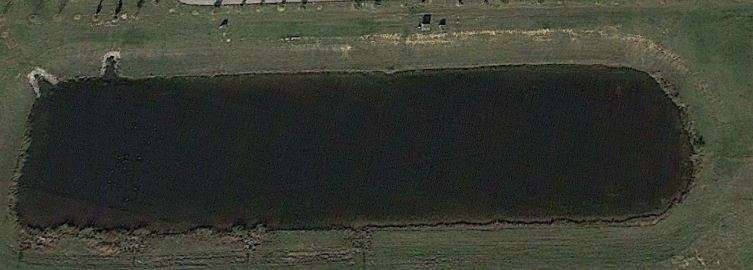
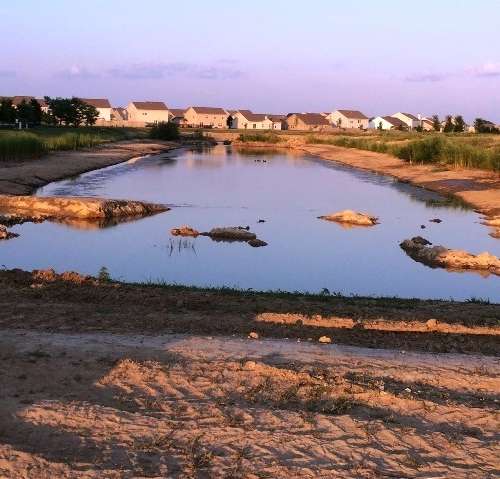
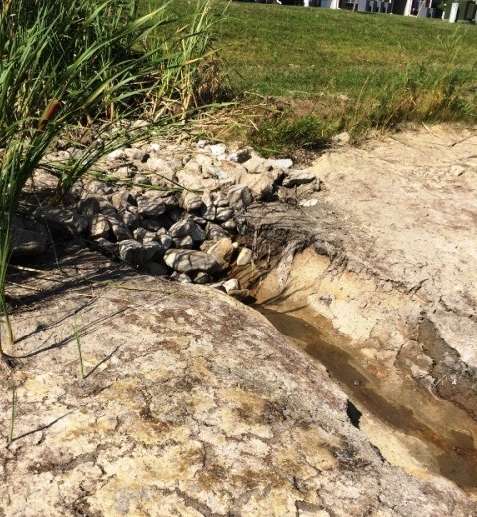
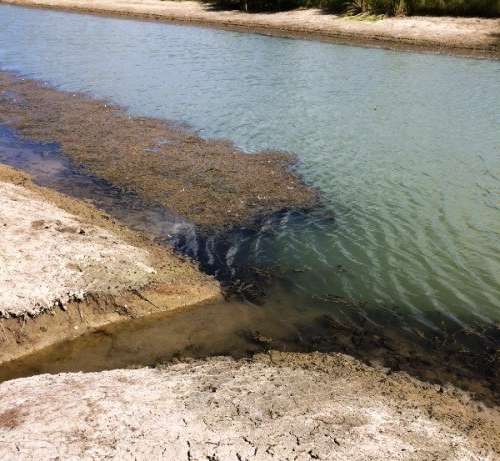
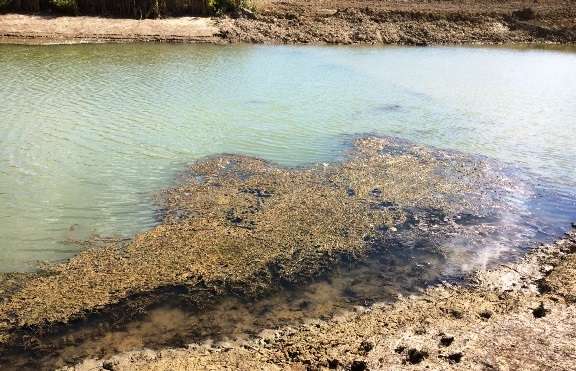
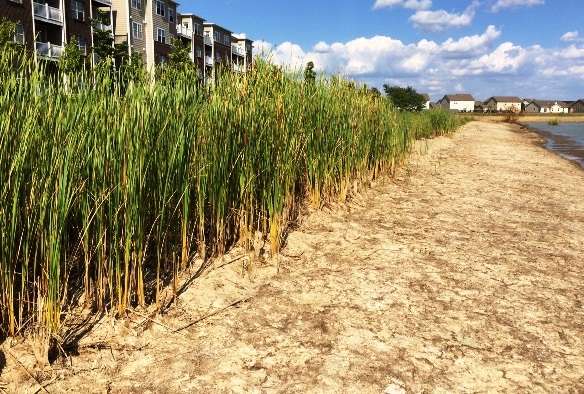
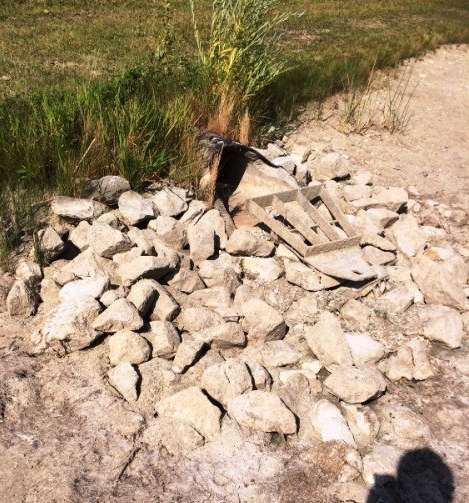
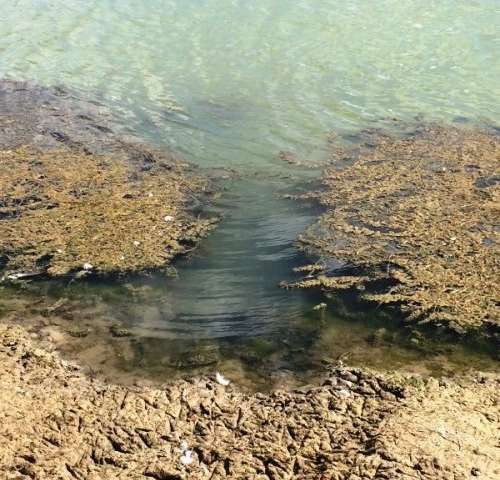
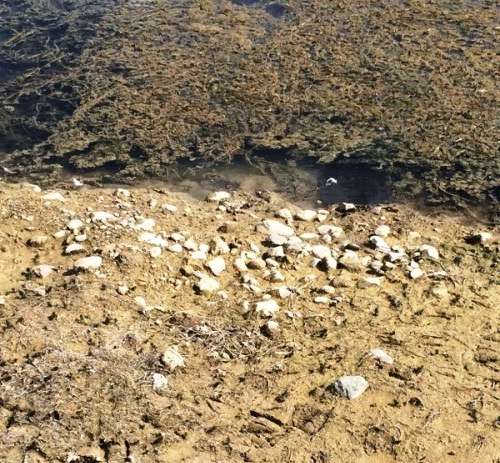
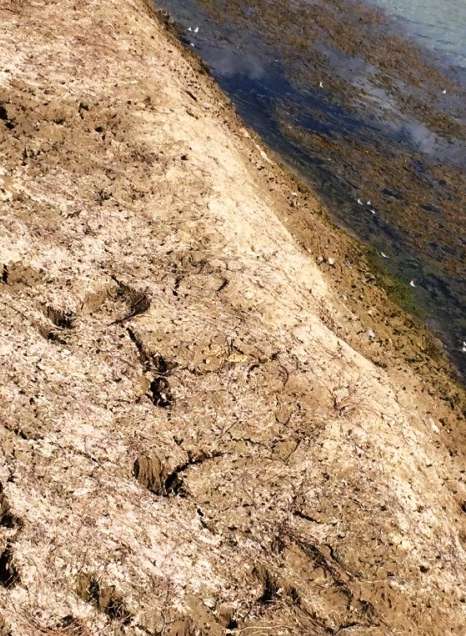
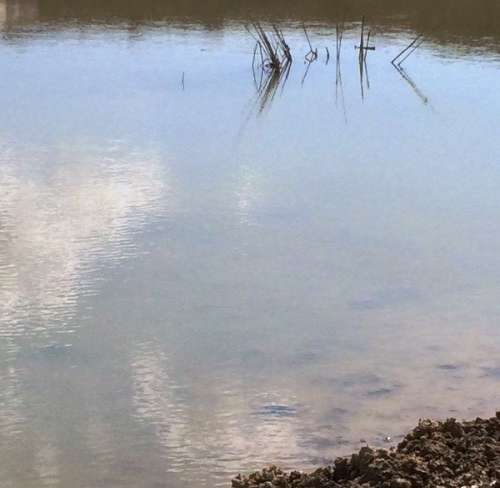
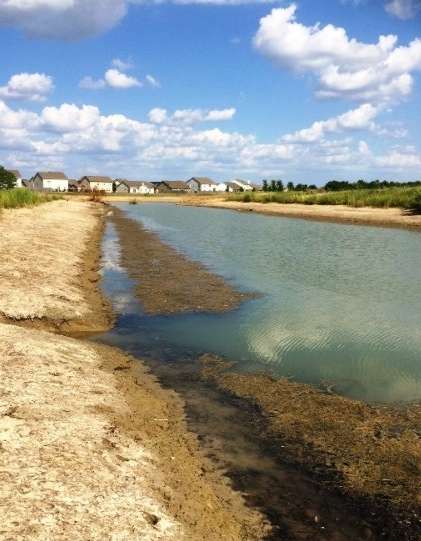
So I was finally able to get all the pictures squeezed down to fit inside the site maximum - LOL. This is another take on fishing small ponds and lakes, what I'm looking for, or at, when trying to decipher the puzzle on these smaller bodies of water. In most cases, I'm limited to bank walking, so it should be helpful for others in a similar situation, or at least I hope so. This post will be similar to my first 'Scoping' post found in the Fishing Reports section, but with a twist. In this case, I've never fished this pond. However, due to construction in the area, they have drained the pond down considerably, giving us a great look at what lies underneath these waters, almost a fish eye perspective on why some areas will hold fish and others won't, or at least hold them better or more consistently than others. First, the pond This is an aerial view of the pond in question; 1.25 acres and almost 500 feet long. Like most small bodies of water built in subdivisions across the country, they almost always start life as a smooth hole in the ground - LOL. Rarely do you ever get a lake designed for fishing. Instead, their sole purpose is to move and hold water, acting as drainage areas and largely regulated by local code. That said, and as you'll see, over time things change, and often for the better in regards to fishing and location. Before I go any further, one thing I'd immediately point out is that this pond basically seems to have 4 corners and 2 drains. Corners almost always concentrate the fish in these small bodies of water, as do drains. If I was heading out to fish this pond, those 4-6 areas (some overlap) would be high on the list of locations I expect to find bass. Now, the pond after they drained it down to start development; This reveals another likely key to this place - the ridges and dirt extensions in the foreground from drainage work being done. Most everything else is flat and sloping, but these little ridges and humps, likely not visible when the water is back up, would be key locations. As it turns out, these weren't in the original build of the pond, but were placed there when they first did some work on the drainage structures after draw down. It appears they will be left in place once the pond is refilled, and will probably become key locations for fish. Now, lets walk around the rest of this pond and take a closer look. This is one of the drains, and a great example of why they can be so good in these small bodies of water. Not only is there the influx of fresh water that can be an attraction all its own, but there is also protective riprap forming a nice change in cover and a break in the cattails. The amount and force of the water has also created a little drain or channel leading out into the pond, another benefit, but it gets even better. Look a little further out in the pond and you see where the drain/channel ends. It basically forms two bars or small points, "structure"!! I would surmise this would be one of the better spots in the pond during normal conditions. Not only are there bars, but it creates a break in the weedgrowth, another key/bonus and a place where the deeper water comes closest to the shoreline. Bass would likely funnel up and down this drain all the time. Speaking of cattails and weeds; Over time, the cattails have spread and multiplied. This will create great shoreline cover the bass, especially in cases of high water, like after heavy rains. It will also provide some shade at certain times of the day, as well as make little nooks and crannies the bass can relate to. While it would be hard to fish some of these areas from the bank effectively, anywhere the cattails get broken up and allow access, you can expect to be another key area for the bass. As for the weeds, this turned out to be milfoil which is a rather rare find in small ponds. Talk about great frogging cover as well as pitching cover. The milfoil, at normal pool, probably has several feet of water under it, more than enough depth to hold bass along its entire length. Looking for breaks, holes and thin spots would be good starting locations for bank bound anglers, though they could be anywhere along the outer weededge. This picture is a good example of where the weeds extend out a little ways into the pond forming a pair of mini points and indents. Again, a potential good spot when trying to key on something a little different than just the long consistent line of grass. These next two pics are the second drain. Again, you have the riprap and fresh water inflow potential, all key locations. You'll notice no erosion channel with this drain, likely meaning it doesn't get near the flow/amount of water that the first drain did. That said, if you look further out into the pond where it meets the grass, you'll see it still creates an opening in the grass, a key spot for the bass to hold or move into the shoreline rocks from. This next spot is small, and the only spot on the pond I found like it. A little harder bottom "rockpile" on the inside edge of the grass. It is likely there is a hole that gets created in the grass at this location, as milfoil usually grows in softer substrate. It could be a good location for consistently holding single fish, and points out the importance of trying to understand every little inch of these smaller bodies of water. This would be easy to overlook and even harder to find at normal pool if you didn't know it was there, but might be the kind of place where you always seem to catch a fish even though you don't see any real reason why. Two ther small things I found while walking the banks. This one is probably hard to tell just from looking at the picture, but it was pretty obvious when walking past. It is a little ridge or high spot running parallel to the bank, about 12'-15' out in front of the cattails and rising about a foot higher than the rest of the bottom. Again, it could be hard to find and decipher from the bank, but a little rise like that next to the deeper water in the middle of the pond could be a great area for fish to hang out at after fronts or when not roaming the shallower cover. This last spot was on one end of the pond where it started to shallow up, and where I couldn't walk out to, but it appeared to be almost fish attractor like. I couldn't tell if it was all small sticks, perhaps added when someone drug something out on the ice over winter and let it sink when the ice melted. Either way, in a featureless body of water, small items like this can be big fish attractors, and just goes to show you that you never really know what might be out in a small body of water. So that concludes this post. I'm hioping to actually sneak out and fish this pond while it is down just to see if there are any bass in it. I have seen a couple people fishing it at normal pool from one of the open ends along the bank, so perhaps that is a good sign. We'll see.
-
I'd say plausible in shallow water per Scott F's comment, but would agree with Tennessee Boy that smaller is better in any type depth situation. As for diameter to density, no difference. The material is the material, and the properties don't change because of size. A large granite rock isn't more dense than a small granite rock, just like a large piece of styrofoam isn't more dense than a smaller piece. Diameter does affect other attributes though like stretch (per a given force) and drag.
-
Main setup: Sufix 832 10# main line to an 8# leader of Tatsu fluoro. As for johnnyblazex, whoever that is - LOL; yes and no. I don't necessarily agree with him on "where you work shaky heads correctly," so naturally different line choices will play into different scenarios and not necessarily fall in line with his thoughts. Slack line sensitivity - yes, fluoro tightline sensitivity - yes, braid ...but I rarely 'drag' and rarely 'shake', so my presentation style doesn't fit with either of his two scenarios. braid vs. fluoro sinking and straightline - it depends on the diameters in question...not as dramatic in most cases as he suggests. I do sometimes use straight fluoro for shaky heads and could see where it might be a better option, but I also can see where braid would have advantages including some not mentioned like hooksetting, especially at long distances. Think you could get by with either just fine depending on how you fish.
-
Worth it...
-
Like most questions, “it depends” seems like the best short answer. In your example, it sounds like the appropriate thing to do. There are lots of scientific studies that now support the idea that between 10-40% weed coverage is close to ideal on most lakes. You can have greater percentages underwater and be fine, but more than 40% surface coverage becomes a nuisance and can also be bad for the fishery in general. The trick is being able to maintain that balance, often not easy on smaller lakes. One of the biggest spraying concerns is around timing and volume. If you kill off too many weeds too quick, that can lead to short term oxygen deprivation, and even fish kills, especially in hot weather conditions. The smaller the lake, the harder this is to manage. In general, I’m not opposed to spraying or treating lakes as long as there is a good management plan in place that only treats problem areas and that leaves some vegetation in place. I’ve fished plenty of smaller lakes over the years that have received constant treatments in one form or another, and that maintained healthy fisheries. By and large, they (spraying/treating) don’t negatively affect the fish population if done properly. Lots of misunderstanding and fear mongering by anglers in this regard. On the other hand, overzealous HOAs and nuking lakes “just because” or because someone wants a swimming pool and not a lake, I am very much opposed to. Fish can and will survive, but maintaining good fisheries in those cases can be a challenge, and probably hurts more lakes from a fisheries standpoint than it helps.
-
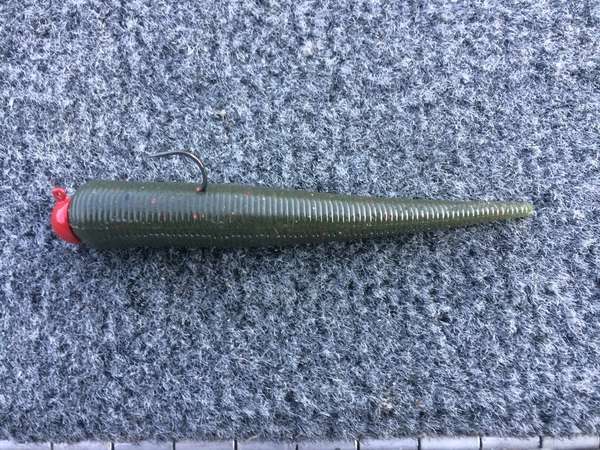
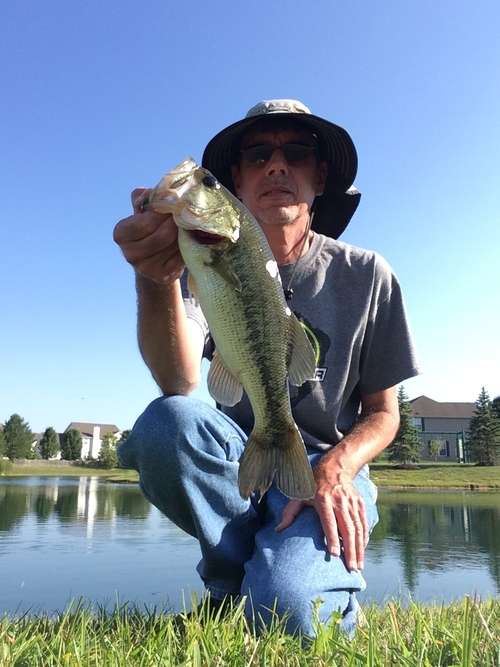
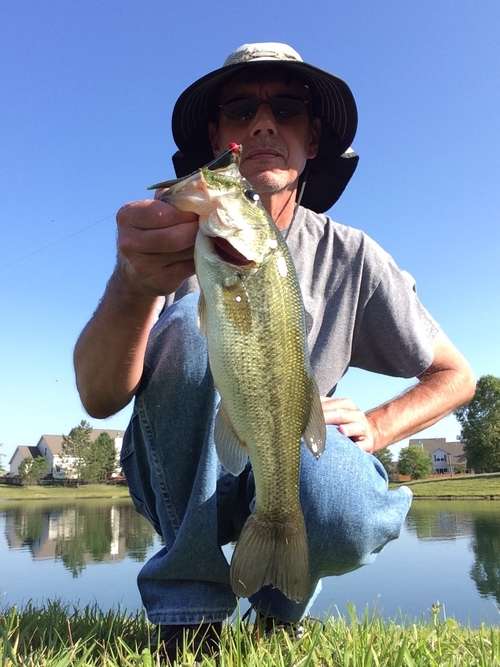
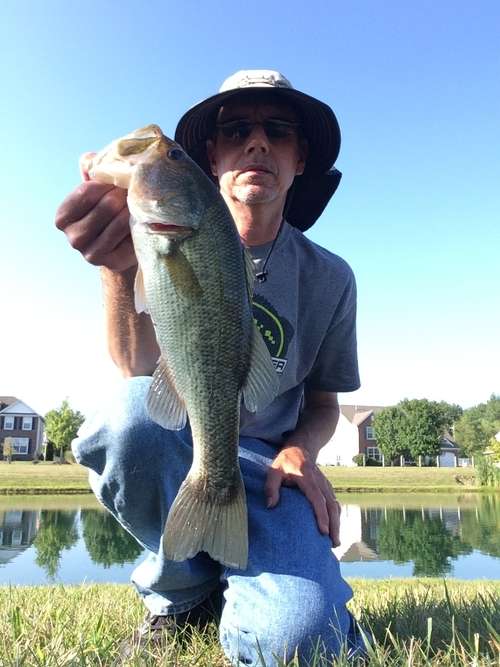
Made a second trip to this pond under hot, calm and sunny conditions to see what was going on. Bass were still deep (relative) on the outside edge of the musk grass and biting ‘Ned.’ Only got an hour in or just over, but picked up 7 bass. Lake looked like it had received another treatment as it was dyed blue. Working on a new in-depth ‘scoping’ post. Hope to have it posted by the weekend. In the meantime, a few of the 7 from the return trip.
-
Always happy to see a few dinks come aboard. It means the bass are successfully spawning and recruiting into the population, which is usually a good thing.
-
This ^^ Most all the spoonpluggers chasing pike and Muskie have gone to fluoro or mono leaders of 50-80# test. Should be easy to find online...or just steal some from your weed trimmer ?
-
No problem going braid to braid. Knot should never come into play if set up properly. A simple uni-uni will do the trick.
-
Berkley Sqwormers...they made numerous versions of the bait including grubs, lizards, paddletails and larger worms. They were discontinued in the 1999-2001 time frame.
-
Not published in any technical journals to my knowledge. The closest, the one referenced all the time in other technical writings was a 1978 piece he wrote with Larry Bottroff that appeard in California Fish & Game. Beyond that, I've got a few newspaper articles on the study from 77/79 era. Still looking though.