



Team9nine
Super User
-
Joined
-
Last visited
Everything posted by Team9nine
-
Never without a set in my boat. Use them all the time.
-
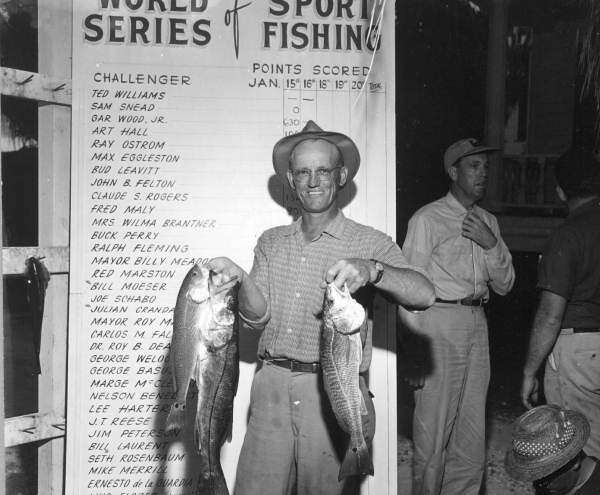
I agree with a lot of the names...Al Lindner, for sure, gets listed at or near the top. I also like Jason Mitchell. Jerry McKinnis was always multi-species. Of course, you know I have to throw in Buck Perry as most don't realize he did saltwater as well as freshwater, including the Great Lakes. Here's a pic from the 1960 World Series of Sport Fishing competition he was involved in that put competitors on both fresh and saltwater environments. I believe those are redfish and snook he's holding from one of the saltwater competiton days. Check out some of the listed competitors on the scoreboard behind him. I believe he was paired with professional golfer Sam Snead during the bass competition day on Lake Okeechobee in that event.
-
No, you called it right the first time - a breakline.
-
Buck Perry’s “theories” have all been scientifically disproven; that his book and information are antiquated and out of date and no longer apply; that Spoonplugging is simply trolling; that you must buy and use Spoonplugs for it to work; and the whole thing was simply a scam to sell baits and make money
-
Nope - not the reel. Something’s wrong with your thumb ? You need to keep a little light pressure over the rotating spool because line is building up slightly and causing the loops. You could also nudge your magnets/brakes/spool control knob up slightly also to get a little better control. Might even swap line out as once it gets some loop sets built up, it often makes casting a little more difficult.
-
Once upon a time, flashers were standard equipment on bass boats, the in-dash units up until the mid 2000s. Lowrance discontinued their models sometime between 2004-2009. I bought a brand new Triton back in 2002 and had in-dash Lowrance flashers front and console. But the early LCRs were becoming popular, and parts for the flasher were getting scarce from what I recall. But guys were used to flashers, and the earliest LCRs were pathetically slow, so guys would run “flasher mode” partly because they were used to it and partly because it was a RTS application. Vexilar was also a player in the digital flasher space, and I also owned one of their in-dash units after I couldn’t replace a Lowrance unit. So part of the story is just a carryover from the glowing neon bulb days The other part, as mentioned, is that flashers have always been “it” when it comes to ice fishing, and so there has always been a market for good digital flashers in the north. I believe Vexilar has long dominated that market, but frugal anglers have converted existing traditional units from off their boats to portable ones out on the ice, and utilized the flasher mode found on most units these days. Back as early as 2003, Humminbird even had special settings on some of their units when utilizing flasher mode along with ice fishing mode.
-
The “shorter” length would be either curved/round end of an oval split ring, no? That’s always the side/end I tie to. Not sure you could tie to the “long” flat side and have it work for any length of time correctly.
-
Have the same deal going on a couple ponds here, the others have been treated down. Still enjoy tossing the light stuff and having to play them around “the donut.” Helps that it’s rare to latch onto anything around the 4lb. mark or better ?
-
You got it...especially since nylon/mono absorbs water and “softens up” with use. Fluoro by and large doesn’t. That retention of stiffness is also why some have issues casting with it, so the same property can be either a benefit or a hindrance depending on the individual. In your case, it’s more of a benefit from the sound of it.
-
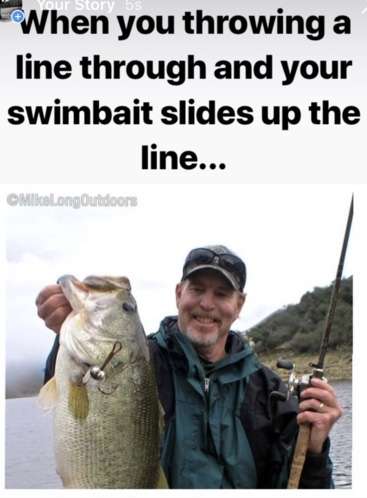
Most often, I believe it’s from the rebound effect of being shot up the line by the weight underneath it from the force of the hookset. The weight moves even further on it’s own when not pegged by a stopper, but there are limits.
-
So when a bass inhales a Texas rig (let’s assume the entire bait for discussion sake), he closes his mouth after inhaling. The entire bait is now inside his mouth under jaw pressure. You set the hook. Ideally, the sinker is outside the basses mouth because you didn’t peg it, so the worm got sucked away from the sinker due to buoyancy/mass vs the weight of the sinker. In that case, with the basses mouth still closed, you set the hook, the line slides through/out his mouth, but jaw pressure and teeth largely keep the plastic in place. The head of the worm and body get slid down the hook, but the line and pressure ultimately end up forcing the hook point through the worm and into the basses mouth. This is more easily accomplished with the worm somewhat balled up. This is also why if your hook style isn’t matched well with the size and bulk of your worm, you may not have enough clearance around all that balled up plastic to get a clean and solid hook in the fish, hence losing the fish. Not much difference if the bass got the sinker inhaled also, other than the sinker May sometimes bang and pry open the mouth of a bass slightly, creating a narrow gap that the hook could possibly slip through, again losing the fish or not hooking deep. Also, large bass with lots of jaw pressure may keep the sinker totally trapped inside it’s mouth with no opening. When that happens, the hook eye bangs up against the bottom of the sinker but can’t go any further, which then also stops the forward progress of the hook, oftentimes resulting in a bad hookup. Hope that makes some sense. Jigs are similar but different - lol.
-
Learned a little something tonight when I rotated through a pond the second time around today right at sunset. Bass turned on like flipping a light switch. Managed 17 fish in about 45 minutes only fishing half the pond. A full pass during the day only turned up 5 or 6, and they were toward the small size. Nothing like bass chasing down, waking and crushing a topwater just off the bank in a foot or so of water The mosquito bites I suffered, on the other hand...



-
Growth and catchability of northern, Florida, and F, hybrid largemouth bass in Texas ponds North American Journal of Fisheries Management 10 (4), 462-468, 1990 Fish from two genetically identified populations of largemouth bass Micropterus salmoides, representing the northern subspecies M. s. salmoides (N × N) and the Florida subspecies M. s. floridanus (F × F), and their reciprocal F1 hybrids (F × N and N × F; female represented first) were stocked in 0.04–0.48‐hectare ponds and evaluated for growth, condition, and percent survival during the second year of life. Angling and seine‐capture vulnerability were also examined. The F × N cross was significantly heavier and had a significantly higher relative weight (100 [individual weight/standard weight at length]) than the other crosses at the end of the study. The F × F cross was significantly shorter, weighed less, and was in poorer condition than all other crosses. The N × N cross was generally more susceptible to angling than the F × F cross. The F × F cross was significantly less vulnerable to seine capture than the other three crosses. Growth characteristics of the northern and Florida subspecies of largemouth bass and their hybrid, and a comparison of catchability between the subspecies Transactions of the American Fisheries Society 105 (2), 240-243, 1976 Nine 0.04‐hectare ponds of the Alabama Agricultural Experiment Station were used to evaluate growth differences among northern largemouth bass, Micropterus salmoides salmoides (Lacepede), Florida largemouth bass, Micropterus salmoides floridanus (Lesueur), and their hybrid. Salmoides grew faster than floridanus or the hybrid during the first summer of life. Since the environments were similar the differences in growth rates were attributed to genetic factors. The first year growth, therefore, is not the factor which contributes to the larger adult size of the Florida largemouth bass. Angling records from four other ponds indicated that floridanus was significantly more difficult to catch than salmoides. The difference is probably great enough to significantly affect the catch in heavily fished bodies of water. Growth comparisons and catchability of three largemouth bass strains Fisheries 2 (5), 20-25, 1977 Florida largemouth bass, Micropterus salmoides floridanus (Le Sueur), northern largemouth bass, M.s. salmoides (Lacépède), and their F1hybrid were stocked in a 3.64-hectare pond, and their growth rates and catchability compared. The hybrid and Florida bass were found to achieve the best growth over a 3-yr period, apparently because of genetic influences rather than environmental factors. Differences in catchability were not observed among the three strains of largemouth bass. Catchability of northern and Florida largemouth bass in ponds The Progressive Fish-Culturist 40 (3), 94-97, 1978 Four 0.1-ha ponds were used to evaluate differences in vulnerability to angling between 1- and 2-year-old northern largemouth bass (Micropterus salmoides salmoides) and Florida largemouth bass (M. s. floridanus). In a total of 32 man-hours of fishing in two 3-day periods in June and July 1976, anglers captured 91.5% of the northern bass but only 58.3% of the Florida bass. Only a trivial difference was observed in the vulnerability of age I and age II bass of either subspecies. Of the 37 northern bass marked and released during a June fishing interval, 22% were recaptured during a July fishing interval; none of the 10 marked Florida bass were recaptured. Fishing was with plugs, spinners, and live golden shiners (Notemigonus crysoleucas). Of the Florida bass, 52% were caught with plugs, 43% with shiners, and 5% with spinners; of the northern bass, 20% were caught with plugs, 53% with minnows, and 27% with spinners.
-
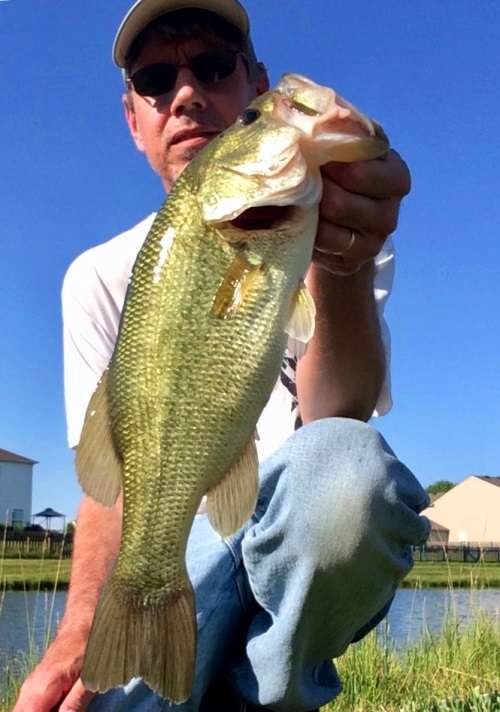
"I fish alone. Yeah, with nobody else. I fish alone. Yeah, with nobody else. Yeah, you know when I fish alone, I prefer to be by myself." ?I agree - it will be “THE ONE” in my book too...but I’m glad to see Hayes’ fish reinstated in the mean time.Kurita’s fish is the world record in my eyes; 22lbs. 4.97oz., easily 1 oz. heavier than the GA fish, but IGFA says a tie because of not being 2oz or more greater. Have other larger bass been landed? Dottie for sure and possibly the Lake Dixon fish come to mind. But snagging off a bed, intentional or not, shouldn’t count IMO, especially given the current ML controversy, and bathroom scales just don’t cut it. Have to side with Tom on this one.From the bank, 1 rod; 1 reel; 1 bait most all days. Trips are usually 1-3 hours long. From a boat, usually 3-5 rods and correspondingly 3-5 baits, usually for 3-5 hours ?Ned being Ned - it's the way he's pretty much always written. His former life (job) was as an archivist for a state college, to collect or document things of value or historical significance. He's donated all his old fishing logs and writings to the state historical society. He puts all the details down to document everything as accurately as possible, then lets others decide what level of importance, if any, they may play.Kept the boat in the garage due to all the 4th celebrations, tournies and general drunken mayhem that comes with this weekend on our larger reservoirs. Instead, fished 4 ponds over the 3 days, a couple hours each day, and landed 67 bass. Nothing real big, but always fun seeing everything going on at each one; so similar, yet so unique. Best numbers was today with 37 bass landed in 90-92 degree heat. Coolest bite was yesterday with 20 bass caught out of just 2.5 feet of water and less stalking the inside weedline. Everything on ML spinning outfit, 8# line and Zman Finesse WormZ. One rod - one reel - one bait
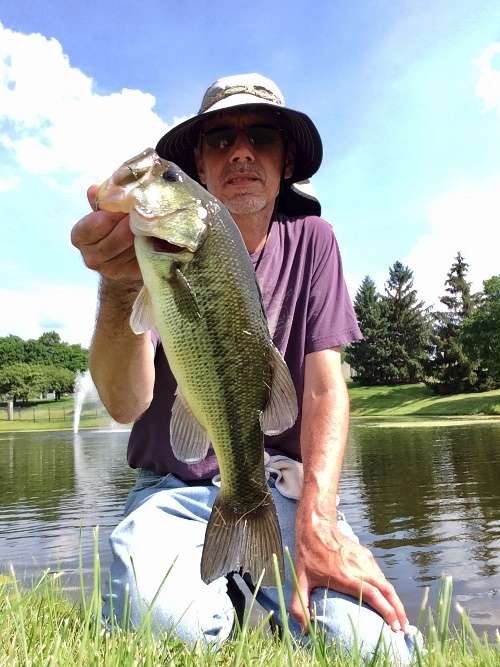
 Lightest for me are 1/32 oz. marabous along with tiny tubes and hair jigs (1/16-1/8 oz. fished sans trailers) around the ice up/ice out periods along with 3/16 oz. blade baits. Regular use all year long baits would be jigworms of various sorts ("Ned," etc.), and wacky finesse worms, sliders, etc. Jig head and plastic combined range from 3/32-3/16 oz. in most cases.And now for something completely different...
 Thanks for your insight ? Glad you dropped in, and hopefully we hear from a few more guys as this moves forward. Take CareWelcome to the forums, Porter! Glad you joined the conversation. You’ve “been there, done that” so to speak. Hung around the great ones, Mike included, I believe. What say you? Guilty as charged/accused based on the evidence presented? Seems some are still defending him, or at least questioning the accusations in the piece. Heard from any of the other greats on the matter? Seems like this would be a black eye on all the record chasers to some degree. Hope we get to hear them all weigh in on the matter in time.






Important Information
We have placed cookies on your device to help make this website better. You can adjust your cookie settings, otherwise we'll assume you're okay to continue.