



Team9nine
Super User
-
Joined
-
Last visited
Everything posted by Team9nine
-
Smallmouth can start showing some signs of barotrauma around 20 ft, with a sharp increase at just over 30 ft. Once you reach 60-70' it becomes a catch and keep game because most will die without immediate attention (fizzing). Playing them slowly does nothing except possibly make the situation worse. Get them up quick and then try and immediately release them so they can swim back down.
-
As Darren mentioned, Ned prefers 6' (he makes short casts) medium action rods costing $20 (Shakespeare Synergy). Sensitivity is a non-issue to him as he emphasizes a "no feel" retrieve. In this regard, any med or med-lt rod, depending on actual power/action, in that general length will work fine. Take your pick. Beyond that, many prefer longer, faster action rods of lighter weight and greater sensitivity. If that's where you want to head, go right ahead and enjoy, but it's not necessary and arguably can be a bit counter-productive. I've used both ends and everything in between and caught plenty of fish in all cases.
-
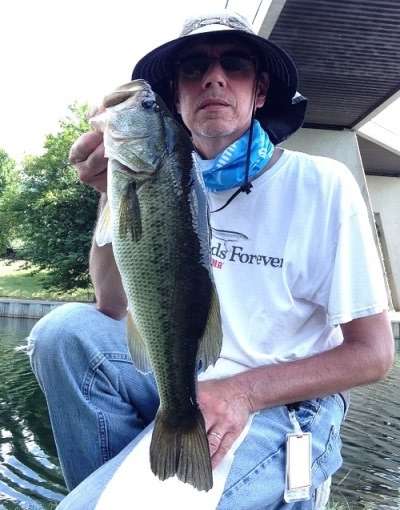
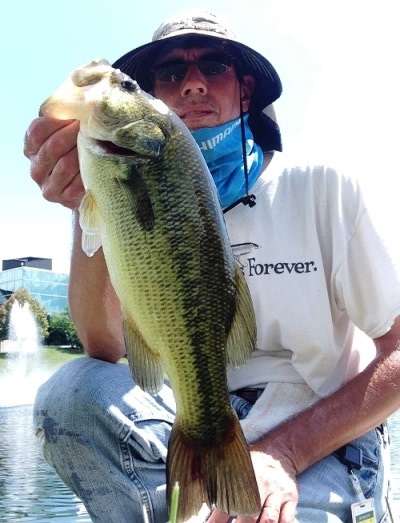
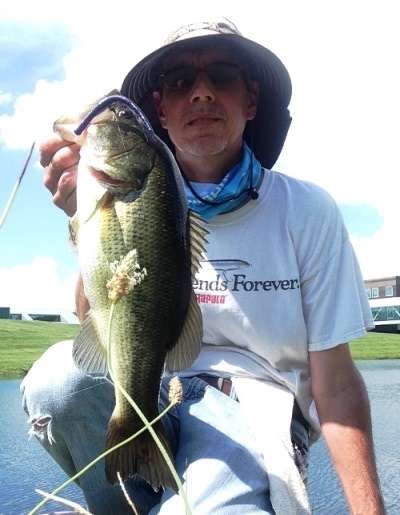
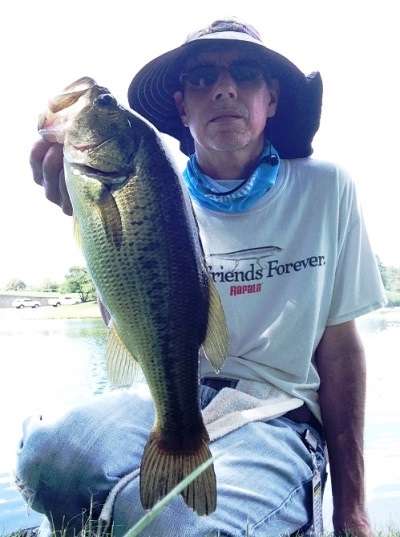
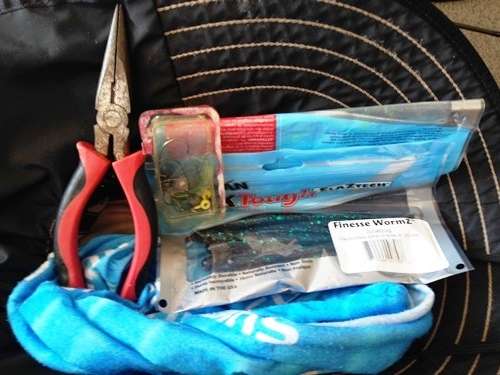
High in the low 90s with heat indexes over 100, so called it after 40 fish. Fish in this little lake are fat and healthy, and put up one heck of a fight, but I haven't found any of the big girls from last year yet. Looks like the deepest water is only 7 or 8 feet, and we had a pretty severe winter, so I'm hoping they didn't die off. Got some solid chunks though today. As always, all my tackle went in my back pocket, and thanks to the Elaztech, I only had to use 2 worms today
-
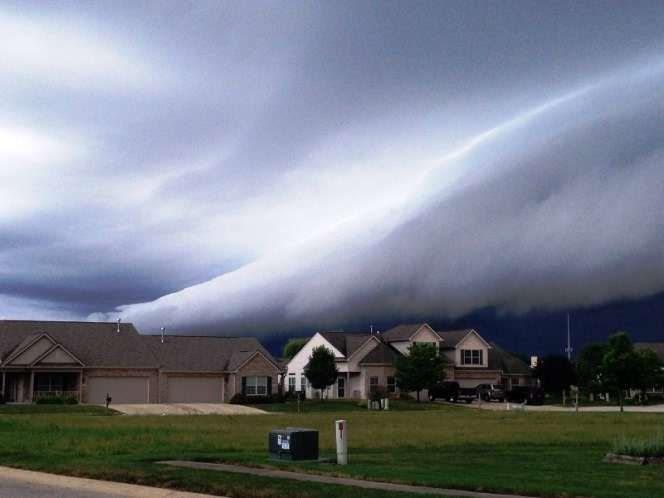
Wicked storm front moving in...
-
Yes and no. Phytoplankton and submerged plants often provide much of the oxygen in a pond on sunny days through photosynthesis. However, at night and on cloudy days, that oxygen gets used up by algae and submerged plants (respiration). Typically, the lowest levels of oxygen in a pond are right at sunrise, so often, fishing can be best during the day or in the evening when levels are highest. If the oxygen levels get too low, fish can become lethargic, and in severe cases, summer kills occur.
-
LC Pointer 100XD. A Staysee 90 on 8# line will come awfully close and is a personal favorite. A tiny bit of additional weighting would probably get it there.
-
Correct - the clips have nothing to do with quickly relieving gas pressure. However, they do appear to help in mild cases where you will be holding the fish for a period of time by stabilizing the fish in an upright position, allowing it to conserve its energy instead of exhausting itself quickly, trying to fight to maintain its normal upright position. There are still many professionals who suggest the best fizzing is no fizzing, and the weights can help in that regard.
-
Good info above. While there are some variations among species, in general, studies show 20 ft is typically the depth at which symptoms start showing, with a quick increase in percentage of fish affected at just over 30 ft. By 70 feet, incidence is 100%. Studies have come to differing conclusions, but generally accepted is that immediate C&R requires no treatment, and mouth fizzing shouldn't be done at all. If trained and comfortable, side fizzing is best overall option for deeper caught fish. Weights work well for fish at the lowest levels of incidence.
-
Can't tell from your picture. You need to grab a handful and pull it out and get a clear picture. Weed ID can be very difficult without close observation. There are regional name differences, but from the stems, it looks more like milfoil or Cabomba to me.
-
Where in the rules does it say the boater gets first shot at all waters? As long as you're not throwing ahead of or in front of him, you are fine in my opinion. It's a narrow space and he got to pick what side he wanted to throw to. If he moved slow enough, he could have fished both sides as he moved along. I would have kept fishing, limited out on his butt from the back deck and then sat down and ate lunch ?
-
You're overthinking this. It's a 7' deep pond...there is no "deep" water. The surface and top couple feet will have the most oxygen because it mixes with the wind and gets the most sunlight (photosynthesis). Don't worry about a thermocline in this situation, either. It's a simple process of elimination. Start in the shallows and around any cover with a variety of presentations. If you don't get bit, they either aren't there or they are but aren't biting. Fish a little deeper; maybe off the ends of the cover that reaches out the furthest; any weedline edges if there are such things. Expect slower action on sunny calm days and better activity on cloudy breezy days. Maybe fish in the evening or at night. Fish move around in a pond regularly, so after a couple hours, don't hesitate to go back through the shallows and see if anything has moved in or become active. Sometimes a simple wind change is enough to stimulate the bite. I've been fishing similar ponds all year. Some days I catch 3, some days I catch 30. Unless you know something is out in the deeper sections, it's usually a waste of time to just randomly cast into these holes, except in winter. The active fish will be moving or near the bank.
-
No problem - Albright is a single set of wraps beginning from the back and moving toward the loop/eye, modified/Alberto is double wraps both up and back, usually fewer in number than the single pass on the Albright.
-
Modified Albright and Alberto are the same knot... http://www.101knots.com/alberto-knot-modified-albright-knot.html
-
...but it was crushed in a head to head battle by the Alberto, which was over 20% stronger.Midwest Finesse (Ned rig) is part history relived and part practical application, and that's why the mushroom head jig was the original jighead used. The history part dates back to the 1970s, with Ned being given the Gopher mushroom head jigs by Ron Lindner. The practical part is that "jig worming," often with a mushroom head and soft plastic was a big part of upper Midwest finesse fishing back in the 70s, 80s and even early 90s. Think of the mushroom head as a Weeble (if you're old enough). Using a light mushroom head jig and 4-7" soft plastic (ribbontail worms and Power worms were popular options) on a spinning rod and 8# line, you could fish the cabbage and coontail weedline on natural lakes with the open hook design. The light mushroom head fell weight first, followed by the plastic, and would actually sit/land on the weeds, not sink into them. The open hook would catch leaves, but could easily be snapped off and out of them, triggering bites. If no bites came, the jig landed softly further down the weedline and the process was repeated. Ned still fishes this way extensively through the winter and early spring on the mud flats of Kansas where cabbage and coontail emerge every year with the rig.Step No. 1 - Make sure the gas/primer bulb is squeezed full and solid the first time you start a trip, regardless of time of year. Then advance the throttle (prop unengaged), push in the key to choke and turn at same time. As soon as she starts, let off the choke and adjust throttle as necessary to just a slightly fast idle. Always let these engines idle and warm up to operating temp before hauling butt, even in summer, to avoid a blown engine down the road. Worked like a charm for my 2002 115 Johnson 2 stroke while I had it.Old habit, or some mental peace of mind thing, but totally unnecessary and potentially detrimental...Not necessarily old school baits, though I did just buy an original Arbogast Muskie Jitterbug, but more so old school techniques. I still troll spoonplugs regularly, fish Sliders the way Charlie Brewer meant them to be fished, throw hair jigs ala Westmoreland, Gee, Sias, Kennedy, and Crawford, and even some Nightcrawler Sectets and Lindy Rigging mixed in now and then. I also pull out the old Fish Lo-K-Tor from time to time and just run a flasher.Pretty much agree ? If everyone is setting their drags right at 20-25% breaking strength of line like most say they do, you're talking just 2-5 lbs of pressure in nearly all cases. Any halfway decent tied knot should be able to handle that, so which knot you use or which is stronger doesn't even come into play. The fact that so many posters swear by so many different connecting knots bears this out. But, for us lock the drag down backreelers, let the knot tying competition begin ?There are some nice studies out there on this subject showing good correlation between light penetration and maximum growing depth of vegetation. While there will always be one-off examples and outliers, the studies generally show that submerged vegetation requires a minimum of 10% incident light for growth. Using Secchi Depth transparency, about 90% of the time the max depth of growth will be 3X water clarity, with around 60% of that falling within 2X water clarity.That's basically it - don't like the "openess" of interpretation as written myself, but it is what it is...this year ?About the first 20-some years when I fished tourneys, I almost never fished worms. I usually only kept one package with me on the boat along with a few hooks and sinkers, "just in case." Could probably count on 2 hands how many times I actually fished them. Once I stopped fishing tourneys, along with older age, the rise of the shaky head and Ned rig, I now probably throw them about half the time in some form or fashion. In fact, just walked in the house from a 3 hour trip and the only bait I threw was a worm - lol. Caught nearly 50 on it today.I use an uncoated river anchor, 15# with a little sharper fluke ends than what is shown. Digs into muck well, but you have to be a little careful around rock and stumps.
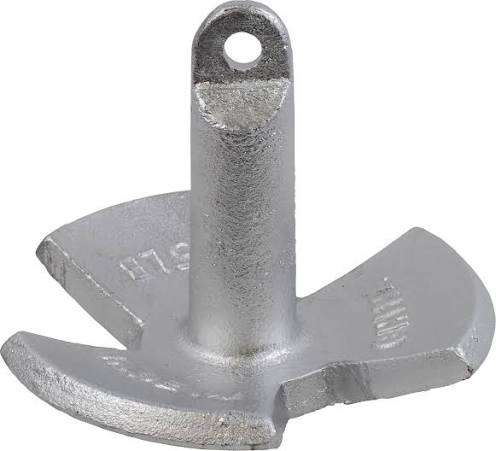 I'm going with this ^^ Need to have plenty of line out to get the best angle and some cushioning so the flukes can do their job, at least 2X depth and preferably 3X as Scott mentioned. Mushroom anchor would be much worse under most conditions. You could add a chain as you mention, but usually not necessary under normal conditions. Fifteen pounds should be plenty under typical winds. Buddy and I both run 15# anchors with 16-18' aluminums with minimal issues.




Important Information
We have placed cookies on your device to help make this website better. You can adjust your cookie settings, otherwise we'll assume you're okay to continue.