


fissure_man
Members
-
Joined
-
Last visited
Everything posted by fissure_man
-
BUT... can you buy 600?
-
Reminds me of this (not just the name, either):
-
Green pumpkin boats are best in clear water. Muddy, go for black/blue.
-
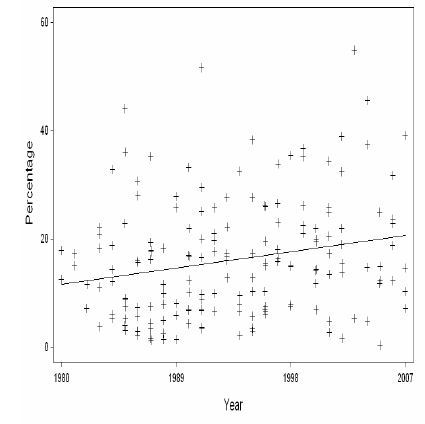
I’ve read studies but still don’t have a conclusive answer, at least in a general sense. There are many examples of fisheries that have withstood heavy bed fishing pressure for years with apparently no ill effects, but that doesn’t prove that bed fishing can’t impact populations. The Michigan studies – were those on Lake St. Clair, perhaps the most productive smallmouth lake in the world, where the bass are still protected on the Canadian side during winter/spring? How far can we reasonably extrapolate those results? Bed fishing DOES impact individual broods/nests, and if ‘enough’ broods are lost, recruitment to adulthood will suffer – common sense. But what is ‘enough,’ and can C&R bed-fishing reasonably cause ‘enough’ brood loss to have a population-level impact? In many cases, probably not. But that’s tough to generalize, and any reputable study will not claim to have a broadly applicable answer without significant caveats. How does a lake like St. Clair compare to a highly pressured 2 acre pond, or a lake with an already marginal bass population? If anyone does have irrefutable proof that bed fishing is universally harmless, send it up to Ontario so I can start bass fishing before the end of June without having to drive 4 hrs awayOne could say you’ve “mastered” the skill of managing slack during hooksets (and overcoming stretch). For those less practised, who occasionally still whiff on a hookset, wouldn’t less stretch sometimes be an advantage? If someone neglects to fully reel up the slack before setting the hook, having a stretchy line makes it even less likely they’ll achieve a firm hook set. On a long distance hookset like you describe there is certainly line stretch involved that reduces the force delivered at the hook, even if you are adept at overcoming it. I assume your preference for 5-6 power fast action rods is because they are relatively 'stiff.' As discussed above, the effect of rod stiffness is very similar to the effect of line stretch. Your hook-setting efficiency would be compromised by too soft a rod, just as it would be by a line that's too stretchy. Within reason, the impact of either scenario could be offset with good technique, but why not stack the odds in your favor? Or at least factor it into the pros/cons list when choosing a line type. It’s not just hook setting, stretch can affect how lures work too – jerkbaits on long casts, ripping through weeds, walking the dog. Any technique can be done on any line, but the feel changes, and people will have preferences. As T9 pointed out, minor variation in stretch between different monofilaments is probably insignificant, but the jump to braid is noticeable IMO, whether good or bad. Everything on this site is over-analysed, why not stretch? It’s no worse than debating 6’10” vs 7’ rods, or preferring 24.19432 IPT for deep cranks -------------------- Other random points: Do you think the density of flouro lines tends to reduce the amount of slack line in play for baits like jigs/worms by giving a straighter connection to the lure (less bow), which also contributes to the apparently increased sensitivity? As in my last post, any thoughts on ‘why’ fluoro would have less drag in the water vs. mono of the same diameter in your boat-dragging example?Yes, but my point is that in this case, using proper procedures wouldn’t change the results so significantly that the conclusions would change. Or at least “the conclusions as they apply to this discussion” wouldn’t change. Stretch occurs in these materials, and it begins at very low force (well within the range that is reasonably applied while fishing). This is very interesting. What’s the cause, if the diameters are the same? Chemical characteristics of the different materials, ie: how they interact with water on a molecular level? Texturally I imagine they’re the same on a macro-scale… Do they drag at different depths, surface vs underwater? Could a difference in stiffness cause a flutter effect, turbulence around the line? Just spit-ballin 50% is a dramatic difference I do the same thing, but all my spinning reels are loaded with braid. Agreed. It all still passes the ‘gut test’ I think. On a sharp hook set with a soft rod, the rod bends dramatically, absorbing your energy input and limiting the peak force you can generate, resulting in minimal line stretch. With a stiff rod and the same hook set, something’s gotta give. The rod doesn’t ‘give’ as much, leading to greater force applied to the line for the same ‘swing arc,’ and more line stretch. With either rod, a static test (dead weight or a steady-pulling fish) would result in the same amount of line stretch, because the force on the line is the same.The loading rate would be important in extremes, but I imagine it was relatively quick. Why would TT bother gradually loading over an hour? Or running a dynamic ‘impact’ test without mentioning it in the review? If significant plastic creep was induced, then the % rebound would be reduced. Most FC’s did show some non-reversible deformation, but Shooter didn’t, and the control mono (Trilene XL) didn’t either (they still stretched, though). This shows that the measured strains for at least those two samples were fully elastic; the others were “mostly elastic.” For a static test, where behaviour is elastic, results shouldn’t be sensitive to loading rate at all, right? 6.3% stretch for Sunline Shooter is better than the others, but hardly “minimal.” That’s 2.5 ft on a 40 ft line. Sure, drag in the water is real, and affects how a line “feels” in use. But that’s in addition to stretch. Anyone who’s fished on a short line in shallow water with mono vs. braid can still feel the difference in stretch. In 2 ft of water it’s not a result of water resistance. Looking at it another way: in typical bass fishing conditions, what will feel more "stretchy," 4 lb mono, or 50 lb braid? The mono should have less drag in the water, right?Not true. These tests by TackleTour used a 3 lb weight on lines ranging from 10-14 lb rated strength (0.30-0.32 mm diameter), and found results in the range of 10% elongation. On a 50 ft cast, that’s 5 ft of stretch! http://www.tackletour.com/reviewfluorocarbon2.html 3 lb is still a lot, but do you think at 2 lb, 1 lb, 0.5 lb, the stretch would suddenly drop to zero? Why?Thanks for the link @Zeeter. That report has some pretty compelling statements, but no references at all? I’d argue the conclusiveness of some of the statements made in there, and even the logic of some others. I think this chart (page 8) says a lot about the level of uncertainty involved: lol I think the concern is not so much about pestering Nadine, as it is with letting the neighbors eat her kids while daddy is supposed to be babysitting
 Links?Fair enough, good sir Gaining insight into yielding behavior from a home experiment might especially be a “stretch” Young’s modulus hinges on accurate line diameter measurements, and then kind of assumes that the diameter is constant throughout the sample – neither is likely very reliable. BUT I’d think with a long-ish piece of line, it should at least be possible to get fairly precise measurements within the elastic range. It’d be nice, but it’s not necessary to have the whole curve. The apparatus I’m picturing would be: 10-15 ft long stiff pipe (aluminum or steel), 1” diameter, held upright during test. Line is threaded through the pipe and attached to a cap on the top end, extending 6-18” out of the bottom end with a snap swivel to attach the basket. A measuring tape/stick can be fixed to the bottom of the pipe, and the knot to the snap swivel is used as the measurement point. With this setup, the initial length is fairly easily measured (pipe length + whatever sticks out at the bottom). Running the line through the pipe prevents swinging, and holds the line close to the measuring tape for easy and accurate reading. In my mind, this setup could reasonably achieve 0.5 cm precision when measuring stretched length (<0.2% error for a 10 ft line). If it takes greater precision than that to differentiate between lines, then that’s a conclusion in and of itself I do tend to over-complicate In this case, having measurements at different loads and especially smaller loads would add a lot to the experiment IMO. As others stated, 8 lbs dead weight on 8 lb line is not really reminiscent of a typical fishing condition. There’s no guarantee that the “stretchiest” line at 8 lbs force will also show the most stretch at 8 ounces. I agree on the importance of diameter measurement. Interestingly, if you run Frydog’s dry numbers for Trilene XT and XL to correct for the published metric diameters (0.30 mm, 0.25 mm), XL material actually appears somewhat stiffer than XT, although the raw test results showed XT with significantly less stretch. The reason - jumping from 0.25 mm to 0.30 mm diameter is a 44% increase in cross-section area! In general, running the tests with heavier line would reduce the impact of uncertainty in diameter measurements, because a rounding error on a larger number is proportionally less significant. In any case, even if we don't know the diameters precisely, test results are still interesting. It's still cool to know Brand X stretches more than Brand Y in 8 lb test, even that result is a combination of difference in diameter AND material properties. One might say: "Who cares?!" Anyway, I’m just rambling now… Kudos for doing the dirty work. I hope my posts don't come off as critical, I like the tests and think it's spurred an interesting discussion. CheersNice thread @FryDog62 Concerning the above posts on line diameter: In theory you could normalize the results to cancel out differences in diameter – at that point you’d be essentially calculating a representation of tensile young’s modulus* for each line type. The precision and consistency of reported line diameter would come into play – 0.0086” vs 0.0094” diameter is not an insignificant difference in cross-sectional area (and thus, tensile stress for a given load), though they might both be reported as 0.009” *You could calculate it if the tests did not exceed the elastic limit of the materials or induce creep, which I don’t think is the case here. A very informative test that someone could perform without any fancy equipment could go like this: Hang a basket (known weight) from a known length of line A. Record length before and after hanging the basket. Gently add 1 oz weights to the basket, one at a time, and record the new length after each weight is added. Working steadily without delay, continue adding weights and taking measurements until the line fails (or you run out of weights). Repeat the test for different line types, wet vs dry Normalize the results to diameter by plotting results as “stress vs strain.” Stress = [Force (weight) ]/[X-Section Area (pi)*(D/2)^2] Strain = [Change in length]/[Original Length] Plotted with strain on the x axis, stress on the y axis, tensile young's modulus is calculated as the slope of the line in the elastic portion of the curve. Steeper slopes indicate higher modulus, stiffer materials (low stretch). Shallower slopes indicate lower modulus softer materials (high stretch). Changes in slope as load increases could indicate the onset of plastic vs elastic behavior (related to yield strength). Any volunteers? Any kids need a science project?In most uses, ‘yield strength’ refers to the stress level which causes the beginning of plastic deformation. Measurable elastic strain occurs before the onset of plastic yielding in all but the stiffest and most brittle materials (or 'squishy' things like play dough). It is well known that nylon mono fishing line can withstand substantial elastic deformation before ‘yielding’ permanently. Line drag and having a bow in your line does affect ‘feel,’ but that’s why I specified matching diameters, or pulling on line tied to a tree. If you drag a jig across your lawn with mono vs braid you can clearly feel the difference, with negligible line resistance in the air. I actually just did this to make sure I’m not losing my mind At stresses below its yield strength, mono fishing line behaves more or less elastically under tension, where stress (force/area) is related to strain (stretch per unit length) by an elastic modulus (stress/strain). If you’re saying that no stretch occurs in mono line before plastic yielding, you’d be saying that it’s infinitely stiff or completely non-elastic; neither is true.This is not true at all. You can prove it to yourself by tying some mono to a tree and pulling gently, then doing the same with braid. It doesn’t take much strain to change the ‘feel’ of a line, especially on a long cast. Dragging a lure on bottom with say 40’ tight line, the difference in feel between mono and braid of the same diameter is dramatic. For the OP – if you think the ‘stiffness’ of your setup is costing you fish, you might also consider a less powerful, longer, and/or slower action rod (that’s still sufficient for hook setting). The “shock absorption” of a rod is consistent through the fight, whereas the actual linear stretch of a “stretchy” line depends on how much line you have out. The most stretch occurs at the start of the fight (hook set) which is exactly when you don’t want it. Closer to the boat, when line stretch would be more desirable, the “stretchiness” is reduced because the fish is on a shorter leash.It depends on what’s in the water. Algae blooms, tannic stain, turbidity, etc. all have different effects on the transmission/absorption of different wavelengths, so blue is not always the last color to “disappear.” Blue lures are so often recommended for deep water with low light conditions because presumably the lighting down there is mostly blue, and other colors would fade to dull blue or black. By that same logic, wouldn’t white also be a good choice? Think about what a black/white jig looks like in a dim environment with only blue light, vs a black/blue jig. Now take the same jigs in deep water with an algae bloom, where mostly green light remains, or dark brown stained water. For ultimate contrast in the visible spectrum (if that’s the goal), a black/white jig works in all lighting conditions – but how many of us ever fish that color? Further, ‘black’ is recommended for dark water because it presents a strong silhouette, absorbing any available visible light (opposite to the reason blue is recommended). But if we’re really fishing in situations where all visible light except particular colors is absent, then many of the darker opaque colors in our box are effectively ‘black,’ right? What does a blood red jig look like in water with only blue light?This is a little dramatic, no? I'll take the sinking worms if you're just throwing them out Interesting that nobody cares whether their t-rigs float, but shaky worms 'must' float. I hear t-rigs have snared a couple bass over the years Just about any bait can work IMO, but fluke-style minnow imitators are an underrated option.The way some of you guys talk about and defend the Ned rig in this and other threads is hilarious, like you’re preachers in the “Church of Midwest Finesse.” I wouldn’t be surprised to find shrines to ol’ Ned in some of your basements lol Let’s not forget – we’re talking about a jig head and worm here, folks. Maybe dial back the passion a touch (no offense, just an observation … carry on)The stuff I have is 3/32” (2.4 mm), 3:1 shrink factor, adhesive lined. It's nearly too small, but I think that's a good thing - you probably want the smallest that will still fit. I think 1/8” would work too. Thanks man I just sort of ‘hooked’ them with a corkscrew bait keeper, then twist the corkscrew through until it’s hanging from the end. Then screw it into the plastic. Edit: on the 'Hula Slider' the ear plug is just threaded onto the line like a bullet weight, held in place with a bobber stopper. The bait is rigged upside-down (tentacles up). Lots of options with tubes, I tried that out too (I’ve read about c-rigging a floating tube+ear plug). With a translucent color tube, the bright color of the ear plug shows through and looks cool . I’ve also played with stuffing floaty things into the ‘void’ of a paca craw/yum craw papi so they stand up. You can use rig floats from walleye spinner rigs, they come in all kinds of colors. Funny you mention that – I’ve been playing with this setup with is a similar concept: This is V1.0: just a small colorado blade and bell sinker. It wobbles like a chatterbait but seems like it will be too finicky on the retrieve (as best I can tell in a tub lol) and sometimes it sort of “seizes.” I imagine it doesn’t help that I drilled the hole off center It’s a work in progress.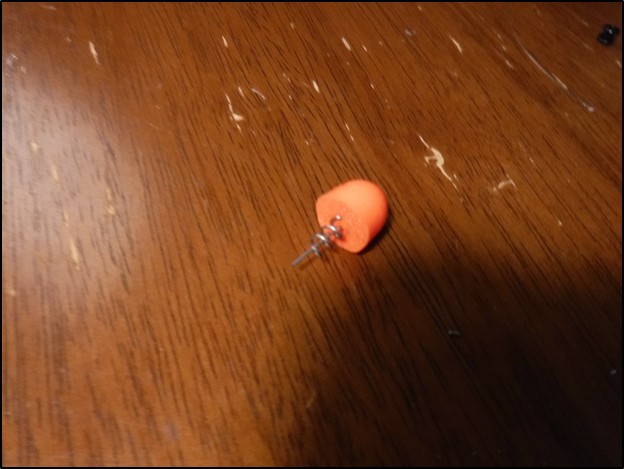
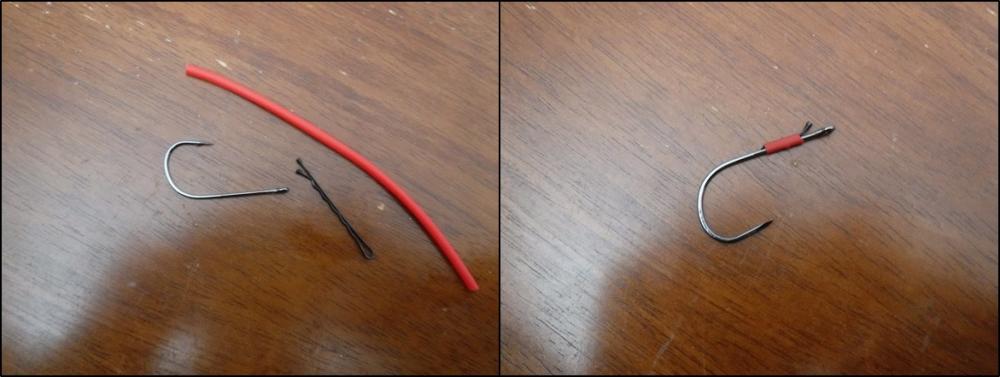
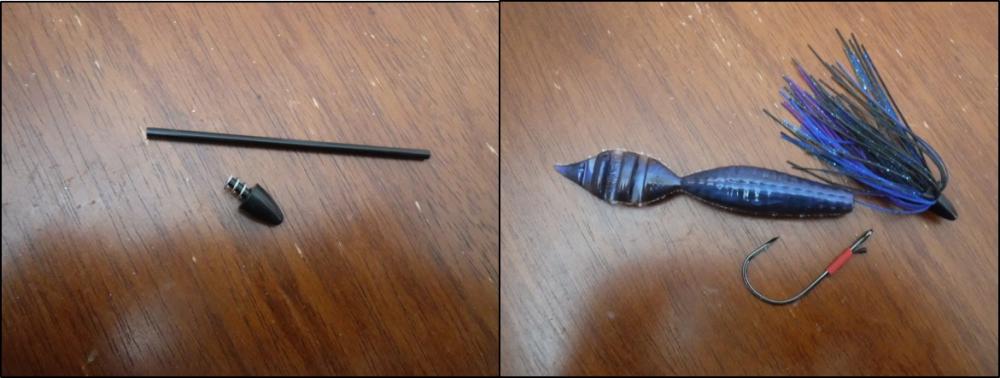
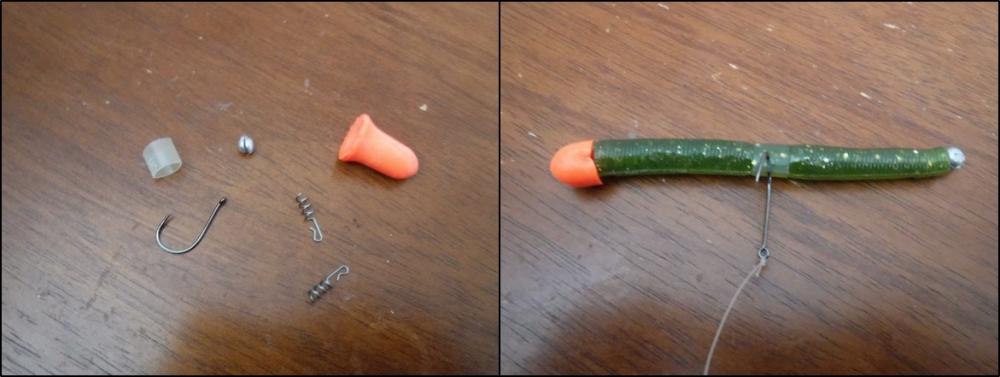
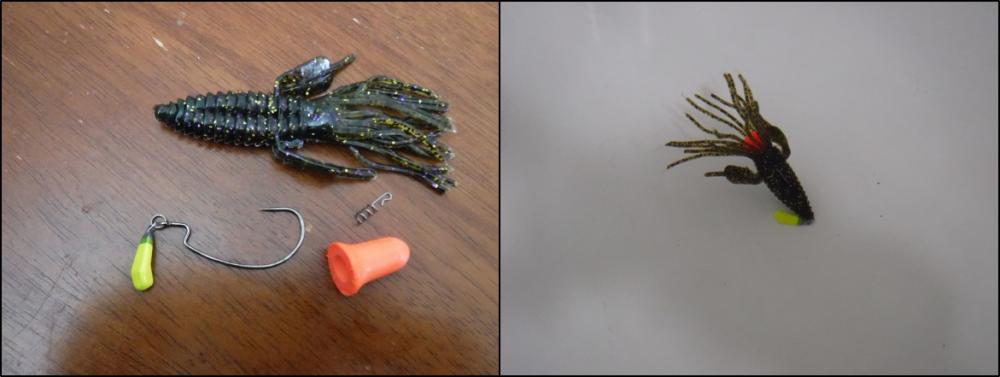
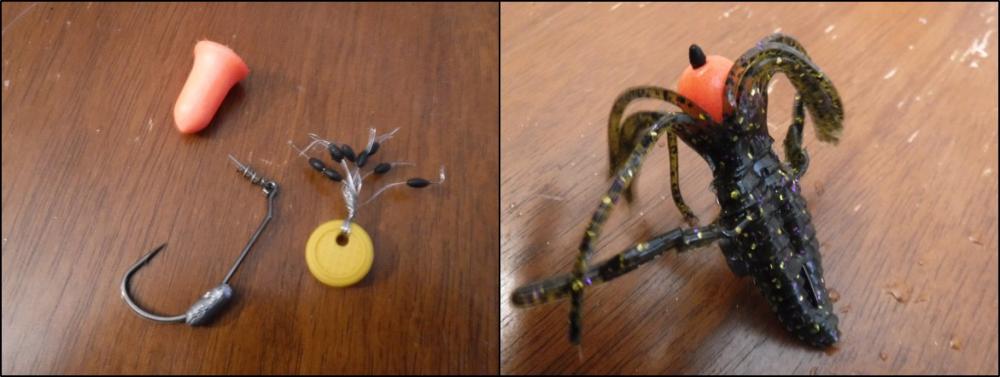
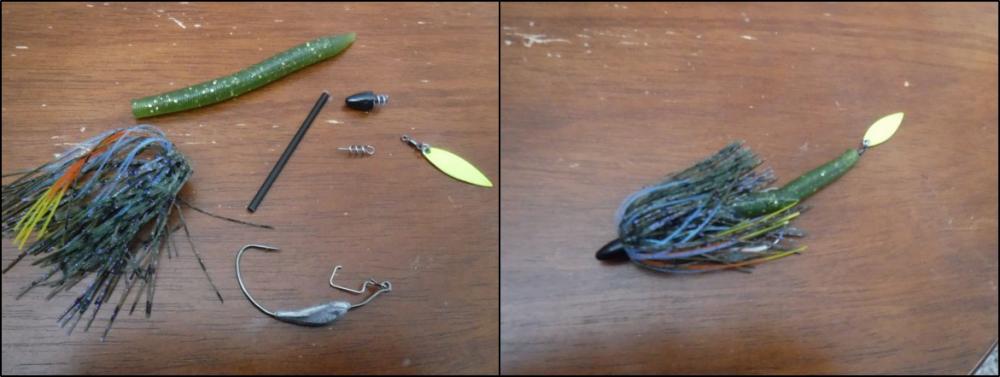
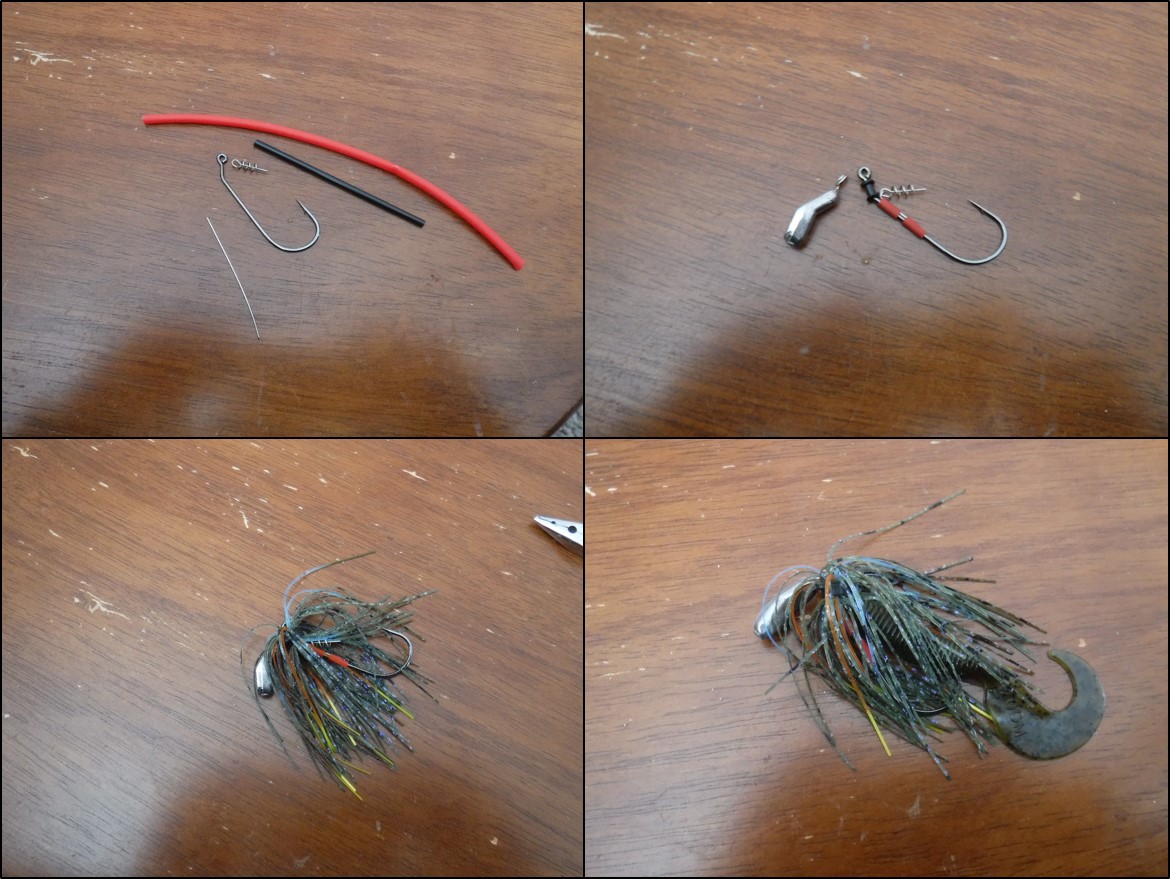
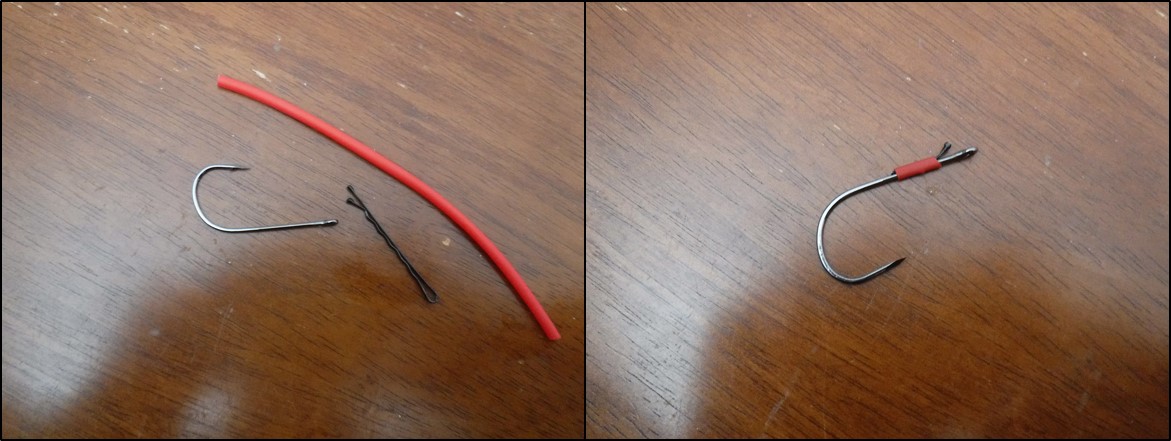
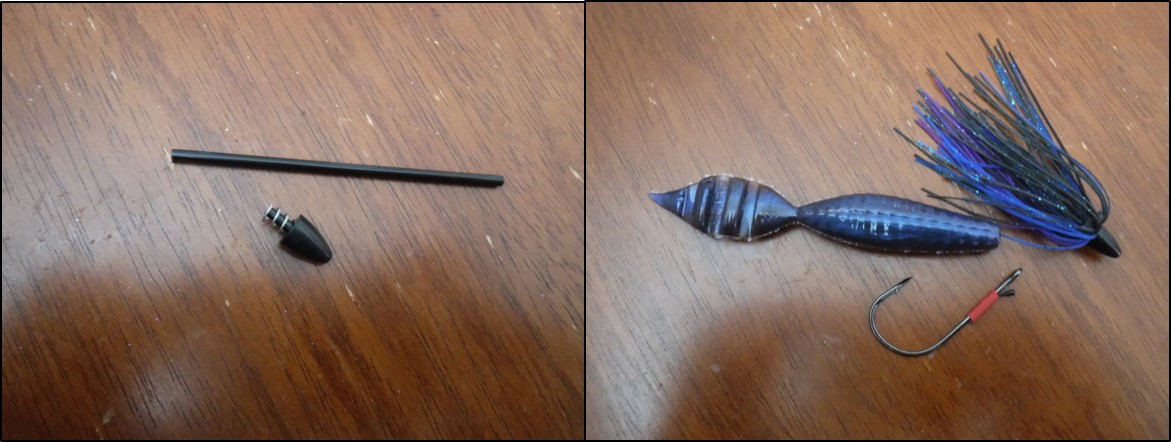
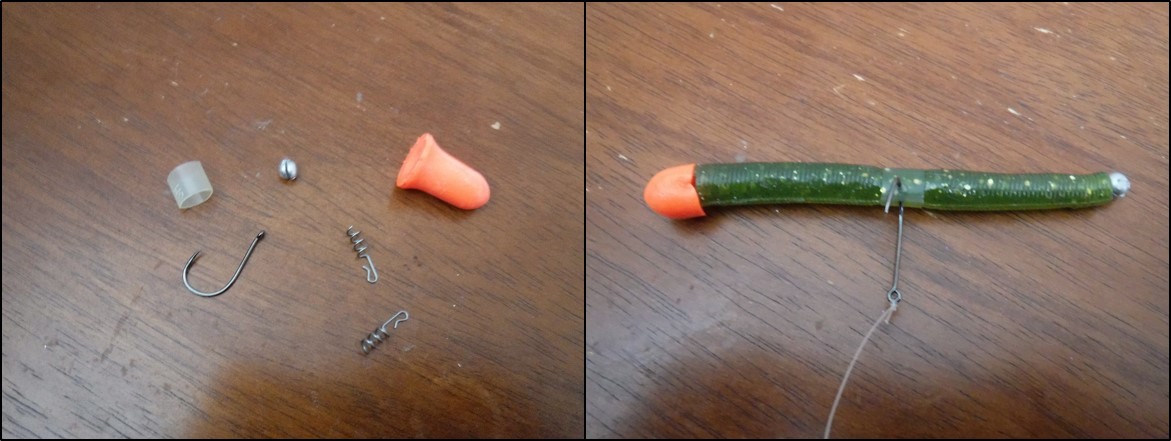
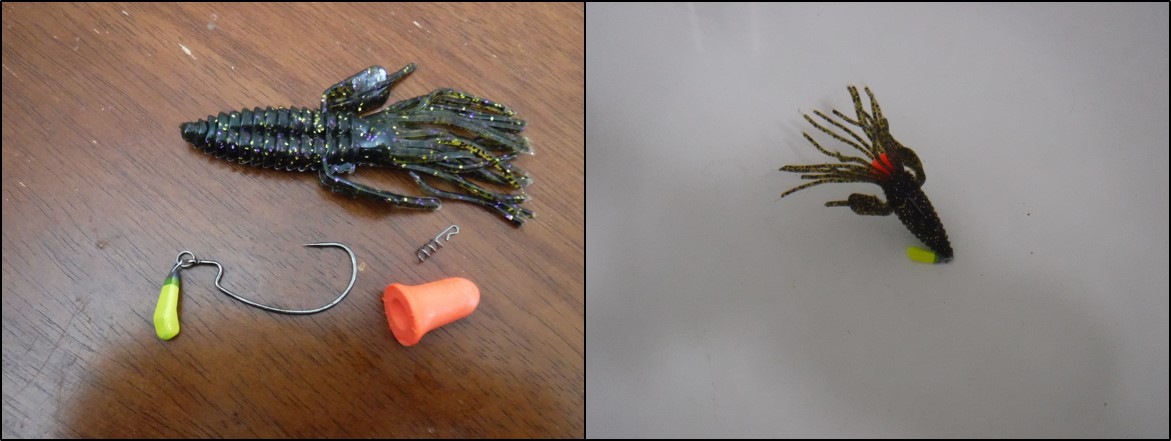
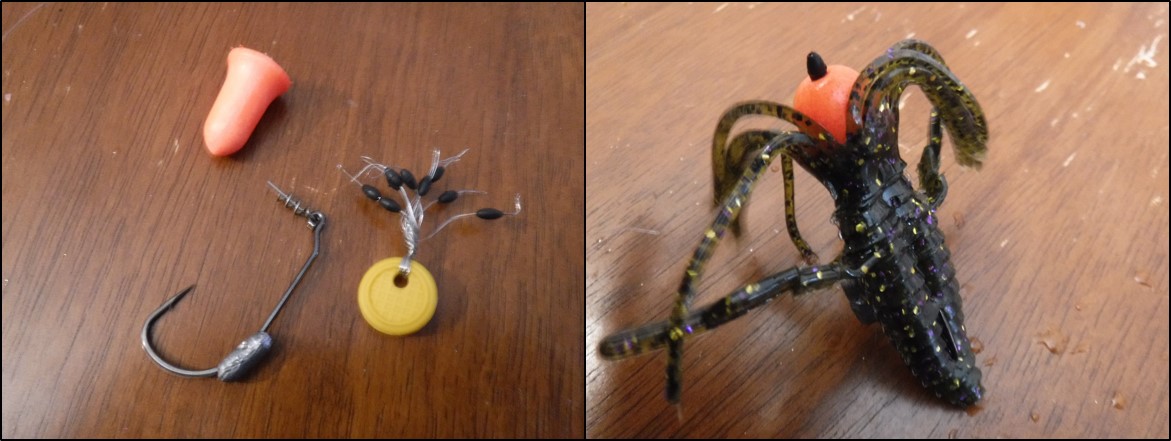
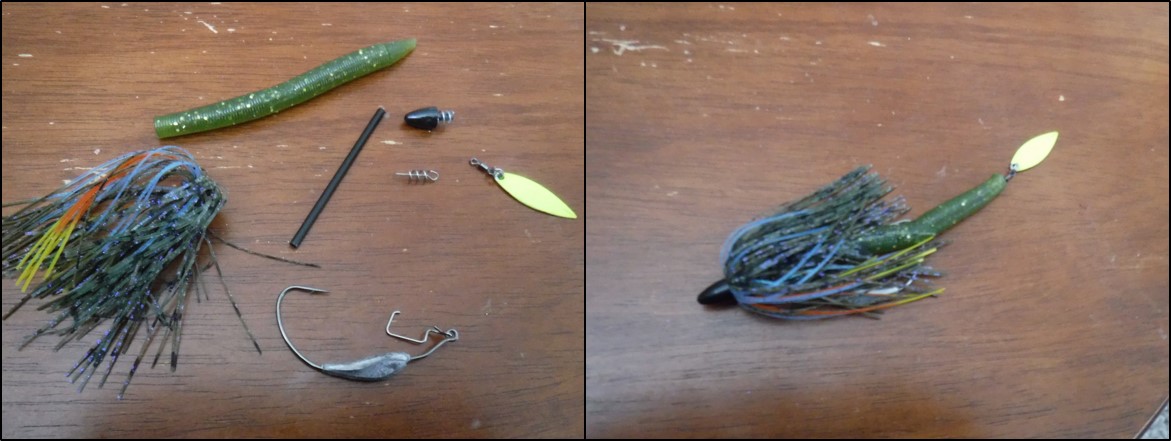
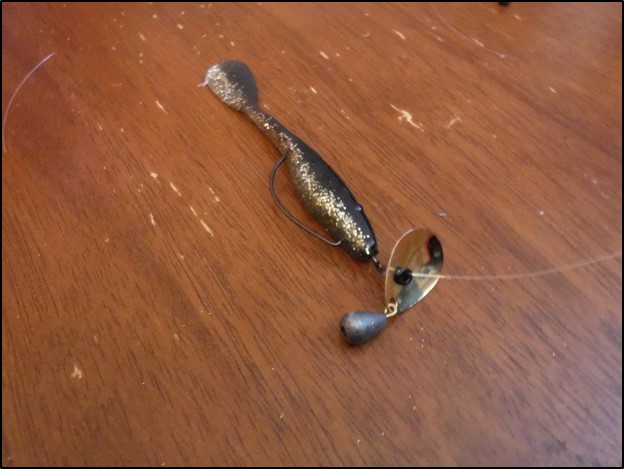 Check these rigs out. Think they’ll work? Full disclosure: I have not fished ANY of these, other than in my bathtub (I didn’t catch anything). I'm sure none of this is ground-breaking, but they're new to me. 1. “Jika Jig” This one needs work, but I really like the idea. The weed penetrating power of a jika rig, with the profile of a jig. I want to avoid tying to a split ring with braid, but I think it needs a better (“freer”) linkage between the hook and weight (and must be tough enough for flipping duty). I made another one using a Gamakatsu ‘ringed’ superline EWG hook that looks good, but I usually prefer a buried hook point (not skin hooked EWG) in grass… ideas? 2. “DIY Bait Keeper” I ordered a bunch of Trokar TK130 flipping hooks on clearance but they came with no keeper barbs. I made these using shrink tube and a piece of a bobby pin. The shrink tube is adhesive lined and the hooks have a small barb on the inside of the shank, so I think these will stay in place well. The bobby pins have a nice epoxy ‘blob’ on the end, so there’s no exposed sharp metal. We’ll see how that ‘blob’ holds up. 3. “Weightless Jig” I bought a pile of these “Cobra Blackheads” when TW cleared them out for pennies. They’re basically a plastic screw-in cone that you can put in front of a weightless senko, horny toad, etc to help it slip through cover. Turns out they’re garbage for that application, as the spring falls out with the slightest tension lol. Here I popped the spring out, and used the cone in conjunction with small segment of a stir straw I melted into a ‘skirt hub.’ To make the hub, hold the straw in a cordless drill and turn it slowly next to a lighter flame until the end curls over. Use some kind of mandrel to hold the straw, so you don’t burn your drill :-P (I used a toothpick). This is the same kind of ‘hub’ I used to hold the skirt on the Jika Jig. It doesn’t need to be weightless, you can pop the plastic cone out and use with any bullet weight like a regular punch hub. Instead of a flipping hook this would be great with a belly weighted hook, swimbait… 4. “Anti-Gravity Neko” This one is dumb; obviously just neko-rigging a floating worm is a more elegant solution But I have piles of dingers, stick-o’s, trick-sticks, etc that I’ll never run out of, and none of them float. This rig is ‘tub-tested;’ a piece of ear-plug is enough to float the worm, and the action is good. You can probably use a smaller piece than I did. I kind of like the ‘fire-tip’ look of the ear plug on the worm. The neko weight is just a split shot clamped onto a corkscrew hitch hiker. I know from wacky rigging that the clear shrink tube really holds the hook well and preserves the worm. The stuff I have is actually too tough, it's hard to get the hook out. 5. “Anti-Gravity Jika” This rig is born out of a need to use up the hundreds of V&M hula bugs I’ve acquired at prices too low to resist (I have a problem ). Same idea as above, also tub tested. The piece of ear plug barely floats the bait+hook, but with the ‘free’ hook on the jika rig it gets a really cool action when deadsticked. It just sorta floats and sways in the slightest “tub current,” with the tentacles fluttering a bit. Many use jika rigs in weeds, but I also like them for smallmouths in clear water, sandy/rocky areas. I hardly ever bed fish, but this rig with its ‘fire tip’ visibility and deadstick action might be a winner. The hook is an actual Owner jig rig EWG, but I normally just use a regular EWG or VMC xl wide gap with a split ring. I don’t mind tying to a split ring when not using braid. The weight is a ‘quick change’ walking sinker for walleye rigs. Good design for dragging around rocks, and the ‘quick change’ aspect lets me get away with not needing to add another split ring to the rig, and of course you can change weights easily. 6. “Hula Slider” I’m a big fan of the reverse-rigged GYCB Fat Ika, but I have many hula bugs to use up As far as I can tell in 10” of tub water, this rig gives a similar action as the Fat Ika, with a slightly quicker fall. It does do the “glide away” thing, and playing with the size/location of the shank weight might make it even better. 7. “Tail Spinner” I think this kind of tail spinner corkscrew is commercially available somewhere. I just used an owner CPS spring to hold it (a knock-off, actually). The hook is a Damiki D-Hold – I like the keeper but the hook gauge is too light for my taste. I have a bunch though, so I want to find applications for them (common theme here). The weightless punch skirt is the same as described previously. PS. The names are open for suggestion I figure if the "Damiki Rig" (jig head plus plastic minnow) can have it's own name, these can too lol. Anyone else bored this winter?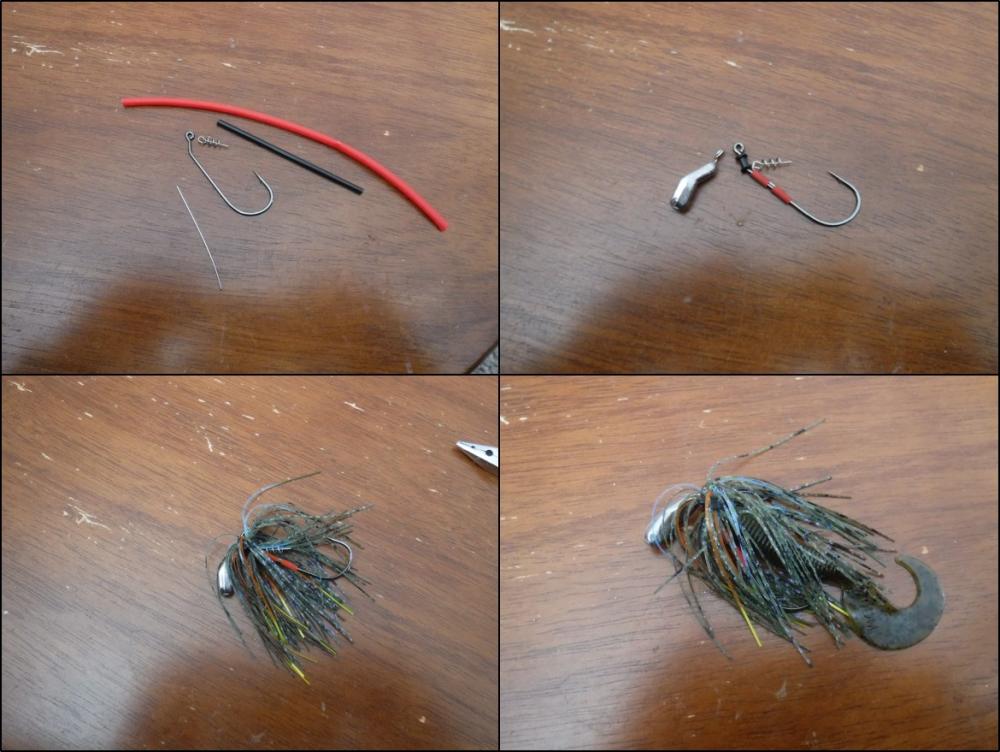
 Perhaps some of those bass detected the giant boat floating overhead, and not the sonar pulse? I've had smallmouth school in the shadow of my boat, drifting in <10 ft of very clear water with 2 sonars running. Methinks this is going to be another case of "it matters when it matters" and nobody can prove otherwiseWeren't these reviews performed within a sponsorship agreement with Okuma? I imagine it's not a coincidence that you and all the mods decided to 'try out' Okuma . Is it really much different than hearing about the rods from Scott Martin? lol Not saying they're bad rods, but there are lots of good rods out there. At the end of the day, whether you catch fish or not is rarely ever going to depend on the brand of your rod (within reason). Pick something in your price range with generally positive reviews, appropriate specs for your technique, and you'll be fine.I guess you can make a pretty good argument for red/black in the morning, but for the second half of the day you definitely want blue/white/red tied on! The last cast could net you a lunkerI like “match the hatch,” but maybe these alternatives could work: “simulate the bait?” “plagiarize the alewives?” “trace the dace?” “portray the cray?” As far as strange idioms go, at least “match the hatch” comes from the realm of fishing. I’d say we should just “bite the bullet” and accept it, since I don’t think the phrase is going anywhere and “there’s no use crying over spilled milk.” To the OP, the topic of lure color is “a hot potato” around here, and debates can spiral out of control “at the drop of a hat.” Perhaps it’s best to “let sleeping dogs lie.” Contradictory angler theories about bass behavior are “a dime a dozen,” and should always be “taken with a pinch of salt.” The problem is that it’s so easy to “bark up the wrong tree” when we know so little about what we’re theorizing around. Until we get some answers “straight from the horse’s mouth,” I don’t know if the “cat” will ever fully “come out of the bag.” Luckily, bass aren’t “the sharpest tools in the shed”, and on most days it seems like there are plenty of different ways to “put the puzzle together.”I agree 100% with all of this – the term “power” is constantly misused. But there is still some validity in preferring a different gear ratio depending on lure speed/resistance, even though the power is unchanged. Personal preference comes into play when you answer the question “would I rather crank a little more slowly and forcefully, or a little faster with less force?” Power is the same in either case, but the ‘angler experience’ changes. Handle length and spool size also come into play, as well as any other advantages/disadvantages of reel speed (slack take-up, ‘keeping up’ with fish). I was typing a post about how the car analogies in this thread need to consider that the reel is the transmission, and the angler is the engine, but you beat me to the punch! Replace “power” with “torque” and this is more accurate. Power is supplied by the engine, and the gear ratios through the transmission determine how that power is delivered to the ground - wheel torque and wheel speed. “Low gear” results in higher torque/lower speed at the wheels, and “high gear” results in lower torque/higher speed. In either case, “power” is the output of the engine (minus losses), regardless of how it’s geared. Changing gears in a car depending on load keeps your engine running in a “happy” range of RPM and engine torque. Operating far outside that range will result in inefficiency, excessive wear, or it simply won’t work (think of driving on the highway in first gear, or starting from a stop in high gear). Stretch this idea a bit, and you have a justification for why anglers ('engines') prefer different reel speeds for different presentations ('loads’)…

Important Information
We have placed cookies on your device to help make this website better. You can adjust your cookie settings, otherwise we'll assume you're okay to continue.