
king fisher
Super User
-
Joined
-
Last visited
Everything posted by king fisher
-
That is the camera I need for my fishing this year. With that wide of angle, I'm sure I can make a 2 pound bass look like a 10 pound bass and not even pull a muscle trying to hold the bass away from my body.
-
$150 but I have been known to go over budget.
-
I know almost everyone recommends a heavy action rod for frogs. I don't often fish frogs, so I don't have a dedicated frog rod, but the Monkey is insisting I buy one for the few times I do fish them. I understand the need for heavy gear to get the bass out of the thick cove which is the only place I throw a frog. I also prefer to cast as far as possible with a frog in order to cover as much water as possible. My problem is the heavy action rod I have is a 7.5 foot heavy power fast action. The rod works well for winching bass out of the thick stuff, but does not cast a 1/2 oz frog well. I have a 7.5 medium heavy fast that casts a frog completely out of my zip code, but is too soft to really put the hammer to bigger bass. I use braid for all frog fishing, so line stretch is not a factor. What rod do members like, and if you like a heavy rod, how are you able to get it to load enough to cast 1/2 oz frogs. My heavy rod will cast 3/4 oz lures as far as I could ever want, but my frogs are a little light.
-
That is good information that I was not aware of. I was never saying a person should play them excessively. I was only trying to explain my way of having the most success landing a bass in a kayak. I would have to assume the bass has a built in system for helping deal with lactic acid build up. They may simply get tired faster and give up quicker in order to keep from building up too much lactic acid. I have never noticed any difference in how hard a bass fights when the water gets hot so maybe that is not the case. I know the reason I don't get heat stroke when it is hot, is because I get tired more quickly when I'm hot and tend to slow down. I do this automatically without ever consciously thinking about heat stroke. Bass may automatically slow down and leave themselves some reserve. I know they don't have the stamina of other fish I have caught that battle for hours and come in way more exhausted. Even when I fight a bass for a longer than normal time, they always seem to have lots of energy when I release them. The only time I have woried about their survival is when I spend to much time trying to get a picture and weight. I acknowledge that no one has said anything about other types of abuse bass go through such as live wells, boat flipping, and weigh ins. I only brought those practices up because I know they have studied bass that are released after tournaments and the survival rate is surprisingly high. I was only assuming that if they can survive all of that an extra minuet or two of fighting them would not make much difference in their survival rate. I can only say I horse my bass far less than the average bass angler, and do believe I land more of my larger bass from my kayak than if I tried to bring them in quickly. I also try and handle the bass once landed respectfully and unless I see a pier reviewed study from a reputable source that clearly states lactic acid as a larger cause of release mortality, I am going to be skeptical of the bring them in quickly for the health of the bass theory. I may be way off base, and there might be a considerable amount of scientific data out there that proves it. Please link me some information if that is the case. I have been wrong before, and will not try and dispute well researched scientific studies. I know there is lots of scientific data that explains the problems with excess lactic acid in muscle tissue, I would be more interested in studies that go the next step and address the problem of increased mortality in bass that are hooked and landed by anglers. A few years ago it was all the rage in the salmon trout fishing world, that lactic acid was killing the fish from extended fights. Every magazine had an article, and everyone was trying to horse the trout to the net as fast as possible in order to help mitigate the damage. I believed the hype, but also noticed how many very large trout were landed in strong current on 2 pound test line multiple times in a season. The trout were heavily fished for and many had recognizable scars. The trout that were still hot when landed and were far more likely to wiggle out of the anglers hands causing the anglers to squeeze or drop the trout while taking a picture never even made it across the river after released. I started worrying less about lactic acid and more about proper handling after the trout was landed. If I was fighting for my life I would still leave enough reserve in me to live if I survived the fight. A bass may be different and give it everything they have but I think that most of the time they still have some life left, even if an angler takes a little extra time landing them. I have also seen bass hooked on lines left on stringers, and stuck in nets that lived for hours, after getting caught. Is the lactic acid build up more of a problem for a bass on an anglers line than it is for one caught in a net or struggling on a stringer? Like I said before, I don't recommend fighting a bass to complete exhaustion, it only makes sense that this isn't good for the health of a bass, I only feel that many bass anglers could take a little more time when landing bass especially larger ones, vastly improving their landing rates, and still not increasing release mortalities. If the water is so hot the bass become overly fragil, than it might be wise to fish for them in cooler water. When trout streams get a certain temperature, some wildlife managers will shut those streams down to fishing in order to not put any undue stress on the trout. Bass like warm water, so I doubt they would become that fragile in most of their natural range. I'm not saying I'm am right and others are wrong. I have less experience than many on this forum. I also lack any education in biology, or fisheries management. I can only say with certainty, that when asked if I drag them in, or play them till they are tired. If at all possible, I play them until they are tired. From my experience more fish are lost from horsing them in to much, than letting them play to long. Simple as that.
-
I believe there is a big difference between fighting a bass to total exhaustion, and taking a little extra time to make sure I successfully land the bass. If a bass has to use an exceptional amount of effort to escape from a predator, does it then die of lactic acid build up? I have witnessed large trout that were landed on very light tippet that had to be revived in order to swim away. Those same trout were caught dozens of times that summer. I know trout are not bass, I can't recall landing the same bass after a few days, but I never have played a bass to the absolute end of a fight like I have a trout. I believe camera's kill more fish than over playing them does. If the science proves me wrong than I'm wrong. I am not familiar with any studies that prove one way or the other on how much stress a bass can take. I do know when lactic acid builds up in my muscles I become tired and my muscles will become week. I recover with rest and am soon back to normal. I have pressed my body to the absolute limit, and did not suffer any long term effects. I realize a fish may not be able to rest, and still has to hunt something to eat, where as I can go lay down on the couch. I'm not saying to fight a bass to it's absolute limit, I'm only saying there is no need to be in a big hurry to land a bass. The world of a bass is violent and tough. They have evolved to be able to survive more than just a normal day in the water. Many natural conditions can put a huge amount of stress on them, and they have adapted over time to be able to take stress themselves in the water. They have not adapted to being lifted completely out of the water for photos, or being boat flipped on to the deck of a boat. Fighting hard in the water is something they can handle, abuse out of the water is totally foreign to their normal way of life.
-
While I greatly appreciate your concern for the long term survival of the bass, I'm not too worried about lactic acid build up. If a bass can survive being skied on top of the water, boat flipped into a boat, drove around in a live well all day, transferred to a tank, held up high, weighted showed off to a crowd of spectators, transferred back to a tank, then released miles from it's home, and live to be caught another day, I think it can survive an extra couple of minutes getting tired enough to land without making a big show of it at the boat. I do agree very light tackle, making for an extremely long fight resulting in complete exhaustion is not helping the survival odds, but backing off on the pressure, while lessing the chance of pulling a hook and insuring a quieter experience at the boat is not going kill the bass.
-
Depends on the cover, gear, and how they are hooked. In general, I play them hard when I have to, but back off and let them get tired before I try to land them. A bass wrapped on a branch is gone, but one that is too hot close to the boat can quickly become a fish story instead of a picture. A bass can pull as hard as any gamefish, but does not have the endurance for a long fight. A little patience can bring them to the net with not much left in the tank. If given a chance they can bulldog into cover and defeat even the heaviest tackle. An angler must have both the skill to turn a big bass instantly on hookset, and the finesse to not pull a hook close to the boat. There is not one way to fight a bass. Every situation calls for a different strategy, and sometimes they will break your heart when you least expect it.
-
The Bait Monkey determines the amount of gear I bring fishing.
-
How muddy was the water? Less than a foot of visibility? When the lake that I fish is low, the bass are schooled up on offshore structure. Once I locate the bass a variety of lures will work. When the lake is muddy the water is high and the bass on in very shallow water, and spread out. I fish a buzzbait if they are active, and large soft plastics if they want a slower presentation. I don't often encounter the conflicting conditions you describe. Muddy water that is far lower than normal is a rare occurence for me, and I assume is not normal for most bass anglers. It has happened to me and like you, I had tough fishing when it did. I have learned in my lake if the water clarity is less than a foot, I do not catch bass in water deeper than 12 feet, and usually the bass I catch are in water less than 8 feet deep. I have landed bass in 30 foot deep water with poor visibility, but the bass were five feet deep suspended in trees. This is where I found the bass the few times the water was low and muddy. They were in the same location as they were when the water was low and 2 foot of visibility, only suspended higher the the water column. If the water clarity is anywhere near 2 foot, I can find bass in any depth, and they will most likely hit a variety of presentations. Water temperature will have a big effect on where the bass are, but even if the water is very hot, they usually will not like to go deep if the water is extremely muddy. Determining what the water clarity is will help eliminate a large portion of the lake. Spinnerbaits are my number on choice for windy conditions in almost any water level and clarity. I also find myself using bladed jigs more now, as well as a variety of crankbaits when the wind is blowing. Deep cranking is my favorite way to fish when water is low, if the bass are in areas that I wont lose all of my crankbaits. If the water has less than a foot of visibility deep crankbaits are eliminated from my lineup but squarebills, and lipless will still get some playing time. Hot low and muddy sounds like tough conditions to me. I hope other anglers here can be more help.
-
I'm a young 63, do I qualify as a kid.
-
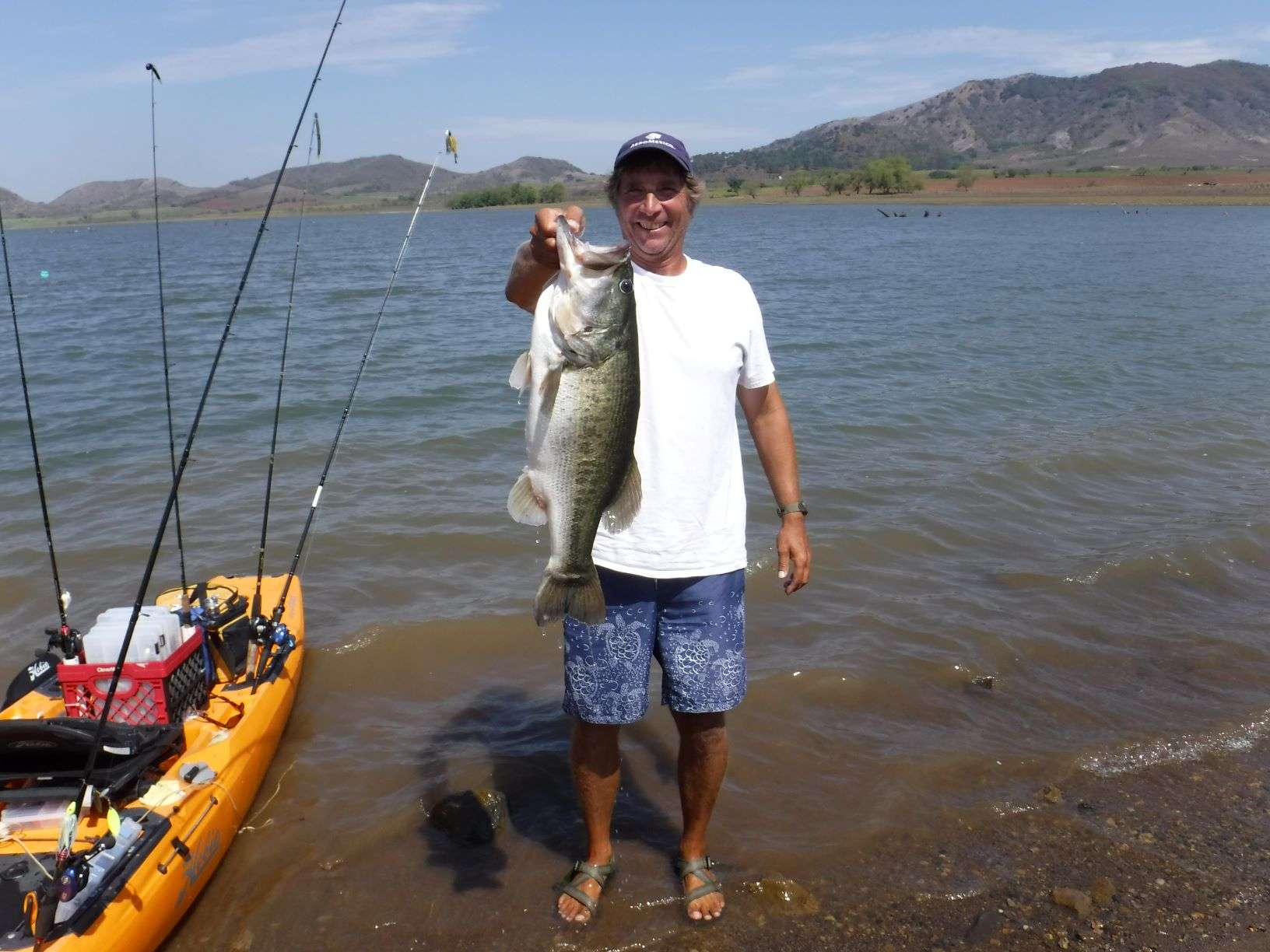
I couldn't find a picture of my kayak loaded, but this picture will give you an idea of what my prep. work is like.
-
I own hundreds of crankbaits, and still buying more. I usually only throw one or two of whatever my latest favorite is. If I'm getting bit on a crankbait, and the bite stops, I will change colors to see if I can catch a few more bass before moving to a new location. Size and depth of the crankbait will be determined by the depth of the water, size of baitfish in the area, and type of structure or cover. I usually start with a smaller size and if I'm getting bit, will try a few casts with a larger bait to try and get bigger bass to bite. This has worked, but most of the time the smaller bass are aggressive and will hit the bigger baits too. The bigger baits cast further, so I do prefer to throw them if I can get the bites. If I'm desperate enough, I will throw my favorite old bagleys balsa cranks. When I lose one of those I swear never again, and a T rig gets tied on.
-
-
Because they are bass. No other explanation needed.
-
I lose my share of big bass while fishing out of my kayak. I have also landed double digit bass that were barely skin hooked while fighting strong winds and maneuvering through cover. I have a system I like, but I have to admit I rely heavily on luck. Most of the big bass I lose are within a few seconds of hooking them. I fail to quickly get them away from thick cover. They wrap the line around a tree limb and when that happens the landing percentage is very small. Many times I hook a big bass on a long cast on the other side of a big tree and I'm mostly depending on luck to get them clear of the branches. It is imperative that I'm ready for the bite before I make a cast. My kayak must be facing my target and the peddle drive in reverse. A big disadvantage of a Hobie drive system is the pedalal drive must be either in forward or reverse drive. Other brands of pedal drive systems you simply reverse pedal, which is a big advantage. I have made the mistake of not being in reverse to many times and am now in the habit of switching to reverse mode before I make a cast. I should cast across my targets less, but many times the best way to get bit is to make a long cast past my target rather than a short cast directly on the target. If the bass hits on the far side of a piece of cover all bets are off, but if I don't get bit I can't land a big bass, so I prefer to gamble and make the cast that gets bit. If I'm lucky enough to move the bass away from cover into open water most of the time the bass is mine. I will horse a big bass away from cover, but once in the open I play my bass with more finesse than most bass anglers. Especially if I hook a bass on a crankbait or other lure with treble hooks. I know I'm going against the advice of many bass anglers who are far better, with way more experience than me, but I personally believe far more fish of any species get away from over horsing than escape because the fish was played to long and gentle. I know this goes against most bass fisherman's core DNA but I stand firm in my belief. I have had and witnessed far to many large fish getting away at boatside due to impatience, than ones that get away because they were allowed to fight too long. Once a bass is away from cover, I treat them like I would any other large fish. One advantage with bass is they tire quickly. They are extremely strong and can buldog like no other fish, but will not go on long enough runs that I have to worry about getting spooled, or fearing the hook will wear a large hole after hours of battle. I'm not saying my methods are best for other anglers,, but for me, skillfully fighting a large bass with a light touch works better than winching one in. In my experience, once a bass is hooked well and away from cover the worst thing a person can do is get in a hurry to get it in the boat. Many times I have landed large bass that would have been just a big one that got away story, when the hook pulled, or a nick in the line caused the line to break if I had put one more pound of pressure on when it wasn't absolutely necessary. I do not use a net fishing from my kayak. I play the bass until they are tired, pull them alongside my kayak reach down, and grab them by the lower lip. I prefer to use a net when fishing out of a boat, but when sitting in my kayak the bass is so close to me when I land them, I feel a net will get in the way more than than help when it comes time to land the bass. Again I'm not saying this is the best methode, but I do feel it works well for me, and I can't recall ever losing a trophy size bass anywhere near my kayak. By the time I bring them close enough to net, they are tired and fairly easy to land with my hands. I have been hooked while lipping a bass, and I have to admit even though I didn't lose the bass pulling a treble hook out of my hand by myself definitely made me consider buying a net. The only time I lose big bass after the critical first seconds getting them away from cover is when they jump. Big bass where I fish will always jump. They jump when they are hooked, they jump mid fight and sometimes they even jump after I think they are played out and are close to my kayak. I always try to keep moving my kayak moving backward even when in open water, helping to keep a tight line when they jump, but I have found praying or swearing are my two best techniques for dealing with jumps, and the bigger the bass the more I do of both. I use a variety of lines, rods and reels. My equipment is usually chosen to fish the lures I'm using most effectively and not picked because of the size of bass, or how I plan on landing them. If a lighter rod and line will give a worm more action or make a topwater walk better I will use the lighter gear no matter how heavy the bass are. The exception would be frogging thick vegetation, or punching mats. When using these techniques I use extra heavy gear with braided line and horse the bass from the minute I hook them to when they are in my hand.
-
I'm 63 years old, and the Bait Monkey permanently moved in to my house when I was 13 years old. Does that get me a 10
-
The Monkey saw this, and is now doing back flips even before I am fully awake this morning.
-
You think bass lure names are crazy, here are some of my favorite kwikfish colors I use for king salmon. Some of the names originally were descriptive, but fisherman started giving them names in order to shorten the names. Instead of silver with chartreuse head and tail, they started calling it double trouble, or silver with green lightning stripes, and a green and chartreuse tail, simply became Grinch. The Funky Chicken looks so awful it couldn't be called anything else. The company making the lure then started adopting the names given to them by the anglers. Anglers even shorten the names further with Fickle Pickle becoming simply pickle. Funky chicken slammer Fickle Pickle Bubba slammer Double Trouble Grinch Glad Clown Trapper
-
I don't have any idea when the bass in my lake spawn, but I am positive they are all breaking the number one rule. If I cast my bait enough times, I should get bit. This is the only rule I care about and so far this year it has been broken all day every day.
-
Give a magnum trick worm a try. They work well in Mexico, don't know how well they will work in Maine.
-
I have fished many places where single hooks were required. Spoons, spinners, and many other baits make it an easy and worthwhile change. While you may miss a few more bites, the hook to land ratio goes way up with single hooks, making up for the few missed bites. The trouble comes when trying to switch from trebles to single hooks on crankbaits. Some baits you simply swap out the hooks and they work fine. Others are more more difficult. Some crankbaits have a more sensitive balance point, and will not run well without the hooks that come with the bait. Others will run fine, but may take experimenting with several different sizes and style of hooks in order to get them to run well. If you replace both hooks on a crankbait you can usually get them to run well without to much trouble. If you are only going to use one single hook you may run into difficulty. Many places that require single hooks only allow one hook on a lure. To solve this problem with magnum wiggle warts I had to place the single hook on the front hanger not on the back hanger. Placing the only hook on the back hanger caused the plug to roll over in stronger current. In order to get decent hook up ratios, the common method was to use a barrel or small bead chain swivel on the front hanger and attach a single hook to the swivel. This placed the hook further back which increased hook ups, but didn't upset the balance of the lure. This became so popular with salmon anglers, that Storm even marketed some Wiggle Warts already rigged this way. Replacing trebles with single hooks will not keep you from landing fish that bite. If you can get your crankbaits to run well with single hooks, you will be happy with the results.
-
I finally was able to take a day off and go bass fishing. I wasn't going to be able to squeeze two days in, so I opted to try fishing some at night. I have next to zero experience fishing at night, but I guess there is only one way to get experience. I left home at 11:30 PM. Drove three hours to the lake, and had my kayak and fishing gear ready to go at 3:00 AM. Fog rolled in so thick I couldn't see more than a couple feet, but managed to get out on the lake and not get lost. I landed one bass in the dark, on a buzzbait that was around 1 pound. The fog left when the sun started to come up. I landed a 1.5 pound bass first cast on a popper, and that was the only topwater strike of the morning. I managed to land a few bass on a variety of techniques before the strong afternoon winds Picked up. I hooked a 6 pound plus bass on a spinnerbait, but was in a bad position to get it out of the cover and lost both the bass and the bait. I was fishing my favorite big bass lake, during my favorite time of year with perfect conditions. I landed around 10 bass, and my best five would weigh approximately 5.5 pounds. I have not landed a bass over 3 pounds in 2026. Last year I went to this lake in the first week of June and landed a 38 pound bag of five including two nine pound bass on consecutive casts. I haven't had much opportunity to bass fish, but I am seriously beginning to doubt my bass fishing skills. The Bait Monkey is convinced I need to upgrade everything. Kayak, rods, reels, electronics, and ofcourse lures. It does not make sense to me to buy more gear when I have less time to fish, but coming home fishless, does make the Monkey's arguments at least worth listening to. Rainy season starts soon, and the fishing traditionally gets way tougher when the lake floods. I guess it can't get much worse, so I will have to keep trying.
-
I can't believe you didn't try a spinnerbait.
-
I have zero patience. I fish fast, and am always on the move. I'm not saying it is the best way to catch the most or biggest bass, but It is just the way I'm wired. If I think a location needs to be fished more thoroughly, I will go back to it later. Sometimes I fish the same piece of cover numerous times in a day, but never stay longer than a few casts at a time. Even when I fished from shore I put more miles on my shoes, than number of casts. I would go to the lake with a friend, who always stayed at our favorite whole, while I explored every possible place to make a cast. When I would get back to where my friend was, we usually had about the same number of fish, but I always felt I had more fun.
-
yes