.JPG.7a57c32021fbd56ed3f24f5a8ea9422e.JPG)
Fallser
Members
-
Joined
-
Last visited
Everything posted by Fallser
-
Since I mainly fly fish, I'm use to fishing barbless hooks. They're required in some of the trout streams I fish, but I use them also for warm water and salt water fly fishing. I never been able to talk myself into removing the treble hooks from my lures. What I've been doing the past two years is replacing the barbed trebles with barbless ones. I buy them from either Barlow's or Jann's Netcraft. So far they've worked well. Easy to remove from fish or net. Not to mention myself.
-
That's something I associate with fly fishing, particularly for trout. Since I fly fish most of the time for bass, the closest I come to "matching the hatch" would be with my frog patterns. With the rest of my flies, I'm just trying to convince the bass or the trout the fly is something edible. With lures, if the lake has small bait, minnows, I probably go with a narrow body lure. If shad are the main forage, then I might go with a wide body lure. I would go with both. Until you start casting you have know idea which one is going to work.
-
I live in SE PA. Pennsylvania, New Jersey, New York, Maryland, Vermont, Connecticut, Ohio, Tennessee, Minnesota, Wisconsin, Kentucky and South Carolina. Not states but US Territories, US Virgin Islands, Puerto Rico and Guam. And Ontario.
-
All my spinning reels have a spare spool. One has two extra spools. Most of my fresh water reels have 10 or 12 lb fluorocarbon on one spool and 10 or 15 lb braid on the other. My large reel which has the two extra spools, and I occasionally use for salt water. Two spools have fluorocarbon, 15 lb on one and 20 lb on the other. The third spool has 30 lb braid. I tie the braid directly to the lure or jig. I don't use a leader.
-
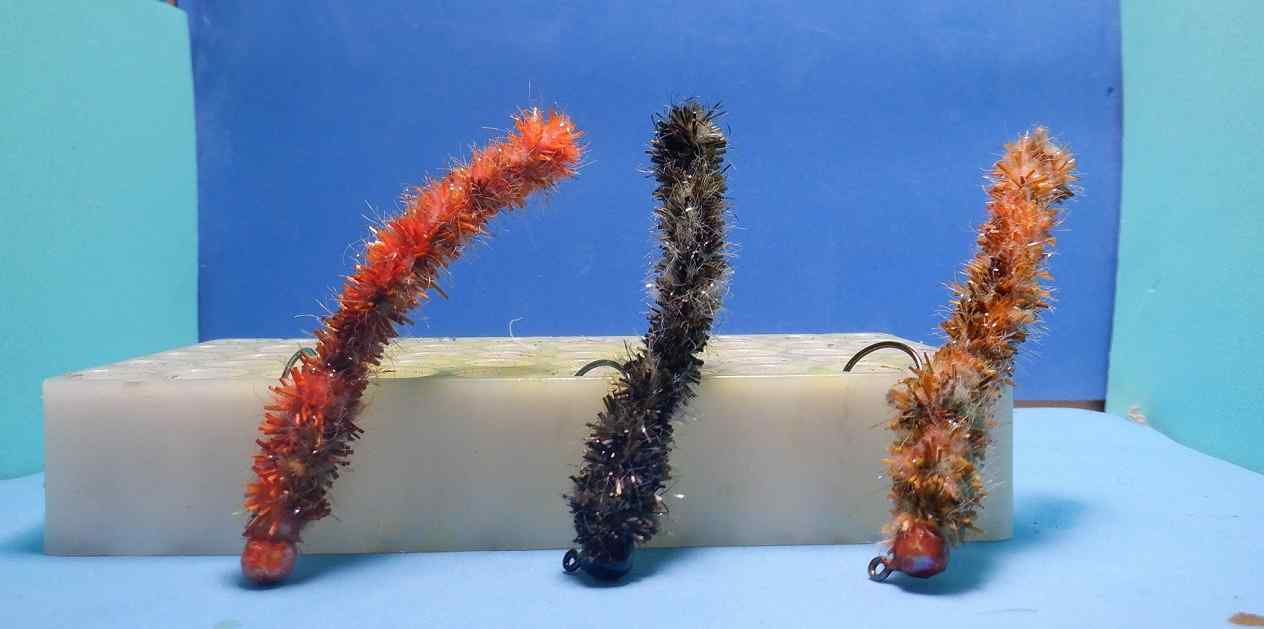
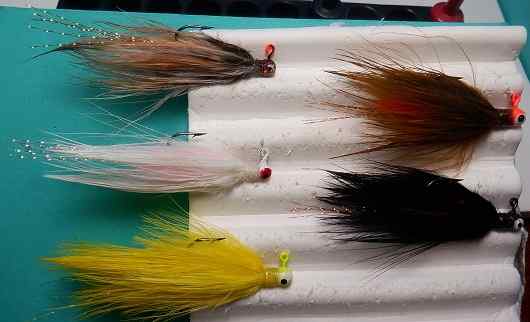
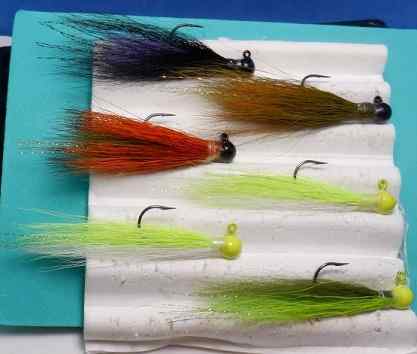
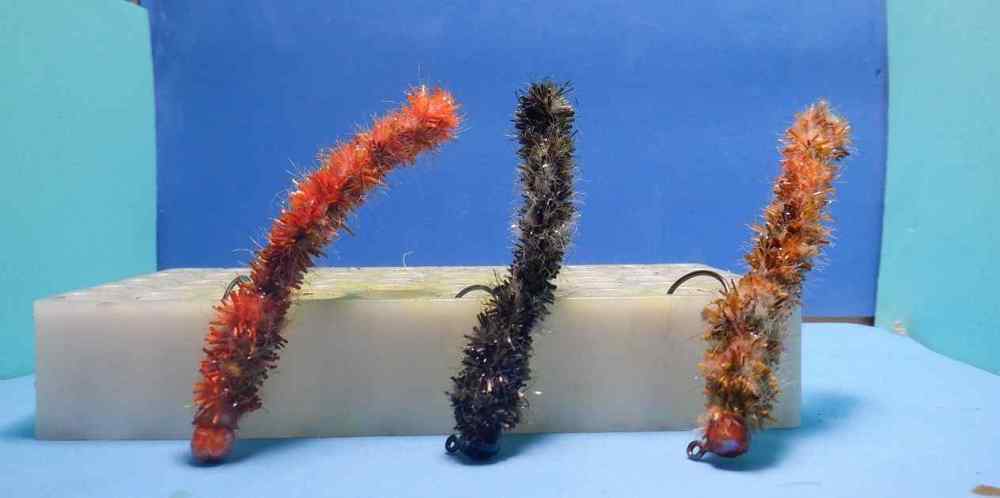
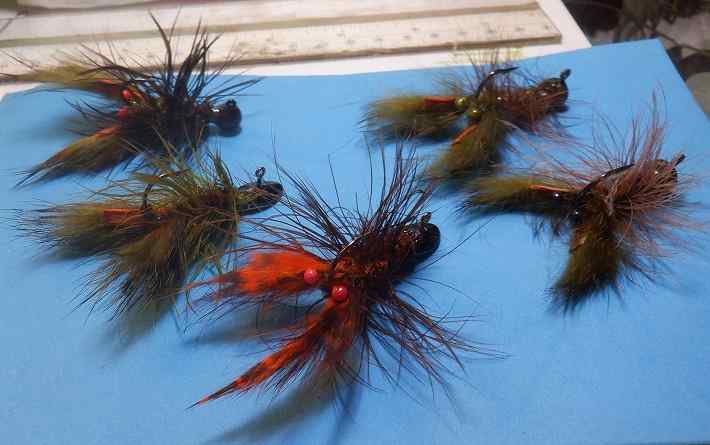
I'll be up in Ontario next week. The odds are the smallies are going to be in 20 to 30 feet of water which will make using my fly rod a bit of a challenge. I have a box of flies tied on 1/32nd and 1/20th jigs which I plan to fish off a fast sinking line with a long leader. These are the bucktail and marabou ones. I've have a couple "Ned" flies to try. Tied on 1/20th oz Ned Jigs One of my most successful flies the last two years has been my crayfish pattern. This year I tied a dozen or so on 1/4 oz jigs At least I won't feel guilty using some scent on them.
-
Normally, a sandwich, a piece of fruit, a couple of cookies. Liquid, a bottle of sparkling water and/or a box of coconut water. If it's hot, maybe a bottle of Gatorade or an extra bottle of sparkling water. Sometimes I carry a couple of Kind bars or protein bars to snack on in my fishing vest.
-
Welcome, I'm in Philly. One of my fishing buddies has a place near Wallenpaupack and we do a lot of fishing in the smaller lakes in that area. Locally, I'm not far from the Wissahickon, so if I want a quick fishing fix I'll go there. It has a good population of smallmouth and a few largemouth. I've seen some decent size bass in there but most average between 8 and 12 inches long. Fun on light tackle or fly rod.
-
Last few flies for my Ontario trip in two weeks. These are patterns I haven't used in a couple of years. This one is called a "Bead Belly". A guy in my saltwater fly fishing club showed it to me many years ago. I used it for a couple of years as a silverside imitation, but moved on to unweighted baitfish patterns. Generic bait fish Perch Hook- Gamakatsu Straight Shank Worm hook, 1/0 Thread - clear polyester thread Body - Flash blended Mirror image Belly - Two large silver bead heads in front of a piece red Mirror Image Eyes - Living Eyes, 6 mm Head - UV Resin This one is a Short Floating Woolly Bugger. I usually tie them on a long shank and larger hook. I'll fish it like a gurgler across the top. It has a big enough head to use it as a popper. Front View Hook- Kona XS Stinger, size 2 Thread - 3/0 color to match body Body - Crystal chenille and wrapped saddle hackle Head- 3/8" Foam cylinder Eyes - Living Eyes, 8.5 mm Crease Fly(modified). Crease flies were one of my go to flies when I fished salt water, but I moved away from when I fished fresh water. Normally tied on a single straight shank hook, I think the action is better "tied" this way. Hook- VMC 9648 BZ barbless treble Thread - only to wrap on the hook shank or in this case the articulated shank as a base to glue the foam Body - Large articulated shank with 2 mm craft foam, cut in a triangular shape, folded in half over the shank. Halves glued together then trimmed to shape Eyes - Living Eyes, 8.5 mm Tail - Dressed treble hook
-
I don't normally use night crawlers around here. Mostly flies and lures. If I do use live bait it's usually minnows. The only time I use them is when I go up to a lodge in NE Ontario.. The lodge supplies night crawlers for bait and we usually pick up three dozen leeches at a bait shop on the way up. The basic rig is a 1/4 oz jig, any color as long as its chartreuse, with a half a night crawler on it. If we're anchored on a spot we just drop it over the side let it hit bottom, make a couple of turns on the reel and let it sit 12 to 18 inches off the bottom. Last year, I used a drop shot rig and it worked really well. The hook was 12 to 18 inches off the bottom. I tried fishing for them with circle hooks below a slip bobber, again it worked but half the time the smallies swallowed the hook and I had to clip the line and leave the hook. They'll also hit a jig with a half night crawler cast toward shore structure and reeled in fairly fast. It's how we determine if the spot is worth fishing. If we catch a smallie, then I'll switch to my fly rod and my buddy to lures. Walleye and pike also take night crawlers.
-
Generally, I fly fish for them. They'll take top waters, poppers, sliders and frog patterns. I use a 25 # tippet when I fish for them or bass. Spinning gear, when I use it , and what my fishing buddies use. Top water minnow type lures, poppers, hula poppers, Spooks, Tiny Torpedoes, in-line spinners fished fast, spinner baits, buzz baits. I don't use wire leaders. Either fluorocarbon or braid tied directly to the bait. I've been bit off a couple of times but not often enough to use wire. The lakes we fish are shallow and weedy. That's why the emphasis on top water baits. Where. In and on the edges of lily pads, fallen timber or stumps, edges of weed beds, on top of submerged weed beds. We even keep or two to fry up for dinner. They're actually pretty tasty. You just have make sure you remove the Y-bones.

-
I will be using them in less than a month when I head up to NE Ontario. The lodge supplies them and we usually pick up a couple of containers of leeches at a bait shop on the way up to the lodge. Mostly, we fish lures, soft plastics and in my case, a fly rod. When fishing with a ball jig, we use half a night crawler. If we use a whole one, the smallies will just pull the tail off. The nightcrawlers are insurance that we will have some fish to bring home.
-
They are tasty. I use to fish for them when I was much younger in the Bohemia River in NE Maryland. They're considered a semi-anadromous fish. They don't spend time in salt water like striped bass. Around here they live in brackish water and move into fresh water or slightly brackish water to spawn in March. If you hit a large school you can quickly fill a stringer.
-
For regular split rings, size 1 or 2 would work.
-
Nothing fancy. Just some WTH flies. Maybe the smallmouth in Ontario will like them. This one is a 1/2 and 1/2 version of an Estaz Bug. Normally, I tie it with just an estaz body and usually on a size 6 hook. Hook: Ahrex Traditional Shrimp size 4 Thread: Color to match body, in this case, white and chartreuse Weight: 6 to 8 wraps of medium size lead in the center of the shank Tail: Marabou w/ 6 strands of crystal flash(color to match body Body: Small flexi Squishenille twisted with estaz and trimmed to shape Head: UV resin(white or chartreuse) General idea of the original was to imitate a Mr. Twister grub Another variation of a Mop fly. Fished as a streamer. With the tail the flies are about 3 inches long Hook: Gamakatsu B10S size 4 Thread: Color to match body Weight: Unweighted Tail: Marabou color to match body Body: long mop piece Thorax: crystal or sparkle chenille Head: Stonfo Soft Head #2 Eyes: 7 mm Living Eyes Color on Fire Tiger pattern, permanent marker This one was real hard to tie. Soft Foam Floater Hook/Body: Soft Foam Body, size 2 Thread: Color to match body Weight: Unweighted Tail: Marabou w/ a couple of wraps of small crystal chenille to cover shank. Originally brought the bodies to use for walleye on my Ontario trip. Normally fished behind a sinker with either a leech or piece of night crawler attached. Keeps the bait off the bottom. Figure I can use them as top water or fish them off an intermediate or sink tip line. If they don't work as flies, we'll just use them like they're supposed to be used.
-
I'm not concerned about the fish feeling pain. I am concerned about me feeling pain. I've had hooks in me three times. The first two were with barbed hooks and required trips to the ER to remove them. The third was barbless, and a fishing buddy was able to back it out with no problems. I fish for bass about 85% of the time with a fly rod. Barbless hooks are pretty much the rule in fly fishing. I guess they don't want to hurt the wimpy trout. I never debarbed the hooks on my lures until on one of my trips to Canada many years ago. My buddy had a pike on and it spit the barbed hooks and the lure came flying back and it hit in the back of my fishing vest. By the time I got the three treble hooks out of the vest, it looked like I'd been hit with a shotgun. I've replaced the barbed treble hooks on my lures with barbless ones. When fighting the fish you just have to keep the pressure on. Easier to do with a spinning rod than a fly rod. I'm less likely to lose a fish with a barbless treble hook than with a single barbless hooks.
-
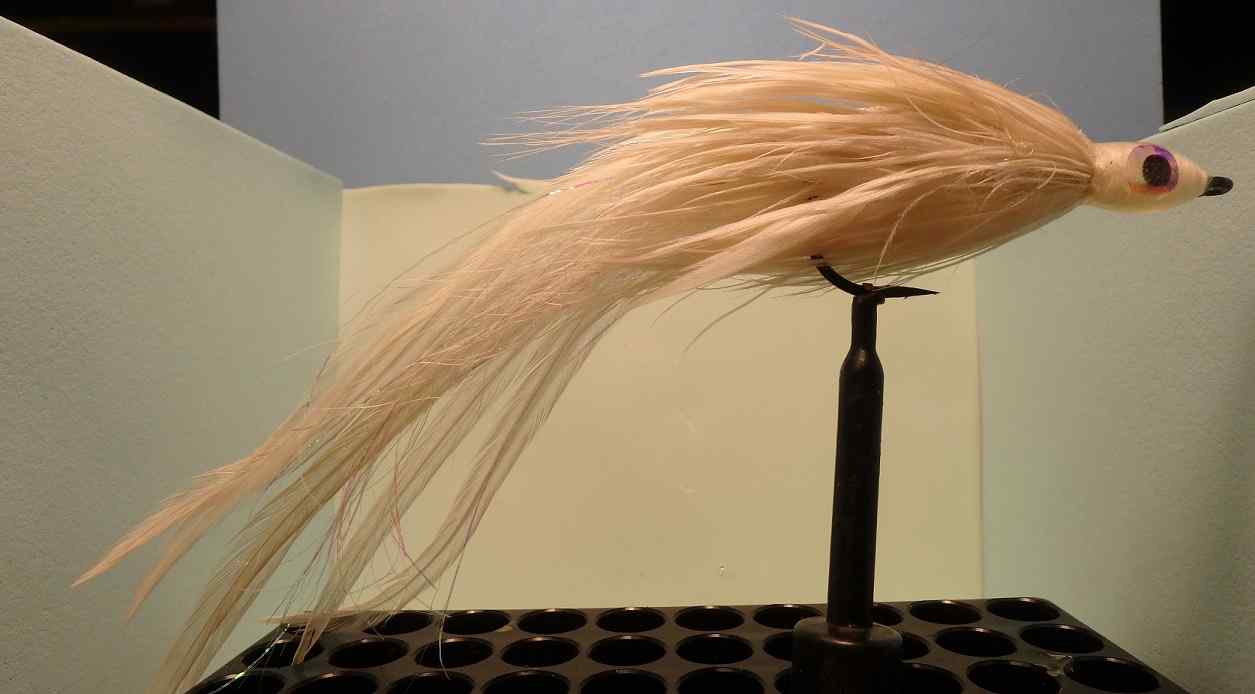
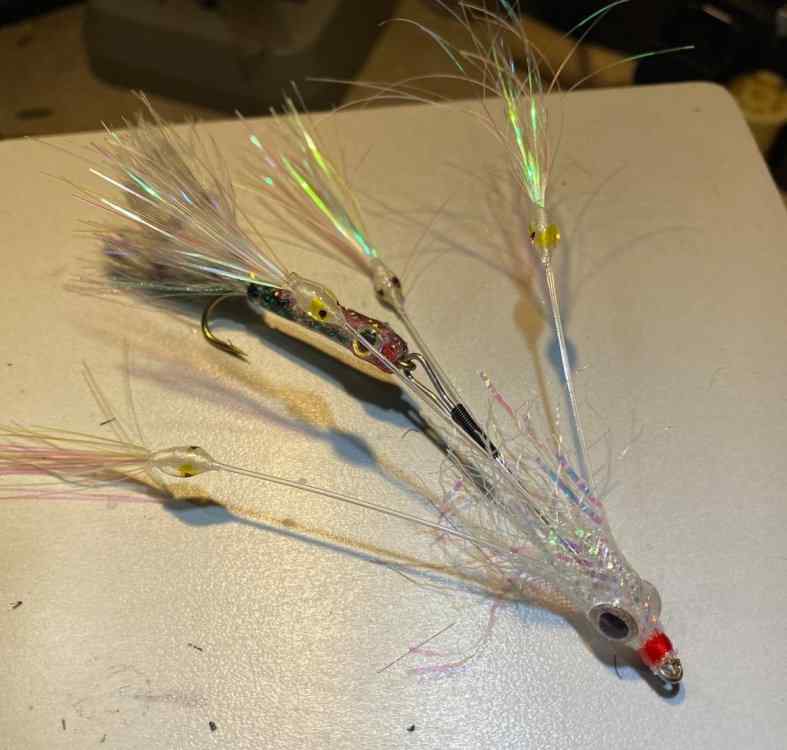
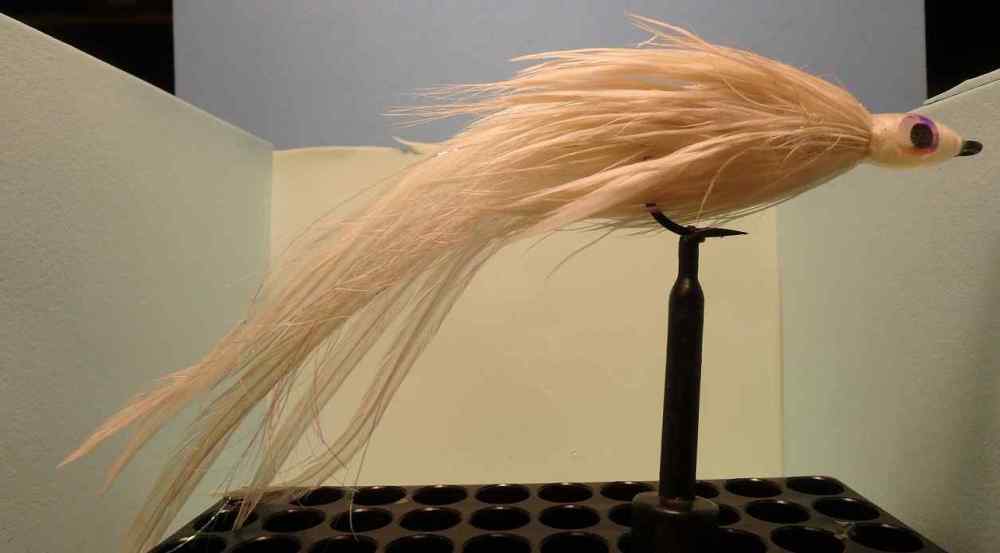
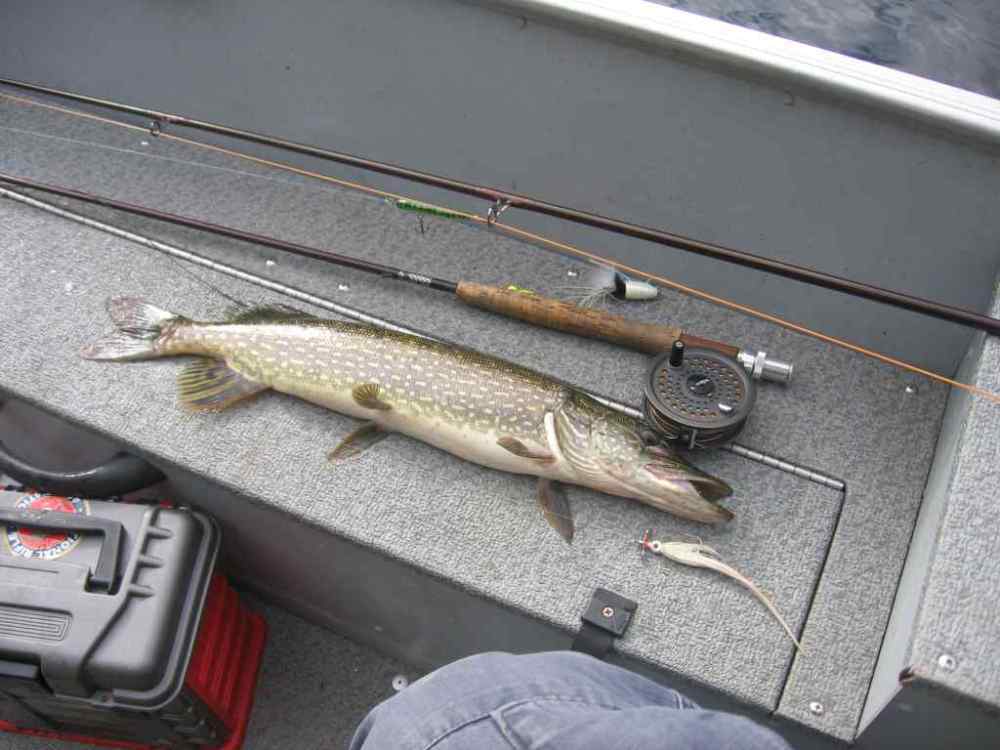
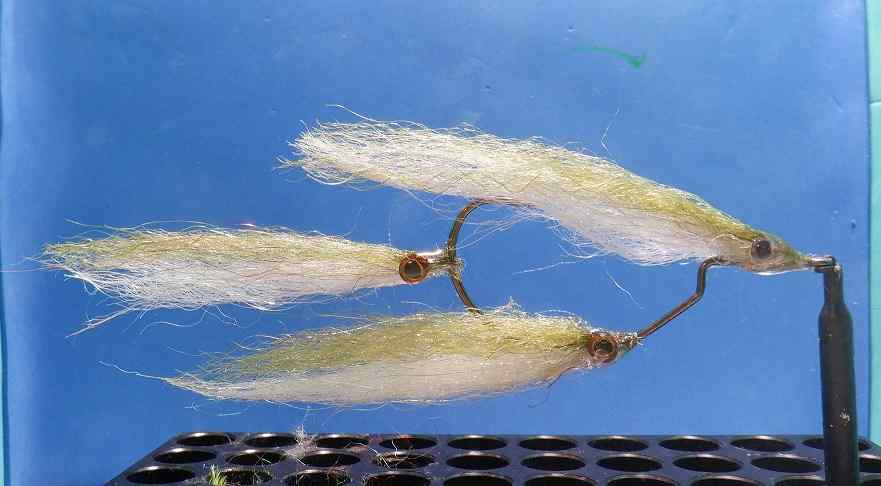
Finally tracked down a picture of the Alabama rig fly that was on the Fly Tying Forum. The tyer claims he can cast it with a 6 wgt. Not sure I'd want to do that. This is about the largest fly I can cast with my 6 wgt. It's more of a chuck and duck with a floating line, but I can cast easily with a sinking line. I removed the prop from my later versions since it twisted my leader. I generally use a 6 wgt with a heavy leader. I gotten some grief about doing that on other boards, but I'm no spring chicken and I have an arthritic shoulder. It's easier for me to cast the 6 wgt for a couple of hours than it is an 8 wgt. That's the beauty of tying your own flies. You can tailor them to fit the weight of the rod you're using. That fly is all feathers. Saddle hackle for the tail and wrapped spey hackle for the body. The only real weight is the hook and the epoxy head. Most of my flies are unweighted. If I have to get one deep I use a sink tip line. If I want to run a subsurface fly, down to around 5 or 6 feet, I use an intermediate line. The heaviest fly I have in my fly box, right now are those tied on 1/32 oz jigs and my crayfish flies which are tied with dumbbell eyes about the same weight. All which can be easily cast with my 6 wgt and a heavy leader. I do use my 8 wgt occasionally but not that often.
-
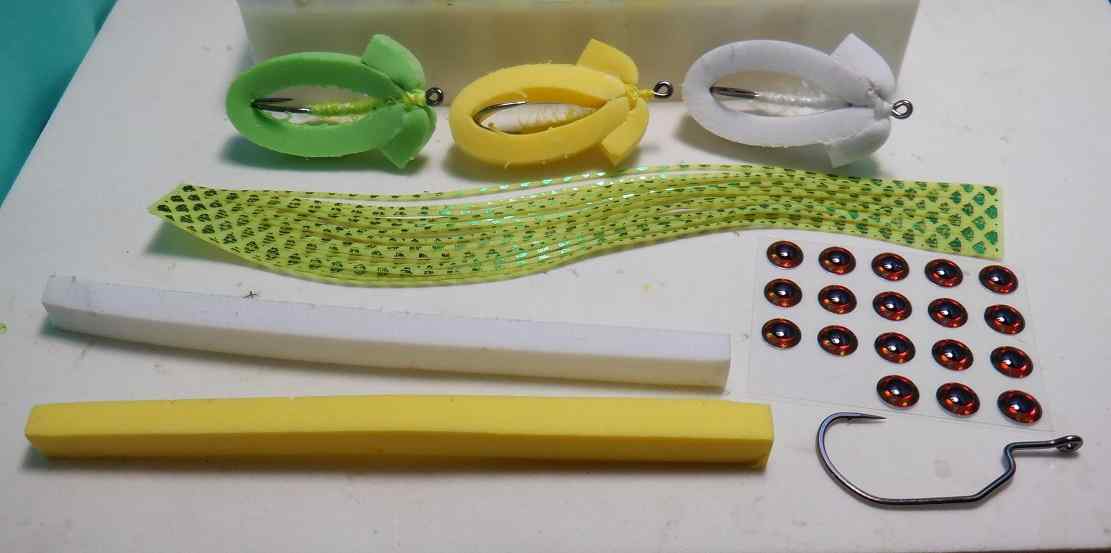
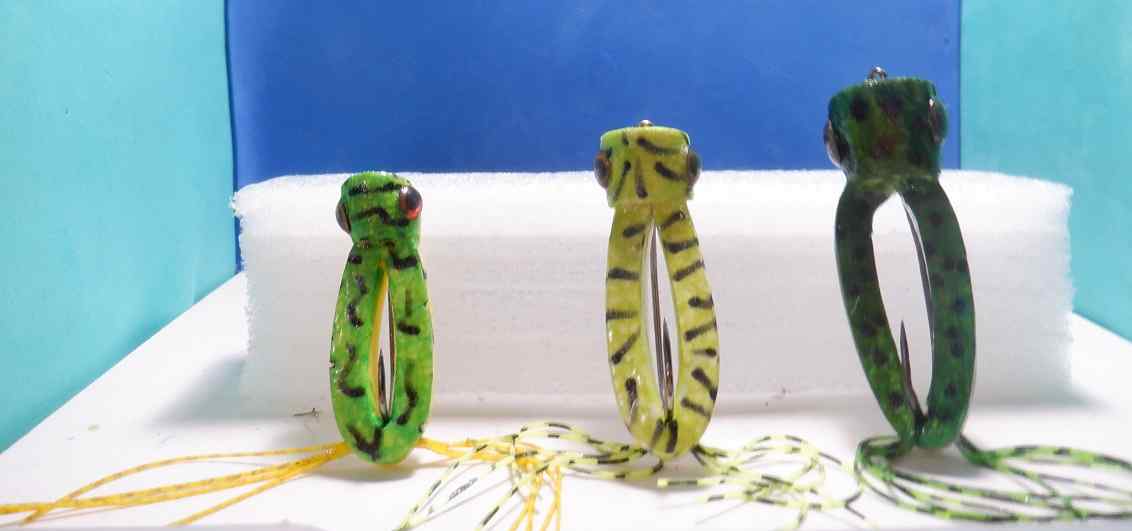
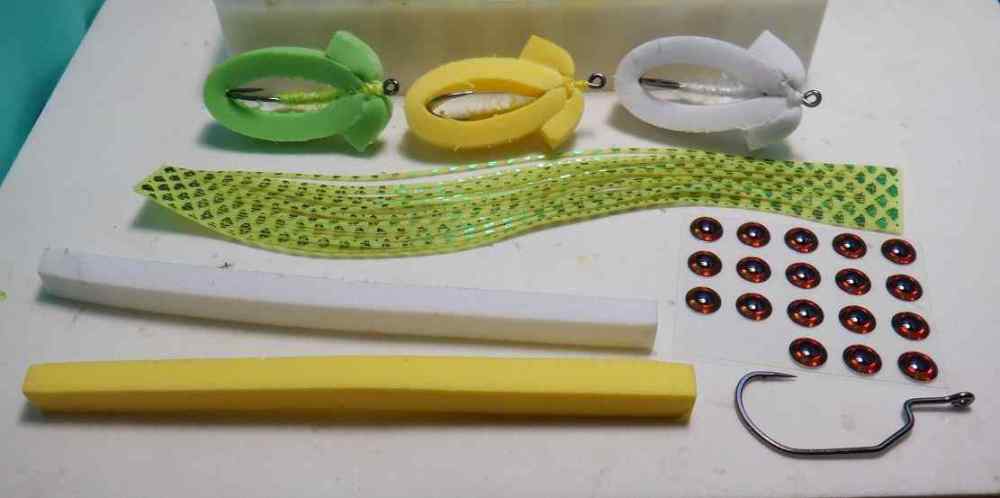
Here's the a picture of the materials. I got the idea from a pattern called the "Gutless Frog" I tied the original but didn't like it's action. After watching a couple of fishing shows on frog fishing I decided to model the fly based on the plastic frog the pros were using. The body is a strip of 6 mm craft foam. I usually make them 5 mm wide. You can find the white sheets in a craft store. They also have black and sometimes yellow. One of my fly catalogs also sells squares of it. That's where the green and yellow ones came from. You take a 6 to 8 inch inch strip of foam. Tie one end against the shank, leave enough of the strip facing forward. It will get folded back to make the head. Bring the strip around the bend of the hook and lay it against the opposite side of the shank. Before you wrap it down, adjust the tension of the strip on the hook bend. You can get an idea from the popping frog how the hook sits. Tight enough to hold the hook in place. Loose enough that the body slides down when the bass hits it, exposing the hook. Wrap that side down. Again leaving enough of the strip to bend back to make the head. Trim the strips to size you want the head to be. Fold them back and glue them to the sides. Even with super glue you may have to hold them in place till the glue sets. Add eyes to side of the head. I use spinner bait skirt layers for the legs. I use a needle to poke a hole in the foam at the bend close to the belly of the fly. Decide on the number of legs. I use between 3 and 6 depending on the size of the frog. I use one of those blue dental floss threaders to pull the legs through. Trim to the length you want. I use permanent markers to color the body. The popping frog is pretty much the same, except I cut the strips so they're just behind the eyes. Then I trim so they're not as wide or thick. I use one of those pre-made soft foam poppers for the head. I trim it to the size I need. Hollow the back out with a Dremel tool. Slide it on the hook, make sure it sits against the body and glue it place. The Schoolie fly is interesting. Popovics has tied them with as many as five bodies on the hook. The best I can do is three without messing up the tie. A guy on another board tied up an Alabama Rig fly. It looked good, but it was a lot of work. It apparently was a PITA to cast. Let me know if you have any questions
-
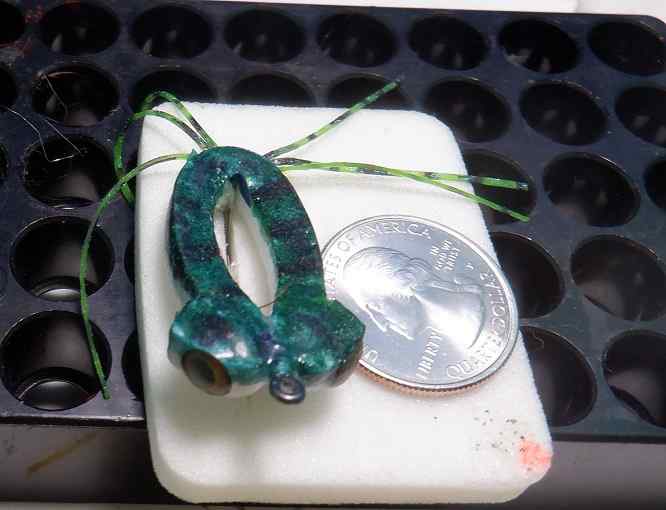
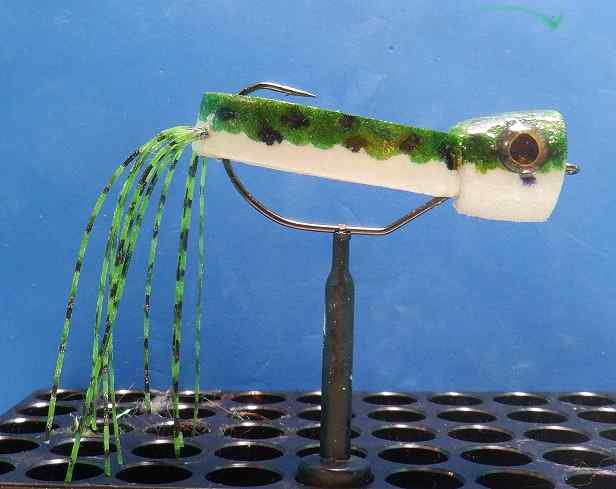
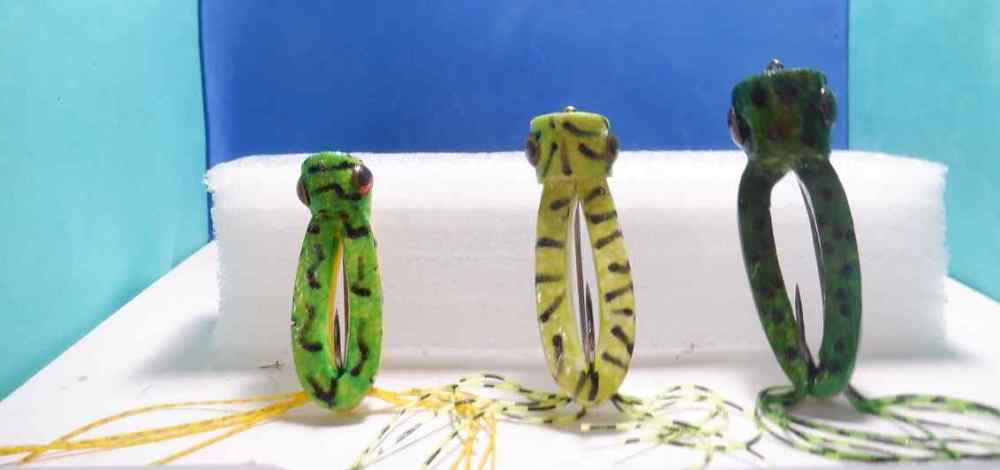
Nice ties. I haven't done that much tying recently. Worked mainly on small weedless frog patterns. Figure this time of year the frogs will be smaller than later in the season. They're tied on Size 4 Ahrex GB Predator hooks. I also tie them in larger sizes, size 2 and 1/0. Might do a couple on 4/0 hooks. I was watching a fishing show a couple of weeks ago and they were using popping weedless frogs with lot of success. I have a basic frog pattern, so I messed around and came up with a popping frog. I tried the smallest one when I was up in the Poconos, in late May. Didn't catch any bass but picked up a couple of chain pickerel. Another one I thinking about tying up for my Ontario trip in late August is the Schoolie Fly. Originally created for salt water by Bob Popovics. Not in the mood to tie up an Alabama rig fly but this might work for bass. It definitely needs some work
-
Since those are for fly fishing, they're unweighted. The only weight is the material and the hook. They do sink slowly. If I need to get them deeper I use what they call a sinking or intermediate line that will get them down faster. If I wanted to add weight, I would wrap lead wire on the hook shank As far as the heads, they're made from wrapped thread and then coated with UV resin. If you're tying jigs, the jig head is your weight. Most of the jigs I tie on are shank directly to the head. If the do have the lead piece, used to hold soft plastics or bait, I just remove them, since I really don't like a bulky collar.
-
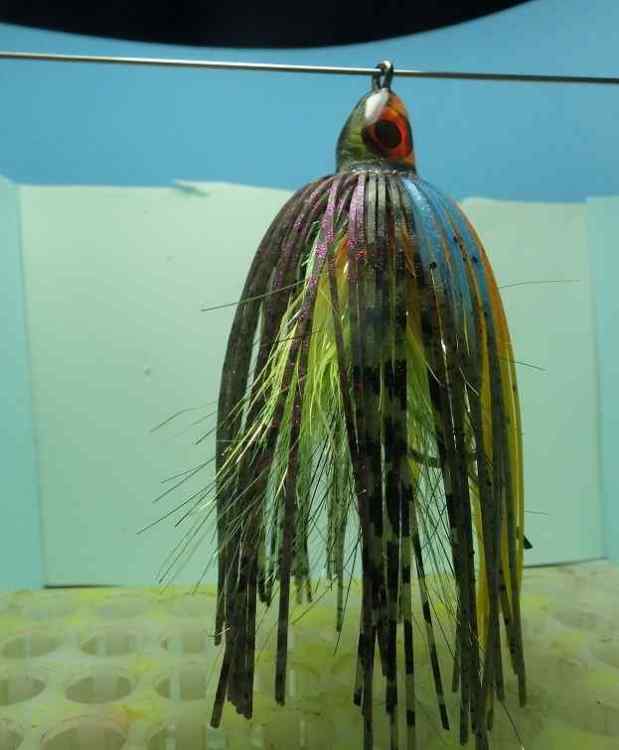
I mainly fly fish, but I do tie jigs for myself when I spin fish and for the guys I fish with. What size rod building thread do you have? Size A or D? When I tie jigs I prefer a thinner thread, in fact I use a clear polyester thread for buck tail, hair and marabou jigs. It keeps the bulk down on the wraps. If you already have the thread use it and see how it works. The skirts are silicone, as far as I know you can't dye them or add flake to them. You don't have to they come than way. Check on line or find a catalog and look for spinner bait skirts or spinnerbait skirt layers. You'll be able to find any color combination. These flies I use for bass are closest thing I have to swim jigs. I used spinner bait skirts to make them. When I posted them on this forum, one of the suggestions was to trim the length of the skirts which I did. Get your materials, make some jigs up, take pictures and post them here. Let the folks who really know what they're doing critique them and make suggestions on how to improve them.


-
I mostly fly fish, but I use my spinning gear a few times a year. All my spinning reels have two spools. The two I use mostly for smallmouth have 10# fluorocarbon on one spool and the other spool has 10# braid on one reel and 15# braid on the other. I just fish straight braid, no leader. When I'm fly fishing I use a 6 to 8 foot piece of either 20# or 25# fluorocarbon for my tippet. Partially to help turn over the flies and the lakes I fish have tooth critters in them. I've never noticed that smallies are leader shy.
-
My buddies use a lot of Rapala or other minnow style baits. They also use in-line spinners, sometime spinner baits. Shallow divers or top-water on the smaller lakes. Minnows, small sunfish or perch would be the primary forage in the smaller lakes. Beltzville and Wallenpaupack have shad in them. Also crayfish imitations in the larger lakes. The Delaware, pretty much the same. By August, there should be YOY American shad and gizzard shad in the river. Mostly I fish top water flies in the smaller lakes. I've tied up a few frog imitating flies which should work well in the smaller lakes. I'm surprised my buddies don't fish plastic frogs. They might be something to consider
-
Depends how far you want to drive. Beltzville and the Delaware are least an hour's drive from where you'll be staying. You should be able to pick up largemouth in Arrowhead, no gas powered boats are allowed on the lake. Just saw your reply. Can't help you with Beltzville, I've never fished it. The Delaware can be iffy because of the water levels. If there's been a lot of rain the river might be unfishable or since they're cutting the discharges from the reservoirs in NY the levels might be low. I've fished Wallenpaupack a couple of times. One of the guys I fish with has a place up there. His son fishes it more than he does. We tend to fish the smaller lakes around it. The closest lake to you, other than Arrowhead, is Brady's Lake. It's, I believe, a canoe/kayak only lake. Pocono Lake isn't far from you either. Tobyhanna and Gouldsboro lakes are an easy drive away. Both, I believe, are electric motor only lakes. You can check on-line about boating/HP limitations. All of them have largemouth. Any of the lakes will be less crowded on weekdays. Be prepared for chain pickerel, particularly on the smaller lakes.
-
I was raised Catholic. Went to a Catholic grade school and high school. I didn't even curse, let alone use the "F-word" and there wasn't much profanity used in my house.. Then I joined the Navy in the late 60's. When I got out almost every other word was the "F-word". I really had to concentrate to keep from dropping it in front of my parents. After I finished college I went to work at the DOD supply center in South Philadelphia where I worked a bunch of women who were from South Philly. Get into a conversation with some of them and it was sprinkled with the F-word. More impressive they could say it in English and Italian. Maybe that's what my grandfather was muttering when he got ticked off. My friend who grew up in rural Ohio. She uses it about as often as I do in our conversations. I worked at the college radio station when I was an undergraduate in NW Tennessee back in the 70's. I played a Jefferson Airplane cut which I hadn't really listened to an one of the lines was "Up against the wall, up against the wall motherf***er. I kept waiting for the campus police to come in and shut me down. Still these days it's lost it's shock value. I expect to here at some point most conversations.
-
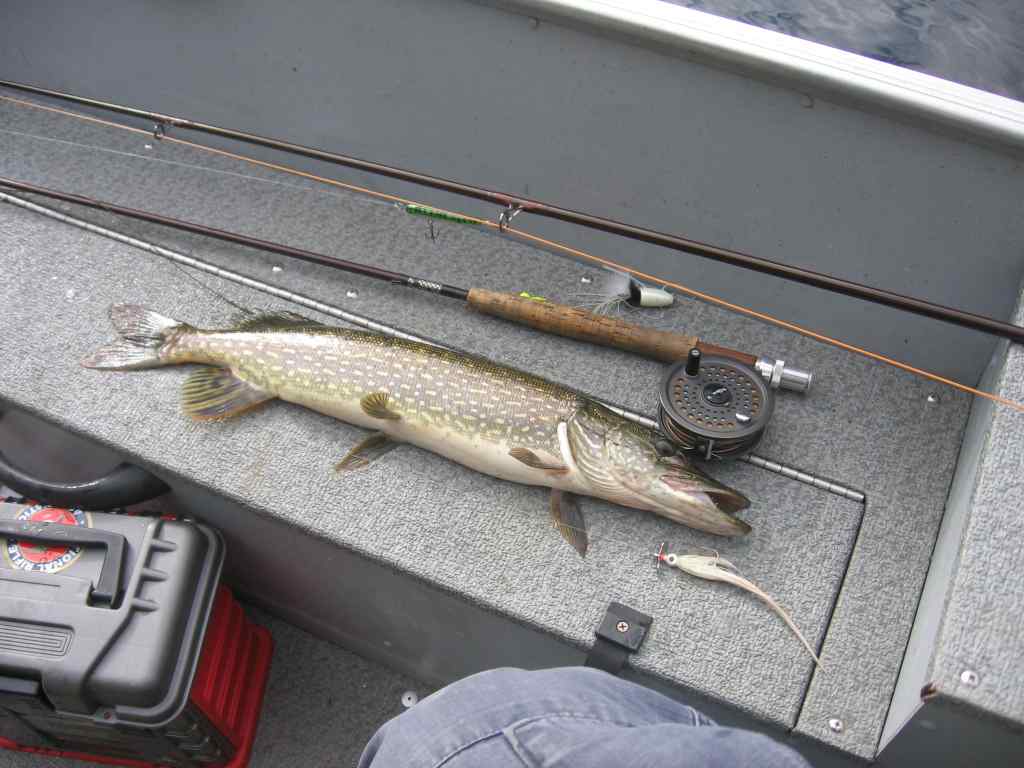
If I'm spin fishing for them I just tie the line either fluorocarbon or braid directly to the lure. I tend to use longer minnow lures like Rapalas, Yo-Zuri, Bagley which may explain why I haven't had that many bite-offs. Fly fishing, I just use a 5 or 6 foot piece of 25# fluorocarbon for my leader. One trick I learned fly fishing for bluefish which have a much nastier set of teeth than a chain pickerel or pike is to use a long shank(3xl or 4xl) hook to tie my streamers on. The hook shank serves as a bite protector. I do make up wire leaders for the guys I fish with out of 30# Tyger Wire.
.thumb.JPG.a2a1c59ae7345f54f15bdd150d552a09.JPG)