Bankc
Super User
-
Joined
-
Last visited
Everything posted by Bankc
-
Ah. We don't have much hard bottom around here either. But, I'll keep this in mind, because there is some. I've also found that the winter often fishes a bit like the middle of summer. Not exactly. But close enough that they can often share some techniques. So I might have to give this a try soon and then keep it in my back pocket for the cold months.
-
-
Grass is the key to chatterbaits, I've found. If there's no grass near by, they don't seem to work. I don't know why, but I can't get bit on one on most of our lakes, since most of these lakes don't have grass. But on the few that do, they tend to work okay. But for me, it's hard jerkbaits. Our water is too stained. I've tried hard jerkbaits for years now, and even with rattles, they just don't work. Bass can't seem to locate them. Now, soft jerkbaits can work pretty well. But they don't have exposed treble hooks, so I can throw them in cover where the bass are. These bass won't travel far to hit a lure in open water, but they'll hit a lure right in front of them. Fishing for bass in open water is pretty difficult around here anyway. Your best bet are lures that get down deep and cover lots of water, like deep diving cranks, spoons, blade baits, etc. Sometimes a worm or a jig works too. Lures that suspend over deep water without going deep themselves don't seem to be effective for me.
-
I haven't ever used an app for that, so I can't recommend anything specifically. I will say, however, that I doubt there's much money to be had in making an app like that, since most sonar units either come with maps, or have maps as an option. And making those maps is very expensive and time consuming. So my guess is the best app would come from the same people who make the maps for the sonar units. And I doubt they spend too much money developing the app, since that's not where the money is for them. And I'm betting most of the other apps all use whatever government surveys they have access to for free, which means they're probably all about the same. But mostly, the best app is probably whichever one has the best map for the lakes you fish, just like with the big sonar units. One company might have a better detailed map of one lake, and another company might be the only one that offers a map of a second lake.
-
I agree that the best thing to do is to add to it slowly, and figure out what you need as the needs arise. Otherwise, you'll add a bunch of stuff you don't use that will take up space and be in the way. And depending on your budget, you might no longer have the money for the things you do actually need, but didn't think about at first. But yeah, a PFD and paddle are the two must haves. I prefer a foam PFD for the cold months and an inflatable for the warm months. Basically, because in the winter the foam padding helps to keep me warm and near freezing water can instantly shock your system so that you can't swim. So I don't want to take the chance that my PFD won't inflate, if my body might go instantly go into shock. But in the summer, an inflatable is nice, because it's hot, and I'm much more likely to be conscious and able to swim if I hit the warmer water. You don't need one of each. Especially if you don't get out in extreme temperatures. As for paddle, since you have a pedal kayak, I'd just get a cheap fiberglass one. Something to push off rocks and docks with and use as a backup in case your pedal gets clogged or breaks on the water. You probably won't use it much. But don't get one with a metal handle, as they'll get crazy hot and crazy cold in the extreme temperatures. For everything else, you'll figure it out as you go. It's not always just a matter of what you want or need, but also what you have room for. At some point, you'll still have extra space to pack more stuff in, but you won't be able to maneuver around and access everything. It does no good to add accessories that are such a hassle to access that you never use them.
-
Lizard. I find the lizard to be the most versatile soft plastic out there. You can rip the legs off and have a worm. Rip the tail off and creature bait. Rip the front legs off and tail and have a craw. Rip the front half off and have a jig trailer. Rip the legs and tail off and have a Ned rig. Or just fish it as it comes. Outside of that, I just usually pack of bunch of whatever was on sale. I've not found a magic bait yet, so I'm not particularly loyal to any one brand or color. They all seem to have their days, so it's just a matter of going through the box until you find what the bait of the day is.
-
My thought is, you're taking this entirely too seriously. The only thing you are "supposed to do" is have a good time. There will be days where you'll make dumb mistakes and get skunked because of it. They'll be days where you do everything perfectly, and still get skunked. And there will be days where you'll make nothing but mistakes and catch a boatload of fish anyway. You can INFLUENCE how many fish you catch with your choices, but you can't CONTROL it. Besides, you'll make better decisions when you're relaxed.
-
Usually, I'll just tie on what I plan to use, and then maybe put another bait or two in my pocket. Then I'll leave whatever else I might want in my car. That way I'm not carrying a ton of stuff, and if need be, I can walk back to my car and get something different. I used to carry a bunch of stuff with me in a tackle bag, but I've figured out that I catch more fish when I focus more on where and how I present my lure, versus trying to figure out what lure to use. Plus, when fishing from the bank, I'm pretty limited on what I can throw anyway. It has to be heavy enough to get out past the weeds along the bank, and weedless enough to make it's way back to me. So even if I brought a big tackle bag, 75% of it would be useless from the bank.
-
That's just a rough estimate. Cast it out a few feet in front of you, and reel it back towards you while it's within view. You'll quickly get a feel for how far and how fast to reel to get the action you want. Ultimately, it'll depend on the bait and how fast your reel is. But I bet it'll be something around a half spin.
-
If it's properly supported and protected from the sun, it should be fine. The main problems I would see, other than theft and vandalism, are the heat of the sun slowly warping the hull and the UV light breaking down the plastic and making it brittle. Ozone will do that as well, but there's not much you can do about that, even in a protect storage space (unless you want to store it in an airtight bubble). But some kind of cover to protect from the sun's rays will greatly extend the usable life of the kayak. And if it's properly supported, then warping shouldn't be an issue.
-
First thing I do is after I launch is immediately head out from the ramp to the deepest part of the lake (that's nearby, you don't want to waste too much time doing this), and keep your eye on the sonar. You're looking for the deepest spot fish are holding, and/or a thermocline. Once you've determined the deepest depth that hold fish, make a note of the and head back towards the bank. Look for a good place to throw some topwaters, because it's morning. As the sun gets higher in the sky, and if I'm not getting bit too often in the shallows, I'll progressively make my way deeper, looking for spots with cover on structure, shade, and any steep transition zones or temperature/current changes. The basic idea is use your sonar when you first launch to set a floor for how deep the fish are at their deepest. That gives you a floor, and allows you to eliminate a lot of unproductive water that's safe to ignore. Then immediately head shallow and slowly work your way to deeper water, hitting up the most likely spots along the way, looking for patterns. Once you think you've discovered a pattern, look for other spots on the lake close by that are similar to see if the pattern repeats itself. If you get all of the way out to the deep water and still aren't getting bit, work your way back towards the shallow water and start over, only in reverse. On bigger lakes, I also like to set some boundaries for how far to travel from the dock. In a kayak, movement is slow and laborious. So try to focus on making the most of what you have access to, and not wasting time moving around too much. Also, if the wind is blowing a bit or the current is moving enough to push you along, look for areas of the bank that run parallel to the wind. A good technique in a kayak is to start upwind of the bank and let the wind or current push you along the bank while you fish. That allows you to cover a lot of water fishing without wasting much time or effort paddling. Plus, it a super stealthy way to move around a lake. A drift sock can really help here if the wind or current is moving you too fast. Then, when you get to the end, if it worked well for you, you can restart and drift again.
-
I don't try to buy gold crankbaits. I've heard they're good for partly cloudy days. But for whatever reason, I don't generally gravitate towards them. Perhaps because they're neither natural, nor high contrast. But I do have a few. And they seem to work as well as any other color. Size, running depth, noise (or lack there of), and of course, action seem to be what matters most. Color isn't usually a big concern of mine with crankbaits. Though I have noticed that I find a lot of gold colored crankbaits at antique stores. So I guess that was a popular color in the past. Either that, or no one else wants them.
-
It's not terribly uncommon for the thermocline to be at different depths in different areas of the same lake. There's usually some relation, so you're not likely to find one area with a thermocline sitting at 6 foot and then another area of the same lake with the thermocline sitting at 60 feet. But it's not unusual for it to change a bit as you move in and out of the wind or current. And as the wind or current changes, it can adjust the thermocline with it. Again, you usually won't see massive changes, but changes do occur, and can occur pretty quickly under the right conditions.
-
Those old mushroom anchors are what everybody had when I was growing up. They never seemed to work worth a hoot. I remember when my dad bought a fluke anchor for his boat when I was a kid. It worked so much better, he was telling anyone and everyone about it who would listen for the whole summer. Then I recently read that the mushroom style anchors really only work if you're going to be anchored somewhere for a really long time. Like weeks or more. They were designed to sink down deep below the surface of the mud, and don't do much good if you're only going to be anchored somewhere for the short term. Which brings up the question, why did virtually everyone one in the 70's and 80's? I guess they were cheap or something.
-
If a bass is going to die, I just release it back into the water. Let it serve it's purpose in the food chain. I've eaten bass before. And I'll eat bass again. But I'm not a fan of the taste of bass, so it's not usually worth cooking and cleaning for me. If it makes you feel any better, just remember, if the bass was bigger than you, it wouldn't hesitate to eat you first.
-
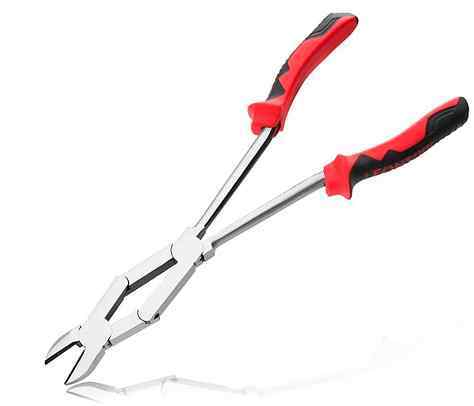
It's the water in soda that clots the bleeding. Just like exposure to air is what clots our blood, exposure to water is what clots fish blood. Which is why it's important to get them back into the water as quickly as possible. The citric and phosphoric acid in most sodas can damage the fish's gills and inhibit their ability to breath. It's like if we breathed in acid vapor into our lungs. It wouldn't be good. Probably the best thing to do for the fish is to bring a pair of long reach, double joint, wire clippers, and if you can't get the hook out quickly and easily, just cut the barb off and get her back in the water. But if you catch fish, you kill fish. Even if every fish you've ever caught, you immediately released and it swam off unharmed, there's still a very high probability some of them died some time later due to injuries or trauma sustained from the catch and release.
-
If you're going to leave your rods and reels in the car, I would probably not invest too much into them. Now I'm not saying to get the cheapest rods and reels you can find. But don't buy stuff that's so expensive, you can't afford to have them get stolen or damaged in a few years time. You're going to accelerate their aging, storing them in the car. And there's not really a good way around that. I might consider switching to braided fishing line, if you get tired of swapping out line so often. It tends to hold up better over time. But if you don't mind the swapping and prefer fluoro, then stick with what you're doing. As for maintenance, just clean it when it's dirty and oil it when it needs it. If you fish often, you'll probably notice when your reel is suddenly not casting as far or reeling as smoothly. Then it's a good time to break it down for a good clean and relube. Same with the rod. If you notice it's accumulating gunk, give it a good cleaning with soap and water or whatever cleaner you prefer. Otherwise, there's not much you can do to slow down the accelerated aging of leaving it in the car. So just accept it and plan accordingly. You can probably still get a good 5-10 years out of them.
-
Is it within or near city limits of a big city or way out in the country in the middle of nowhere? Because here in Oklahoma and Texas (and probably a lot of other places too), that matters greatly in how the law will be interpreted and implemented. Not just by law enforcement, but by the courts too. A rural county judge or sheriff will likely side with the locals, no matter what the law technically says. I've had a run in with a sheriff in a rural county where he bold-faced lied about me doing things I didn't do, threatened to arrest me and my wife on these made up charges for no reason, other than "People like you don't belong around here", only to eventually let us go with a smile and handshake when I name dropped the right names. And I've had another incident where a local policeman in a small town in the middle of nowhere wrote me a ticket for speeding, and when I pointed out that the posted speed limit was indeed faster than I was going, he put the wrong address on the ticket to make it look like I was driving on a different road altogether. I took photos of him and where we were when I noticed it on the ticket before we drove off to use as evidence in court, but the judge wouldn't even look at them. He wouldn't listen to a word I said, because I wasn't from around there. I wasn't allowed to mount a defense. Years later, they pulled over the wrong guy and he mounted a successful suit against the county, and they lost the ability to collect revenue from traffic tickets. So you know it was a long running scheme that involved the coordination of law enforcement and the courts to generate outside revenue. My point being, just because you're on the right side of the law, doesn't mean the law is on your side. It's not right or fair. But it's the way things are, and you're not going to win that fight. Of course, it doesn't help that the sheriffs and judges in Oklahoma are elected. And it's not good for their reelection campaign to follow the letter of the law if it goes against someone who might vote for them, especially when there are so few votes cast in those rural elections.
-
A 3.5lb folding grapnel anchor is the standard choice for a kayak for good reason. They're small and light enough to not take up too much space, and they hold pretty well on most bottoms you'll encounter. Second place would be an anchor pole. They will hold your kayak the best, but only work in shallow water and can take up a lot of room. I have one but almost never use it because these lakes are too deep to be of use. Either way, an anchor trolley is a virtual must, in my opinion. The wind and current will blow a kayak around and an anchor trolley allows you to point the kayak in the direction you want to fish while anchored. I have two, one on each side of my kayak. I also have a drift sock that I'll occasionally use to help keep my kayak from moving too much while anchored, by using it on the opposite side of the grapnel anchor. Also, a lot of people like to put a zip tie on their grapnel anchors and tie the rode to the eye on the tip instead of the shaft. And then zip tie the rode to the eye on the shaft. The idea being that it'll act like normal under normal conditions, but if it ever gets truly stuck on something, you can pull it hard and bread the zip tie and it'll pull the anchor up backwards, freeing it from whatever it was stuck on. On the cheap end, some people will use a retractable dog leash and a 5lb dumbbell or weight. Or maybe a small length of heavy chain. All seem to work fine with kayaks. Some people will also use those 8ft. fiberglass tree stakes you can get for a few bucks at home improvement stores and use it as an anchor pole. You can glue a PVC T-fitting to one to make a handle to help drive it int the bottom and it gives you a place to attach a rope.
-
I'm fairly lucky in that for the city lakes nearest me, you can get an annual pass for fishing and boating for about $60. Then you can fish all of the bodies of water in the city (about a dozen) as much as you want. There are also some lakes owned by electric companies that are free to use. There are some other lakes around me with a fee. But it's usually between $10-20 a day for fishing and boating. That's not ridiculous to me. And, to be honest, it's almost always a pay box system. So no one really knows if you paid or not. Especially since most of these lakes don't have people around to monitor them or anything. So if you were the type to get angry about the lake fees, you could probably not pay them and never face the consequences. But I like to pay them. I like to believe that money I pay goes towards the upkeep of the things and places I love.
-
Learn to back up. That's the big thing and you don't need to practice at the dock. You can do that anywhere with your trailer. It won't take long to get the feel for it. And you don't need to be an expert who always nails it the first try. Just don't be that guy that takes 20 tries. And don't rely on your mirrors or backup camera. Turn around and watch the trailer with your own eyes. You can still use your mirrors and backup camera to help see things more clearly, but you want to do most of your driving with your head turned around, watching the trailer directly. It's much easier that way. Next, make sure to pull up, out of the way somewhere in the parking lot, and get out to check the boat and everything and get it all ready before you attempt to back up. Check the plug as the first and the last thing you do. You'll forget the plug one day, so make it a habit of being paranoid about forgetting it. And while you're checking the plug, check the rear straps. You'll probably forget about the rear straps one day as well. Leave the front strap on until your trailer is in the water and unhook it when you crawl into the boat. But use this time when you're out of the way and not in a rush to go over everything. Take your time. Visualize what you're going to do when you're on the water, and make sure everything is where it needs to be. Then, when you're ready to launch, if anything goes wrong, stop, take a breath, get out of the boat and double check everything. If you panic because you're in a rush, you'll likely make things worse and take even longer. But if you stop, breathe, and go slow, you'll figure out the problem much more quickly. Slow is fast, and fast is slow here. Also, keep your windows rolled all of the way down and car running at all times on the ramp. And get everyone else out of the car before backing up. Even get the dogs out. Brakes can fail and the car can slide into the water. Ice and moss on the ramp can cause your car to slide even if the brakes don't fail. Once your car doors get below the water, you probably can't open them until the cab is fully flooded. The water rushing in will generate a literal ton of force pushing your door shut. So the open window gives you a way out before the car is fully submerged.
-
I'd turn it in. Then I'd milk it for every dime I could. You'd see my ugly face on all of the useless baits in the clearance section of Bass Pro!
-
Blue, black, or junebug is about 50% of my soft plastics. Another 25% is green pumpkin or watermelon, which I seem to buy more often than I use (water is pretty stained around here). The remaining is mostly white, chartreuse, or some kind of shad/minnow looking color swimbait. And I make sure to always have a package of Zoom Trick Worms in Methiolate, as that color absolutely kills for like a two week window during the prespawn, and at other random times throughout the year when nothing else seems to work. I also fish a lot of "trash brown", which is whatever color I get when I remelt my old plastics. It seems to work pretty well. And let me tell you, that Methiolate color is really strong and will take over if you use much of it!
-
Almost none. Here in Oklahoma, storms can, and often do, intensify very, very quickly. And what starts off as a light sprinkle with barely nothing on the radar can quickly turn into heavy lightning, 80+mph winds, and a torrential downpour in a matter of minutes. Back when I had a ski boat, I'd tough it out until I heard thunder. But more than once, I got caught trying to load my boat with lightning all around and 50+ mph gusts, when maybe 15 minutes ago, it was clear and calm skies. Now that I fish from a kayak, I won't chance it. It can take me half an hour to get back to the ramp, and another 15 minutes to load, so it's just not worth the risk. Oklahoma is one of the few places in the world with weather tourism. We have people from all over the world come here to see our storms. We have hundreds of people who's job it is to chase storms. Some do it for local news stations, some for science, some to sell video footage or for social media, and some who lead tour groups in armored busses. You don't mess with the weather around here. I think it was just two weeks ago we weren't supposed to have any rain, and a storm suddenly popped up out of nowhere and generated 90mph wind gusts! That's the speed of an EF1 tornado, without the tornado!
-
If the grass is all about the same height and there's room to pull a lure above the grass, then I like to use a lipped crankbait, because they're pretty good at maintaining a constant depth. If the weeds aren't too thick, and I want to fish down in them, then I'll use a chatterbait, as they usually come through the grass more cleanly than anything with treble hooks. If it's a little of both or the grass height and density varies a lot, then I'll use a lipless crankbait, as that can either be pulled over the tops or ripped through. If the grass is thick and tall, then I usually switch over to a T-rig with a heavy weight to get down in it, or a topwater to stay above it. If it's really thick and all the way to the top, I might throw a frog or toad to keep the topwater from getting fouled up. If it's extremely thick, I'll probably avoid the grass and just try to fish around it.