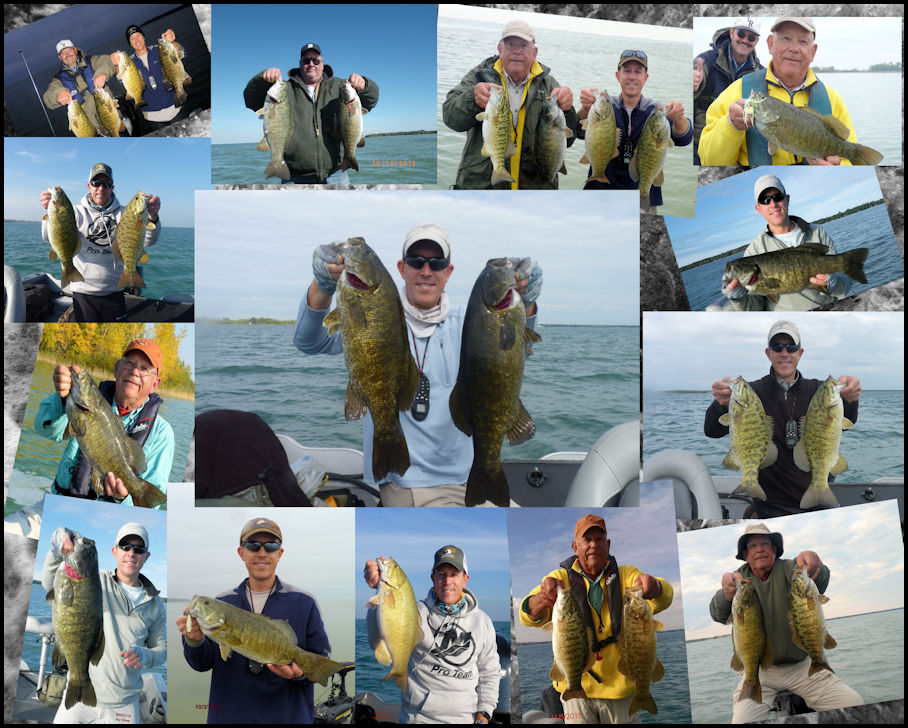
MickD
Super User
-
Joined
-
Last visited
Everything posted by MickD
-
-
I've always used right retrieve casting reels, casting with right and retrieving with right. As others have stated it feels right. But after snapping blades off the bottom for about 6 hours last fall with the left hand, with the right on the reel handle grips, my bad left shoulder said it didn't like it. So I'm learning to do it the other way for techniques that over-stress the bad left shoulder. It's easy to get used to. I found that for a technique like blades, requiring quick reeling after the snap, changing hands did in fact take too much time.
-
These new units will drain a starting battery faster than the older units. With two running on my new rig I found my starting battery too low to start the engine after about 8 hours on the water. They have power saving features, easy to use and saves battery when not really needing them on. I also bought a jump starter power unit just in case. Takes up less space than jumper cables, and on my boat it's a lot easier to use than jumping from the trolling motor batteries.
-
Good luck with trying products intended to soften line (a plastic material) on EVA (a plastic material). Why do you want to "condition" it? All they need is a soap and water wash now and then. IMO
-
I used a power washer for years on my boat, worked well. I suggest the simple green procedure recommended above, then do the power wash, no need to vac. Be sure to be careful with the power wash, you want to be a little aggressive, but don't want to damage the carpet. Have the front of the boat high and the plug open.
-
Keep in mind that the video stated that lines are not all spooled the same way, so for spin, label up on some, down on others. I check EVERY time to be sure it's going on right. Any spooler that has the source spool rotate is not the best for spin. OK for cast. Another way that the immersion in the water can help is that nylon absorbs water and becomes softer. That's why storing nylon line and reels with nylon line on them in an unheated building in the north is a bad idea. Very low humidity, nylon tends to get brittle.
-
Watermelon green tube, Ned rig, 4.5 inch paddle tail swim bait on a 3/16 oz darter head jig.
-
I use the KB's for the first two on spinning rods, KT's after that. I have used a few AmTak micros in the past, no problems, have grown to prefer the KLH reduction guides, KB's and KT's for runners. The AmTak design was not tangle free. I don't like the Microwave system that much, no problems, just personal preference. I sometimes use KB's for all the running guides on casting rods and heavier spin rods.
-
So many questions. . .-Get the regs from the MI DNR website, no boat issues I can think of. Pick your lake depending on the wind. The really clear lakes can be tough because the bass see you so easily. Long casts, sounds like you have the right idea on braid and FC. No need for high pound tests as most water is pretty snag free. Don't forget about lipless cranks. For clear water I like chrome, lighter colors, ghost, transluscent colors. You may find bass still spawning up there, so slow stuff for beds should be part of your plans, tubes good, even lizards. One good search lure for me in clear Saginaw Bay is a 4 - 4.5 inch white swim bait on a 3/16 darter head jig, snapped off the bottom, vary the cadence until you get a good snap off the bottom, with a tight line drop after that. Fish often hit on the drop. Make sure you rig it so you keep good hook exposure/gap to the lure. Hard jerks you have planned should be good. Be sure to try long pauses. If you don't fish Ned rigs, get some of various colors. They sometimes are the only thing that works. Fish very slowly. I would have a few silver buddie blades along in case you have to fish deeper for them. In some of the lakes up there you will find different colored bottoms (often dark) as you search. Focus on them-they are often weeds which will have fish around the edges, or they will be rocks with fish anywhere near and on them. Finally, have a few colors of super flukes (5 inch) fished weightless. White, pink, and dark green. Good luck.
-
Check out the Fuji KLH guide trains in the Fuji catalog. I love them. All my rods are built now with some version of Fuji K series guides, spinning and casting. It's like putting very functional jewelry on your rods. I cannot offer valuable info on cork components; I turn my own from the best quality cork rings i can get. Easy to do on a drill press.
-
For the rod to be used for spinnerbaits I would use the lower ratio because I tend to crank them too fast. I use an old Calcutta 100 with 5.4 (I think that's it) ratio to slow me down.
-
Agree, good stuff. Only one coat, as the instructions state. Two will not be better.
-
I agree that Mudhole is a good place to start, not only their products, but their techniques and tips videos, too. When you have questions on how to do something, also consult the very good Flex Coat videos (search for "Flex Coat videos" I suggest you do not start with an expensive blank. You will get better with every build, and you will make mistakes. Better to start with something reasonably priced. There are tons of reasonably priced very good blanks out there. Mudhole offers "turnkey" kits which include a simple tool set, so that seems to make sense as a starter. Once you build a few rods you will develop a style that you like and will expand into doing more than assembling ready-made components. One can turn cork on a drill press with a simple setup that costs almost nothing, for example. I turn almost all my cork and some other easy-to-turn materials which allows me to get a larger variety of looks and functions beyond the components available for sale. There are also a couple other good rodbuilding forums out there which offer good instructive information.
-
-
If you take it easy on the casts you will not break the rod, but if you get too aggressive with an "overloaded" rod, then it could break. As stated before, it's a PITA compared to having the proper rod.
-
Using mono? Try braid and follow instructions above. If you feel a thump when you are not moving the lure, it's a fish. If you are feeling them and not getting them then try a smaller lure; maybe they will take it in farther. Also, in some cases, bluegills or gobies or other fish too small to get hooked are fooling around with the worm. They usually don't thump, though, more of a rat a tat tat high frequency feel. Practice; it will get more obvious what is going on.
-
I respectfully think these last few posts are confusing the issue. Justbass wants to simply replace a guide, so using an epoxy designed for wraps is obviously a good solution. Pro Coat has only one issue: It takes a long time to harden, often a few days. But if that is consistent with one's time-table, then it is a reliable, high quality, product. I've used it on many rods and have had zero problems with it. If there is a report of never hardening, it was a failure to mix it thoroughly enough. ALL epoxies should be stirred at least two minutes or they will be unreliable at hardening. The water vapor curing urethanes, like Permagloss and Lumiseal are good for their intended use, which is finishing the blank itself if you want to get a gloss finish. But they don't build like wrap epoxy, so the acheiving of a "glass" smooth finish cannot really be done with them. They will always leave the texture of the thread showing. Wrap epoxies are unsuitable for finishing the whole blank-too thick and heavy, will actually slow down the action of the rod and are not as hard as Permagloss or Lumiseal. Ghoti is right, don't use products not designed for rod building WRAPS as you don't know what you are getting into. The other products on the link, water-based "varnishes," (notice the one is amber colored, probably suitable for cane rods, but I'm not familiar with it) are not, as far as I can tell, designed for wraps. Before using them you might want to talk to the publisher of the link in Studley, UK. I doubt if they (exc for Lumiseal) can be purchased here. By the way, Lumiseal is not water soluble-it uses water vapor to cure. Stick with the original plan, epoxy designed for wraps (as Ghoti said, Threadmaster, Flex Coat, or Pro Coat if you have the time to wait for it). Mix them for two minutes min, wait for bubbles to break, blow gently on it through a straw to break bubbles, then apply). I gently blow on the wrap through the straw to break any bubbles I missed before, or any that formed while applying.
-
Can you elaborate on this product? Brand name? I'm not familiar with it by this name.
-
-
-
Spoonplugger makes a good point. If you limit yourself to braid less than about 15 pound test for the spin reel, then most any guide setup would work to some degree. I presume you are talking about one set of guides on the blank that will work down for spin and up for cast, and in that case I would use two Fuji KL guides starting with 16, then 12, a KB 6, then whatever size you want to the tip, in KB's and KT's. Your cast outfit could use whatever line you want. Test cast both ways to find the right spot for that first KL 16. Why KL's? They are lower than Y type spin guides so should work better when baitcasting than higher spin guides, but should still handle the braid if below about 15 when spinning. I doubt if you'll find a kit that meets your requirements, but this setup might. Use a smaller spin reel, like a 2500 size. Fuji's new cc frames with Fazlite rings are quite affordable. Forgot to mention, if that 16 first guide seems too small, Fuji makes a 20 KL. Then I'd go 20-12-6 for the first three. But it will look pretty big when on top. But many casting rods used to use pretty big first guides.
-
I was perusing the Cabelas catalog while having lunch the other day, and was reading the descriptions of the fishing rods offerred. I can only conclude that the same people who write wine labels also write fishing rod descriptions.
-
The spine is of no significance. Most builders are building on the straightest orientation of the blank. You have bigger issues. Not sure I understand the casting and spinning, two different builds? The only way to have a single rod that works with both reels is to have the blank, with a male ferrule, mate with a handle/grip with a female ferrule, and rotate depending on the reel. Not ideal, and difficult to get the compatible right parts, and no trigger for the casting setup. Could use clarification.
-
That blank would work well for Ned rigs and for casting cranks that you find too light for your baitcasting rig. Of course you won't be horsing any big fish out of weeds, but you said smallies, which are more open water fish. I use two similar blanks all the time in open water with fish up to 6 (still looking for the seven) and have no problems.
-
Adding a new coat should fix it just fine.