Heartland
Members
-
Joined
-
Last visited
Everything posted by Heartland
-
Base your decision on the weight of the baits that you plan to cast.
-
The gears are entirely different in the XT and the bearings are not the same size.....
-
Not my explanation, it was borrowed from another fishing forum where a similar question was asked. I think the conclusion was reached long before the comparison of parabolic and fast action rods. " A longer rod is less effort efficient than a shorter rod" I believe the example was to just demonstrate how the action of the rod can change the equation based on the flex in the rod and the shortening of the effective load lever.
-
Lots of "techie" stuff follows........... Answer 1 : The longer the rod the more leverage advantage the fish has & the less line tension the angler can generate for the same effort. Answer 2 : Depends on where the angler is holding that rod ( but not practical ) As usual our simple fishing rod has a complex dynamic. A fishing rod is not a classical lever , as they are rigid. A fishing rod is a flexible lever. there are 3 classes of levers. When casting a rod it acts as a reverse Class1 lever. - the effort is applied on the short end of the lever (the butt) & the top hand acts as the fulcrum ( yes its moving too & applying some effort , but it results in a class 1 lever action). When fighting a fish, pulling on a rod it acts as a Class 3 lever. - the butt of the rod acts as the fulcrum and the effort is applied at the foregrip with the "load" being line tension at the tip . levers generate torque at the fulcrum and are explained as a torque-leverage-force equation. With a rigid lever ( rod) the equation is well understood. load x load to fulcrum distance = effort x effort to fulcrum distance. irrespective of the class of lever the equation holds true. - where the load & effort are not perpendicular to the rigid lever their effective force is reduced by the angle they are applied at from the perpendicular. - the effective force at an angle is called a vectored force. forces in a fishing rod as a lever are all vectored forces :- a) because the rod is a flexible lever & b) because none of the forces in practice are applied perpendicular to the "effective" lever. as a fishing rod is flexible its leverage is not explained by the classical rigid lever situation, but it uses the same equations & physics/engineering. Sooooo....... pulling on a rod:- * its fulcrum is the rod butt in a fighting belt. * the effective lever & length is the STRAIGHT line from the deflected tip to the butt. * the effective load is line tension on the tip at the angle the line is relative to the effective lever ( this is a critical concept to understand in how a rod works & what the effort efficiency of different types of rods is ). effective load leverage = line tension ( drag setting etc) x Cosine of the difference between the actual line angle to perpendicular to the EFFECTIVE load lever X the length of the EFFECTIVE load lever. * the effective effort is angler input at the foregrip at the angle of the angler's forearm. * the EFFECTIVE lever is the straightline from the hand on the rod at the foregrip to the butt. the effective effort leverage = angler effort x cosine of the angle between the forearm & the perpendicular to the EFFECTIVE effort lever x the length of the EFFECTIVE effort lever In equilibrium where the rod is deflected but not moving up or down load leverage = effort leverage...........and this holds true irrespective of the angle the rod is being held at................as its the angles of load & effort to the EFFECTIVE levers that change with rod orientation & cause equilibrium in leverage. the Equilibrium is resolved as a torque equation at the fulcrum as the EFFECTIVE load lever & EFFECTIVE effort lever are in different horizontal planes ( this is different to a classdical rigid lever , where both are in the same plane ). Sooooo............ the load leverage in a rod is the tip to butt deflected length , which is always longer than the effort leverage , which is foregrip to butt deflected length so a longer rod is less effort efficient than a shorter rod. Ha Ha I posted the equations & diagrams for this quite some time back. If anyone is seriously interested in them I can post them again in this thread. Now you can start to see explanations of the different effort efficiency of different rod actions. Lets take 2 types :- A parabolic rod & a fast taper rod of equal length & equal line class. - a fast taper rod always has a longer EFFECTIVE lever length. - A fast taper rod always has a smaller angle between line angle at the tip & the perpendicular to the EFFECTIVE lever...............therefore the effective load leverage is always higher. - this means for equal angler effort the equilibrium load ( line tension ) is lower for a fast taper rod than for a parabolic rod. The key element here is that the parabolic rod deflects further & decreases the angle from the EFFECTIVE lever and the line............this increases the line tension that results from the same angler effort. Wonderful thing Physics when you understand it & how to use it in engineering to your advantage. Its complex tho & you need to apply the right physics for the particular application. its easy to assume the wrong physics for the application & fool yourself. It took me more than a decade of extensive research to establish the truth of how a fishing rod works as a flexible lever & what the applicable physics for them was. Extensive testing (with rigorous 3-way validation) has developed an explanation & predictive formula which is accurate to 2% .............this is equivalent to measurement errors, not errors in the physics formulae. BTW..............once you come to grips with the concept of EFFECTIVE levers in a deflected rod ............the physics is basically the same as in a 'pinch' bar with an angled foot, where the load & effort are not in the same horizontal plane .........despite the lever being rigid in the case of such a 'pinch' bar. `
-
I prefer a rod of a little longer length. I have many from 5.5 to 7.0. Maybe a two piece rod would work in your particular situation.
-
I would guess it is a custom. It has a lot of paint remaining on the hook hangers and the line tie point. When magnified it also has the look of a brushed on an epoxy clear coat. The CB lip is also interesting.
-
A few years back I fished Amistad with some friends. We spent a little over a week in Del Rio. He had a home on the lake back then, and we would often see him around town. Nearly every morning he would beat us to the ramp and when we were through for the day his rig was still in the lot. That guy puts some serious time on the water.
-
Like I said originally it depends on where you believe the fulcrum is. If it is a matter of fact, then please support it. Sorry OP, we are off topic in your thread. My last reply on this subject.
-
Question 2 depends a lot on where you believe the fulcrum is. Some think the hand is the fulcrum, others believe it is the part of the rod that goes from action to power. Not an engineer so I can't swear to either. I think the best example that I can think of off hand is that you do not often see saltwater sport fisherman fishing tuna or marlin on a 5ft rod.
-
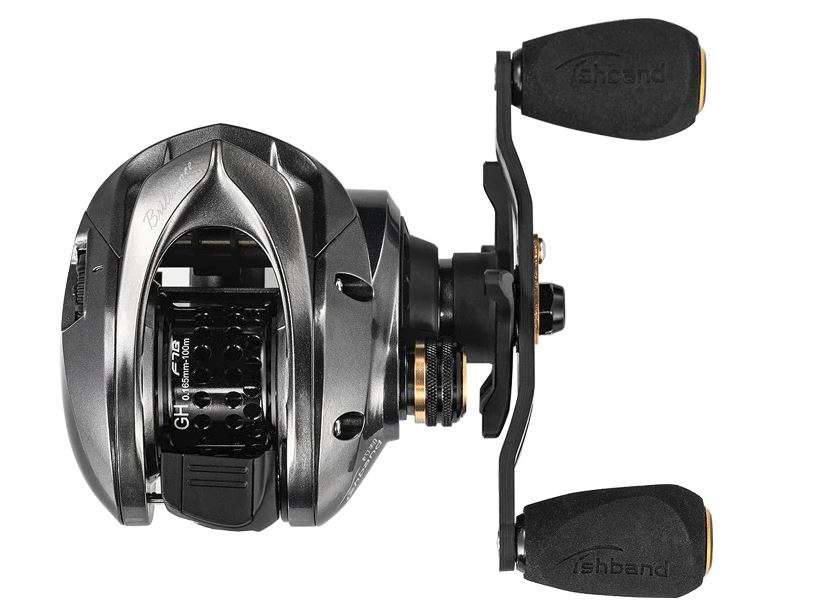
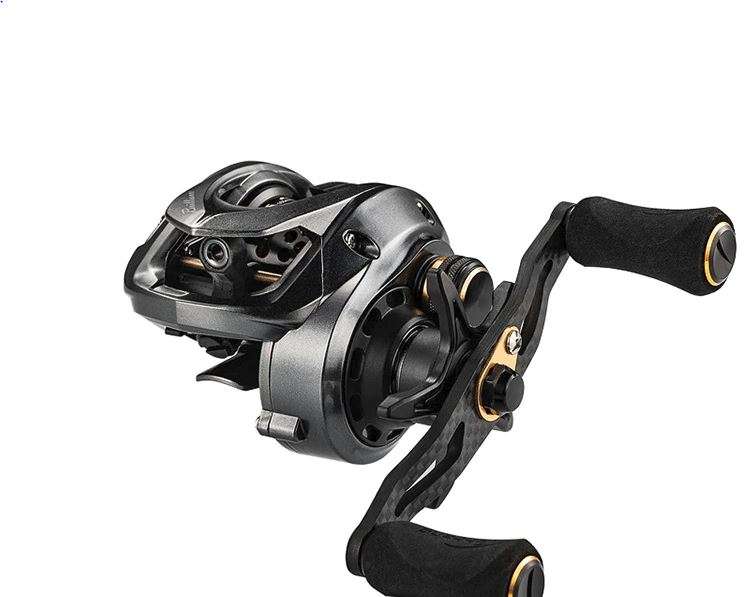
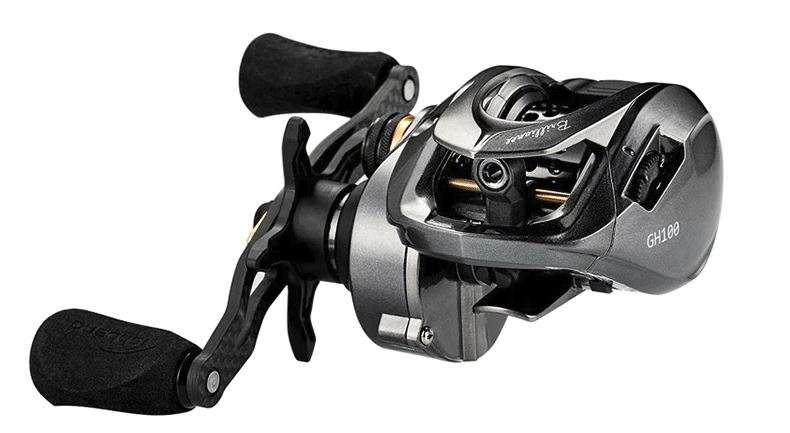
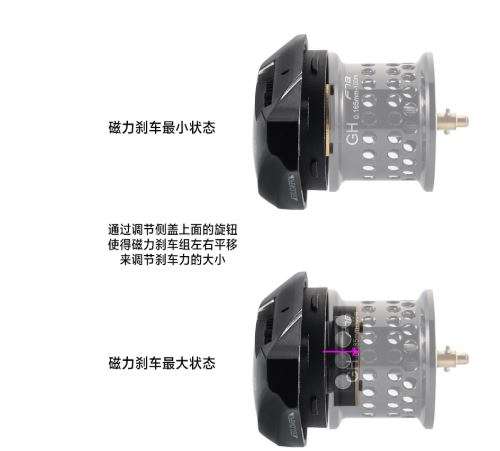
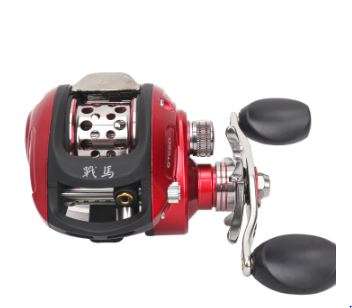
This one I am not sure of the name, it is a very close copy of the Aldabaran BFS including the braking system.
-
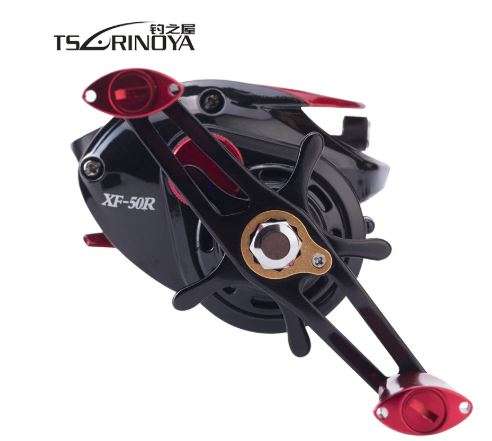
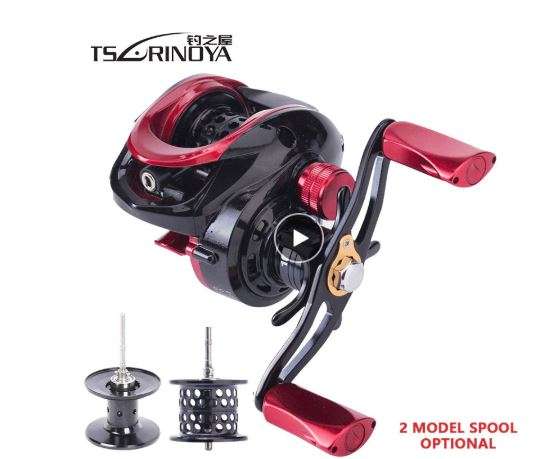
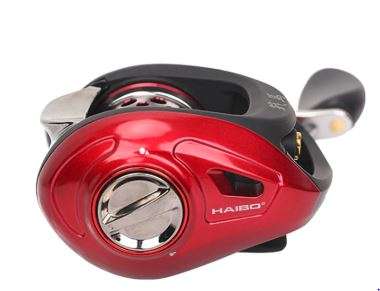
There are a few Chinese Baitcasters that have some good reviews and impressive results compared to reels that cost much more. Haibo Steed
-
Yes, I have been doing a lot of research on BFS casting recently. The best BFS systems don't seem to be able to reach 300'. I have seen some good casts reach about half that distance though.
-
The stock spool in a PX68 will hold about 110 yards of 20lb power pro 8 Slick. If you're casting on a full spool and emptying it, that is around 300 -330ft. Extremely looooooooooong casts.
-
should do fine, a trd and a 1/16 oz head weight just a little under a 1/4 oz. Somewhere around .222 oz.
-
what size and type of line are you using?
-
everything but my crankbaits and \I throw them on 5.1:1 reels.
-
-
I watches dem catch the fishes. I likes it.
-
Whenever I hear the name Denny Brauer I always associate it with jig fishing.
-
NRX, still great rods.
-
Tree rat, it's what's for dinner...
-
I fish Gliss on several of my spinning setups, as mentioned I fish in waters that have a real problem with zebra muscle. I tie a 6-7ft FC leader, usually about 8lb test, and can honestly say that I do not experience the problems that are being mentioned. It's very thin and casts fantastic, it works great for my use.
-
I have used 18lb gliss for several years now on my spinning equipment with good results. I typically tie an FC leader of about 8 to 12 lb test. I fish in waters that are heavily infested with zebra muscle and just watch the line for signs of abrasion. Interesting to me are the reviews and comments about Gliss fraying. From my understanding, Gliss is a single-stranded extruded line which would put it in a similar class to other monofilament lines, nothing to unravel or fray. Just a thought.
-
Can't help much with your issue, I did do a little research on the trolling motor you are using and Minkota recommends a 50 amp CB. The 45lb thrust edge can draw up to a max of 42amps. One thing did cross my mind during your description of issues. For current to flow through the positive lead of the trolling motor and blow the fuse, the circuit would have to be grounding in some fashion. Try turning the speed dial all the way down to zero and placing the momentary/off/continuous switch to off when you attempt to connect the positive lead. Another thought I had was about a possible short in the windings on the trolling motor armature or commutator segments.
-
Just a suggestion. Save yourself some money and use a 10-15 lb braided line with a FC leader if needed. Braid is great on spinning reels because it handles the inherent line twist much better than other types of line. Tatsu is a fantastic FC line, but not really necessary on spinning equipment to get fantastic performance.