


Kirtley Howe
Members
-
Joined
-
Last visited
Everything posted by Kirtley Howe
-
I live in Owego NY and fish the Susquehanna River often. Come on down here and you can catch pike, Musky, and Tiger Musky with great regularity. Pike to 38" and Musky to 42" are pretty common, and Tiger Musky (those are Pike and Musky hybrids) to 48" are not totally unusual. Most are caught as a byproduct when Bass fishing, but many people in the area target them.
-
Best thing in the world (my opinion) for picking backlashes out, regardless of the type of line, is a small plastic crochet hook. You can get them at Walmart, or any fabric store (think JoAnne Fabrics. I have never had damage to my line using one.
-
I live in the Southern Tier of New York. I can have great days for Smallmouth as long as there is open water to fish. But they seem to get farther apart as the year progresses. I should say that I fish the Susquehanna River for the most part and don't do much lake fishing for bass after October. Jerk baits, Rattle Traps and Original Rapala work the best for me. Sometimes a tube bait just cannot be beat in cold water as long as there is current. A simple jig head with a MIster Twister grub tail can also be a killler. Just my observations, and your results may vary.
-
If I remember correctly the Bass Pro brand used to be made in the USA. I used it and liked it. Last time I was at Bass Pro I noticed their brand was made in China. Anyone notice any difference in quality now?
-
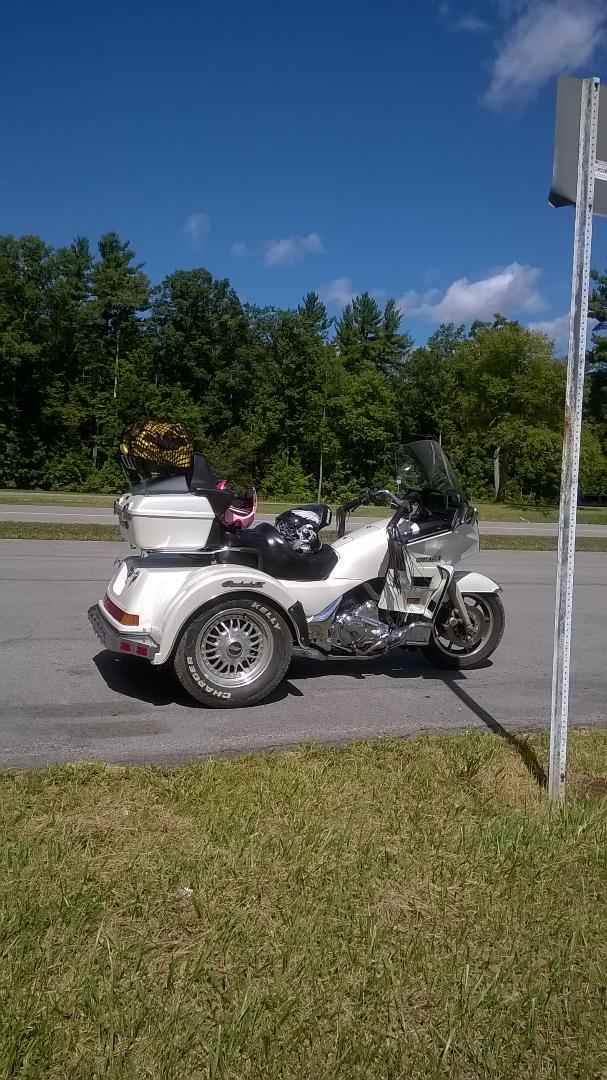
My outboard motor will charge the starting battery when the motor is running. So, why would it be necessary to have a deep cycle starting battery? Why not just use a good quality standard battery to start the outboard? With my use, I would only be starting the outboard 3 or 4 times a day at most, and then running a fair distance so the battery should be recharged by the motor. My fish finder is a pretty basic unit which does not draw much power, so unless I am running lights, the draw on the battery is minimal. Of course, the trolling motor needs a good deep cycle battery that is not tied to the starting circuit.Can someone explain to me the difference between a Deep Cycle Marine Starting Battery, and a Deep Cycle Marine Trolling Motor Battery? I always kind of thought that a deep cycle battery was a deep cycle battery...the only difference being amp/hrs......I am best at being in love with my wife. As far as fishing goes, I would say that I am best at crankbait fishing.When fishing in current I have found that closing a spinnerbait up (making the arm with the blades closer to the body of the lure) will often stop the lure from doing weird things (the whole lure spinning around, the lure "wadding up"). It is also critical that the blade arm is perfectly aligned with the body of the lure. Any deviation from dead perfect straight will make the lure about useless. I also often fish crankbaits and stickbaits AGAINST the current. I cast them out and let them drift downstream whatever distance I am comfortable with and then reel them back slowly with a lot of pauses.I prefer a Rawlings fielders' glove, but some think a Wilson is better. Don't use a catchers' glove....the pocket is too small for any bass over 1 lb.I just use raw chicken breast or chicken thigh meat. You can use it plain, soaked in jello, or if you don't mind the smell on your hands, use some vegetable or olive oil and garlic. It stays on the hook great. Some people around here add some salt to, but I have never bothered. Always works great for me. Only problem is that snapping turtles like it a lot also. Nice thing is that the leftover chicken can be frozen and used next time. The smellier it gets the better the cats seem to like it. I end up tossing some out...not because it no longer works, but just because it gets nasty to use.Old school, but I often use Spinnerbaits as wake baits. I use the lighter weight (1/4 or 3/8 oz). Add a 3 to 5 inch long paddletail swim minnow as a trailer, and crank them just fast enough so that the run barely under the surface creating a wake. Sometimes I double up on the skirt on the spinnerbait to give it even more buoyancy so I can run it at slower speeds and still throw a good wake.Thank you. Good info. I think I will stick with conventional guides for my use.Just something to remember.....(over simplified, but useful) electric power consists of 2 parts. Amps and volts. If your equipment can't get the volts it needs, it will try to make up the difference (so to speak) in Amps. That may explain the burned section of wire....I don't know why your circuit breaker and or fuses did not blow, but my guess would be that the draw was just momentary before the unit shut down and they just did not have time to blow. Anyway, it was good to hear that the unit is OK.Well, that only answered a couple of my questions. Anyone else want to chime in on this?What are your opinions/experiences on using rods with Micro Guides. I have never tried them, but have considered buying a rod with them. I just wonder what the advantages/disadvantages are of these types of guides. Are they more useful for some techniques than others? Are rods with micro guides more expensive (in general) than the same rod with conventional guides?That is BS...and adding a foreign substance to fish gills is a bad idea.I fish Cayuga a lot, and can attest to the size of the smallmouth bass (and largemouth too). My personal best there is a 5lb 15oz smally and a 5lb 12oz largemount. And I would point out that the lake runs basically north and south, and when the wind is coming from the north, you can wipe out your trolling motor batteries in just a few hours. Some local anglers use drift socks to slow drift down the shoreline, and only use the trolling motor to steer with. Saves a lot of battery power. Not sure how functional that would be in a tournament, but it works for a weekend fisherman.1991 Chevy extended cab, 8 foot box, 350ci automatic, 4x4. 10.5mpg around town, 13mpg on the highway. 42 gallon gas tank. I don't fill it up often....thank goodness we also have a 6 cyl small SUV. And, I have an 1987 Suzuki Cavalcade Trike (MotorTrike conversion) that I ride all summer. That gets 37 mpg riding solo, and 34 riding with the wife.
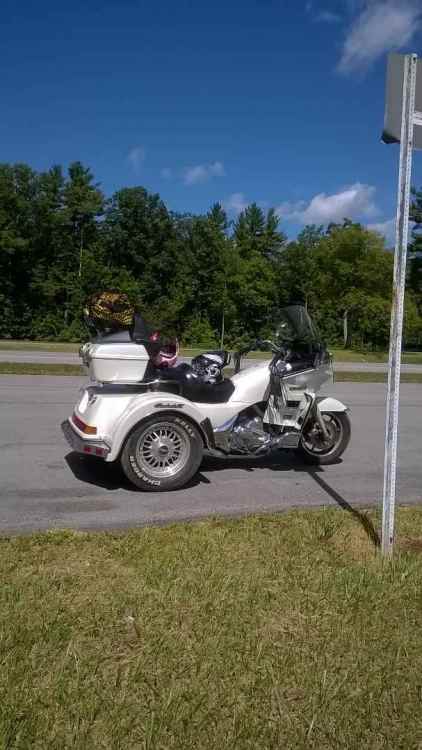 I like this forum because I can sit back, listen to what others say and apply what works for me. I don't post much, but do contribute where I have experience or a strong opinion. So far all I have received is gratitude and respect from other members. Great site.Just thinking out loud here.....What voltage does it take to actually stow the trolling motor? It may be that you could disconnect your lithium batteries from the trolling motor, and jump off your 12v starting battery to stow the motor. Just wonder if that is possible?First let me say that for 13 years I drove a 3500 pickup truck towing a 28' gooseneck trailer that weighted 16,000 lbs. I have over 750,000 miles towing like that. I also have often towed boat trailers and utility trailers for personal use. My observations are as follows: Most trailer manufacturers (boat, gooseneck, utility....it doesn't matter) will put tires on their trailers that barely meet that load requirements for that trailer. They do that to try to keep the price of said trailer down to a certain price point. You can almost always get an upgraded tire package (at extra cost),, but only if you ask for it. In almost all cases owners of trailers underestimate the total weight of what they are towing (trailer weight plus the load on the trailer). That is not due to stupidity or carelessness, but simply because of what I call "creeping load". For instance, let's assume that your new boat and trailer, fully equipped from the factory, weights 10,000 lbs (just an arbitrary weight for discussion purposes.). The tires that came on the trailer are rated to carry that much and maybe even more, so you are good right? Maybe not. Did you opt for the larger gas tank? (Gas weights about 8lbs per gallon...adding 30 or 40 more gallons can another 250-350 lbs to the overall weight of the rig. Did you ditch the 24 volt trolling motor and go to a 36 volt model? More weight...and don't forget the extra battery you just added. Did you add a couple of Power Poles? More weight. How about the 15-20 rods and reels you may carry? A heaver or extra boat anchor? The 40 boxes of lures? And, as your boat ages, don't forget that the fiberglass may absorb some water (you would be amazed how much water is actually trapped in the hull of an older fiberglass boat!) And so many other things that each do not weigh much but can really add up....Anyway, your 10,000 pound rig now weights 12000 or 13,000 lbs.....or more. If the tires on the trailer were near their load limit with the "stock" weight, they may well be overloaded now. And as the tires age, their load carrying capabilities DECREASE....so the tire that was doing OK 2 years ago may be way overloaded now. My advice is to fully load your boat (as if you were going on an extended fishing trip with you and a buddy) and go to a certified scale and find out exactly how much you are actually towing. Then check to make sure the tires are capable of handling that load, PLUS at least another 10% weight. Then make sure to keep the tires properly inflated, and check them EVERYTIME before trailering. Always inspect the tires for damage; Don't just look at the outside of the tires, and the tread. Get a hand around the back of the tire and feel for damage, bulges, and cracks. I also keep small inspection mirror in my tool kit, and can use that to actually see the back side of the tire. And don't forget to check the spare tire for damage and pressure...nothing worse than finding out your spare is flat or damaged after you blow out a tire on your trailer. Carry a jack that can lift one side of your loaded trailer. Carry a lug wrench that fits the trailer lugs. A battery powered impact wrench can be a real life saver...and are not that expensive. Consider carrying one of those. Always carry a set of warning triangles and some flares. You can get a nice kit with the foldable triangles, warning flags, and flares at any truck stop, RV place, and a lot of trailer dealers. They are a good investment. Always carry a portable air compressor..in the event of a small leak you may be able to just reinflate the tire enough to get to a safe place to change it. If you carry a portable "jump box" you should consider getting one with the built in compressor. Carry a bright light...working in the dark just does not cut it. All that may seem like overkill, but believe me it is worth it. Changing a tire on the side of the interstate with cars and trucks blasting by is not fun...and is down right dangerous. The best bet is to try to prevent the problem. But, flats can still happen, so be prepared to easily, swiftly and as safely as possible to change that tire. Also, I would never consider running a tire that was over 6 years old on any trailer It is just not worth the risk. Some people recommend carrying a can of Fix-A-Flat, for emergency use. Personally I hate the stuff and will not use it, but to each their own. The reason I hate it is that people tend to use it, and then think the problem is solved because the tire is not currently leaking.....NO THE TIRE IS NOT FIXED...that stuff is just a temporary bandage, and the tire must be repaired ASAP by a professional....and he/she is not going to like dealing with a tire full of that crap....but for heavens' sake DO tell them if you have put it in your tire. OK...rant over, and I will get off my soap box now. Be safe out there.I used to travel 200 nights a year for work. I had to stay in hotels. For me the best hotel for the money was a MicroTel. Very good price. The room is not large, but.....the beds were always great, great sheets and pillows, super clean room. Nice bathroom (though small). The hotels were quiet and the staff was always accommodating. I never had a bad experience with them.Around here (Southern Tier of New York State) you can rent a RotoTiller from equipment rental places for $50-$100 a day depending on the size/power you need. Well worth the investment to get the ground prepared. I rototill the area a couple of times to get the depth of loose soil I want, then spread fertilizer (treated cow manure which does not stick like fresh manure and is available at any garden supply store) and rototill that into the soil. Then plant as you wish. Depending on what you are planting, you may want to spread plastic sheeting over the area and just poke holes in it for the seeds. That will prevent any weed growth...but that does not work for all vegetable crops, so do some research. should read "does not STINK like fresh manure"......My debit card is covered for fraud just like my charge cards. Most banks and credit unions now do that.



Important Information
We have placed cookies on your device to help make this website better. You can adjust your cookie settings, otherwise we'll assume you're okay to continue.