


spoonplugger1
Members
-
Joined
-
Last visited
Everything posted by spoonplugger1
-
El, are you talking about the ones with the swelled butt and the reel seats built into the blanks?
-
If your rod wrap doesn't look like crap now the sun will soon make it so, finish has UV protectors in it, adhesives do not. Expect a cloudy amber mess that will be far harder to remove cleanly than the finish was.
-
Looks like a full exposed blank reel seat, I'm assuming the notch I see up front by the threads is where that starts. Zebco and Berkeley used that type seat and fore grip late 80's, early 90's. Castmaster used a much nicer, smoother version for sometime with the regular type tenoned reel foot clamp/nut. Best you can do without a full strip down is to move it forward as best you can, smear a LOT of epoxy in, align everything and center as best you can clean up the exposed center. May I suggest wrapping thread, masking tape or similar to build an arbor to fill the gap in back without having to take things apart. I would try to seperate the foregrip from everything to ensure it don't get glued up too. You can probably use a piece of old rod hlank stuffed in the butt end to extend rear grip. Lots of them at garage sales, etc. for near nothing. The craft stores have colored eva sheets, a great thing to put between the two eva grip sections to make it look like an accent on purpose.
-
Carbon Fiber isn't necessarily lighter. They were when we started pouring and building our own, but now mass-produced grips are not made from the same materials, the duplicators used in mass production needed a denser, and stiff material. Not long ago a gentleman took a 9 inch foam grip, measured it and turned identical grips from cork and eva, they were virtually identical in weight, the eva was actually minutely lighter. Winn grips are actually coated eva, and have been prone to wearing out, just like the golf grips that are built the same way.
-
Pipe reel seat size has nothing to do with blank diameter, it's ergonomics, or comfort while fishing all day that beats blank size always. A simple observation and test for everyone. What is the diameter of your screwdriver grips? Your hammers, axes, rifles, any other object you want to hold in your hand comfortably all day? I bet it isn't 16 mm. Go to your school yard and hang from the monkey bars, which is more comfortable for you to hang from, the rungs or the side rails? Ergonomics at work. Ergonomics allows all the functions we do fishing to be done at the highest level, like it has been proved to increase productivity and lessen injuries in the work place and military grips, tools and handles, etc. I have average palm size, but short fingers, I still pick at least a 20 mm seat, and have used 22 mm on occasion. A 20 mm seat will fit any spinning or casting reel I have ever owned, big or small, fresh or salt. 22 mm can be a bit long in some designs to hold all reel foot sizes. A 16 mm pipe seat is great for holding a fly reel and little else. When using an Am Tack Aero seat I use the 17 mm version for two reasons, it's 1/10th inch larger and every standard size cork, eva, carbon grip in existence for your casting seats also fits the Aero unlike the 16 mm version, one less thing to order or worry about come building time.
-
I thought I answered it, maybe a bit convoluted, the $60 blank has extra stuff done to it to makes it worth the extra $100 to people, buying all the same components retail, you would be near that and it's still in pieces. You can't just look at modulus numbers and select the best value, the amount of carbon materials that make good rod blanks are very limited, the reason Daiwa and many others just love IM7 which has been available since the 80's. It's the improvements in the binders that bind the fibers together, called prepeg when infused into the carbon sheet, where the magic happens for the last decade+. These improvements made the need for a mesh of fiberglass or paper carbon scrim for hoop strength unnecessary for new rods, this automatically increases the linear fibers overall modulus because the final modulus is the ratio of linear fibers to the horizontal low modulus materials and binder used to improve the blanks hoop strength. The new binders are way more expensive than the old stuff and the layup of fibers in the no scrim materials are far denser reducing the amount of heavy binder to light fibers. The expensive blanks from NFC and others aren't your dad's, or even your first bought rod/blanks. The difference is night and day. Now back to what rod you will get, using NFC as an example, their high end blanks have no scrim, the most recent materials and binders, US made materials throughout including the reel seats, grips and guides. The reason for expensive blanks and finished rod prices. Look at the price for REC guides, Fuji titanium Torzite guides, etc. high end blanks get high end materials throughout the build, many have to be put together by hand and set aside before installation while the lesser materials are slapped on quickly as a unit.
-
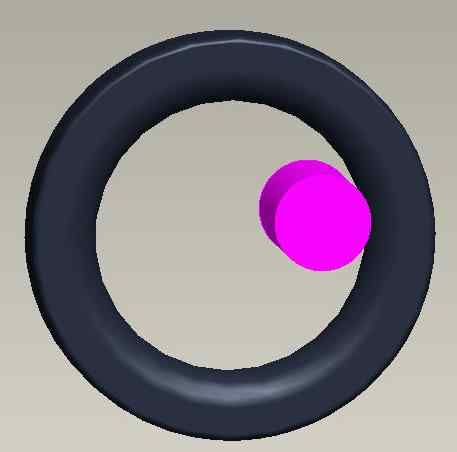
Many exaggerate the amount of room your line and well tied small knot really need, a size 8 running guide was the norm when I built my first rod and we weren't using nothing but straight mono. An illustration of what 50 lb. mono looks like in a 3 mm guide. Really want to know what works, try it, the guides are a buck a piece and you don't have to build it to try it, just tape the guides on and test cast, I have taped entire rods together to test cast, it works.
-
Pretty simple really, a rod has guides, grips, reel seats, epoxy finish and thread, epoxy adhesives bought, about 30 people handing it before it is sacked up, than you have to store it, ship it, warranty it, and the whole time people are being paid, equipment is being repaired as necessary, carbon rolls are being taken out of refrigerated storage and then put back in at the same time you have to heat or cool the buildings in the great white north. Phone, internet, electricity, office supplies, computers, boxes, tubes, a forklift or two I bet, etc. All this and a Chinese made blank from Rainshadow and others cost how much?
-
We have no idea what your first rod is, no idea what presentation or lures you want to throw, etc. Most bass blanks now days are fast action.
-
JB weld is junk for wrapping finish, use the polyurethane or your significant others clear nail polish, it is lacquer and dries very quickly, has good durability, the old cars were all lacquer paint jobs.
-
If you went 10 mm then all 6 mm you would never know the difference and save a bit of money also.
-
The power of that blank is 1027gm. Action Angle 76 deg., XF, soft tip to cast the lighter stuff off of, bubba class butt power.
-
An X Fast blank the same power as the fast will have a softer tip when pulling your offering. If you are looking at the Point Blank blanks, be advised the tips are lighter than the ratings would make you believe and they cast very well off the tip, you will have all the butt power you will ever need. The PB761HF may be worth looking at.
-
Where are you fishing? You do know there are regional differences in rods, a western built Sage rod will work much better in the windy open west than a spring creek back east. G Loomis boomed in popularity when the bass presentation started to get lighter, they had the rods already while others were selling broom handles. Finess techniques? G Loomis already had the rod, same with dropshot. The deep, clean western reservoirs demanded them before the lighter presentations migrated east and they needed them. Same with the old Texas All Stars and Castaways, same with the Great Lakes and Midwest St. Croix.
-
You do know that Rainshadow makes the blank you like is two other higher modulus carbons? Going from 33 modulus carbon to 58 modulus can change sensitivity a bit. Sure would save a bunch of guesswork about what you are buying. I've never found the shotgun approach to blank selection to be near as effective or knowledge building.
-
The 27X system was suggested by Tom Kirkman 15 years ago or so. It's purpose was to give a system that, under most circumstances, would allow a person to produce a reasonable guide train. It don't care if the rod is 5 ft. long or 15 ft. long, doesn't take into account line size, line type, etc. Just remember if you use this system the running guides are irrelevant, it spaces the reduction guides and if the rod is short enough to only allow for reduction guides only, that is the way you build it. Simply put it is a "Jack of All Trades" system.
-
Favorite color, Gudebrod or Fish Hawk Garnet, beautiful on bare carbon blanks and I use a 3 turn gold or silver trim, me personally, I prefer the silver. Fish Hawk really tried hard to match the Gudebrod colors and they even used the same numbers and names to describe the threads. Not brand conscious as long as the thread doesn't have the "fuzzies". Have had good results with Rice, National, Gudebrod, Fish Hawk, Fuji, Pro Wrap, and Sulky embroidery thread metallics that have so much more color selection and the foil is incorporated so much better in the thread because it has to go through the needle, etc. on the machines at high speeds.
-
The thin wall PVC rain gutter material has been used for spinning rod cases for decades. I have a few of the Sage large diameter cases, I believe they are 6 inch diameter, they hold a lot of rods, and have travelled to Alaska and other places many times. they are not heavy for their size.
-
I'm with Jig Man, I prefer the 3 power over a heavy power 4. The 3 is also a far better rod for the other stuff. In the scheme of things I have always thought the MBR 783 C was a better rod than the 843, but I was on a boat mostly.
-
Have built quite a few RX7 7, 3 pc. blanks from the last introduction, mostly the ISP 847-3, 12 -30 lb. rated blanks designed for peacock bass, etc. great blanks, also the ISP 843-3 and 844-3. The new ones look similar, just 2 inches longer. One of the aforementioned blanks was built for a gentleman who did a lot of travel installing and repairing robotics systems. He carried the rods everywhere with him in a common case, the reels were in his luggage. The 847-3 was by far his favorite, catching large fish of all species everywhere he went, including a trip to the Amazon for peacocks. The old green color made a striking rod. I agree the later RX6 rods were dandies too, built quite a few of the 4 pc. SB 720-4 rods, as mentioned before they are more powerful than I anticipated, but still nice rods.
-
Epoxy is a pretty stable compound, it doesn't go bad in any sense that is relevant to our use, 20 years from now it would still work just as well when mixed. Effected by very little, the reason it is used on floors in chemical rooms, aviation paint, etc. You really never come to the point where it couldn't be used, we use a potting resin compound, the same type of stuff put on high-end boat cabinetry, bar/restaurant tables that look deeply finished, etc. The heat setting resins used in blank building gives the blank a shelf life of 5000 years according to people in the know. The U-40 products were developed by people, epoxy engineers, who at one time or another developing stuff for Skunk Works from the 50's, programs prior to NASA and NASA, the stuff that held the heat shield tiles on the Space Shuttle.
-
Epoxy in the scheme of things is inexpensive as far as other components go, making a mistake here costs you money, maybe a re-wrap and time, this is not where I would pinch pennies. You can put high build finish on thinly, but not thinner builds heavily. Finish in the bottle isn't magically doing something that it won't do later on the rod, it will go to amber in the sun no matter if it's on the rod or not. It's the thin application vs the thick bottle that makes it look different on the rod. Epoxy finish really has no shelf life.
-
Remember the weight difference is the weight times the distance in feet from your hand while the rod is static, and the weight times the distance plus the kinetic energy of the cast and having to stop and then stop at the ends of the cast. Want the lightest rod to be less fatigued? This isn't it. Want a more balanced rod? This isn't it. Want a rod with more snap? This isn't it. Want a more sensitive rod? This isn't it. It's your build though and we have no idea where your priorities are, all I know is you can't buy success here, you build it.
-
It's your rod, but when I'm building a rod for its performance, the last thing I worry about is how it looks unless I can improve that without impeding performance in a noticeable way. There are a whole bunch of sponsored pros out there using custom non-descript rods you don't see till they are on the water. A sponsorship is one thing, a win and the 50,000+ bucks in nothing they mess with.
-
Any guide that continues to the tip that is the same size as all the rest is a runner, type and configuration is not important. A thing to think about when selecting guides, your first few guides from the tip at no time have any real load on them, it's been measured by Rich Forhan decades ago, his MH builds all had less then 1/10 of a pound load on the first 3 or 4 guides at all times. Since a SF fly guide can withstand over 20 pounds of load without deflecting let alone being damaged, I believe you have a reasonable safety margin no matter what guide you choose. If this is to protect the rod from damage by you or in the way it is stored or transported than you have a viable concern. Secondly, as guides get smaller and use less materials to build the difference in weight drops dramatically, my mail scale needs two complete sets of guides for a MH like you describe for it to register in a repeatable fashion the difference between my SS sets and a Ti set, you would never know the difference on the rods.
