Skip to content

Small Water Fishing

Featured Replies

I typically fish large(er) bodies of water (6k-12k acres) but our kayak series has added new small water tournaments to the roster.

I’m kinda at a loss!

Sizes range of the larger areas from 60 to 70 acres to a couple in the 25 to15 acre sizes. All are DNR lakes with ramps, porta-potties and bank fishing platforms. Some are heavily weeded and I assume shallow, some full of old timber and a few just open bowl shaped pits with featureless banks.

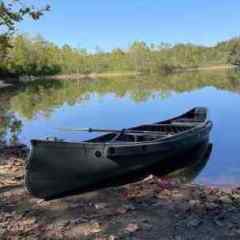
Usually for me this is bank fishing type ponds but within the kayak series I’ll be on the water in my canoe. I seldom fish retention ponds but when I do it’s the usual bank-beating with downsized moving baits and stick plastics is the thing.

I have very little topographical information as only the larger ones have any DNR images with depth detail, and little of that.

Those of you that regularly fish these types of water, how do you go about it?

Do you downsize your gear and lures?

When filled with structure what do you look for, how do you break it down or fish just “what’s fishy” looking?

Do you fish everywhere with everything?

What’s the most common lures? Topwater, moving or dragging weeds?

Any specific features to look for?

Being a small water expert this is right up @Swamp Girl’s alley and trusting she’ll lend some thoughts or successful suggestions.

All input is appreciated.

Solved by BrianMDTX

  • Super User

Before the Pro-V Bass came into the picture, the Old Town Canoe and Fish small waters exclusively.

Both night & day trips, and it was fun. My tackle matched where & what I was fishing. Overall baits were a little smaller in size & profile, but not always.

Currently, the canoe has been relegated to Lake Minichuck use only. As I paddle my wife around its perimeter looking for mostly keeper-sized green bass and the occasional disproportionately large pike.

Stick baits, swim jigs, Texas-rigged plastics, and vibrating jigs dominate. Sometimes a spinnerbait gets in on the action.

A-Jay

  • Super User
  • Solution

I mainly fish small ponds. Most smaller than what you’re referencing. All are man-made so no natural sunken stream courses, sunken timber, etc. Very little structure except for what’s on or overhanging the bank. Most of my catches tend to be right at the bank, around or under overhanging limbs (especially ones that are partially submerged), or off the bank where the weeds start to lessen a bit (4’-5’ deep and parallel to the shore).

I don’t really “downsize” but I also don’t have any huge swimbaits, etc. I use standard-sized soft plastics, jigs, etc. About the only concession I make is that I pretty much use 3/16 to 1/4 oz. weights on Texas rigs and usually 1/4 to 3/8 oz. jigs. Too heavy and they sink in the muck and you spend all your time cleaning gunk off your bait after every cast.

Yesterday I had good success with a 1/4 oz. Strike King Bitsy Bug jig with a 3” Keitech Easy Shiner, but the biggest bass hit an A-Jay Special, which is a hybrid weedless “Texas rig jig” with a 1/4 oz. weight, a jig collar/skirt, and. 4/0 EWG with a Strike King Rage Craw trailer. I had to cut and retie and used a 3/8 oz. weight and it was getting fouled on every cast. So maybe downsizing in weight is what I would say I do. I don’t use treble baits much as they are definitely getting fouled, unless they are topwater or shallow jerkbaits/squarebills. Even then you run that risk but the rewards balance that out unless the floating mats of weeds is just too thick.

  • Super User

I fish three lakes of about 200 acres a lot. Most of it I'm casting at visible targets. I pretty much stay with old reliables. Cranks, spinnerbaits, buzzbaits, top waters , Texas rigs , jigs, tubes. I just start fishing at the ramp and work my way around. I average about 40 fish a day with some big fish thrown in. Rip rap dams, standing timber, beaver houses, laydowns , vegetation and whatever else I come across gets fished. I try to outcast everybody else. The best casters get the luckiest.

  • Super User
55 minutes ago, Motoboss said:

Those of you that regularly fish these types of water, how do you go about it?

I spend a lot of time watching the hourly weather before I launch. For example, I shore fished yesterday because the wind was double-digit and coming from the south. I launch from the north shore, so I hoped that the steady south wind and the warmer temps of the last few days would stack bass on the north shore. It did. I'm returning today to fish the same way (north shore from the shore) this afternoon because the wind is still blowing from the south. I'm just waiting until two or three so the water can keep warming.

However, tomorrow the wind will drop, so I'll launch and fish a rocky flat, a ledge/drop-off, two stream mouths, a ridge, and the north shore. Here's why:

@Lottabass has been landing both quantity and quality of bass in two feet of water, so I'll fish the shallow, rocky flat to see if my bass are orienting in a similar place.

@Hartwood71 had a couple 50 bass sessions fishing a ledge with a jerkbait, so I'm following his lead.

I figure warmer water might be issuing out of the stream mouths, so I'm paddling to those.

Last summer when the water was low, I saw crawdad claws in the ridge. I marked the ridge with a tree on the shore. I'm hoping smallmouth will be hunting there tomorrow. I'm going to cast a surface Rapala on the ridge and twitch it. If that doesn't work, I'll try a T-Rigged crawdad.

I'll fish the north shore too hoping that some of the bass stacked there now because of the South wind will still be there.

When I'm paddling from one spot to another, I'll be trolling an A-Rig, as suggested by @Glenn.

I share all this to illustrate how I have a plan every time I launch. All my plans are shaped by the weather. My plans often produce bass, but when they don't, I fish on the fly, meaning I cover a lot of water looking for them. That''s the advantage of small water: If you guess wrong about where they are, you can go looking for them. Then when you catch one, that's your new plan. For example, if I catch a bass in Eel Grass, then I pound Eel Grass. If I catch a bass in Pond Weed, I keep fishing Pond Weed. And so on.

1 hour ago, Motoboss said:

Do you downsize your gear and lures?

Absolutely not. I'm always fishing heavier line with MH or H rods. Smaller water doesn't necessarily mean smaller bass. I average 17, 18, and 19-pound bags. I'll lose them to weeds if my equipment isn't stout.

1 hour ago, Motoboss said:

Do you fish everywhere with everything?

I have days like that, for sure, but I do begin with a plan determined by wind speed, wind direction, temp, and light.

1 hour ago, Motoboss said:

What’s the most common lures? Topwater, moving or dragging weeds?

I prefer the single hooks of soft plastic lures, but topwater is fun and once it warms a little more, I'll always launch with at least one topwater lure.

1 hour ago, Motoboss said:

Any specific features to look for?

Fish with your head on a swivel. The bass will often reveal themselves. Again, in a smaller body of water, they can only hide so many places and because the water tends to be shallow, their ripples and whatnot are easier to spot. You know I fish with a teenage boy I call The Kid. The Kid outfishes all the local adults except for me and I credit his alertness for his success.

I'll say, "Did you see that?"

And he can always honestly answer, "Yes."

His head is on a swivel too.

Also, use Bass Resource as a resource. You can see from my post that I rely on the Bass Resource brain trust to guide my boat. I ask questions and the guys are always helpful. I caught yesterday's 18-pound bag, my biggest ever from the shore, because of @PhishLI and @Hartwood71. Phish gave me the technique that worked with my blue craw and Hartwood gave me the other lure that caught bass, including my two 19-inchers.

Lastly, I emphasize long casts and being quiet. Smaller water tends to be shallow and the water I fish has many predators, such as cormorants, eagles, ospreys, and otters, so the fish are always alert. I hook many bass at the farthest ends of my longest casts and I literally sometimes bump into bass with the bow of my canoe because they didn't hear me coming.

Now go get 'em!

P. S. - @scaleface emphasized the importance of accurate casting. I fished for smallmouth for most of my adulthood in clear, largely weed-free lakes and the Great Lakes. Fishing small, weedy water was such a change for me and really overwhelmed me. Now I love the art and challenge of casting into the gnarliest cover. There's nearly no water too shallow or weed-congested to not hold bass. Last year I was back in a bog and came to a dead end, but I could see water over the mound of soil and bushes in front of me. So, I stood ever so carefully, clutching a branch, and flipped my lures into the Twiggy-skinny water yonder. I couldn't hear the hit, but I sure heard the eruption. Yeah, I landed it!

  • Super User

motoboss,

A lot of what I have around here are small lakes like that. When I had the kayak there were even more open to me that had primitive ramps. Even still, a lot of what I fish is <300 acres. My favorite lake is 125 and two small 'tactical' places are 35 or so. Each one is unique so don't assume anything specific until you get there and have a look around. Remember that 'shallow' and 'deep' are all relative to the body of water you're in. One of the 35 acre lakes is only 12' and the 300 acre lake is only 5'. Those fish are used to shallow water and don't mind getting REAL shallow as long as there is just a little cover to hide them from birds.

Broadly, they fish small. On a big lake you can catch a fish that makes a ruckus and then catch another on the next cast. In some of these small places, catching one can put off the rest for a bit, especially if they are really up shallow. This will have an impact for a tournament. You're not going to 'run and gun' on a 50 acre lake. Heck, if there is a boat already on the water when get to one of those there is a 50/50 shot that I just go to the next lake. Putting a half dozen kayaks on one and no one can move. So pick an area and camp out. If it were me, I'd have one spot to go catch 1-3 quickly and then once those fish are tight lipped back off to the next deepest 'ledge' where they pull off to and finesse them.

  • Super User

I approach small water similar to any other body of water. I study the contour map the night before if I’m not that familiar with it already. I look for structure, specifically points, and I start there. Then I look for cover on the structure.

Shoreline cover like downed trees are usually safe bets as well. Look for steeper banks with downed timber.

  • Super User

I do a lot of small ponds in South Florida when not taking the boat out to the bigger bodies of water. They are all connected to the Everglades system by culvert pipes. All are full of black bass, peacock, and a mess of exotics. They all have loads of grasses, structure with large rocks, drop offs, and current when water management turns on the big pumps. These all fish like bigger natural lakes, even though they were dug to supply fill for development in what was once a big swamp. They are everywhere and wonderful fishing resources! I have caught many 8 pound bass, 7 pound peacock, 30” snakeheads, even a freshwater snook, thousands of Oscars, and Myians. We are so lucky to have this resource available. I have at least 8 of these lakes 5 minutes from my house.

  • Author
5 hours ago, A-Jay said:

Before the Pro-V Bass came into the picture, the Old Town Canoe and Fish small waters exclusively.

Both night & day trips, and it was fun. My tackle matched where & what I was fishing. Overall baits were a little smaller in size & profile, but not always.

Currently, the canoe has been relegated to Lake Minichuck use only. As I paddle my wife around its perimeter looking for mostly keeper-sized green bass and the occasional disproportionately large pike.

Stick baits, swim jigs, Texas-rigged plastics, and vibrating jigs dominate. Sometimes a spinnerbait gets in on the action.

A-Jay

I see the dominant lure choice’s are top(ish)or shallow baits always followed with the t-rig.

Great suggestions.

5 hours ago, BrianMDTX said:

I mainly fish small ponds. Most smaller than what you’re referencing. All are man-made so no natural sunken stream courses, sunken timber, etc. Very little structure except for what’s on or overhanging the bank. Most of my catches tend to be right at the bank, around or under overhanging limbs (especially ones that are partially submerged), or off the bank where the weeds start to lessen a bit (4’-5’ deep and parallel to the shore).

I don’t really “downsize” but I also don’t have any huge swimbaits, etc. I use standard-sized soft plastics, jigs, etc. About the only concession I make is that I pretty much use 3/16 to 1/4 oz. weights on Texas rigs and usually 1/4 to 3/8 oz. jigs. Too heavy and they sink in the muck and you spend all your time cleaning gunk off your bait after every cast.

Yesterday I had good success with a 1/4 oz. Strike King Bitsy Bug jig with a 3” Keitech Easy Shiner, but the biggest bass hit an A-Jay Special, which is a hybrid weedless “Texas rig jig” with a 1/4 oz. weight, a jig collar/skirt, and. 4/0 EWG with a Strike King Rage Craw trailer. I had to cut and retie and used a 3/8 oz. weight and it was getting fouled on every cast. So maybe downsizing in weight is what I would say I do. I don’t use treble baits much as they are definitely getting fouled, unless they are topwater or shallow jerkbaits/squarebills. Even then you run that risk but the rewards balance that out unless the floating mats of weeds is just too thick.

Fishing the featureless bank shallow is a nice choice in stead of going “deep”. Anything touching the water is fair game. Like the idea of the weight range also. In shallow(ish) water I prefer the 1/4-3/8 range.

4 hours ago, scaleface said:

I fish three lakes of about 200 acres a lot. Most of it I'm casting at visible targets. I pretty much stay with old reliables. Cranks, spinnerbaits, buzzbaits, top waters , Texas rigs , jigs, tubes. I just start fishing at the ramp and work my way around. I average about 40 fish a day with some big fish thrown in. Rip rap dams, standing timber, beaver houses, laydowns , vegetation and whatever else I come across gets fished. I try to outcast everybody else. The best casters get the luckiest.

Outcasting is my style also. Throw at everything!

4 hours ago, Swamp Girl said:

I spend a lot of time watching the hourly weather before I launch. For example, I shore fished yesterday because the wind was double-digit and coming from the south. I launch from the north shore, so I hoped that the steady south wind and the warmer temps of the last few days would stack bass on the north shore. It did. I'm returning today to fish the same way (north shore from the shore) this afternoon because the wind is still blowing from the south. I'm just waiting until two or three so the water can keep warming.

However, tomorrow the wind will drop, so I'll launch and fish a rocky flat, a ledge/drop-off, two stream mouths, a ridge, and the north shore. Here's why:

@Lottabass has been landing both quantity and quality of bass in two feet of water, so I'll fish the shallow, rocky flat to see if my bass are orienting in a similar place.

@Hartwood71 had a couple 50 bass sessions fishing a ledge with a jerkbait, so I'm following his lead.

I figure warmer water might be issuing out of the stream mouths, so I'm paddling to those.

Last summer when the water was low, I saw crawdad claws in the ridge. I marked the ridge with a tree on the shore. I'm hoping smallmouth will be hunting there tomorrow. I'm going to cast a surface Rapala on the ridge and twitch it. If that doesn't work, I'll try a T-Rigged crawdad.

I'll fish the north shore too hoping that some of the bass stacked there now because of the South wind will still be there.

When I'm paddling from one spot to another, I'll be trolling an A-Rig, as suggested by @Glenn.

I share all this to illustrate how I have a plan every time I launch. All my plans are shaped by the weather. My plans often produce bass, but when they don't, I fish on the fly, meaning I cover a lot of water looking for them. That''s the advantage of small water: If you guess wrong about where they are, you can go looking for them. Then when you catch one, that's your new plan. For example, if I catch a bass in Eel Grass, then I pound Eel Grass. If I catch a bass in Pond Weed, I keep fishing Pond Weed. And so on.

Absolutely not. I'm always fishing heavier line with MH or H rods. Smaller water doesn't necessarily mean smaller bass. I average 17, 18, and 19-pound bags. I'll lose them to weeds if my equipment isn't stout.

I have days like that, for sure, but I do begin with a plan determined by wind speed, wind direction, temp, and light.

I prefer the single hooks of soft plastic lures, but topwater is fun and once it warms a little more, I'll always launch with at least one topwater lure.

Fish with your head on a swivel. The bass will often reveal themselves. Again, in a smaller body of water, they can only hide so many places and because the water tends to be shallow, their ripples and whatnot are easier to spot. You know I fish with a teenage boy I call The Kid. The Kid outfishes all the local adults except for me and I credit his alertness for his success.

I'll say, "Did you see that?"

And he can always honestly answer, "Yes."

His head is on a swivel too.

Also, use Bass Resource as a resource. You can see from my post that I rely on the Bass Resource brain trust to guide my boat. I ask questions and the guys are always helpful. I caught yesterday's 18-pound bag, my biggest ever from the shore, because of @PhishLI and @Hartwood71. Phish gave me the technique that worked with my blue craw and Hartwood gave me the other lure that caught bass, including my two 19-inchers.

Lastly, I emphasize long casts and being quiet. Smaller water tends to be shallow and the water I fish has many predators, such as cormorants, eagles, ospreys, and otters, so the fish are always alert. I hook many bass at the farthest ends of my longest casts and I literally sometimes bump into bass with the bow of my canoe because they didn't hear me coming.

Now go get 'em!

P. S. - @scaleface emphasized the importance of accurate casting. I fished for smallmouth for most of my adulthood in clear, largely weed-free lakes and the Great Lakes. Fishing small, weedy water was such a change for me and really overwhelmed me. Now I love the art and challenge of casting into the gnarliest cover. There's nearly no water too shallow or weed-congested to not hold bass. Last year I was back in a bog and came to a dead end, but I could see water over the mound of soil and bushes in front of me. So, I stood ever so carefully, clutching a branch, and flipped my lures into the Twiggy-skinny water yonder. I couldn't hear the hit, but I sure heard the eruption. Yeah, I landed it!

My take away is stealth, finding the favorable weather conditions while having a plan of attack and being aware of the environmental disturbances makes sense.

The only thing I can’t control for the tournament is the weather conditions, gotta fish the day when the event is posted so only advanced planning is lake prep. I guess my biggest “prep” is pre-fishing and studying any mapping available..I appreciate the mental approach recommendations.

1 hour ago, casts_by_fly said:

motoboss,

A lot of what I have around here are small lakes like that. When I had the kayak there were even more open to me that had primitive ramps. Even still, a lot of what I fish is <300 acres. My favorite lake is 125 and two small 'tactical' places are 35 or so. Each one is unique so don't assume anything specific until you get there and have a look around. Remember that 'shallow' and 'deep' are all relative to the body of water you're in. One of the 35 acre lakes is only 12' and the 300 acre lake is only 5'. Those fish are used to shallow water and don't mind getting REAL shallow as long as there is just a little cover to hide them from birds.

Broadly, they fish small. On a big lake you can catch a fish that makes a ruckus and then catch another on the next cast. In some of these small places, catching one can put off the rest for a bit, especially if they are really up shallow. This will have an impact for a tournament. You're not going to 'run and gun' on a 50 acre lake. Heck, if there is a boat already on the water when get to one of those there is a 50/50 shot that I just go to the next lake. Putting a half dozen kayaks on one and no one can move. So pick an area and camp out. If it were me, I'd have one spot to go catch 1-3 quickly and then once those fish are tight lipped back off to the next deepest 'ledge' where they pull off to and finesse them.

Echoing @Swamp Girl ,stealth is a top priority apparently.

I like the plan of camping out or moving to another body of water if there is any crowd. There are like five bodies of water in this series and we can fish any of them the same day so if one is crowed I can move on. Fortunately they are relatively close to each other as well.

Fishing extremely shallow sounds like a plan. Is power fishing shallow recommended early then back down to deeper ledges with finesse as the day/water warms, or just move when the bite trails off?

1 hour ago, Jar11591 said:

I approach small water similar to any other body of water. I study the contour map the night before if I’m not that familiar with it already. I look for structure, specifically points, and I start there. Then I look for cover on the structure.

Shoreline cover like downed trees are usually safe bets as well. Look for steeper banks with downed timber.

Fore-planning as much as I can is my main goal and then to pre-fish a couple of days. Staring on points is great advice then moving to cover when the sun gets higher makes sense.

34 minutes ago, geo g said:

I do a lot of small ponds in South Florida when not taking the boat out to the bigger bodies of water. They are all connected to the Everglades system by culvert pipes. All are full of black bass, peacock, and a mess of exotics. They all have loads of grasses, structure with large rocks, drop offs, and current when water management turns on the big pumps. These all fish like bigger natural lakes, even though they were dug to supply fill for development in what was once a big swamp. They are everywhere and wonderful fishing resources! I have caught many 8 pound bass, 7 pound peacock, 30” snakeheads, even a freshwater snook, thousands of Oscars, and Myians. We are so lucky to have this resource available. I have at least 8 of these lakes 5 minutes from my house.

sounds like an awesome series of water and species to fish!

  • Super User
3 minutes ago, Motoboss said:

I see the dominant lure choice’s are top(ish)or shallow baits always followed with the t-rig.

Great suggestions.

Fishing the featureless bank shallow is a nice choice in stead of going “deep”. Anything touching the water is fair game. Like the idea of the weight range also. In shallow(ish) water I prefer the 1/4-3/8 range.

Outcasting is my style also. Throw at everything!

My take away is stealth, finding the favorable weather conditions while having a plan of attack and being aware of the environmental disturbances makes sense.

The only thing I can’t control for the tournament is the weather conditions, gotta fish the day when the event is posted so only advanced planning is lake prep. I guess my biggest “prep” is pre-fishing and studying any mapping available..I appreciate the mental approach recommendations.

Echoing @Swamp Girl ,stealth is a top priority apparently.

I like the plan of camping out or moving to another body of water if there is any crowd. There are like five bodies of water in this series and we can fish any of them the same day so if one is crowed I can move on. Fortunately they are relatively close to each other as well.

Fishing extremely shallow sounds like a plan. Is power fishing shallow recommended early then back down to deeper ledges with finesse as the day/water warms, or just move when the bite trails off?

Fore-planning as much as I can is my main goal and then to pre-fish a couple of days. Staring on points is great advice then moving to cover when the sun gets higher makes sense.

sounds like an awesome series of water and species to fish!

Can’t fish these waters with treble hooks. The banks are surrounded by 20 yards of pads, eal grass, and hydrilla. Fish with Texas rigged flukes, zoom trick worms, senkos, and centipedes. Peacocks love the centipedes fished fast. All other are fished deep right up to drop offs, then slow pulls through the weed banks from the shore. Lose anything with treble hooks, save those for fishing from the boat.

  • Super User

@Team9nine should help here. He used to constantly fish HOA and retention ponds in Indiana before he moved.

In fact, he holds a record with using the same plastic for number of fish caught too.

  • Super User

@Motoboss One thing I do semi-frequently is rig a “heavy” soft plastic (my two favorites are the Fat IKA and the Daiwa Yamamoto Neko Macho) as a weightless Texas rig, and cast it just on the bank. Let it sit for 15-20 seconds and jerk it off the bank into the water. Some of these bass hang in water so shallow the tips of their dorsal fins stick out. Casting directly to them will spook them at times, but pulling it in off the bank can trigger some hellacious strikes.

14 minutes ago, BrianMDTX said:

@Motoboss One thing I do semi-frequently is rig a “heavy” soft plastic (my two favorites are the Fat IKA and the Daiwa Yamamoto Neko Macho) as a weightless Texas rig, and cast it just on the bank. Let it sit for 15-20 seconds and jerk it off the bank into the water. Some of these bass hang in water so shallow the tips of their dorsal fins stick out. Casting directly to them will spook them at times, but pulling it in off the bank can trigger some hellacious strikes.

This is great advice. I do this a lot with different t-rigged baits, but one sleeper is the horny toad. Pull it off the bank and let it fall.

15 hours ago, geo g said:

Can’t fish these waters with treble hooks. The banks are surrounded by 20 yards of pads, eal grass, and hydrilla. Fish with Texas rigged flukes, zoom trick worms, senkos, and centipedes. Peacocks love the centipedes fished fast. All other are fished deep right up to drop offs, then slow pulls through the weed banks from the shore. Lose anything with treble hooks, save those for fishing from the boat.

Sounds like frog water to me.

I mostly fish BIG BIG water, the type of river system where there is almost no limit on distance. But, I've also fished on foot, small canals and ponds where I live in the North and also in Florida visiting.

Do I downsize ? No, lures are lures and small fish will eat small prey and big fish small and large prey.

I like to fish ''connections'', place where one situation changes to another, transition areas or necked down areas.

I mostly use Texas rigged plastics.

My favorite spots are places where there is current from another area comming in.

  • Global Moderator

Sounds like most of what I fish. It's prime junk fishing territory. There isn't typically enough of any one kind of cover/structure to get on a single pattern and stick to it all day, so you just fish what is in front of you and you can't ignore anything because the fish are often limited in resources, so they make the most of what they have. I've caught so many nice fish in small bodies of water off of nothing in those little bowls. You have to pay attention to the small details. The little puddle I was fishing Friday afternoon is shallower than 10' throughout, mostly shallower than 5' with lots of grass and just a few laydowns. I started trying to force them to eat a bladed jig but they mostly weren't having it. I caught a couple off the laydowns on a light T-rig when I started to notice most of the shoreline weeds had a foot or two gap between the submerged grass line. I started pitching my plastic into that gap and catching pretty regular, including my biggest of the year. I would have had a mid 90" bag just doing that in a "lake" that's listed at 13 acres.

  • Author
20 hours ago, BrianMDTX said:

@Motoboss One thing I do semi-frequently is rig a “heavy” soft plastic (my two favorites are the Fat IKA and the Daiwa Yamamoto Neko Macho) as a weightless Texas rig, and cast it just on the bank. Let it sit for 15-20 seconds and jerk it off the bank into the water. Some of these bass hang in water so shallow the tips of their dorsal fins stick out. Casting directly to them will spook them at times, but pulling it in off the bank can trigger some hellacious strikes.

My “go to” is the Texas-rig! Weightless!!!not very often. Tossing to the bank and pulling it in, ‘ala a jig (as Tom @WRB-2.0 always recommended) sounds like a sold plan. @BrianMDTX has offered a few scenarios and presentations I can solidly apply.

@Bluebasser86 method of fishing the “gaps” is another excellent small water recommendation.

The recommended use of regular sized lures in conjunction with lighter weight also seems to be a common practice. Excellent!

All these recommendations from environmental stealth awareness, smaller weight or weightless rigs, shying away from treble hooks, fishing shallow and between the “gaps” give me some confidence in a solid approach to these small bodies of water. I also like the “camping out” on a position, requiring a bit more patience is going to be included in my approach.

I sincerely thank all whom have suggested these methods and presentations in helping me understand how to fish these areas.

Bassresource folks are the greatest!

  • Super User
9 hours ago, Lottabass said:

Sounds like frog water to me.

I agree frog is a great choice if I had a kayak or small boat to target the weed bank. But those days are past be now, too much work for these small lakes. I would be throwing to the open water and pulling into the weed field. Most bigger bass are at the deep drop off at the end of the weed field. I do fish a HB frog in the Everglades when I take out the big boat. Frog is excellent out there.

  • Super User

I fish a 30 acre lake and several smaller ponds. I use all the same lures, but sometimes use lighter weights unless it's windy. I can get around the 30 acre in 3 hours in my kayak, paddling-I don't have a motor or pedals. I like frogs, toads, soft swimbaits and ZoomSpeed & Trick Worms for the vegetation.

In the 28 acre lake I fish relatively often I generally just try to cover water. There are some traditionally good spots where fish like to sit, and I know some banks are more shallow than others. Generally I like to go to 1/4 ounce jigs and 1/8-1/4 t rigs. Weightless soft plastics work very good. I also use a 3/8 bladed jig and top water.

On 4/13/2026 at 11:25 AM, Swamp Girl said:

I spend a lot of time watching the hourly weather before I launch. For example, I shore fished yesterday because the wind was double-digit and coming from the south. I launch from the north shore, so I hoped that the steady south wind and the warmer temps of the last few days would stack bass on the north shore. It did. I'm returning today to fish the same way (north shore from the shore) this afternoon because the wind is still blowing from the south. I'm just waiting until two or three so the water can keep warming.

However, tomorrow the wind will drop, so I'll launch and fish a rocky flat, a ledge/drop-off, two stream mouths, a ridge, and the north shore. Here's why:

@Lottabass has been landing both quantity and quality of bass in two feet of water, so I'll fish the shallow, rocky flat to see if my bass are orienting in a similar place.

@Hartwood71 had a couple 50 bass sessions fishing a ledge with a jerkbait, so I'm following his lead.

I figure warmer water might be issuing out of the stream mouths, so I'm paddling to those.

Last summer when the water was low, I saw crawdad claws in the ridge. I marked the ridge with a tree on the shore. I'm hoping smallmouth will be hunting there tomorrow. I'm going to cast a surface Rapala on the ridge and twitch it. If that doesn't work, I'll try a T-Rigged crawdad.

I'll fish the north shore too hoping that some of the bass stacked there now because of the South wind will still be there.

When I'm paddling from one spot to another, I'll be trolling an A-Rig, as suggested by @Glenn.

I share all this to illustrate how I have a plan every time I launch. All my plans are shaped by the weather. My plans often produce bass, but when they don't, I fish on the fly, meaning I cover a lot of water looking for them. That''s the advantage of small water: If you guess wrong about where they are, you can go looking for them. Then when you catch one, that's your new plan. For example, if I catch a bass in Eel Grass, then I pound Eel Grass. If I catch a bass in Pond Weed, I keep fishing Pond Weed. And so on.

Absolutely not. I'm always fishing heavier line with MH or H rods. Smaller water doesn't necessarily mean smaller bass. I average 17, 18, and 19-pound bags. I'll lose them to weeds if my equipment isn't stout.

I have days like that, for sure, but I do begin with a plan determined by wind speed, wind direction, temp, and light.

I prefer the single hooks of soft plastic lures, but topwater is fun and once it warms a little more, I'll always launch with at least one topwater lure.

Fish with your head on a swivel. The bass will often reveal themselves. Again, in a smaller body of water, they can only hide so many places and because the water tends to be shallow, their ripples and whatnot are easier to spot. You know I fish with a teenage boy I call The Kid. The Kid outfishes all the local adults except for me and I credit his alertness for his success.

I'll say, "Did you see that?"

And he can always honestly answer, "Yes."

His head is on a swivel too.

Also, use Bass Resource as a resource. You can see from my post that I rely on the Bass Resource brain trust to guide my boat. I ask questions and the guys are always helpful. I caught yesterday's 18-pound bag, my biggest ever from the shore, because of @PhishLI and @Hartwood71. Phish gave me the technique that worked with my blue craw and Hartwood gave me the other lure that caught bass, including my two 19-inchers.

Lastly, I emphasize long casts and being quiet. Smaller water tends to be shallow and the water I fish has many predators, such as cormorants, eagles, ospreys, and otters, so the fish are always alert. I hook many bass at the farthest ends of my longest casts and I literally sometimes bump into bass with the bow of my canoe because they didn't hear me coming.

Now go get 'em!

P. S. - @scaleface emphasized the importance of accurate casting. I fished for smallmouth for most of my adulthood in clear, largely weed-free lakes and the Great Lakes. Fishing small, weedy water was such a change for me and really overwhelmed me. Now I love the art and challenge of casting into the gnarliest cover. There's nearly no water too shallow or weed-congested to not hold bass. Last year I was back in a bog and came to a dead end, but I could see water over the mound of soil and bushes in front of me. So, I stood ever so carefully, clutching a branch, and flipped my lures into the Twiggy-skinny water yonder. I couldn't hear the hit, but I sure heard the eruption. Yeah, I landed it!

This was very helpful. I will definitely pay more attention to previous weather and wind before going out next time.

I fish a lot of smaller waters, some only a few acres in size. All from my kayak.

When I'm fishing "bowls" of water I look for changes in bottom composition, places where water may flow in or out, small changes in the shoreline such as a mini point. Some of those points are so minimal you can barely notice them from the water, Google maps before going helps.

  • Super User

16 hours ago, Dens228 said:

I fish a lot of smaller waters, some only a few acres in size. All from my kayak.

When I'm fishing "bowls" of water I look for changes in bottom composition, places where water may flow in or out, small changes in the shoreline such as a mini point. Some of those points are so minimal you can barely notice them from the water, Google maps before going helps.

I look for anyplace where the vegetation changes as well, a point or a dip or a hole, or there's more than one type of vegetation, or there's a stump, twig, piling or any little thing. But, yeah, the vegetation tells the story of the bottom.

1 hour ago, the reel ess said:

I look for anyplace where the vegetation changes as well, a point or a dip or a hole, or there's more than one type of vegetation, or there's a stump, twig, piling or any little thing. But, yeah, the vegetation tells the story of the bottom.

Small differences in boring structure can be huge. A few years back I was fishing a new lake that a friend had a cottage on, he asked if I had side imaging, I did, he said the north bay, which was actually pretty large was a big flat area of shallow water, all of it about three feet deep. He said towards one end was a small hump, less than a foot higher than all that surrounding water and maybe five feet across. He said I'll catch them there. I found it and I did.

  • Author

Well I have had an opportunity to get out once and fish one of the “bigger” small waters, with some limited success. Didn’t get out ‘till around noon and the place was full of boats (kayaks, canoes and small tin boats) mostly crappie fishing.

I leaned on the wacky rig senko with some success throwing at isolated stump stick-ups. The crappie folks were more successful than I was, but at least got a chance to get out.

The wind picked up to around 30mph and it became bluebird skies and 80* so after a few hours most everyone packed it in.

The biggest takeaway was getting used to so many other boats within casting distance and trying to stakeout my spot. I have to find it fast!

I did learn a few things and a lot of everyone’s suggestions helped!

Thanks again.

Join the conversation

You can post now and register later. If you have an account, sign in now to post with your account.
Note: Your post will require moderator approval before it will be visible.

Guest
Unfortunately, your content contains terms that we do not allow. Please edit your content to remove the highlighted words below.
Reply to this topic...

Recently Browsing 0

  • No registered users viewing this page.

Important Information

We have placed cookies on your device to help make this website better. You can adjust your cookie settings, otherwise we'll assume you're okay to continue.

Account

Navigation

Search

Search

Configure browser push notifications

Chrome (Android)
  1. Tap the lock icon next to the address bar.
  2. Tap Permissions → Notifications.
  3. Adjust your preference.
Chrome (Desktop)
  1. Click the padlock icon in the address bar.
  2. Select Site settings.
  3. Find Notifications and adjust your preference.